Author: Bismillah

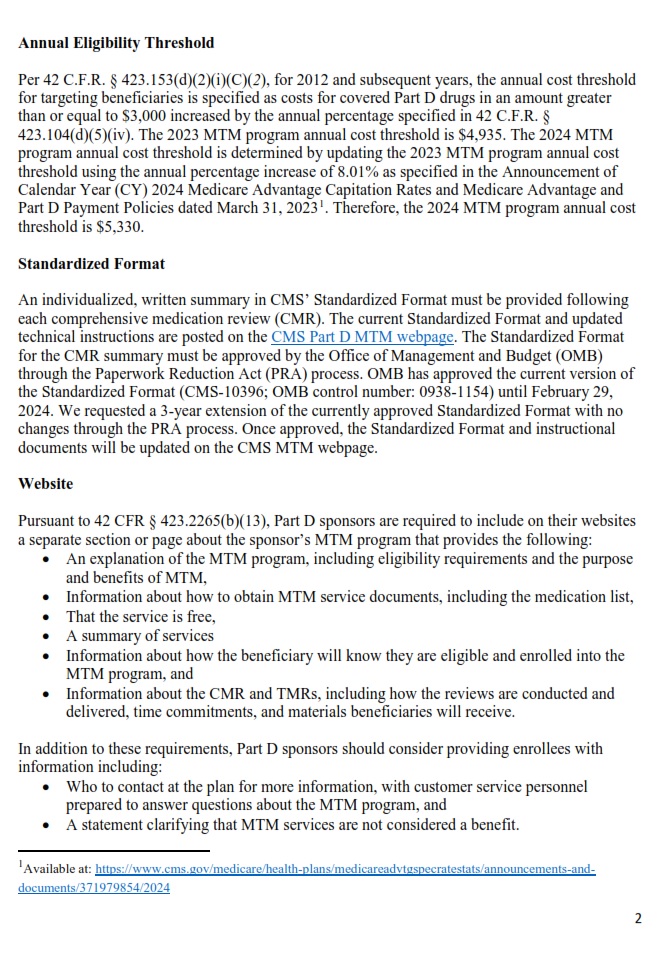
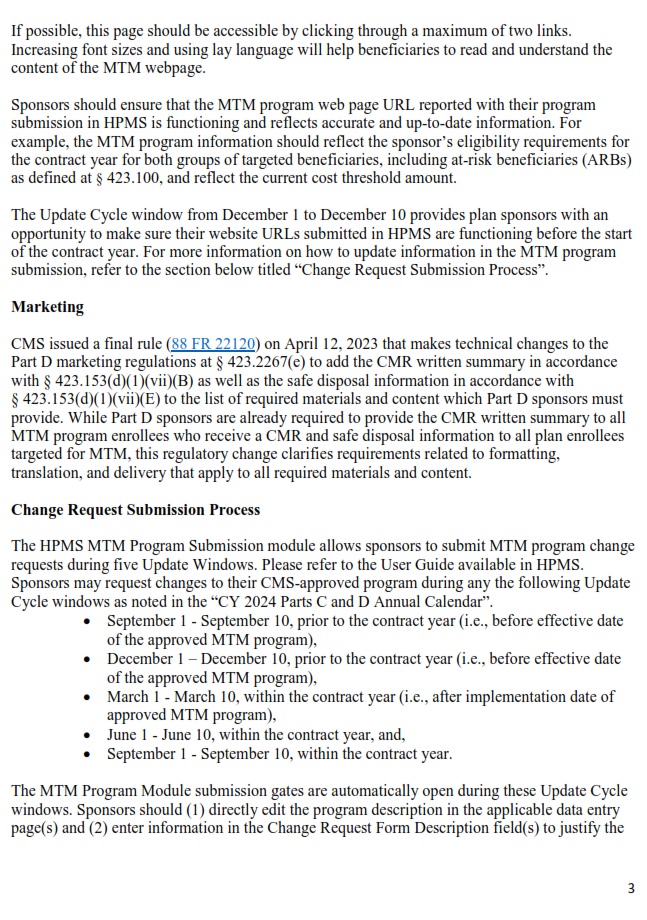
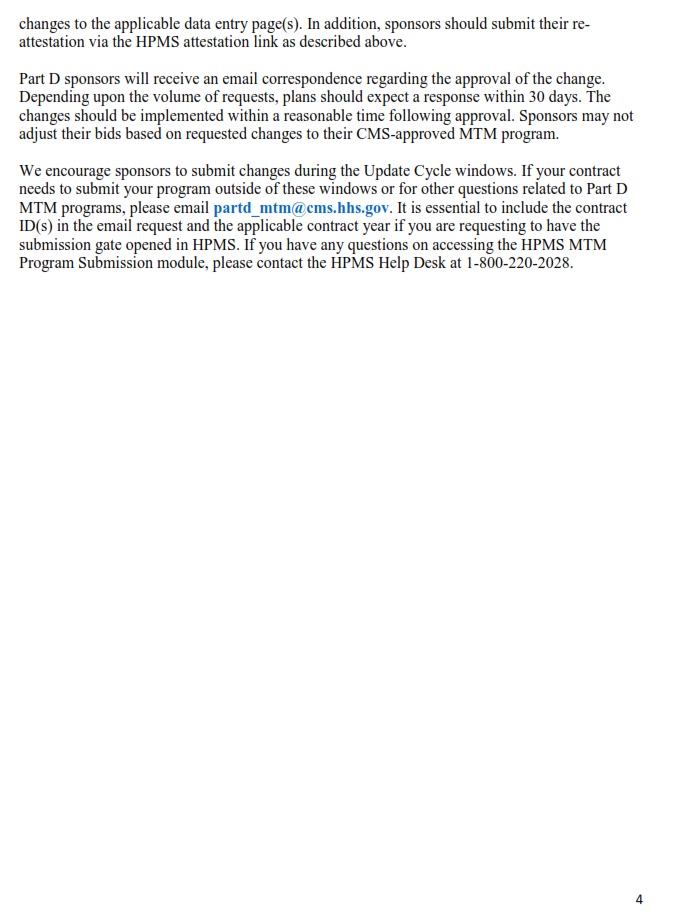
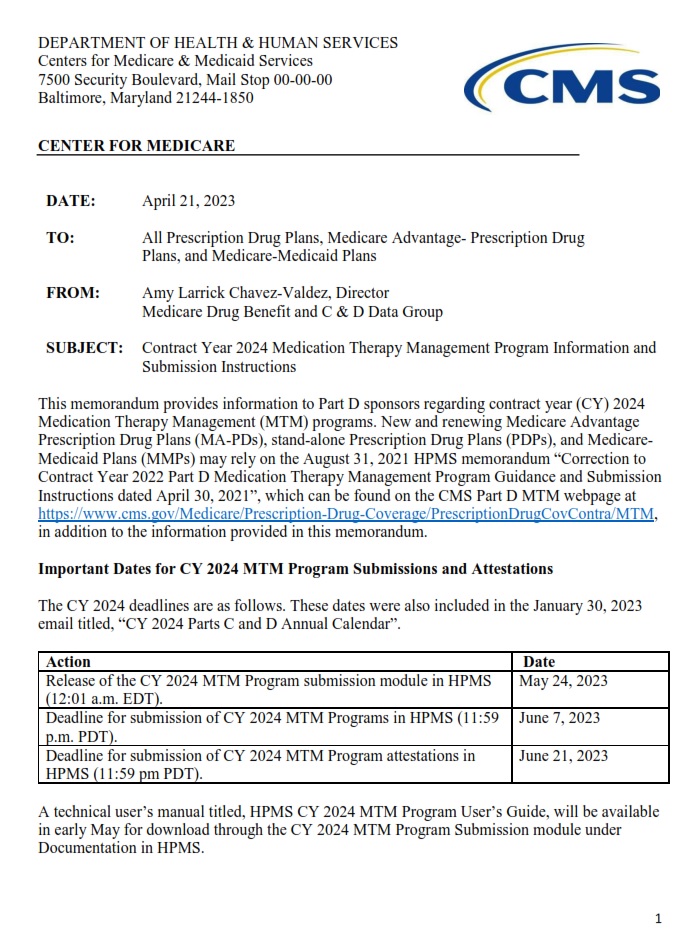
  • CMS 10396 – Medication Therapy Management Program Standardize Format

    CMS 10396 – Medication Therapy Management Program Standardize Format

    CMSFORM.ORGCMS-10396 – Medication Therapy Management Program Standardize Format – In the fast-paced world of healthcare, where precision and accuracy can mean the difference between life and death, standardization becomes paramount. CMS-10396 – Medication Therapy Management Program Standardize Format is set to revolutionize how medication therapy management programs are conducted across the board. Picture this: a seamless system that ensures every patient receives consistent and optimal care, regardless of their location or healthcare provider. This groundbreaking initiative seeks to streamline communication, enhance transparency, and ultimately improve patient outcomes on a scale never seen before in the realm of medication management. Join us as we delve into the implications of this standardized format and explore how it could potentially reshape the landscape of modern healthcare delivery.

    Download CMS-10396 – Medication Therapy Management Program Standardize Format

    [su_table responsive=”yes”]

    Form Number CMS-10396
    Form Title Medication Therapy Management Program Standardize Format
    Published 2012-01-20
    O.M.B.
    File Size 222 KB

    [/su_table]

    [download id=’1533′]

    What is a CMS-10396?

    CMS-10396 refers to the Medication Therapy Management (MTM) Program Standardize Format, a crucial tool designed to streamline and standardize the documentation of MTM services. This format aims to enhance communication among healthcare providers, facilitate the exchange of patient information, and ultimately improve the quality of care delivered to patients. By adopting CMS-10396, healthcare professionals can ensure consistency in documenting patient assessments, plans, interventions, and outcomes related to medication therapy management.

    One key advantage of using CMS-10396 is its ability to provide a structured framework for documenting medication-related information in a comprehensive and systematic manner. This standardized format enables healthcare providers to capture essential data points consistently across different patient encounters, leading to better continuity of care and improved tracking of medication therapy outcomes over time. Additionally, by adhering to CMS-10396 guidelines, healthcare organizations can ensure compliance with regulatory requirements and promote interoperability among various health information systems.

    In conclusion, implementing the CMS-10396 MTM Program Standardize Format not only enhances the efficiency and effectiveness of medication therapy management services but also fosters collaboration among members of the healthcare team. By embracing this standardized documentation approach, healthcare providers can pave the way for more coordinated care delivery processes that prioritize patient safety and optimize treatment outcomes.

    Where Can I Find a CMS-10396?

    If you’re in search of a CMS-10396 form for Medication Therapy Management Program compliance, look no further than your local pharmacy or healthcare provider. These forms are typically available in physical and electronic formats for easy access and submission. Additionally, many online pharmacies and medical supply websites offer downloadable versions of the CMS-10396 for convenience.

    Another avenue to explore in obtaining a CMS-10396 form is through governmental health agencies or insurance providers. They often provide resources and information on where to find the required documentation. Moreover, reaching out to your healthcare professional can lead you in the right direction as they may have copies readily available or be able to guide you on the necessary steps to acquire one.

    CMS-10396 – Medication Therapy Management Program Standardize Format

    Medication Therapy Management (MTM) programs play a crucial role in optimizing patient outcomes and promoting medication safety. CMS-10396 focuses on standardizing the format of these programs to enhance consistency and effectiveness across healthcare settings. This initiative aims to streamline data collection, documentation, and communication processes, ultimately improving the quality of care delivered to patients.

    Adopting a standardized format for MTM programs not only increases efficiency but also promotes evidence-based practices and better coordination among healthcare providers. By implementing CMS-10396 guidelines, organizations can ensure that critical information is captured consistently, leading to more accurate assessments and interventions tailored to individual patient needs. Standardization also facilitates seamless transitions between different healthcare settings and encourages collaboration among multidisciplinary teams involved in medication management.

    CMS-10396 Example
    CMS 10396 - Page 1 CMS 10396 - Page 2 CMS 10396 - Page 3 CMS 10396 - Page 4

  • CMS 1500 – Health Insurance Claim Form

    CMS 1500 – Health Insurance Claim Form

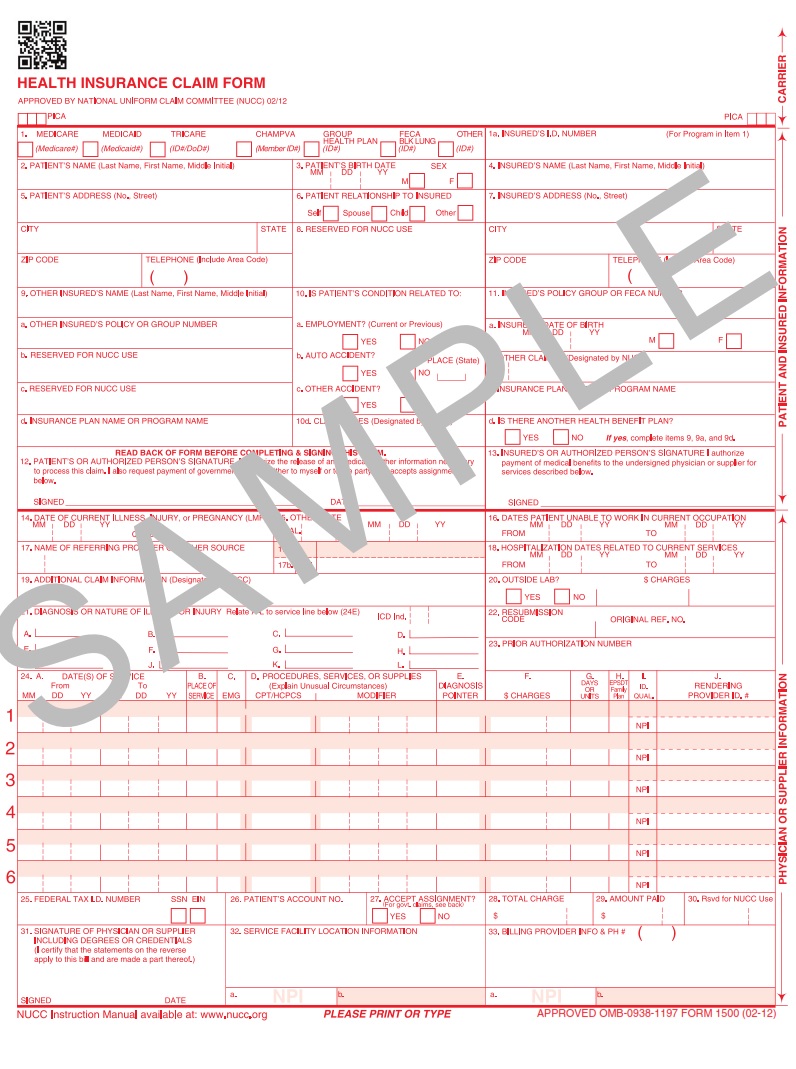
    CMSFORM.ORGCMS 1500 – Health Insurance Claim Form – In the intricate world of healthcare, where every diagnosis and treatment carries a financial weight, exists a seemingly humble form that wields immense power – the CMS 1500 Health Insurance Claim Form. This unassuming document serves as the gateway between healthcare providers and insurance companies, holding within its structured fields the potential to unlock vital reimbursement for medical services rendered. As we delve into the intricacies of this form, we unravel a labyrinthine web of codes, regulations, and patient information that ultimately determines whether a medical practice thrives or struggles under the burden of unpaid claims. Join us on a journey through the nuances of this essential tool in modern healthcare administration, where each box checked represents not just data but also financial stability and patient care.

    Download CMS 1500 – Health Insurance Claim Form

    [su_table responsive=”yes”]

    Form Number CMS 1500
    Form Title Health Insurance Claim Form
    Published 2012-02-01
    O.M.B. 0938-1197
    File Size 2 MB

    [/su_table]

    [download id=’1534′]

    What is a CMS 1500?

    The CMS 1500 form, also known as the Health Insurance Claim Form, is a vital document used by healthcare providers to bill insurance companies for services rendered to patients. This standardized form streamlines the billing process and ensures accurate and efficient communication between providers and payers. What sets the CMS 1500 apart is its simplicity yet comprehensive nature, capturing essential patient and provider information, diagnosis codes, treatment details, and billing specifics within its structured format.

    One key aspect of the CMS 1500 form is its ability to accommodate both paper-based and electronic submissions, providing flexibility for different healthcare settings. The form’s standardized layout plays a crucial role in reducing errors and facilitating timely reimbursement for healthcare services provided. Additionally, understanding how to correctly complete a CMS 1500 form is essential for healthcare professionals to navigate the complex world of medical billing while remaining compliant with insurance regulations.

    Where Can I Find a CMS 1500?

    When it comes to finding a CMS 1500 form, there are several options available for both healthcare providers and individuals submitting health insurance claims. One of the most convenient ways to access the form is through online platforms such as the National Uniform Claim Committee (NUCC) website or through electronic health record (EHR) systems that offer templates for filling out the CMS 1500 electronically. Additionally, healthcare providers can often obtain physical copies of the form from medical supply companies or directly from their billing software vendors. It’s important to ensure that you are using the most up-to-date version of the form, as changes and updates may occur periodically to comply with current healthcare regulations.

    Another valuable resource for obtaining a CMS 1500 form is through local medical billing offices, hospitals, or clinics. These facilities typically have a supply of forms readily available and can provide guidance on how to properly complete and submit them for reimbursement. For individuals seeking assistance with completing a CMS 1500 form, reaching out to their healthcare provider’s billing department or insurance company can also be beneficial in obtaining the necessary documentation and guidance in navigating the insurance claim process effectively. By exploring these various avenues, individuals and healthcare providers alike can find easy access to CMS 1500 forms and ensure smooth processing of health insurance claims.

    CMS 1500 – Health Insurance Claim Form

    The CMS 1500 Health Insurance Claim Form serves as a crucial document in the healthcare industry, facilitating the reimbursement process for medical services provided. Its standardized format streamlines billing procedures and ensures accuracy in submitting claims to insurance companies. With designated fields for essential patient and provider information, the form plays a pivotal role in expediting payment cycles and reducing administrative burdens on healthcare providers.

    One key advantage of using the CMS 1500 form is its compatibility with electronic submission systems, enabling efficient processing of claims through electronic data interchange (EDI). This digitization not only accelerates claim submissions but also minimizes errors commonly associated with manual data entry methods. Additionally, the form’s structure aligns with billing guidelines set by regulatory bodies like the Centers for Medicare & Medicaid Services (CMS), ensuring compliance with industry standards and enhancing overall claim accuracy.

    CMS 1500 Example

    CMS 1500

  • CMS 672 – Resident Census and Conditions of Residents

    CMS 672 – Resident Census and Conditions of Residents

    CMSFORM.ORGCMS 672 – Resident Census and Conditions of Residents – In the intricate web of healthcare management, ensuring accurate resident census and monitoring living conditions within long-term care facilities stand as vital pillars of quality assurance. CMS 672, a regulatory tool wielded by the Centers for Medicare & Medicaid Services, acts as a compass guiding facilities to navigate the terrain of resident population data and their associated well-being. Picture this – a labyrinthine journey through the corridors of care homes, where each door holds a story untold, each bed cradles a life lived. As we delve into the depths of CMS 672, we unravel not just numbers on paper but narratives of resilience and vulnerability etched in the fabric of our aging society. Join us on this exploration where data transforms into voices, statistics morph into stories; for in understanding our residents’ census lie the keys to unlocking compassionate care and dignified living standards.

    Download CMS 672 – Resident Census and Conditions of Residents

    [su_table responsive=”yes”]

    Form Number CMS 672
    Form Title Resident Census and Conditions of Residents
    Published 2012-05-01
    O.M.B.
    File Size 385 KB

    [/su_table]

    [download id=’1535′]

    What is a CMS 672?

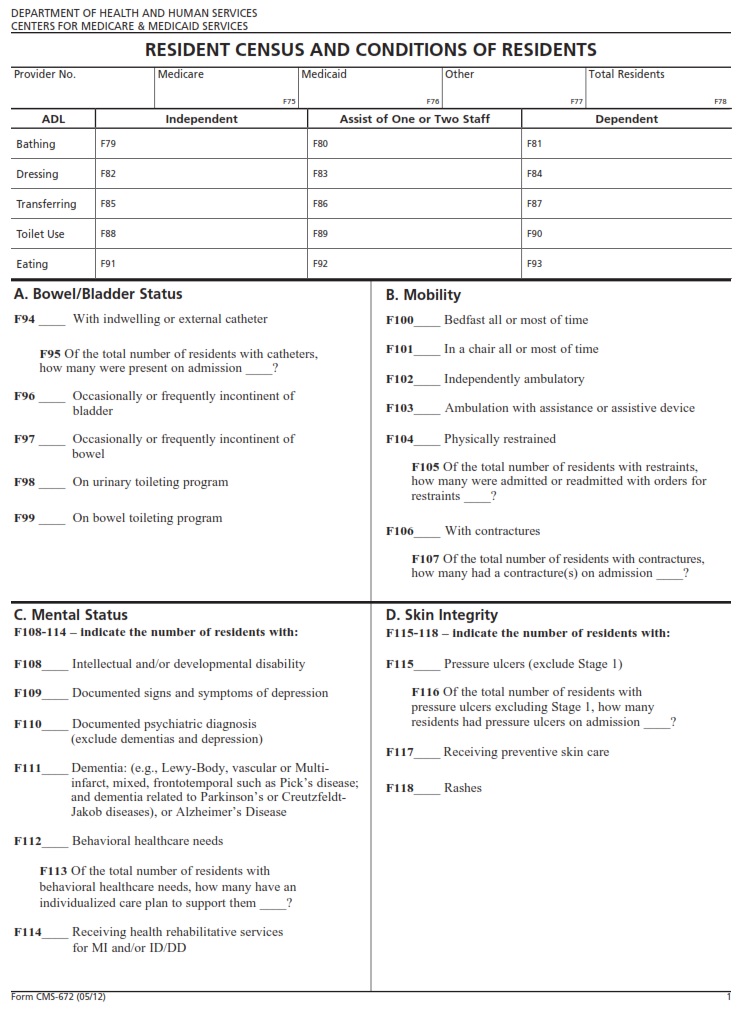
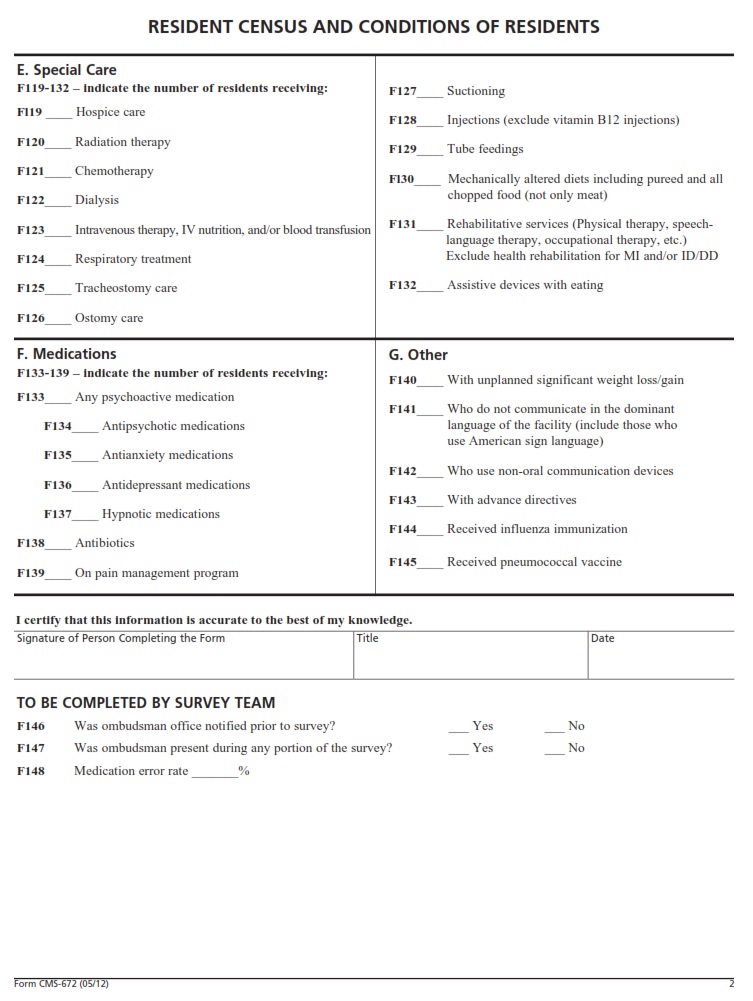
    CMS 672, also known as the Resident Census and Conditions of Residents form, plays a crucial role in ensuring quality care for residents in healthcare facilities. This form collects detailed information about each resident, including their demographics, medical conditions, and treatment plans. By providing an overview of the resident population and their specific needs, CMS 672 helps staff members deliver personalized care that meets individual requirements.

    Completing the CMS 672 form accurately is not just a regulatory requirement but also a key component of providing effective care. The data gathered through this form enables healthcare providers to track trends in resident populations, identify areas for improvement in care delivery, and evaluate the overall effectiveness of existing treatment plans. Moreover, by documenting residents’ conditions and needs on a regular basis, facilities can ensure that they are consistently meeting compliance standards and working towards enhanced resident well-being.

    Where Can I Find a CMS 672?

    When looking for a CMS 672 form, you can typically find it in long-term care facilities such as nursing homes or assisted living facilities. These forms are essential for documenting resident census and conditions of residents to ensure proper care is provided. While some facilities may have digital versions available on their internal systems or websites, others may still use physical paper forms that can be obtained from the facility’s administrative office.

    Moreover, it’s important to note that the CMS 672 form is a standardized document required by the Centers for Medicare & Medicaid Services (CMS) for reporting resident information accurately. In some cases, specialized software solutions designed for long-term care facilities may also include pre-built templates for generating and submitting these forms electronically. By familiarizing yourself with where to find this crucial form within your facility or through digital means, you can efficiently track and update resident information in compliance with regulatory guidelines.

    CMS 672 – Resident Census and Conditions of Residents

    CMS-672, also known as the Resident Census and Conditions of Residents form, plays a crucial role in ensuring compliance and quality care within long-term care facilities. This form serves as a snapshot of the facility’s resident population, detailing important information such as demographics, diagnoses, treatments, and overall well-being. By carefully documenting this data, facilities can track trends in residents’ conditions over time, identify areas for improvement in care delivery, and monitor the effectiveness of interventions.

    Moreover, a comprehensive understanding of resident census and conditions is essential for providing personalized care to individuals with diverse needs. Through accurate documentation on CMS-672, staff members can tailor treatment plans to address specific health concerns or preferences of each resident. This individualized approach promotes better outcomes and enhances the overall quality of life for those living in long-term care settings. Additionally, analyzing the data collected through this form enables facilities to benchmark their performance against industry standards and drive continuous improvement initiatives that benefit both residents and staff members alike.

    CMS 672 Example

    CMS 672 - Page 1 CMS 672 - Page 2

  • CMS 20056 – Medicare Adminstration Observation

    CMS 20056 – Medicare Adminstration Observation

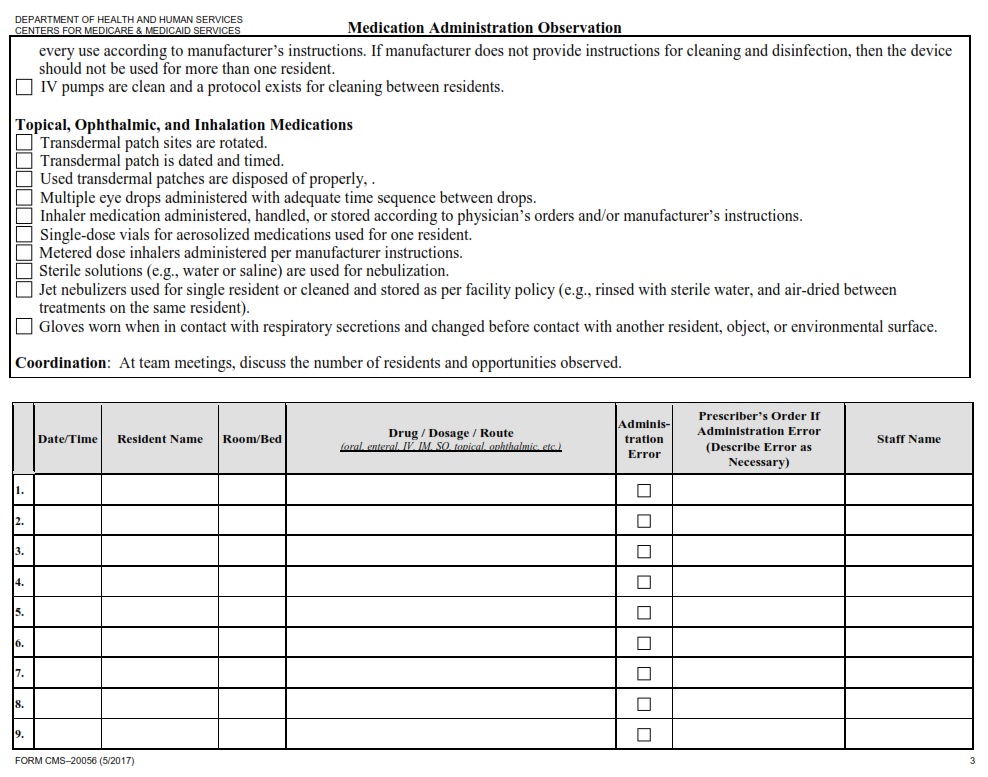
    CMSFORM.ORGCMS 20056 – Medicare Adminstration Observation – As the healthcare landscape continues to evolve, one topic that remains at the forefront of discussions is Medicare administration. In particular, CMS 20056 – Medicare Administration Observation has been a focal point for providers and policymakers alike. This intricate system governs how observation care is managed within the Medicare framework, impacting both patients and healthcare facilities in significant ways.

    Navigating the nuances of CMS 20056 requires a keen understanding of its implications on patient care, billing practices, and overall healthcare delivery. From determining the appropriate level of observation status to ensuring compliance with regulations, providers face a complex web of challenges when it comes to administering observation services under Medicare. Join us as we delve into the intricacies of CMS 20056 – Medicare Administration Observation, unraveling its impact on stakeholders across the healthcare industry.

    Download CMS 20056 – Medicare Adminstration Observation

    [su_table responsive=”yes”]

    Form Number CMS 20056
    Form Title Medicare Adminstration Observation
    Published 2013-02-01
    O.M.B.
    File Size 411 KB

    [/su_table]

    [download id=’1536′]

    What is a CMS 20056?

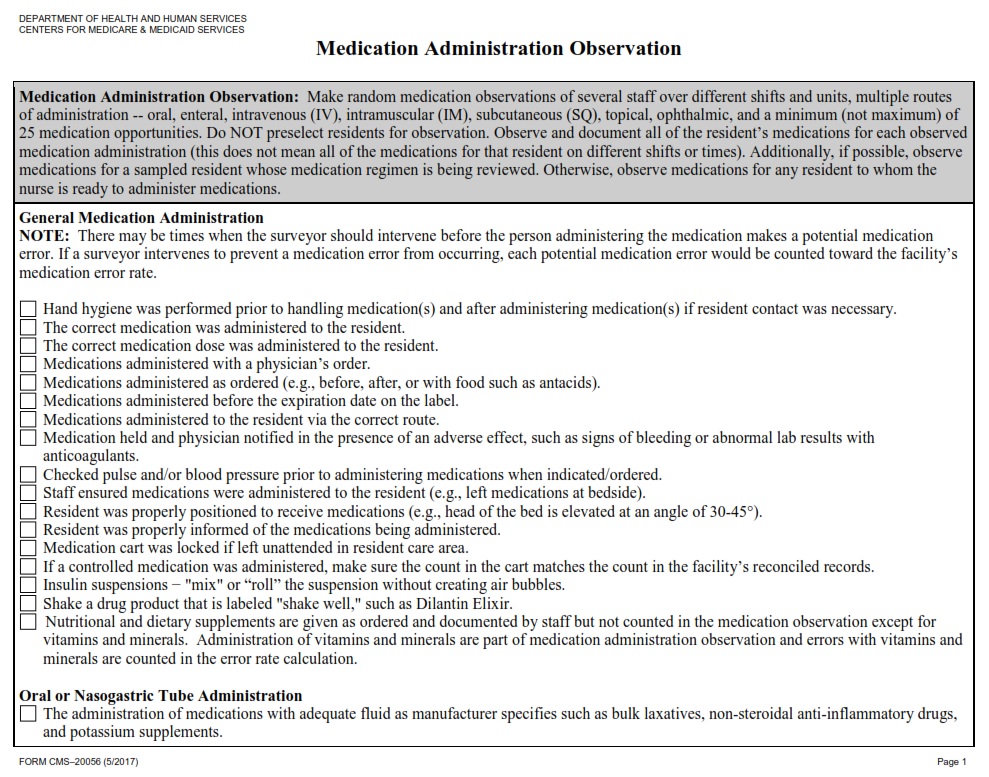
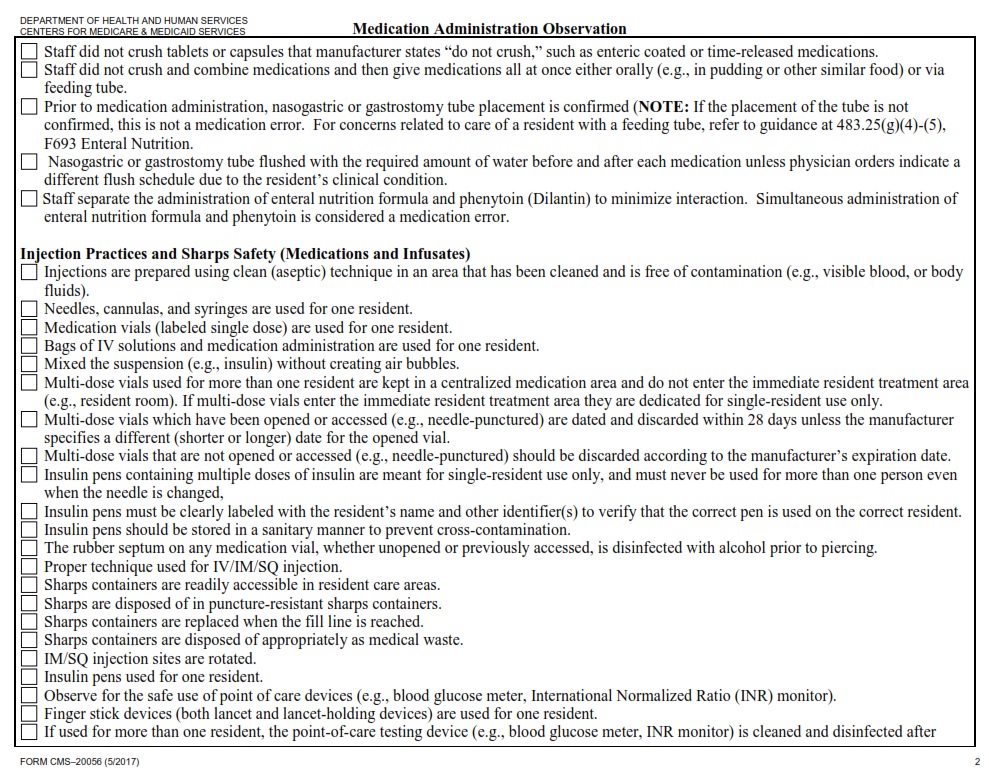
    A CMS 20056 is a specific form used by healthcare providers to report and document observations related to Medicare administration. This form plays a crucial role in ensuring accurate record-keeping and compliance with Medicare regulations. Healthcare professionals use the CMS 20056 to detail important information such as patient identification, date of observation, type of service provided, and the individual responsible for administering care.

    One key aspect of the CMS 20056 is its ability to facilitate communication between healthcare providers and Medicare administrators. By accurately completing this form, providers can streamline the reimbursement process and ensure that all services rendered are properly documented. Understanding the importance of this form is essential for healthcare professionals looking to maintain compliance within the complex landscape of Medicare administration.

    In conclusion, a CMS 20056 serves as a valuable tool in the realm of Medicare administration, aiding in efficient communication between healthcare providers and regulatory authorities. Its meticulous documentation requirements contribute towards transparency and accountability in medical billing practices. By familiarizing themselves with the nuances of this form, healthcare professionals can navigate the intricacies of Medicare reimbursement with clarity and precision.

    Where Can I Find a CMS 20056?

    If you’re in search of a CMS 20056 for Medicare administration observation, look no further than reputable medical supply companies specializing in durable medical equipment. These companies often carry a wide range of CMS products and can provide valuable guidance on selecting the right model for your specific needs.

    Additionally, online marketplaces like Amazon or specialized medical equipment websites may also have the CMS 20056 available for purchase. Be sure to read product reviews and compare prices to ensure you are getting the best deal possible.

    Another option is to reach out to local healthcare facilities or hospitals as they may have surplus or unused CMS units that they could potentially sell or donate. This approach not only helps you find the needed equipment but also fosters collaboration within the healthcare community.

    CMS 20056 – Medicare Adminstration Observation

    Have you ever wondered about the intricacies of Medicare administration observation? CMS 20056 sheds light on the crucial processes and regulations involved in ensuring seamless healthcare services for beneficiaries. This code plays a vital role in overseeing the observation services provided by medical facilities, emphasizing quality care and accurate billing procedures.

    One of the key aspects of CMS 20056 is its focus on compliance with Medicare guidelines to prevent fraud and maintain transparency in healthcare transactions. It sets standards for monitoring patient care during observation stays, aiming to improve outcomes and reduce unnecessary hospitalizations. By understanding the nuances of this code, healthcare providers can navigate the complex landscape of Medicare administration more effectively while delivering optimal care to patients.

    As technology advances and healthcare policies evolve, staying informed about codes like CMS 20056 is paramount for healthcare professionals seeking to enhance patient care and adhere to regulatory standards. Embracing continuous learning and adaptation is essential for navigating the dynamic realm of Medicare administration observation, ensuring that patients receive high-quality care that aligns with industry best practices. Let’s delve deeper into how this code influences healthcare delivery and shapes the future of Medicare administration.

    CMS 20056 Example

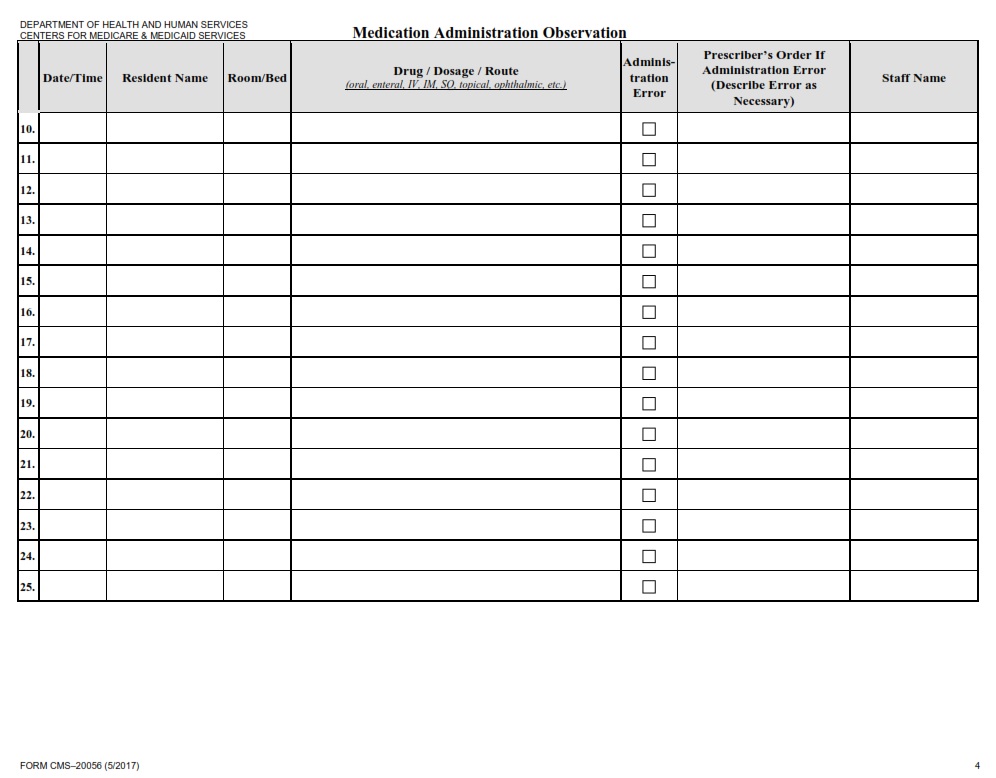
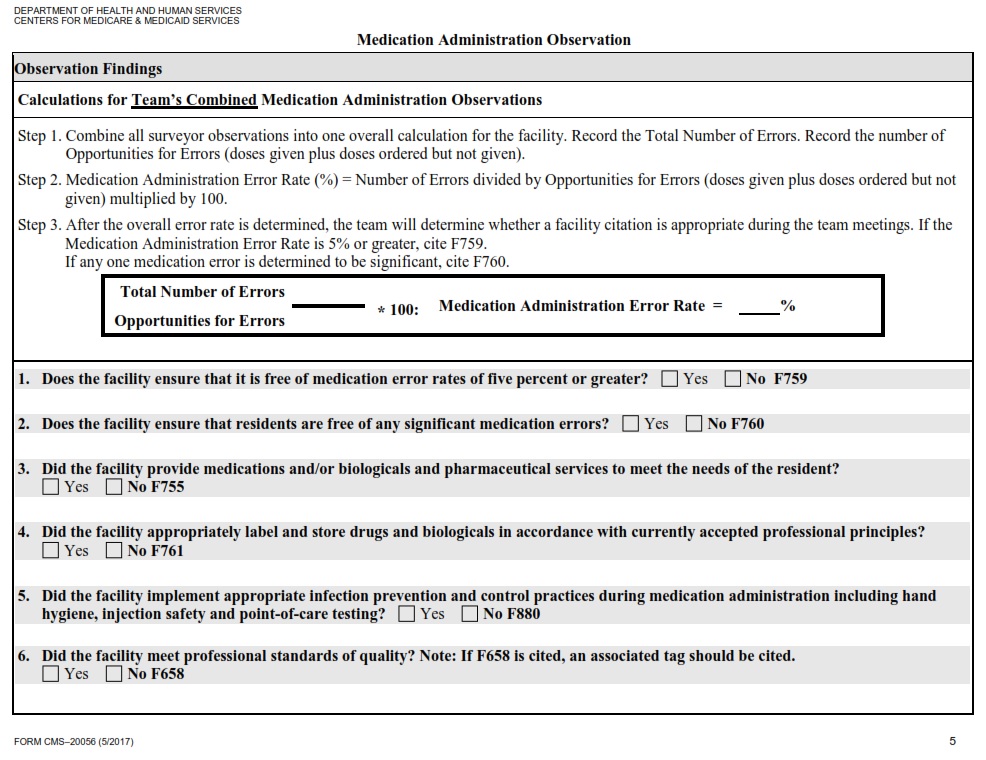
    CMS 20056 - Page 1 CMS 20056 - Page 2 CMS 20056 - Page 3 CMS 20056 - Page 4 CMS 20056 - Page 5

  • CMS 632FOI – FREEDOM OF INFORMATION ACT REQUEST

    CMS 632FOI – FREEDOM OF INFORMATION ACT REQUEST

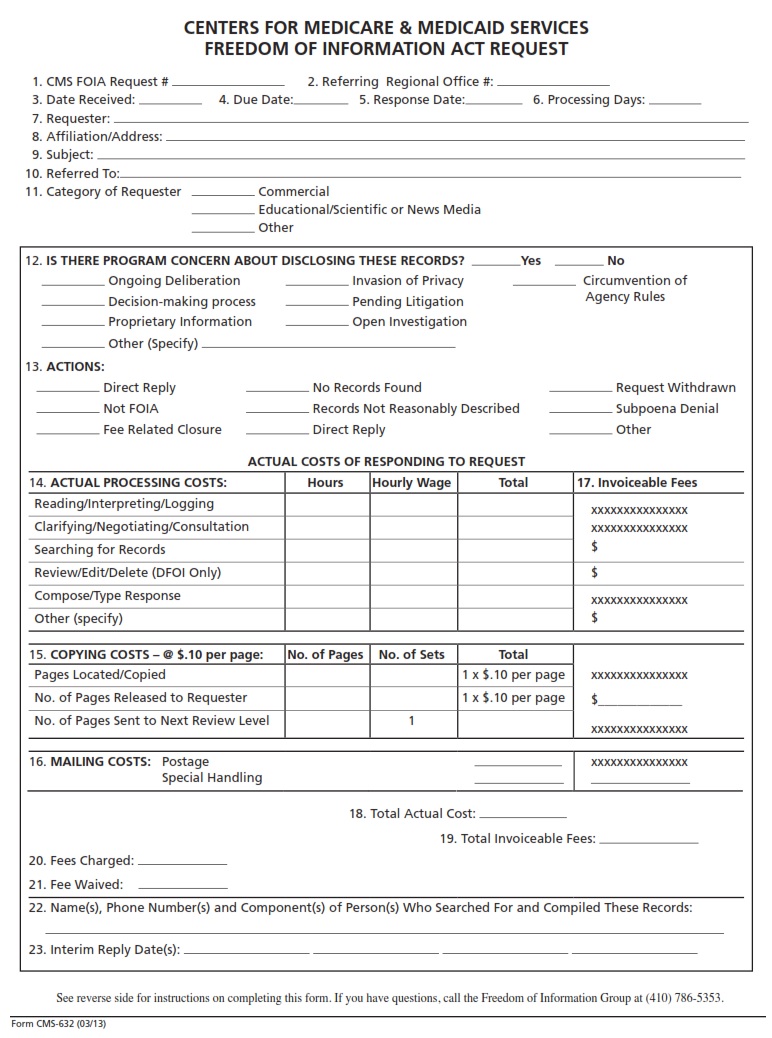
    CMSFORM.ORGCMS 632FOI – FREEDOM OF INFORMATION ACT REQUEST – In the digital age where information is power and transparency is key, the Freedom of Information Act (FOIA) stands as a beacon of accountability shining through the shadows of bureaucracy. Imagine a world where the secrets held by government agencies, corporations, and institutions are just a request away from being unveiled. CMS 632FOI delves into this intriguing realm of access to information, empowering individuals to navigate the intricate web of data protection laws in pursuit of truth and justice.

    As we embark on this journey through bureaucratic labyrinths and legal loopholes, we uncover the underlying tension between citizens’ right to know and entities’ desire to shield their operations from public scrutiny. With each FOIA request submitted under CMS 632FOI, we challenge the status quo, unraveling layers of secrecy that have long veiled decisions affecting our lives. Join us as we decode the power dynamics at play in this enthralling quest for transparency and hold tight as we explore how knowledge truly is power in today’s information-driven society.

    Download CMS 632FOI – FREEDOM OF INFORMATION ACT REQUEST

    [su_table responsive=”yes”]

    Form Number CMS 632FOI
    Form Title FREEDOM OF INFORMATION ACT REQUEST
    Published 2013-03-01
    O.M.B.
    File Size 188 KB

    [/su_table]

    [download id=’1537′]

    What is a CMS 632FOI?

    CMS 632FOI, an acronym for Content Management System and the Freedom of Information Act request process, is a powerful tool that combines efficiency with transparency. This unique system streamlines the document management and dissemination process while ensuring compliance with legal requirements for information disclosure. By leveraging CMS 632FOI, organizations can enhance their ability to respond to FOIA requests promptly and accurately, thus strengthening trust and accountability within the community.

    Not only does CMS 632FOI facilitate seamless access to information, but it also plays a crucial role in safeguarding sensitive data and maintaining privacy standards. With its user-friendly interface and robust security features, this system empowers agencies to navigate the intricate landscape of FOIA requests effectively. By embracing CMS 632FOI, institutions can uphold their commitment to open governance while upholding data protection principles in an increasingly digitized world.

    Where Can I Find a CMS 632FOI?

    If you’re on the hunt for a CMS 632FOI, your best bet is to start by checking with government agencies or departments that are known to handle Freedom of Information Act requests. These entities often use specialized content management systems like the CMS 632FOI to efficiently manage and process such requests. Additionally, searching online for vendors or providers who specialize in information management software may also lead you to a potential source for acquiring the CMS 632FOI.

    Another avenue worth exploring is reaching out to industry experts or consultants who work closely with FOIA compliance and data management. They may have insights on where to procure the CMS 632FOI or be able to provide recommendations for similar solutions that meet your needs. Don’t hesitate to network within professional circles or attend relevant conferences and seminars where you can connect with professionals knowledgeable in this field, as they could point you in the right direction towards finding a reputable source for obtaining a CMS 632FOI.

    CMS 632FOI – FREEDOM OF INFORMATION ACT REQUEST

    The Freedom of Information Act (FOIA) is a powerful tool that empowers citizens to access government information and hold authorities accountable. In the context of CMS 632FOI, understanding how to effectively request information under the FOIA framework is crucial for both journalists and the public. By navigating this process adeptly, individuals can uncover hidden truths, shed light on governmental actions, and ultimately contribute to a more transparent society.

    One intriguing aspect of the FOIA request process is the potential for unexpected discoveries. As individuals delve into documents obtained through FOIA requests, they may stumble upon new leads, unearth controversial details, or connect dots that were previously unnoticed. These revelations have the power to spark public discourse, challenge official narratives, and drive change in areas where transparency has been lacking.

    Furthermore, utilizing CMS 632FOI as a means to engage with government agencies can also foster collaboration and improve communication channels between officials and constituents. By taking advantage of the FOIA process in an informed manner, individuals not only exercise their right to access information but also create opportunities for dialogue and accountability within the public sector.

    CMS 632FOI Example

    CMS 632FOI

  • CMS 3070H – ICF/IID Deficiencies Report

    CMS 3070H – ICF/IID Deficiencies Report

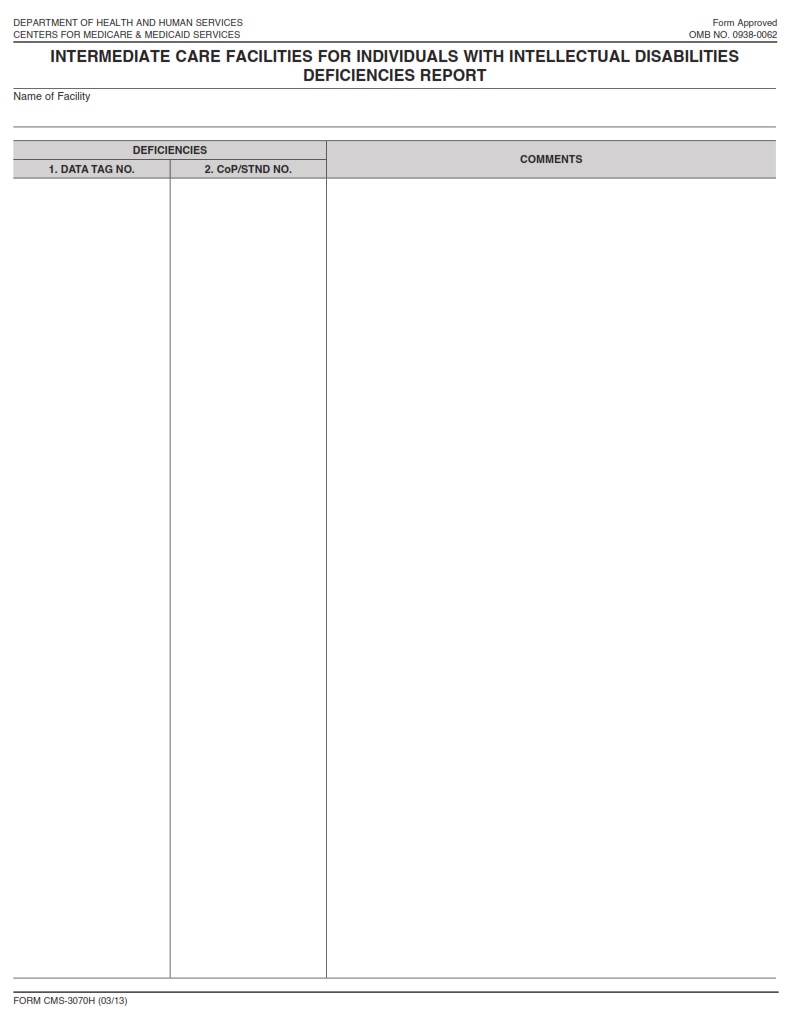
    CMSFORM.ORGCMS 3070H – ICF/IID Deficiencies Report – In the intricate web of healthcare regulations and compliance standards, one often overlooked yet crucial aspect is the inspection and reporting of deficiencies in Intermediate Care Facilities for Individuals with Intellectual Disabilities (ICF IID). Enter CMS 3070H – a comprehensive tool designed to meticulously assess and document any shortcomings within these specialized care facilities. As the curtain lifts on this vital report, a revealing glimpse into the quality of care provided to some of society’s most vulnerable individuals emerges. From staffing challenges to facility maintenance issues, each deficiency uncovered paints a vivid picture of the hurdles faced by both residents and caregivers alike. Join us as we delve deep into the world of ICF IID inspections, where every line item tells a story waiting to be heard.

    Download CMS 3070H – ICF/IID Deficiencies Report

    [su_table responsive=”yes”]

    Form Number CMS 3070H
    Form Title ICF/IID Deficiencies Report
    Published 2013-03-01
    O.M.B. 0938-0062
    File Size 326 KB

    [/su_table]

    [download id=’1538′]

    What is a CMS 3070H?

    The CMS 3070H is a specialized form used by the Centers for Medicare & Medicaid Services (CMS) to report deficiencies identified during surveys of Intermediate Care Facilities for Individuals with Intellectual Disabilities (ICF/IID). This form plays a crucial role in ensuring compliance with federal regulations and standards set forth by CMS to maintain high-quality care for individuals in these facilities. It includes detailed information on each deficiency, such as the regulatory requirement violated, the scope and severity of the deficiency, and any corrective actions taken.

    Facility administrators use the CMS 3070H to outline their plans for addressing deficiencies identified through surveys conducted by state survey agencies or CMS itself. By documenting these deficiencies and outlining corrective actions, facilities can demonstrate their commitment to ongoing quality improvement and compliance with federal regulations. The data collected through this form also helps CMS monitor trends in deficiencies across ICF/IID facilities nationwide, informing policy decisions and targeted interventions to improve care quality for vulnerable populations.

    Where Can I Find a CMS 3070H?

    If you’re on the hunt for a CMS 3070H, your first stop should be the official website of the Centers for Medicare & Medicaid Services (CMS). The CMS website offers a search function where you can look up specific forms and documents, including the CMS 3070H. Additionally, reaching out to state health departments or regulatory agencies may also provide information on where to obtain this crucial form.

    Another avenue to explore is contacting healthcare facilities that specialize in ICF IID care. These facilities are required to maintain accurate records and documentation, making them a potential source for locating the CMS 3070H form. Furthermore, professional organizations within the field of intellectual and developmental disabilities may have resources or guidance on accessing ICF IID deficiency reports and related forms like the CMS 3070H.

    CMS 3070H – ICF/IID Deficiencies Report

    The CMS 3070H – ICF IID Deficiencies Report is a crucial tool in assessing the quality of care provided to individuals with intellectual and developmental disabilities. This report highlights deficiencies found during inspections of Intermediate Care Facilities for Individuals with Intellectual Disabilities (ICF/IID), shedding light on areas that need improvement to ensure the safety and well-being of residents. By identifying these deficiencies, regulatory agencies can work with facilities to implement corrective actions and compliance measures, ultimately enhancing the quality of care delivered.

    One key aspect of the CMS 3070H report is its role in promoting transparency and accountability within ICFs/IID. By making deficiency findings accessible to the public, this report not only holds facilities accountable for their shortcomings but also empowers families, advocates, and policymakers to advocate for better care standards. Additionally, this report serves as a valuable resource for facility administrators and staff to identify systemic issues, develop targeted interventions, and prioritize resident-centered care practices. Through continuous monitoring and collaboration based on insights from the CMS 3070H report, improvements can be made towards achieving excellence in caring for individuals with intellectual disabilities within ICFs/IID.

    CMS 3070H Example

    CMS 3070H

  • CMS 3070G – ICF/IID Survey Report

    CMS 3070G – ICF/IID Survey Report

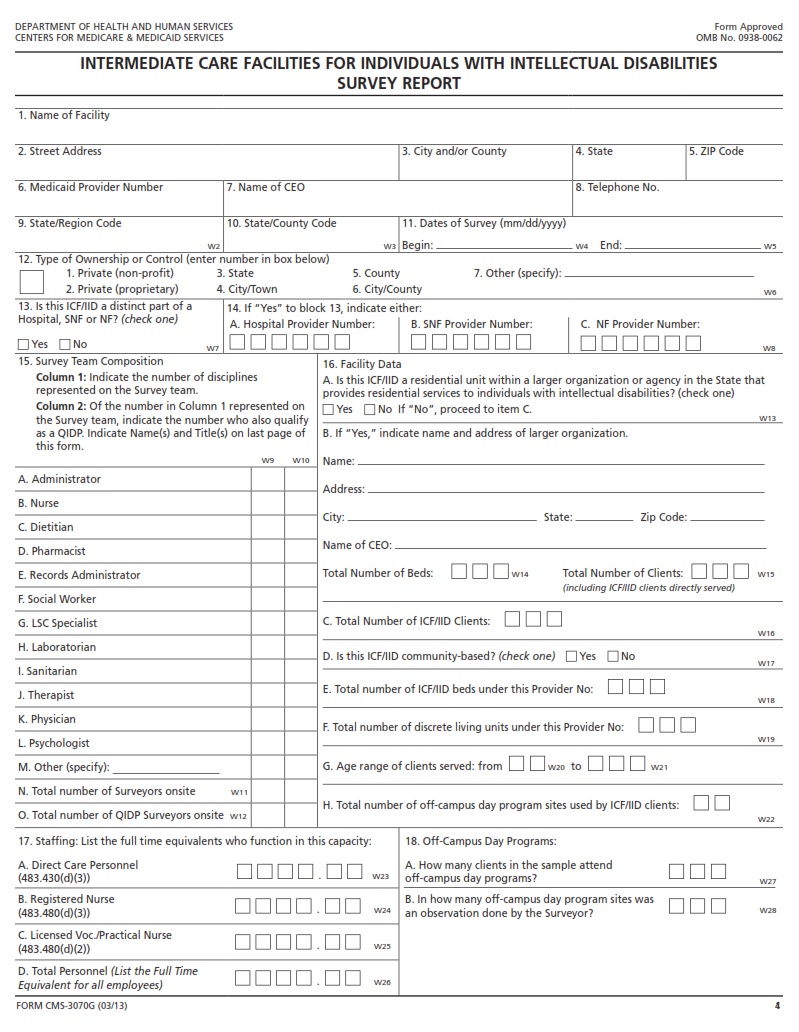
    CMSFORM.ORGCMS 3070G – ICF/IID Survey Report – In the intricate landscape of healthcare regulation, the CMS 3070G – ICF IID Survey Report stands as a crucial document that holds the keys to ensuring quality care for some of society’s most vulnerable members. As we delve into this comprehensive report, we unravel a tapestry of data and insights that shed light on the state of Intermediate Care Facilities for Individuals with Intellectual Disabilities (ICF IID). Through meticulous surveys and analysis, this report serves as a compass guiding us through the challenges and triumphs within these specialized care settings. Join us on an enlightening journey through the corridors of healthcare oversight, where each page unveils a story of dedication, resilience, and above all, compassion towards those in need.

    Download CMS 3070G – ICF/IID Survey Report

    [su_table responsive=”yes”]

    Form Number CMS 3070G
    Form Title ICF/IID Survey Report
    Published 2013-03-01
    O.M.B. 0938-0062
    File Size 155 KB

    [/su_table]

    [download id=’1539′]

    What is a CMS 3070G?

    The CMS 3070G is a sophisticated health care management system designed specifically for ICF IID facilities. This cutting-edge software provides a comprehensive platform to streamline administrative processes, track patient data, and ensure compliance with regulatory requirements. Through its user-friendly interface and customizable features, the CMS 3070G empowers healthcare providers to deliver high-quality care while maintaining efficiency and accuracy in their operations.

    One of the key highlights of the CMS 3070G is its robust reporting capabilities, enabling facilities to generate detailed insights into patient outcomes, staff performance, and overall facility operations. By leveraging advanced analytics tools built into the system, administrators can make data-driven decisions that drive continuous improvement and enhance quality of care for residents. Furthermore, the integration of electronic health records (EHR) within the CMS 3070G simplifies documentation processes and facilitates seamless communication among healthcare teams, leading to better coordination and collaboration across various departments within an ICF IID facility.

    Where Can I Find a CMS 3070G?

    If you’re in search of a CMS 3070G, you might be wondering where to find one considering the specificity and importance of this device. One reliable option is to reach out to medical equipment suppliers that specialize in providing equipment for ICF IID facilities. These suppliers often have access to a wide range of specialized medical devices, including the CMS 3070G.

    Another avenue to explore is online medical equipment marketplaces. These platforms offer a convenient way to browse and compare different options for the CMS 3070G, ensuring that you find the best fit for your facility’s needs. Additionally, consider networking with other healthcare professionals who may have insights on where to source this particular device. By leveraging multiple channels and keeping an open mind towards new connections, you increase your chances of locating a CMS 3070G efficiently and effectively.

    CMS 3070G – ICF/IID Survey Report

    The CMS 3070G – ICF IID survey report plays a crucial role in assessing the quality of care provided to individuals residing in Intermediate Care Facilities for Individuals with Intellectual Disabilities (ICF IID). This report examines various aspects of these facilities, including staffing levels, compliance with regulations, and overall quality of life for residents. By analyzing the findings of this survey, policymakers and healthcare professionals can identify areas for improvement and implement necessary changes to ensure the well-being and safety of individuals with intellectual disabilities.

    One key aspect highlighted in the CMS 3070G report is the importance of person-centered care within ICF IID facilities. This approach focuses on tailoring care plans to meet the individual needs and preferences of each resident, promoting autonomy and enhancing their quality of life. By prioritizing person-centered care, facilities can create a supportive environment that fosters independence and encourages meaningful interactions between residents and staff members. Additionally, implementing strategies to enhance staff training and communication can further improve the overall experience for individuals living in ICF IID facilities.

    The CMS 3070G – ICF IID survey report serves as a valuable tool for evaluating the quality of care provided in intermediate care facilities for individuals with intellectual disabilities. By focusing on person-centered care principles and promoting effective communication among staff members, these facilities can create a more inclusive and supportive environment for their residents. Moving forward, ongoing monitoring and evaluation based on insights from this report will be essential in driving continuous improvement efforts to enhance the overall quality of life for individuals with intellectual disabilities.

    CMS 3070G Example

    CMS 3070G

  • CMS 10003-NDMCP – NOTICE OF DENIAL OF MEDICAL COVERAGE/PAYMENT (“INTEGRATED DENIAL NOTICE”)

    CMS 10003-NDMCP – NOTICE OF DENIAL OF MEDICAL COVERAGE/PAYMENT (“INTEGRATED DENIAL NOTICE”)

    CMSFORM.ORGCMS 10003-NDMCP – NOTICE OF DENIAL OF MEDICAL COVERAGE/PAYMENT (“INTEGRATED DENIAL NOTICE”) – Navigating the complex world of healthcare insurance can often feel like deciphering a cryptic code, with denials and rejections casting a shadow of confusion over patients seeking medical coverage. Enter CMS 10003-NDMCP – the enigmatic acronym that holds the key to understanding denials of medical coverage payments. Referred to as the Integrated Denial Notice, this document serves as both a roadmap and a warning sign for individuals grappling with insurance claim rejections. In this article, we will delve into the intricacies of CMS 10003-NDMCP, unraveling its mysteries to empower readers with knowledge and insights into their rights and options when faced with denied medical claims.

    Download CMS 10003-NDMCP – NOTICE OF DENIAL OF MEDICAL COVERAGE/PAYMENT (“INTEGRATED DENIAL NOTICE”)

    [su_table responsive=”yes”]

    Form Number CMS 10003-NDMCP
    Form Title NOTICE OF DENIAL OF MEDICAL COVERAGE/PAYMENT (“INTEGRATED DENIAL NOTICE”)
    Published 2013-06-01
    O.M.B. 0938-0829
    File Size 286 KB

    [/su_table]

    [download id=’1540′]

    What is a CMS 10003-NDMCP?

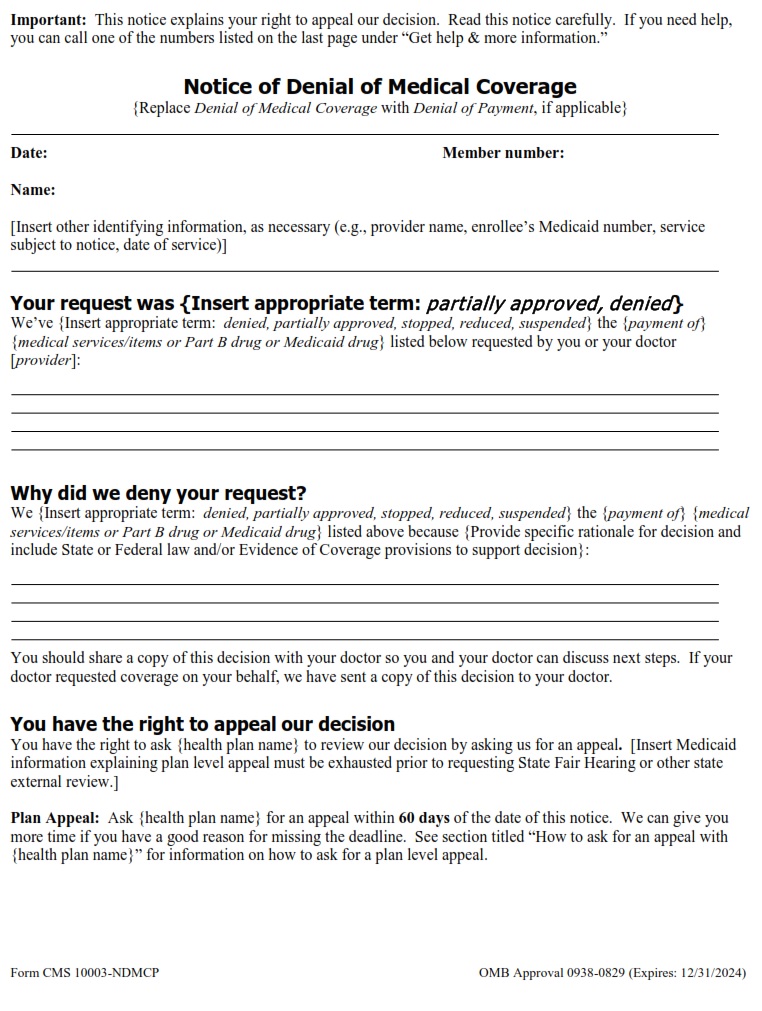
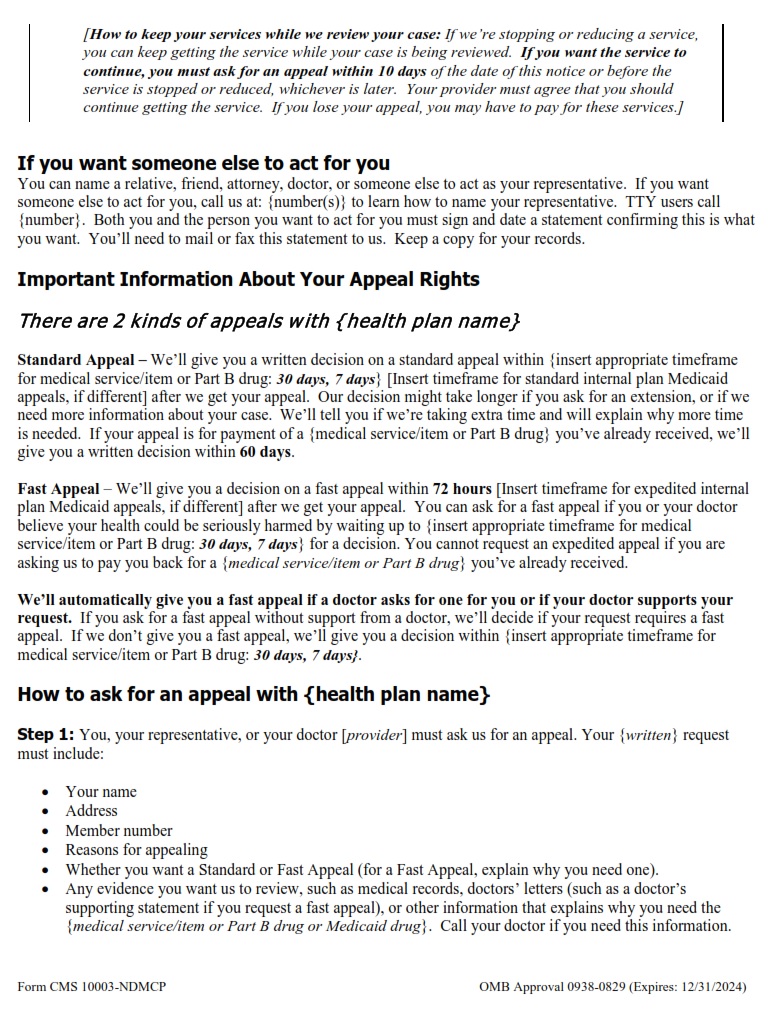
    The CMS 10003-NDMCP, also known as the Integrated Denial Notice, plays a crucial role in informing individuals about the denial of medical coverage payments. This notice serves as a formal communication from Medicare Advantage and Part D plans to explain why a particular medical service or treatment is not covered under the plan. Understanding this notice is essential for beneficiaries to navigate their healthcare options effectively and appeal decisions if necessary.

    One key aspect of the CMS 10003-NDMCP is its transparency in outlining the reasons for denial, which empowers beneficiaries to advocate for themselves and seek additional information or alternative solutions. By providing detailed explanations and citing specific policy guidelines, this notice helps individuals comprehend complex insurance processes and make informed decisions about their healthcare expenses. Ultimately, being familiar with the Integrated Denial Notice can lead to improved communication between patients, providers, and insurers, promoting transparency and accountability within the healthcare system.

    Where Can I Find a CMS 10003-NDMCP?

    When searching for a CMS 10003-NDMCP form, it’s essential to start with official sources such as the Centers for Medicare & Medicaid Services (CMS) website. This centralized platform provides access to a wide range of Medicare-related forms and documents, including the Integrated Denial Notice. Additionally, contacting your healthcare provider or insurance company directly can help locate the specific form you need.

    In some cases, electronic versions of the CMS 10003-NDMCP may be available through online portals provided by healthcare organizations or insurers. These platforms offer convenient access to important documents related to medical coverage denials. Remember to verify the authenticity of any digital copies obtained outside of official channels to ensure compliance with regulatory standards.

    Ensuring that you have access to accurate and up-to-date information regarding your medical coverage denial is crucial for navigating the appeals process effectively. By proactively seeking out the CMS 10003-NDMCP form from reputable sources, you can take important steps towards understanding your denial decision and pursuing further action if necessary.

    CMS 10003-NDMCP – NOTICE OF DENIAL OF MEDICAL COVERAGE/PAYMENT (“INTEGRATED DENIAL NOTICE”)

    Imagine receiving a letter informing you of the denial of your medical coverage payment. The CMS 10003-NDMCP, also known as the Integrated Denial Notice, can be a source of anxiety and frustration for many individuals. This crucial document outlines the reasons behind the denial and provides necessary information to appeal the decision. Understanding this complex notification is essential for advocating for your healthcare needs and ensuring fair coverage.

    The Integrated Denial Notice serves as a gateway to navigating the intricacies of insurance coverage and healthcare billing. It plays a pivotal role in empowering patients to challenge denials and seek clarification on their benefits. While receiving a notice of denial can be disheartening, it also presents an opportunity to educate oneself on insurance policies, rights, and avenues for recourse. By engaging with this process proactively, individuals can assert their rights to adequate medical coverage and hold insurance providers accountable for transparent communication in decision-making processes.

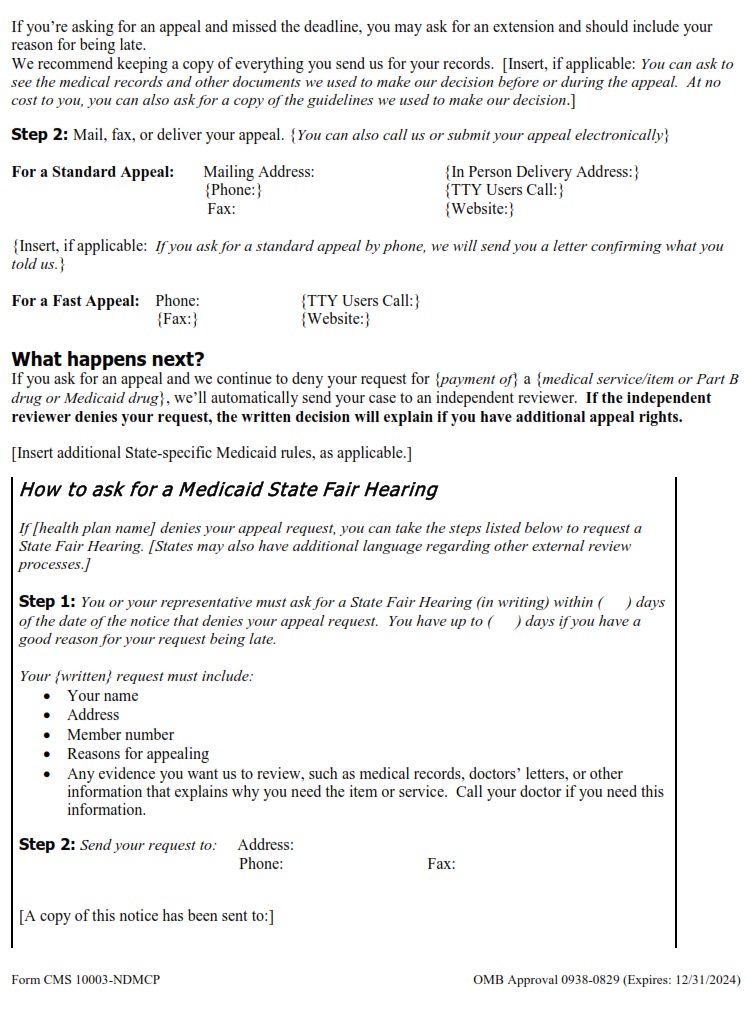
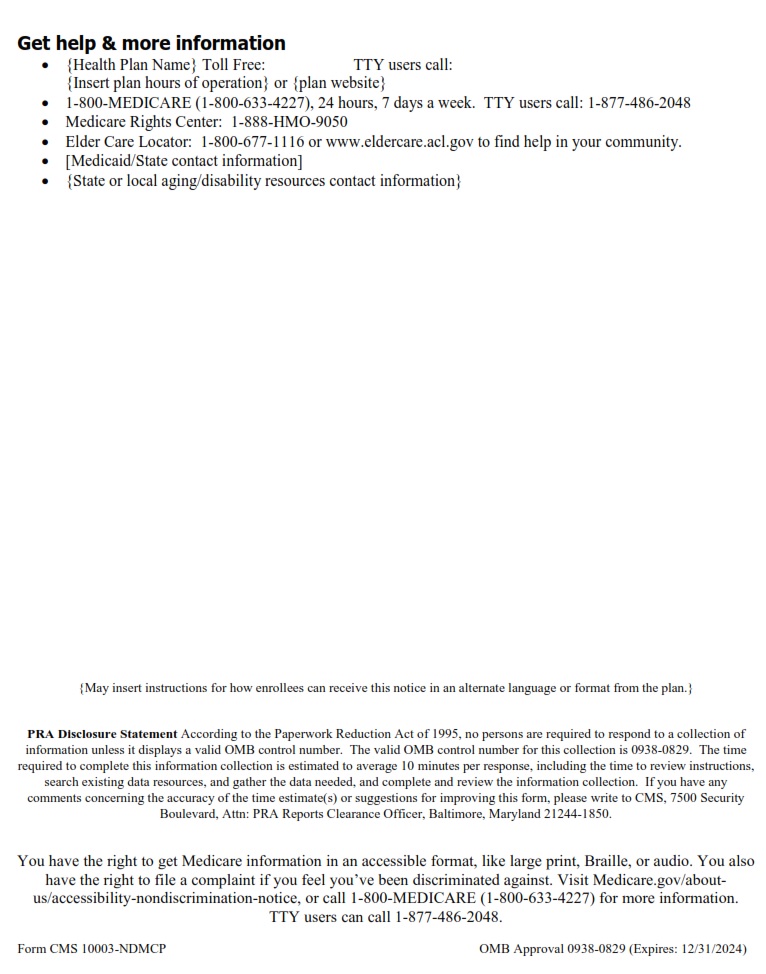
    CMS 10003-NDMCP Example

    CMS 10003-NDMCP - Page 1 CMS 10003-NDMCP - Page 2 CMS 10003-NDMCP - Page 3 CMS 10003-NDMCP - Page 4

  • CMS 10069 – Medicare Waiver Demonstration Application

    CMS 10069 – Medicare Waiver Demonstration Application

    CMSFORM.ORGCMS 10069 – Medicare Waiver Demonstration Application – In the ever-evolving landscape of healthcare policy, one program stands out as a beacon of innovation and possibility: CMS 10069 – the Medicare Waiver Demonstration Application. At its core, this initiative represents a bold step towards reshaping the way we approach healthcare delivery for older adults in America. Imagine a world where traditional barriers to access are dismantled, where cutting-edge treatments are readily available, and where patient outcomes take center stage. This isn’t just a dream – it’s the vision driving the application process for CMS 10069, promising to revolutionize how Medicare services are delivered and received across the nation. In this article, we’ll delve into the intricacies of this groundbreaking program, exploring its potential impact on both patients and providers alike.

    Download CMS 10069 – Medicare Waiver Demonstration Application

    [su_table responsive=”yes”]

    Form Number CMS 10069
    Form Title Medicare Waiver Demonstration Application
    Published 2013-12-31
    O.M.B. 0938-0880
    File Size 203 KB

    [/su_table]

    [download id=’1541′]

    What is a CMS 10069?

    CMS 10069, also known as the Medicare Waiver Demonstration Application, is a crucial form used in the healthcare industry to request waivers for specific Medicare regulations. This application allows healthcare providers and organizations to propose innovative programs or interventions that aim to improve patient care and outcomes within the Medicare system. By seeking waivers through CMS 10069, applicants can establish demonstration projects that test new approaches to delivering healthcare services and analyze their impact on cost-effectiveness and quality of care.

    The CMS 10069 application process involves a detailed submission outlining the proposed project’s objectives, methodology, expected outcomes, and budget considerations. It requires thorough documentation and justification for why a waiver is necessary for the project’s implementation. Successful approval of a CMS 10069 application can lead to significant advancements in healthcare delivery, paving the way for transformative initiatives that address critical challenges within the Medicare program. Ultimately, CMS 10069 serves as a gateway for driving innovation and fostering collaboration in healthcare policy and practice.

    Where Can I Find a CMS 10069?

    One of the best places to find information about CMS 10069 is on the official Medicare website. Here, you can access detailed resources and guidelines regarding the waiver demonstration application process. Additionally, reaching out to local healthcare facilities or contacting Medicare representatives directly can provide valuable insights into obtaining a CMS 10069 form.

    For those seeking further assistance or clarification, consulting with legal experts specializing in Medicare regulations may be beneficial. These professionals can offer expert guidance on completing the CMS 10069 application accurately and ensuring all necessary information is included for submission. Ultimately, staying informed and proactive in your pursuit of a CMS 10069 waiver will increase your chances of a successful application process.

    CMS 10069 – Medicare Waiver Demonstration Application

    The CMS 10069 – Medicare Waiver Demonstration Application is a crucial document that plays a significant role in shaping the healthcare landscape. This application allows for innovative programs and services to be tested within the Medicare system, providing valuable data and insights on potential improvements. By granting waivers, CMS empowers organizations to experiment with new care delivery models, ultimately aiming to enhance patient outcomes and reduce costs.

    One of the key benefits of the Medicare waiver demonstration application is its ability to foster collaboration between healthcare providers, insurers, and policymakers. Through this process, stakeholders can come together to test ideas and solutions that have the potential to revolutionize healthcare delivery. Additionally, these demonstrations often lead to policy changes at a broader level, influencing how future Medicare programs are structured and implemented.

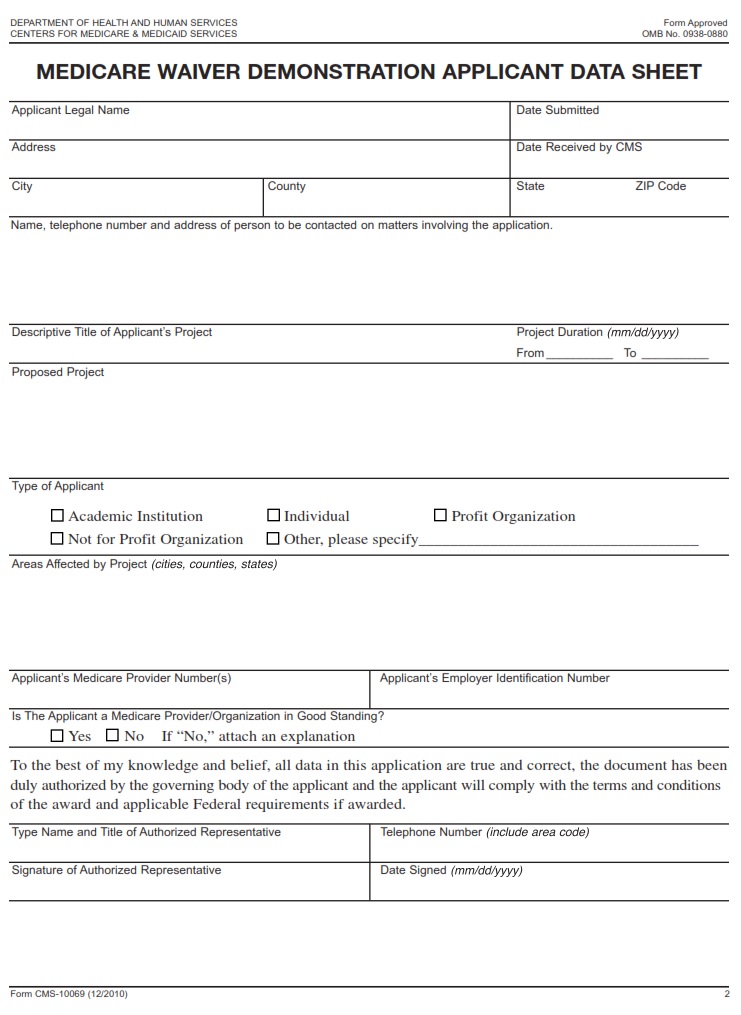
    CMS 10069 Example

    CMS 10069 - Page 1 CMS 10069 - Page 2

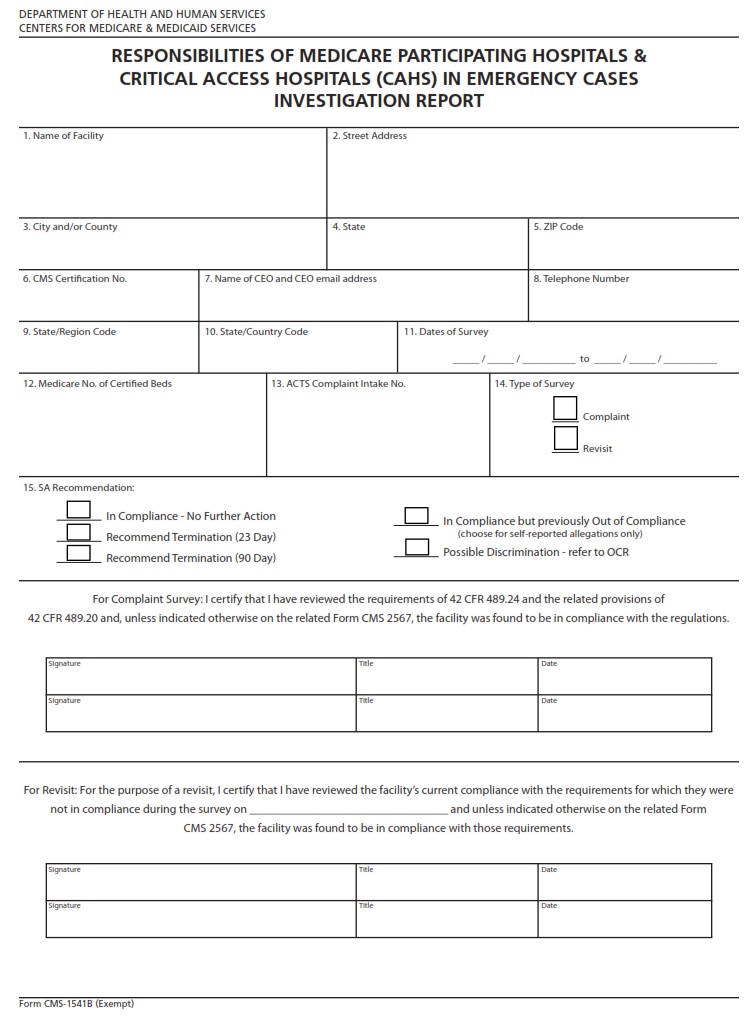
  • CMS 1541B – RESPONSIBILITIES OF MEDICARE PARTICIPATING HOSPITALS IN EMERGENCY CASES INVESTIGATION REPORT

    CMS 1541B – RESPONSIBILITIES OF MEDICARE PARTICIPATING HOSPITALS IN EMERGENCY CASES INVESTIGATION REPORT

    CMSFORM.ORGCMS 1541B – RESPONSIBILITIES OF MEDICARE PARTICIPATING HOSPITALS IN EMERGENCY CASES INVESTIGATION REPORT – In the high-stakes world of healthcare, where urgent decisions can mean the difference between life and death, the role of Medicare participating hospitals in emergency cases is paramount. CMS 1541B sheds light on the intricate web of responsibilities that these institutions must navigate when faced with critical situations. From triaging patients to ensuring timely care, this investigation report delves into the core mandates that govern how hospitals operate under pressure.

    Imagine a scenario where every second counts, where medical professionals are pushed to their limits to save lives amidst chaos and uncertainty. CMS 1541B unveils the behind-the-scenes protocols and guidelines that dictate how Medicare participating hospitals must rise to the challenge in these critical moments. Join us as we unravel the intricacies of emergency care management and explore the vital role that these institutions play in safeguarding public health during times of crisis.

    Download CMS 1541B – RESPONSIBILITIES OF MEDICARE PARTICIPATING HOSPITALS IN EMERGENCY CASES INVESTIGATION REPORT

    [su_table responsive=”yes”]

    Form Number CMS 1541B –
    Form Title RESPONSIBILITIES OF MEDICARE PARTICIPATING HOSPITALS IN EMERGENCY CASES INVESTIGATION REPORT
    Published 2014-09-01
    O.M.B.
    File Size 41 KB

    [/su_table]

    [download id=’1542′]

    What is a CMS 1541B?

    The CMS 1541B form, also known as the Responsibilities of Medicare Participating Hospitals in Emergency Cases Investigation Report, is a crucial document that outlines the obligations of hospitals when treating emergency cases involving Medicare beneficiaries. This form is designed to ensure that participating hospitals follow specific guidelines and regulations set by the Centers for Medicare & Medicaid Services (CMS) to provide safe and high-quality care during emergency situations. By completing this form accurately and promptly, hospitals can demonstrate their commitment to upholding patient safety standards and complying with federal requirements.

    Hospitals play a vital role in delivering critical care to individuals in emergency situations, and the CMS 1541B form serves as a tool for monitoring and evaluating their adherence to established protocols. Through this documentation process, hospitals not only fulfill regulatory requirements but also contribute to improving overall healthcare quality and patient outcomes. In essence, the CMS 1541B form serves as a means of accountability for hospital facilities, ensuring that they meet the necessary standards of care when responding to emergencies involving Medicare beneficiaries.

    Where Can I Find a CMS 1541B?

    When it comes to finding a CMS 1541B form, one of the most reliable sources is the Centers for Medicare & Medicaid Services (CMS) website. This official government platform provides a wealth of information on various forms, including the CMS 1541B. Users can easily download and access the form directly from the CMS website, ensuring they have the most up-to-date version available. Additionally, healthcare provider networks and organizations may also have access to this form for their members, making it a convenient option for hospitals looking to stay compliant with Medicare regulations.

    Another avenue worth exploring is contacting your regional CMS office or local Medicare Administrative Contractor (MAC) for assistance in obtaining the CMS 1541B form. These entities are well-versed in Medicare guidelines and can provide guidance on where to find and how to correctly fill out the necessary documentation for emergency cases investigations. By reaching out directly to these regulatory bodies, hospitals can ensure they have all the required forms in order to meet their responsibilities as participating providers in emergency situations.

    CMS 1541B – RESPONSIBILITIES OF MEDICARE PARTICIPATING HOSPITALS IN EMERGENCY CASES INVESTIGATION REPORT

    In the realm of healthcare regulations, the CMS 1541B investigation report sheds light on the critical responsibilities that Medicare participating hospitals must uphold in emergency cases. This stringent set of guidelines aims to ensure that patients receive timely and appropriate care during urgent situations, emphasizing the pivotal role hospitals play in safeguarding patient well-being. By scrutinizing hospital processes and response mechanisms during emergencies, this investigation report serves as a vital tool in evaluating healthcare facilities’ ability to deliver high-quality care under pressure.

    One key aspect highlighted in the CMS 1541B report is the importance of effective communication and coordination among hospital staff members when dealing with emergency cases. Clear lines of communication can mean the difference between life and death for a patient in need, underscoring the significance of seamless teamwork within medical settings. Furthermore, the report underscores the necessity for hospitals to maintain updated emergency preparedness plans that address various scenarios, ensuring readiness to tackle unexpected challenges with efficiency and precision.

    CMS 1541B Example

    CMS 1541B