Author: Bismillah

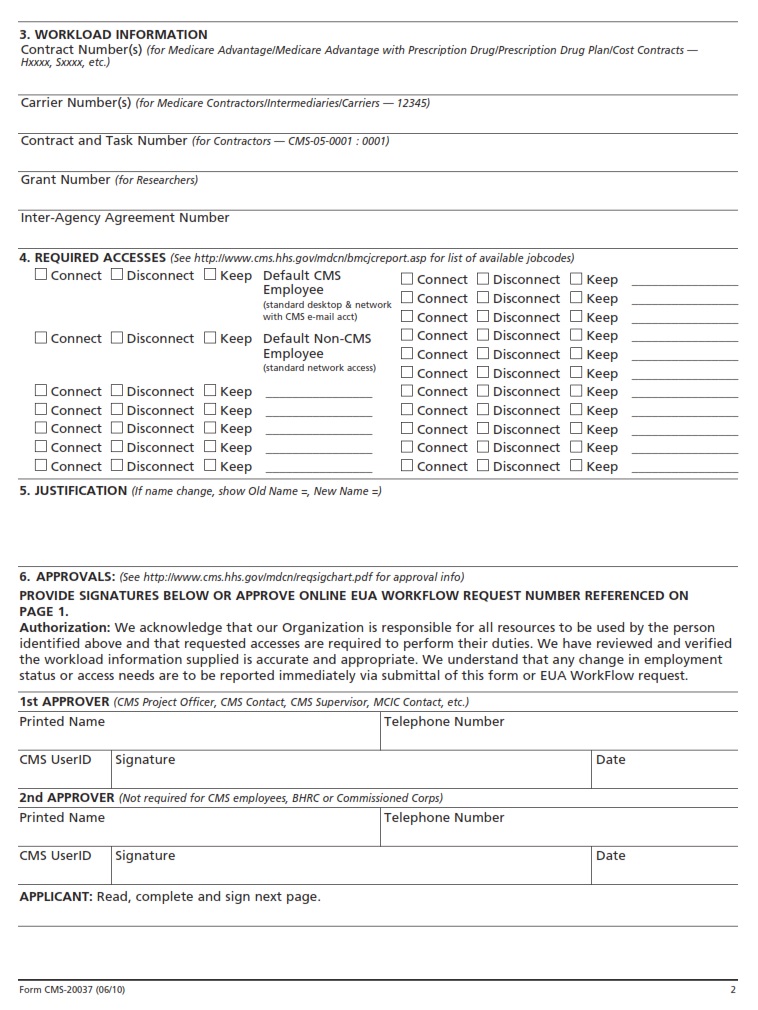
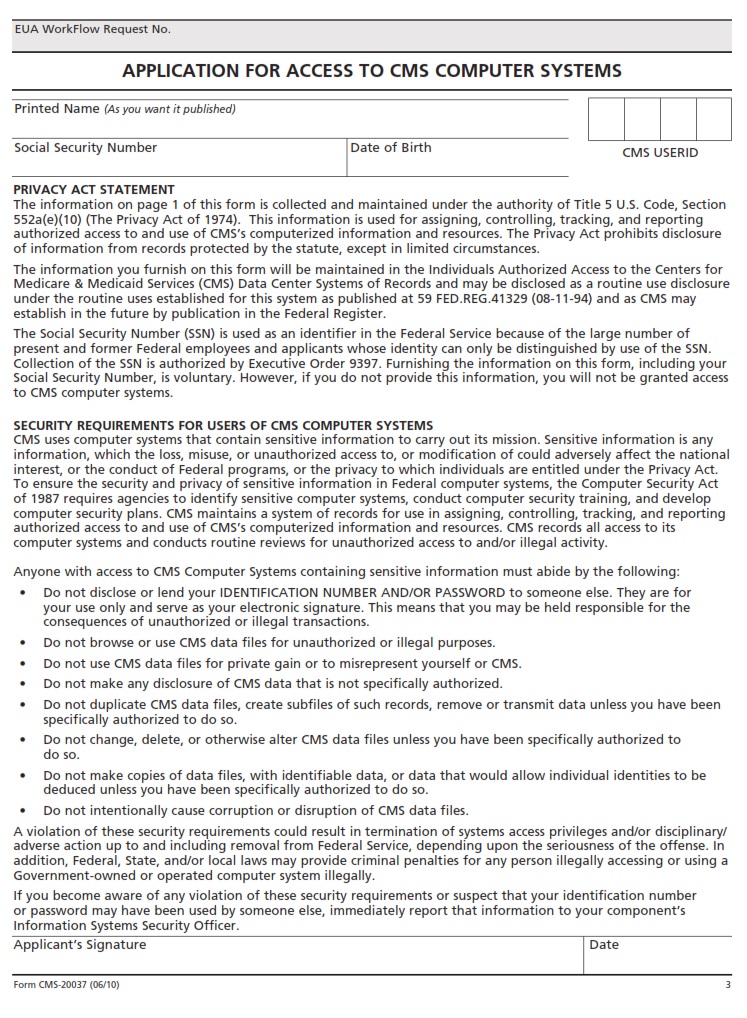
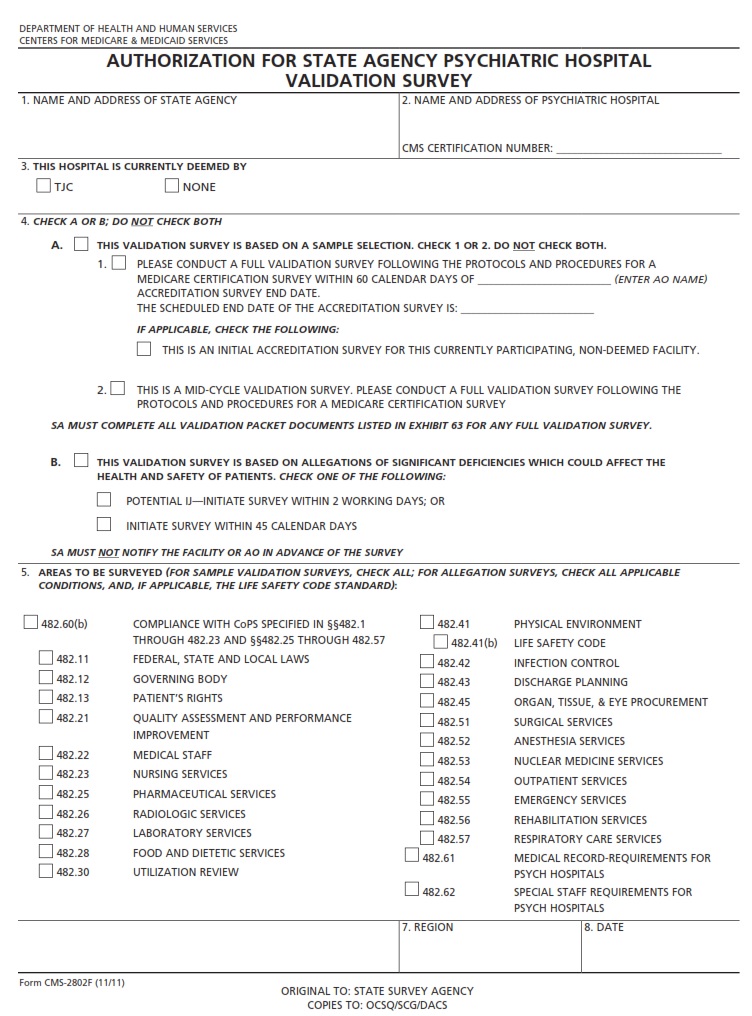
  • CMS 20037 – APPLICATION FOR ACCESS TO CMS COMPUTER SYSTEMS

    CMS 20037 – APPLICATION FOR ACCESS TO CMS COMPUTER SYSTEMS

    CMSFORM.ORGCMS 20037 – APPLICATION FOR ACCESS TO CMS COMPUTER SYSTEMS – In a world where technology reigns supreme, access to secure computer systems is the gateway to a realm of limitless possibilities and unparalleled efficiency. CMS 20037 – APPLICATION FOR ACCESS TO CMS COMPUTER SYSTEMS stands as the golden ticket that opens the doors to a digital universe teeming with data, innovation, and connectivity. Like a key to a hidden kingdom, this application represents not just permission but empowerment; it grants individuals the authority to navigate through virtual landscapes where ideas flourish and solutions materialize at the click of a button.

    Imagine holding in your hands the key to unlocking vast digital archives brimming with knowledge waiting to be harnessed for progress. The CMS computer systems are not merely tools but enablers of transformation, bridging gaps between ambition and achievement. With each keystroke on your application form, you take one step closer towards harnessing the full potential of modern computing power – an opportunity that promises not just access but also responsibility in shaping the future landscape of information technology.

    Download CMS 20037 – APPLICATION FOR ACCESS TO CMS COMPUTER SYSTEMS

    [su_table responsive=”yes”]

    Form Number CMS 20037
    Form Title APPLICATION FOR ACCESS TO CMS COMPUTER SYSTEMS
    Published 2010-06-01
    O.M.B.
    File Size 533 KB

    [/su_table]

    [download id=’1482′]

    What is a CMS 20037

    A CMS 20037, also known as the Application for Access to CMS Computer Systems, is a crucial tool in the realm of content management systems. This specific form serves as a gateway for individuals seeking access to the CMS computer systems, which are utilized across various fields and industries. By completing this application, users can obtain authorization to interact with and manage content within these sophisticated systems.

    Access to CMS computer systems through the CMS 20037 form provides users with opportunities to streamline processes, enhance productivity, and ensure data security. With user-specific permissions and roles assigned through this application process, organizations can better control who has access to sensitive information within their content management systems. Additionally, by adhering to the guidelines outlined in the application form, users contribute to maintaining compliance standards and data integrity within these advanced digital environments.

    Where Can I Find a CMS 20037?

    When looking for a CMS 20037, it’s crucial to explore various avenues to find the right fit for your needs. One option is to reach out to official CMS channels or websites that specialize in providing access to their computer systems. Another approach could be searching through reputable online platforms that cater to software procurement and licensing services. Additionally, engaging with industry experts or consulting firms may offer valuable insights and guidance on how to acquire a CMS 20037 efficiently.

    In the quest for a CMS 20037, networking with professionals in the field can open up new possibilities and lead you to potential sources where this specific system is available. Attending industry conferences, seminars, or webinars related to content management solutions can also provide opportunities for discovering where you can find a CMS 20037. Moreover, exploring niche forums or communities dedicated to CMS technologies might unearth lesser-known vendors or providers who offer access to the sought-after system.

    CMS 20037 – APPLICATION FOR ACCESS TO CMS COMPUTER SYSTEMS

    Have you ever wondered about the intricacies involved in accessing CMS computer systems? The CMS 20037 application is your gateway to a world of information and opportunities. By completing this application, individuals demonstrate their commitment to upholding security protocols and ensuring data integrity within the CMS ecosystem.

    Access to CMS computer systems is not just about logging in but also about safeguarding sensitive information and adhering to strict guidelines. The application process serves as a screening mechanism that filters out unauthorized users while granting access to those who meet the necessary criteria. Understanding the significance of each field in the application form can help streamline the approval process and expedite access to vital resources within the CMS network.

    CMS 20037 Example
    CMS 20037 - Page 1 CMS 20037 - Page 2 CMS 20037 - Page 3

  • CMS R-193 – IMPORTANT MESSAGE FROM MEDICARE (IM) (English)

    CMS R-193 – IMPORTANT MESSAGE FROM MEDICARE (IM) (English)

    CMSFORM.ORGCMS R-193 – IMPORTANT MESSAGE FROM MEDICARE (IM) (English) – The healthcare landscape is ever-evolving, with constant updates and regulations that can often seem overwhelming. In the midst of this complexity, a beacon of clarity emerges in the form of CMS R-193 – an important message from Medicare that is set to make waves in the industry. As healthcare providers and beneficiaries alike eagerly await this communication, speculation runs high about the potential impact it may have on practices, policies, and patient care. With stakes this high, understanding every nuance of CMS R-193 becomes not just essential but potentially transformative for all involved. Join us as we unravel the mysteries behind this imminent directive from Medicare, delving into its implications and preparing ourselves for what promises to be a watershed moment in healthcare administration.

    Download CMS R-193 – IMPORTANT MESSAGE FROM MEDICARE (IM) (English)

    [su_table responsive=”yes”]

    Form Number CMS R-193
    Form Title IMPORTANT MESSAGE FROM MEDICARE (IM) (English)
    Published 2010-07-01
    O.M.B. 0938-0692
    File Size 144 KB

    [/su_table]

    [download id=’1483′]

    What is a CMS R-193?

    The CMS R-193 code is an essential piece of information for Medicare beneficiaries and healthcare providers alike. It represents a specific value or service covered under the Medicare program, indicating the type of care or treatment being provided. Understanding this code can help individuals navigate their healthcare coverage more effectively and ensure they receive the appropriate benefits.

    While the details of each CMS R-193 code may vary, it is crucial for recipients to be proactive in researching and confirming what it denotes in their specific situation. By staying informed about these codes, patients can advocate for themselves and make well-informed decisions regarding their healthcare needs. This knowledge empowers individuals to communicate effectively with their providers and insurance companies, leading to better outcomes and potentially lower costs in the long run.

    Where Can I Find a CMS R-193?

    Looking for a CMS R-193 form? You’re in the right place! This vital document can typically be found online on the official Medicare website or by visiting your local Medicare office. It serves as an essential tool for beneficiaries to report any changes in their coverage status, ensuring they receive accurate benefits.

    Many individuals may overlook the significance of the CMS R-193 form, assuming it to be just another piece of paperwork. However, this form plays a crucial role in maintaining up-to-date information with Medicare and paves the way for smooth healthcare experiences. So, next time you need to access or submit a CMS R-193 form, remember that this small action empowers you to stay informed and make well-informed decisions regarding your health coverage.

    CMS R-193 – IMPORTANT MESSAGE FROM MEDICARE (IM) (English)

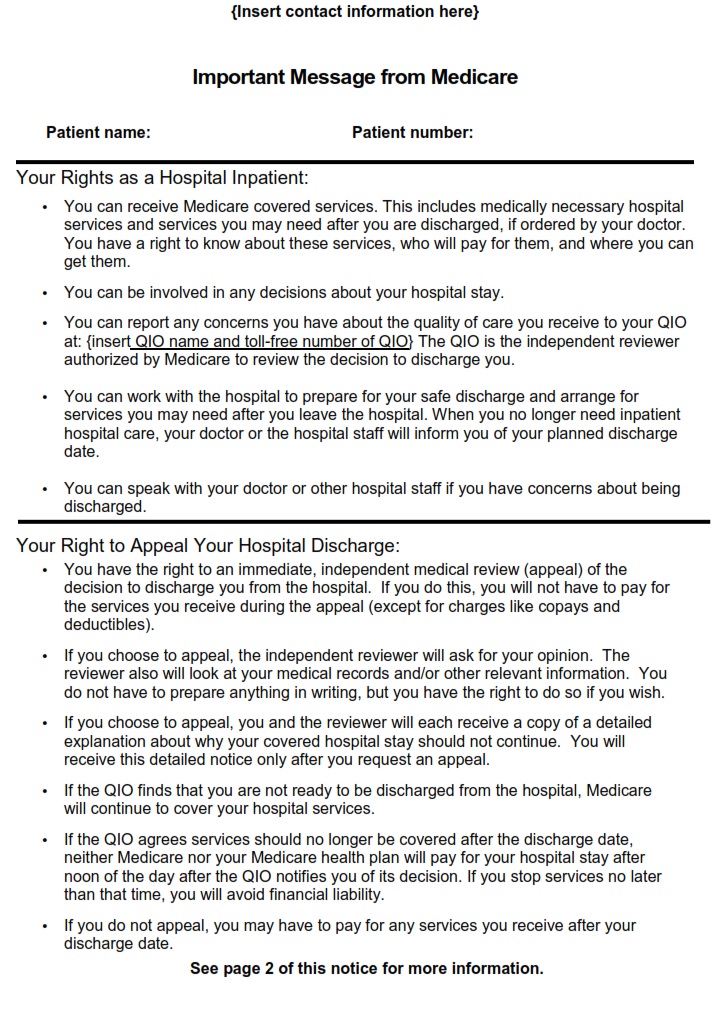
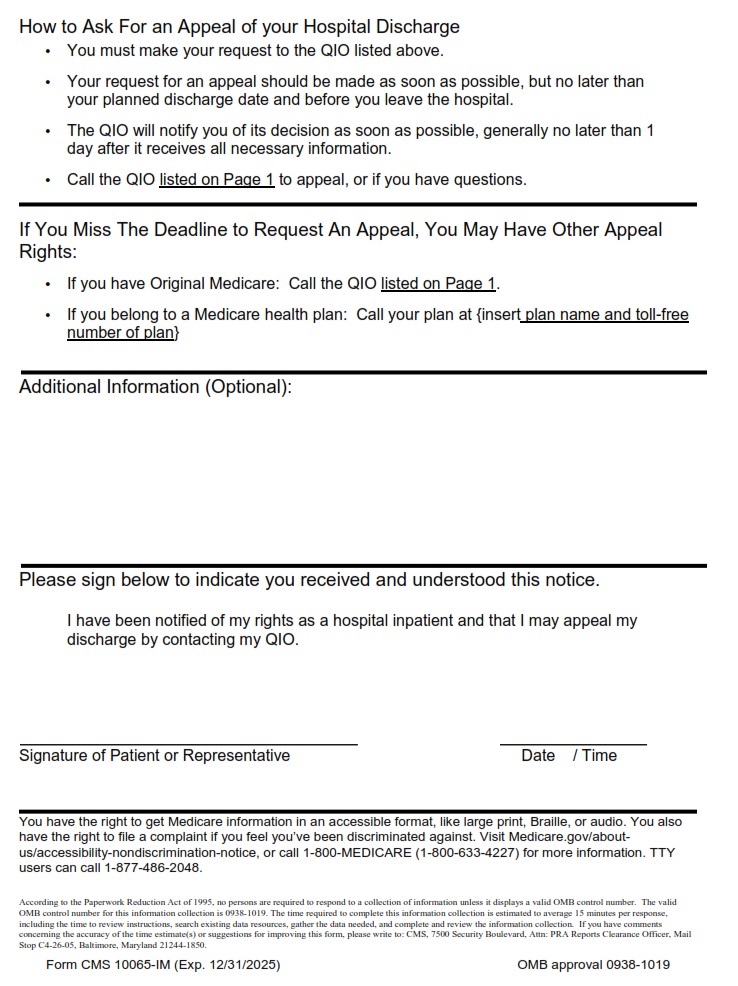
    The CMS R-193 – Important Message from Medicare (IM) is a crucial communication tool designed to inform Medicare beneficiaries about their rights. This initiative aims to empower individuals with the knowledge they need to make informed decisions about their healthcare options. By clearly outlining key information such as coverage details, appeal rights, and provider choices, the IM ensures that beneficiaries are equipped to navigate the complex world of healthcare with confidence.

    It is important for all Medicare recipients to pay close attention when they receive an IM notification, as it contains essential information that can directly impact their access to care. Understanding your rights and options under Medicare can help you advocate for yourself and ensure that you receive the appropriate level of care. By staying informed and educated on the resources available through programs like CMS R-193, individuals can take control of their health decisions and effectively engage with the healthcare system.

    CMS R-193 Example

    CMS R-193 - Page 1 (English) CMS R-193 - Page 2 (English)

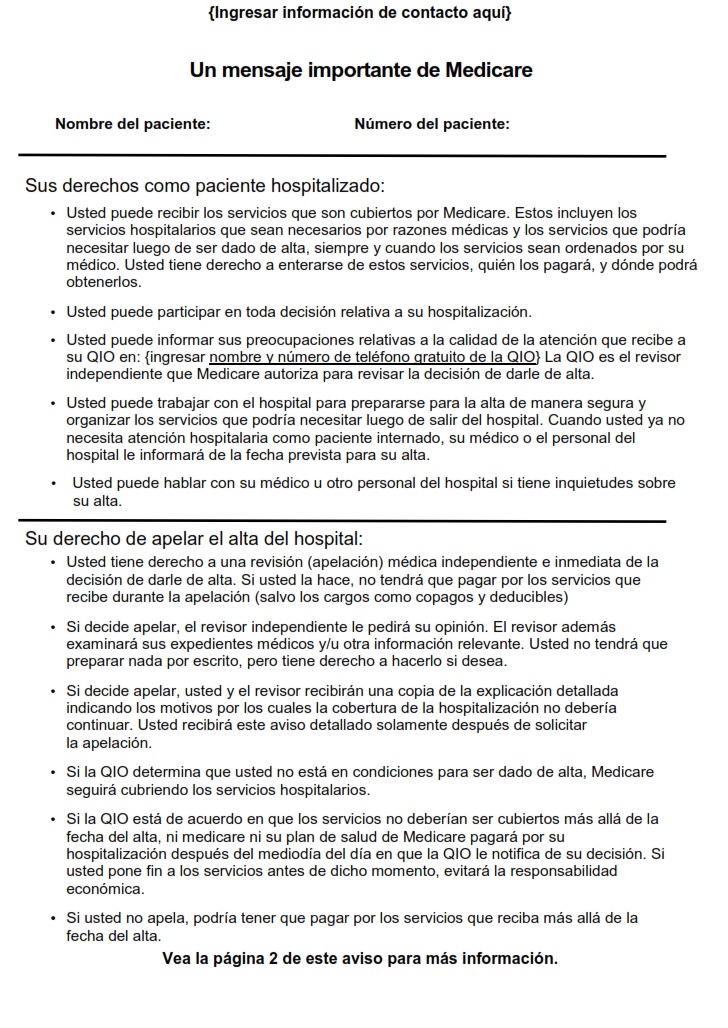
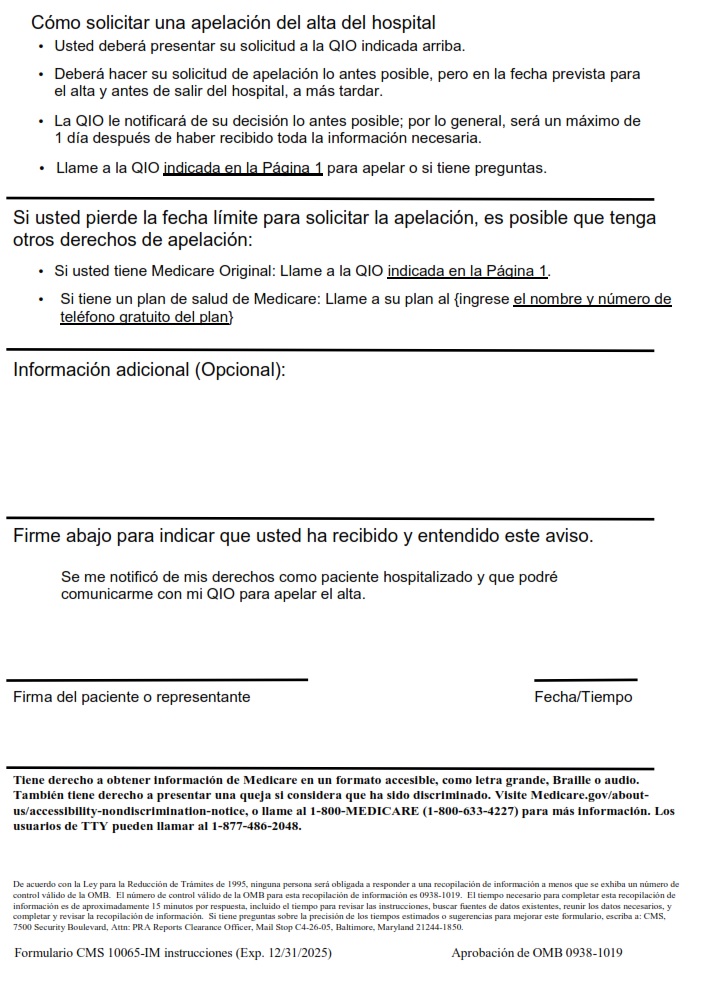
  • CMS R-193 – IMPORTANT MESSAGE FROM MEDICARE (IM) (Spanish)

    CMS R-193 – IMPORTANT MESSAGE FROM MEDICARE (IM) (Spanish)

    CMSFORM.ORGCMS R-193 – IMPORTANT MESSAGE FROM MEDICARE (IM) (Spanish) – CMS R-193, also known as the Important Message from Medicare (IM), is a crucial document provided to patients in healthcare facilities. This notice informs patients about their rights regarding hospital discharge, ensuring they understand their options and are empowered to make informed decisions. By outlining the patient’s right to appeal a premature discharge and providing contact information for obtaining additional assistance, CMS R-193 serves as a valuable tool in advocating for patient autonomy.

    This document aims to protect patients from inappropriate early discharges and encourages open communication between healthcare providers and individuals receiving care. It highlights the importance of ensuring that patients have adequate support and information throughout their treatment journey, ultimately promoting better health outcomes and patient satisfaction. For Spanish-speaking individuals, having access to this important message ensures that language barriers do not prevent them from fully understanding their rights and making informed choices about their care.

    Download CMS R-193 – IMPORTANT MESSAGE FROM MEDICARE (IM) (Spanish)

    [su_table responsive=”yes”]

    Form Number CMS R-193
    Form Title IMPORTANT MESSAGE FROM MEDICARE (IM) (Spanish)
    Published 2010-07-01
    O.M.B. 0938-0692
    File Size 189 KB

    [/su_table]

    [download id=’1484′]

    Where Can I Find a CMS R-193?

    If you’re on the lookout for a CMS R-193 form, there are several avenues you can explore to obtain this crucial document. One primary method is to visit the official Medicare website and navigate through their resources section, where you’ll likely find downloadable versions of various forms, including the CMS R-193. Another option involves reaching out to your healthcare provider’s office or contacting a local Medicare assistance center for assistance in acquiring this specific form. Additionally, community health centers may also provide support in helping individuals access and complete the necessary paperwork for Medicare-related matters.

    When searching for a CMS R-193 form, it’s essential to ensure that you are accessing legitimate sources to avoid potential scams or misinformation. Always verify the authenticity of any website or organization offering these forms before providing personal information or downloading any documents. Remember that seeking guidance from trusted healthcare professionals or government agencies can help streamline the process of obtaining essential Medicare paperwork like the CMS R-193 form.

    CMS R-193 Example

    CMS R-193 - Page 1 (Spanish) CMS R-193 - Page 2 (Spanish)

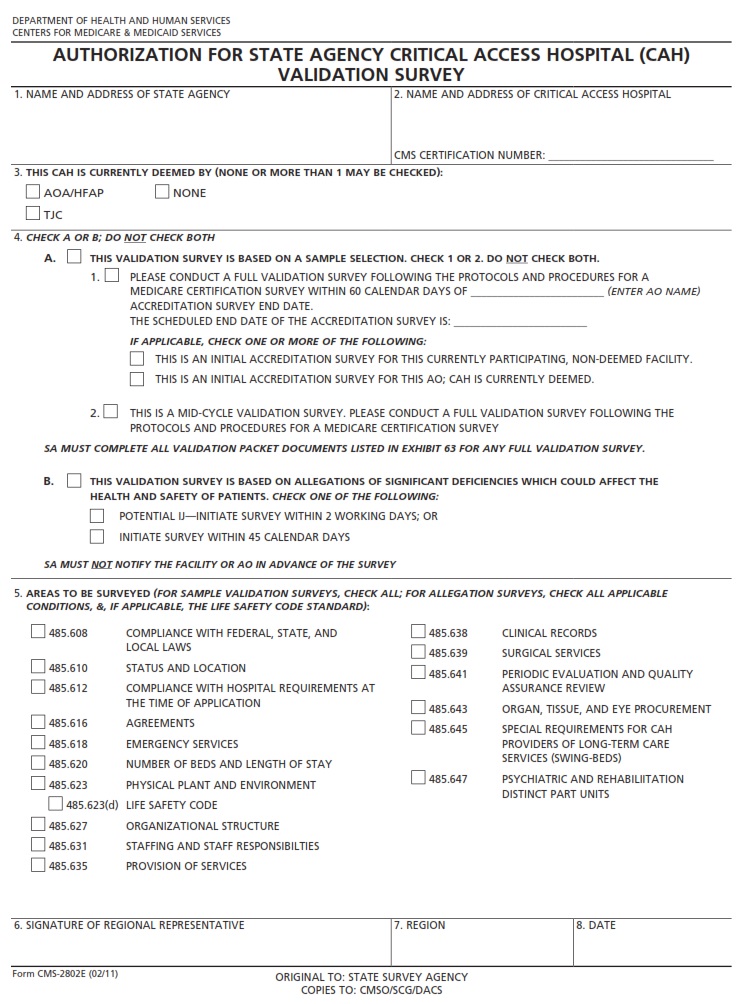
  • CMS 2802E – REQUEST FOR VALIDATION OF ACCREDITATION FOR CRITICAL ACCESS HOSPITAL SURVEY

    CMS 2802E – REQUEST FOR VALIDATION OF ACCREDITATION FOR CRITICAL ACCESS HOSPITAL SURVEY

    CMSFORM.ORGCMS 2802E – REQUEST FOR VALIDATION OF ACCREDITATION FOR CRITICAL ACCESS HOSPITAL SURVEY – In the realm of healthcare regulation, the CMS 2802E form wields a powerful influence, serving as the gateway for critical access hospitals to validate their accreditation status. This seemingly mundane document carries immense weight, holding the key to a hospital’s ability to continue providing essential care in underserved communities. As healthcare professionals navigate the complex landscape of compliance and validation, understanding the intricacies of this form becomes crucial for ensuring seamless operations and upholding standards of excellence. Join us on a deep dive into the world of CMS 2802E – where paperwork meets purpose, and accreditation becomes a lifeline for institutions striving to make a difference in patient outcomes and community well-being.

    Download CMS 2802E – REQUEST FOR VALIDATION OF ACCREDITATION FOR CRITICAL ACCESS HOSPITAL SURVEY

    [su_table responsive=”yes”]

    Form Number CMS 2802E
    Form Title REQUEST FOR VALIDATION OF ACCREDITATION FOR CRITICAL ACCESS HOSPITAL SURVEY
    Published 2011-02-01
    O.M.B.
    File Size 99 KB

    [/su_table]

    [download id=’1485′]

    What is a CMS 2802E?

    The CMS 2802E form plays a crucial role in the accreditation process for critical access hospitals. By submitting this document, these healthcare facilities formally request validation of their accreditation status, ensuring that they meet the necessary quality and safety standards set by the Centers for Medicare & Medicaid Services (CMS). This validation process is essential in maintaining the trust and confidence of patients, as well as securing funding from government programs.

    Furthermore, completing the CMS 2802E form involves a detailed assessment of various aspects within a critical access hospital. From patient care protocols to facility infrastructure, every component is thoroughly reviewed to ensure compliance with regulatory guidelines. This meticulous evaluation not only promotes accountability but also drives continuous improvement within these vital healthcare institutions. Ultimately, by actively engaging in this validation process, critical access hospitals can demonstrate their commitment to providing high-quality care to underserved communities while upholding industry standards.

    Where Can I Find a CMS 2802E?

    When seeking a CMS 2802E form for the validation of accreditation for critical access hospital survey, it’s crucial to ensure that you are accessing the most updated version from reputable sources. One reliable way to locate the CMS 2802E form is by visiting the official Centers for Medicare & Medicaid Services (CMS) website. This platform provides a user-friendly interface where healthcare professionals can easily navigate through various forms and resources necessary for hospital accreditations.

    Moreover, consulting with your hospital’s compliance or quality assurance department can also be beneficial in obtaining the CMS 2802E form promptly. These departments are well-versed in regulatory requirements and can assist in ensuring that all necessary documentation is obtained and properly submitted for accreditation validation. By leveraging both online resources and internal expertise within your organization, you can streamline the process of locating and utilizing the CMS 2802E form effectively to meet accreditation standards.

    CMS 2802E – REQUEST FOR VALIDATION OF ACCREDITATION FOR CRITICAL ACCESS HOSPITAL SURVEY

    The CMS 2802E form plays a crucial role in the accreditation process for critical access hospitals, serving as a formal request for validation of their survey. This document serves as the gateway through which these institutions can demonstrate compliance with stringent regulatory requirements. By detailing comprehensive information on the facility’s operations, patient care practices, and adherence to quality standards, this form provides a holistic view for accrediting bodies to assess the hospital’s eligibility.

    For critical access hospitals seeking accreditation, the CMS 2802E is more than just paperwork; it represents an opportunity to showcase their commitment to providing high-quality healthcare services in rural communities. Completing this form requires meticulous attention to detail and an in-depth understanding of regulatory guidelines. Ensuring accuracy and completeness in filling out the CMS 2802E is essential not only for successful validation but also for maintaining transparency and accountability in healthcare delivery.

    CMS 2802E Example

    CMS 2802E

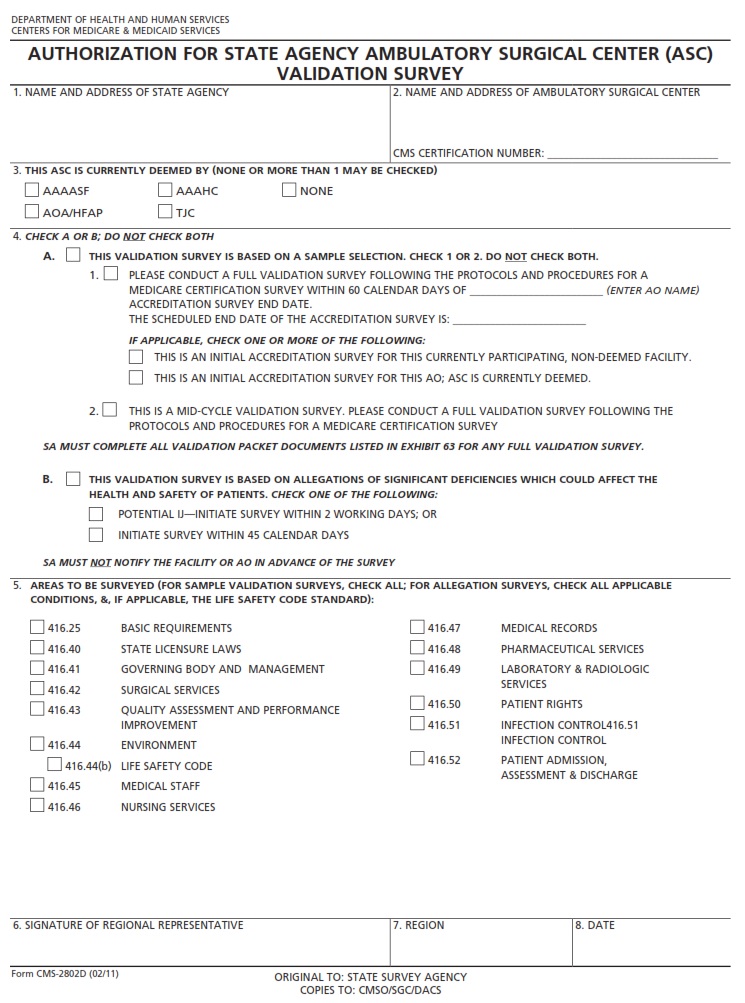
  • CMS 2802D – REQUEST FOR VALIDATION OF ACCREDITATION SURVEY FOR AMBULATORY SURGICAL CENTER

    CMS 2802D – REQUEST FOR VALIDATION OF ACCREDITATION SURVEY FOR AMBULATORY SURGICAL CENTER

    CMSFORM.ORGCMS 2802D – REQUEST FOR VALIDATION OF ACCREDITATION SURVEY FOR AMBULATORY SURGICAL CENTER – In the fast-paced world of healthcare, ensuring the highest standards of care and safety in ambulatory surgical centers is paramount. The CMS 2802D – Request for Validation of Accreditation Survey for Ambulatory Surgical Center plays a crucial role in upholding these standards by evaluating and validating the accreditation surveys conducted on these facilities. Imagine a behind-the-scenes look at the intricate process that determines whether an ambulatory surgical center meets the rigorous requirements set forth by accrediting bodies. This article delves into the nuances of this validation process, shedding light on its importance in maintaining quality care and patient safety within ambulatory surgical centers. Join us on a journey through the complexities of healthcare accreditation as we uncover how CMS 2802D serves as a vital checkpoint in ensuring excellence in ambulatory surgical services.

    Download CMS 2802D – REQUEST FOR VALIDATION OF ACCREDITATION SURVEY FOR AMBULATORY SURGICAL CENTER

    [su_table responsive=”yes”]

    Form Number CMS 2802D
    Form Title REQUEST FOR VALIDATION OF ACCREDITATION SURVEY FOR AMBULATORY SURGICAL CENTER
    Published 2011-02-01
    O.M.B.
    File Size 97 KB

    [/su_table]

    [download id=’1486′]

    What is a CMS 2802D?

    The CMS 2802D, also known as the Request for Validation of Accreditation Survey for Ambulatory Surgical Center, is a crucial document in the healthcare industry. It serves as a means for ambulatory surgical centers to demonstrate their compliance with accreditation and regulatory requirements set forth by the Centers for Medicare & Medicaid Services (CMS). This form plays a vital role in ensuring that these facilities maintain high standards of patient care, safety, and quality.

    Through the CMS 2802D process, ambulatory surgical centers undergo rigorous validation surveys conducted by accredited organizations to assess their adherence to guidelines and regulations. These surveys help identify areas for improvement and ensure that facilities are providing safe and effective care to patients. By completing this form accurately and thoroughly, ambulatory surgical centers can showcase their commitment to maintaining excellence in healthcare delivery and upholding industry standards.

    Where Can I Find a CMS 2802D?

    When searching for a CMS 2802D form, your first stop should be the official website of the Centers for Medicare & Medicaid Services (CMS). Here, you can find a downloadable version of the form along with detailed instructions on how to complete it accurately. Additionally, many third-party medical supply websites may also offer the CMS 2802D form for purchase or download, providing a convenient alternative for those in need.

    For a more personalized approach, reaching out to your local healthcare accreditation agency or ambulatory surgical center association could prove fruitful in obtaining the CMS 2802D form. These organizations often have resources available to assist facilities in accessing and completing necessary accreditation surveys like the CMS 2802D. By leveraging these resources and networks, you can streamline the process and ensure compliance with regulatory requirements in no time.

    CMS 2802D – REQUEST FOR VALIDATION OF ACCREDITATION SURVEY FOR AMBULATORY SURGICAL CENTER

    The CMS 2802D request for validation of accreditation survey for ambulatory surgical centers signifies a crucial step in ensuring quality care and patient safety within these facilities. This validation process plays a vital role in verifying that the ambulatory surgical centers adhere to the required standards and guidelines set by accrediting bodies. It serves as a mechanism for continuous improvement and accountability, ultimately enhancing the overall quality of healthcare services provided.

    By undergoing this validation process, ambulatory surgical centers demonstrate their commitment to maintaining high standards of care and upholding patient safety protocols. The insights gained from the validation survey not only benefit the facility but also help inform best practices across the industry. It fosters a culture of transparency, accountability, and ongoing quality improvement that resonates throughout the healthcare ecosystem, ultimately leading to better outcomes for patients undergoing surgical procedures at these facilities.

    CMS 2802D Example

    CMS 2802D

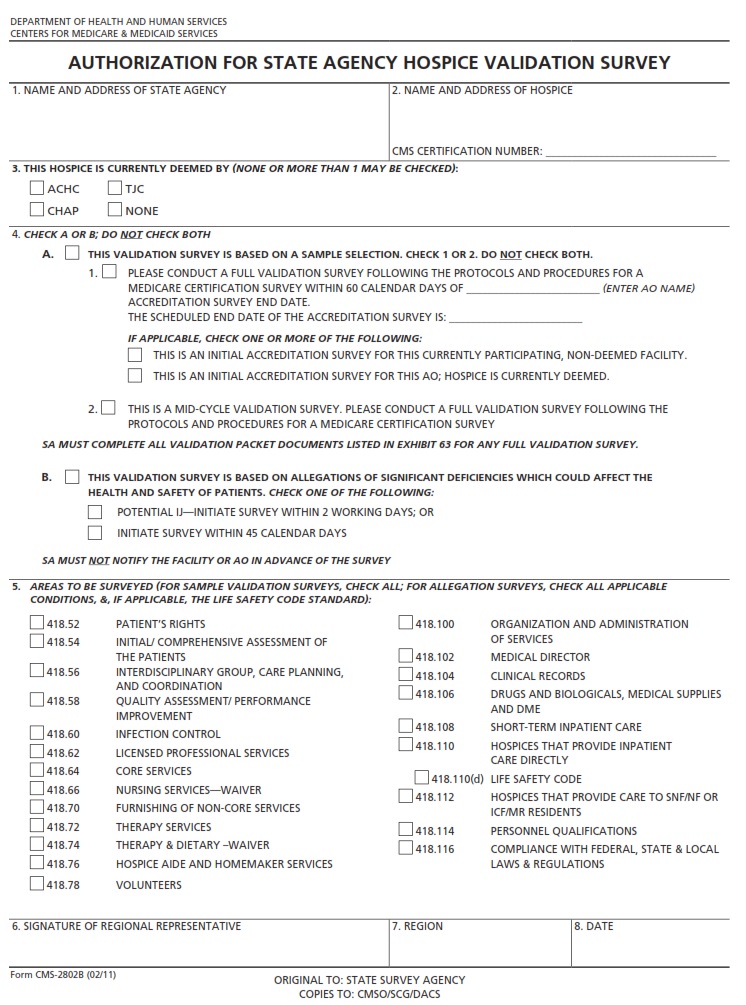
  • CMS 2802B – REQUEST FOR VALIDATION OF ACCREDITATION SURVEY FOR HOSPICE

    CMS 2802B – REQUEST FOR VALIDATION OF ACCREDITATION SURVEY FOR HOSPICE

    CMSFORM.ORGCMS 2802B – REQUEST FOR VALIDATION OF ACCREDITATION SURVEY FOR HOSPICE – In the intricate world of healthcare, ensuring the quality and efficacy of hospice services is paramount. The CMS 2802B form, known as the Request for Validation of Accreditation Survey for Hospice, serves as a crucial instrument in this pursuit of excellence. Imagine a journey through the inner workings of hospice care accreditation – where meticulous assessments and stringent standards converge to shape the future of end-of-life support. This article delves into the significance of CMS 2802B, unraveling its role in upholding standards, fostering transparency, and ultimately enhancing the delivery of compassionate care to those in their most vulnerable moments. As we embark on this exploration together, prepare to gain insights that illuminate the vital intersection between regulation and compassion in hospice services.

    Download CMS 2802B – REQUEST FOR VALIDATION OF ACCREDITATION SURVEY FOR HOSPICE

    [su_table responsive=”yes”]

    Form Number CMS 2802B
    Form Title REQUEST FOR VALIDATION OF ACCREDITATION SURVEY FOR HOSPICE
    Published 2011-02-01
    O.M.B.=
    File Size 110 KB

    [/su_table]

    [download id=’1487′]

    What is a CMS 2802B?

    CMS 2802B, also known as the Request for Validation of Accreditation Survey for Hospice, serves as a crucial document in the healthcare industry. This form plays a vital role in ensuring that hospice facilities meet necessary standards and regulations set forth by the Centers for Medicare & Medicaid Services (CMS). It provides a way for hospices to validate their accreditation surveys and demonstrate compliance with quality measures and patient care guidelines.

    By completing the CMS 2802B form accurately and timely, hospices can showcase their commitment to delivering high-quality end-of-life care to patients. This process not only helps maintain transparency and accountability within the healthcare sector but also fosters continuous improvement in service delivery. Ultimately, adherence to CMS regulations through initiatives like the CMS 2802B contributes to enhancing overall patient outcomes and satisfaction levels within hospice care settings.

    Where Can I Find a CMS 2802B?

    If you’re in the market for a CMS 2802B form, you might be wondering where to find one. The first place to check would be directly with the Centers for Medicare & Medicaid Services (CMS) website, where they typically offer downloadable versions of their forms. Additionally, your local hospice agency or healthcare provider may have access to these forms and can provide you with a copy upon request.

    Another avenue to explore is reaching out to accreditation organizations that work closely with hospices. These organizations often assist hospice agencies with compliance and accreditation processes and may have the CMS 2802B form readily available. Keep in mind that staying informed about updates and changes in regulations regarding hospice care can help you stay up-to-date on the latest documentation requirements, including the CMS 2802B form.

    CMS 2802B – REQUEST FOR VALIDATION OF ACCREDITATION SURVEY FOR HOSPICE

    The CMS 2802B – Request for Validation of Accreditation Survey for Hospice is a critical tool in ensuring the quality and standardization of hospice care services. By seeking accreditation validation through this survey, hospices demonstrate their commitment to meeting rigorous standards set forth by regulatory bodies. This process not only helps to uphold the credibility and reputation of hospice organizations but also ensures that patients receive high-quality and compassionate end-of-life care.

    Accreditation surveys play a vital role in driving continuous improvement within the hospice industry. Through assessing various aspects of care delivery, such as patient outcomes, compliance with regulations, and staff training, these surveys enable hospices to identify areas for enhancement and implement best practices. By actively engaging in the validation process outlined in CMS 2802B, hospices can showcase their dedication to providing exceptional care while also fostering a culture of accountability and transparency within their organization.

    CMS 2802B Example

    CMS 2802B

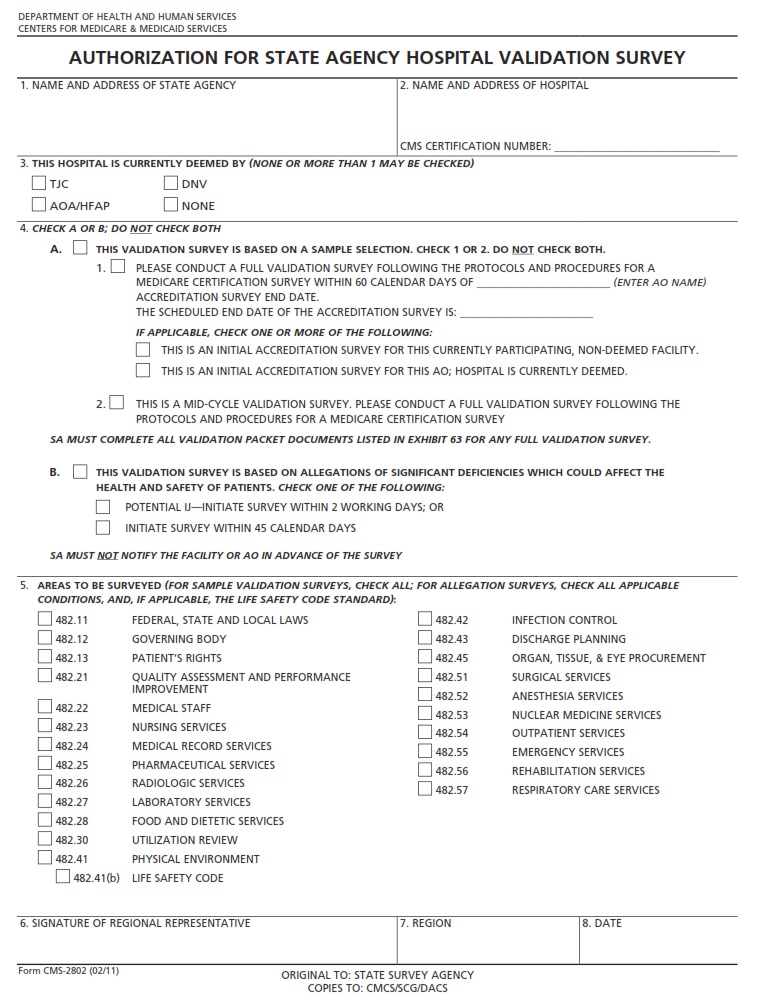
  • CMS 2802 – REQUEST FOR VALIDATION OF ACCREDITATION

    CMS 2802 – REQUEST FOR VALIDATION OF ACCREDITATION

    CMSFORM.ORGCMS 2802 – REQUEST FOR VALIDATION OF ACCREDITATION – In the intricate world of healthcare accreditation, the CMS 2802 form stands as a pivotal document that can shape the fate of healthcare facilities. It serves as a gateway to validation, a beacon of assurance in an industry where quality and standards reign supreme. Imagine it as a key that unlocks doors to excellence, a tool wielded by organizations striving for recognition and credibility in the eyes of both patients and peers alike. The journey towards accreditation is not merely bureaucratic; it symbolizes a commitment to upholding the highest standards of patient care and safety. Join us as we delve into the realm of CMS 2802 – Request for Validation of Accreditation, exploring its significance, intricacies, and impact on the ever-evolving landscape of healthcare quality assurance.

    Download CMS 2802 – REQUEST FOR VALIDATION OF ACCREDITATION

    [su_table responsive=”yes”]

    Form Number CMS 2802
    Form Title REQUEST FOR VALIDATION OF ACCREDITATION
    Published 2011-02-01
    O.M.B.
    File Size 108 KB

    [/su_table]

    [download id=’1488′]

    What is a CMS 2802?

    The CMS 2802, also known as the Request for Validation of Accreditation, plays a crucial role in ensuring the quality and reliability of healthcare facilities. It serves as a formal documentation process through which accrediting organizations provide evidence of compliance with established standards and guidelines. By submitting the CMS 2802, healthcare entities demonstrate their commitment to maintaining high standards and meeting regulatory requirements.

    Accreditation is not just a bureaucratic formality; it signifies a dedication to upholding excellence in patient care and safety. The CMS 2802 validates that organizations have undergone rigorous evaluations to ensure they meet specific performance measures and quality benchmarks. This process fosters continuous improvement within healthcare institutions, driving innovation and best practices in delivering services to patients.

    Where Can I Find a CMS 2802?

    If you are searching for a CMS 2802 form, you may find it challenging to locate one. The CMS 2802 is a specific request for the validation of accreditation, and it can typically be obtained from official accrediting bodies or organizations. One common source for the CMS 2802 form is the Centers for Medicare & Medicaid Services (CMS) website, where you can find a variety of healthcare-related forms available for download.

    Another option to consider is reaching out directly to your accrediting agency or organization to inquire about obtaining a copy of the CMS 2802 form. Additionally, some third-party websites may offer copies of the form for download, but it’s essential to ensure its validity and legitimacy before use. Overall, persistence and thorough research are key when trying to track down a specific form like the CMS 2802 in order to ensure compliance with accreditation requirements and standards.

    CMS 2802 – REQUEST FOR VALIDATION OF ACCREDITATION

    The CMS 2802 form, also known as the Request for Validation of Accreditation, plays a crucial role in the accreditation process for healthcare organizations. This form serves as a formal request to the Centers for Medicare & Medicaid Services (CMS) seeking validation of an organization’s accreditation status, ensuring compliance with federal regulations and quality standards. By submitting this document, healthcare facilities demonstrate their commitment to upholding high standards of care and regulatory requirements set forth by CMS.

    Accreditation validation through the CMS 2802 form not only validates the quality and safety of healthcare services but also enhances transparency and accountability within the industry. Healthcare organizations that successfully undergo accreditation validation exhibit a dedication to continuous improvement and patient-centered care, fostering trust among patients, providers, and regulatory bodies alike. Through this process, organizations can identify areas for enhancement, implement best practices, and ultimately improve outcomes for patients while maintaining compliance with regulatory guidelines.

    CMS 2802 Example

    CMS 2802

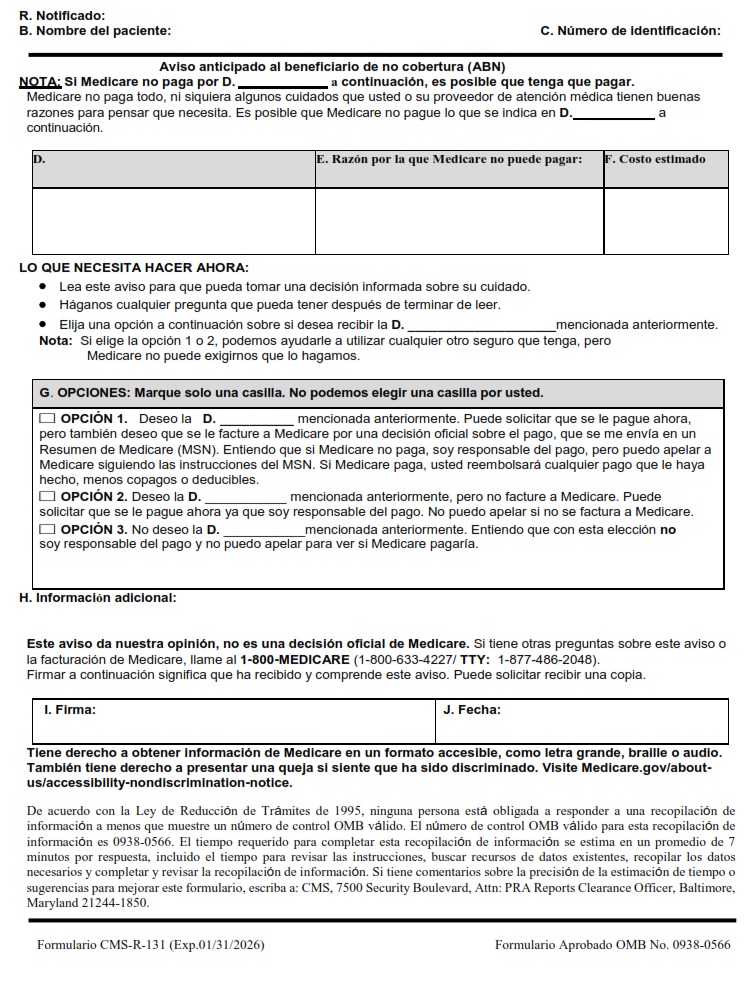
  • CMS R-131 – ADVANCE BENEFICIARY NOTICE (ABN) (Spanish)

    CMS R-131 – ADVANCE BENEFICIARY NOTICE (ABN) (Spanish)

    CMSFORM.ORGCMS R-131 – ADVANCE BENEFICIARY NOTICE (ABN) (Spanish) – In the intricate world of healthcare regulations, one document stands out as both crucial and enigmatic: CMS R-131 – Advance Beneficiary Notice (ABN). This seemingly innocuous form holds the key to understanding a complex web of patient rights, provider responsibilities, and Medicare coverage intricacies. However, what sets this particular ABN apart is its Spanish counterpart, shedding light on an often overlooked aspect of healthcare accessibility and inclusivity. Join us as we delve into the significance of CMS R-131 in bridging language barriers, empowering patients with informed choices, and navigating the maze of Medicare regulations with confidence. Let’s unlock the secrets behind this bilingual beacon in the sea of healthcare documentation.

    Download CMS R-131 – ADVANCE BENEFICIARY NOTICE (ABN) (Spanish)

    [su_table responsive=”yes”]

    Form Number CMS R-131
    Form Title ADVANCE BENEFICIARY NOTICE (ABN) (Spanish)
    Published 2011-03-01
    O.M.B. 0938-0566
    File Size 247 KB

    [/su_table]

    [download id=’1489′]

    What is a CMS R-131?

    The CMS R-131 form, also known as the Advance Beneficiary Notice (ABN) in Spanish, plays a crucial role in informing Medicare beneficiaries about possible costs not covered by their insurance. This form is used by healthcare providers to communicate to patients that certain services or items may not be reimbursed by Medicare, thereby allowing patients to make informed decisions about their care. Understanding and properly utilizing the CMS R-131 form is essential for both healthcare providers and patients to ensure transparency and prevent unexpected financial burdens.

    One key aspect of the CMS R-131 form is that it empowers beneficiaries to actively participate in their healthcare decision-making process. By acknowledging and signing the ABN, patients demonstrate their understanding of potential costs associated with particular medical procedures or treatments. This level of transparency fosters a sense of responsibility and awareness among Medicare recipients regarding the financial aspects of their care, ultimately promoting more informed and involved patient-provider interactions.

    Where Can I Find a CMS R-131?

    One of the key places to find a CMS R-131 form is directly through the Centers for Medicare & Medicaid Services (CMS) website. By visiting their online portal, you can easily access and download the form as needed. Additionally, healthcare facilities such as hospitals, clinics, and doctor’s offices often have these forms readily available for patients seeking more information on Advance Beneficiary Notices.

    Another valuable resource for obtaining a CMS R-131 form is your healthcare provider or insurance company. These entities are well-versed in Medicare-related forms and can provide guidance on how to fill out and submit the document accurately. It’s essential to stay informed about your rights as a Medicare beneficiary by routinely checking in with your healthcare team regarding any necessary paperwork like the CMS R-131 form.

    CMS R-131 Example

    CMS R-131 - Spanish

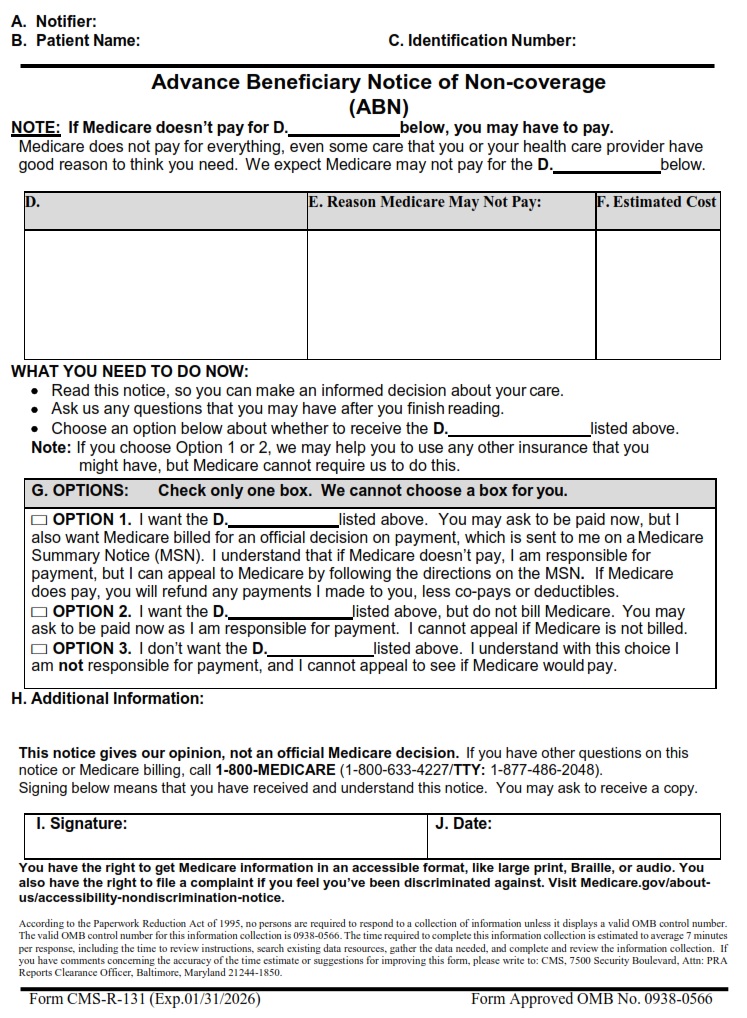
  • CMS R-131 – ADVANCE BENEFICIARY NOTICE (ABN) (English)

    CMS R-131 – ADVANCE BENEFICIARY NOTICE (ABN) (English)

    CMSFORM.ORGCMS R-131 – ADVANCE BENEFICIARY NOTICE (ABN) (English) – Navigating the complexities of healthcare billing can often feel like deciphering a secret code, with acronyms and forms adding layers of confusion for patients and providers alike. One such form that plays a crucial role in informing Medicare beneficiaries about their financial responsibilities is the CMS R-131 – Advance Beneficiary Notice (ABN). Understanding this document is not just a matter of compliance, but a key tool in empowering patients to make informed decisions about their care. In this article, we delve into the intricacies of the ABN form, unraveling its significance and shedding light on how it impacts both patients and healthcare providers in ensuring transparency and clarity in medical billing processes.

    Download CMS R-131 – ADVANCE BENEFICIARY NOTICE (ABN) (English)

    [su_table responsive=”yes”]

    Form Number CMS R-131
    Form Title ADVANCE BENEFICIARY NOTICE (ABN) (English)
    Published 2011-03-01
    O.M.B. 0938-0566
    File Size 218 KB

    [/su_table]

    [download id=’1490′]

    What is a CMS R-131?

    CMS R-131, also known as the Advance Beneficiary Notice (ABN), plays a crucial role in healthcare by informing Medicare beneficiaries of potential financial liability for services or procedures deemed not medically necessary. It serves as a notification tool that allows patients to make informed decisions about their care and understand the cost implications involved. This form must be provided before rendering services that may not be covered by Medicare, ensuring transparency in healthcare transactions.

    One key aspect to note is that CMS R-131 does not guarantee payment from the patient; instead, it acts as a disclosure mechanism to manage expectations regarding coverage and out-of-pocket expenses. Healthcare providers are obligated to issue this notice when there is uncertainty about insurance coverage, setting clear boundaries between what will be reimbursed and what might fall under the individual’s responsibility. Understanding and effectively utilizing CMS R-131 can lead to improved patient-provider communication, enhanced financial outcomes for both parties, and ultimately contribute to a more efficient healthcare delivery system.

    Where Can I Find a CMS R-131?

    If you’re on the hunt for a CMS R-131 form, don’t fret – there are several avenues you can explore to acquire this essential document. One option is to reach out to your healthcare provider or medical facility, as they often have these forms readily available for patients. Additionally, you can visit the official website of the Centers for Medicare & Medicaid Services (CMS) to download a digital copy of the CMS R-131 form.

    Another convenient way to obtain a CMS R-131 form is by contacting your insurance company directly. Many insurers offer resources and support related to Medicare benefits and documentation, making it easier for beneficiaries to access important forms like the CMS R-131. By leveraging these various channels, you can ensure that you have the necessary paperwork in hand when navigating the complexities of healthcare billing and coverage.

    CMS R-131 – ADVANCE BENEFICIARY NOTICE (ABN) (English)

    CMS R-131, also known as Advance Beneficiary Notice (ABN), plays a critical role in ensuring transparency and informed decision-making in healthcare. This standardized form is designed to inform Medicare beneficiaries about potential costs that may not be covered by Medicare for specific services. By providing clarity on these financial responsibilities upfront, ABN empowers patients to make well-informed choices regarding their healthcare options.

    One key aspect of CMS R-131 is its emphasis on patient autonomy and choice. By presenting individuals with the estimated costs of services that may not be covered by Medicare, the ABN allows beneficiaries to weigh their options based on both medical necessity and financial considerations. This process helps foster a sense of ownership over one’s healthcare decisions and promotes a collaborative relationship between patients and healthcare providers. Additionally, the proper utilization of ABNs can prevent unexpected out-of-pocket expenses for patients, leading to greater satisfaction and trust in the healthcare system.

    In essence, CMS R-131 – Advance Beneficiary Notice serves as a valuable tool in promoting transparency, accountability, and patient-centered care within the realm of Medicare services. It acts as a safeguard against hidden costs and surprises, empowering beneficiaries to take an active role in managing their health outcomes while fostering open communication between providers and patients. Through clear communication facilitated by the ABN process, individuals can make informed choices aligned with their preferences and financial circumstances—a pivotal step towards enhancing overall quality of care in the constantly evolving landscape of healthcare delivery.

    CMS R-131 Example

    CMS R-131 - English

  • CMS 2802F – Authorization for State Agency Psychiatric Hospital Validation Survey

    CMS 2802F – Authorization for State Agency Psychiatric Hospital Validation Survey

    CMSFORM.ORGCMS 2802F – Authorization for State Agency Psychiatric Hospital Validation Survey – In the realm of healthcare compliance, the intricate dance between regulations and best practices often takes center stage. Enter CMS 2802F – a seemingly cryptic code that holds immense significance for state agency psychiatric hospitals across the country. This authorization form isn’t just a bureaucratic hurdle, but a key to unlocking crucial insights into the quality of care provided in these specialized facilities. As we delve into the world of psychiatric hospital validation surveys, we uncover a complex tapestry woven with meticulous standards, patient rights considerations, and the ever-present quest for excellence in mental health services. Join us on a journey where paperwork meets purpose, and where every checkmark on form CMS 2802F represents a commitment to safeguarding some of society’s most vulnerable individuals.

    Download CMS 2802F – Authorization for State Agency Psychiatric Hospital Validation Survey

    [su_table responsive=”yes”]

    Form Number CMS 2802F
    Form Title Authorization for State Agency Psychiatric Hospital Validation Survey
    Published 2011-11-01
    O.M.B.
    File Size 104 KB

    [/su_table]

    [download id=’1491′]

    What is a CMS 2802F?

    The CMS 2802F, also known as the Authorization for State Agency Psychiatric Hospital Validation Survey, plays a crucial role in ensuring the quality and compliance of psychiatric hospitals. It serves as a formal authorization for state agencies to conduct validation surveys at these facilities. This survey is essential for maintaining high standards of patient care and safety within psychiatric hospitals.

    By utilizing the CMS 2802F form, state agencies can thoroughly assess various aspects of psychiatric hospital operations, including staffing levels, treatment protocols, and adherence to regulatory guidelines. These surveys help identify areas for improvement and ensure that patients receive the best possible care. Overall, the CMS 2802F is a vital tool in promoting transparency, accountability, and continuous quality improvement in psychiatric healthcare settings.

    Where Can I Find a CMS 2802F?

    If you’re in search of a CMS 2802F form for authorization in conducting state agency psychiatric hospital validation surveys, there are specific avenues where you can acquire this essential document. One primary resource is the Centers for Medicare & Medicaid Services (CMS) official website, which provides access to various forms that serve different purposes within the healthcare system. Additionally, state health departments or regulatory agencies often have copies of the CMS 2802F form available for download or use by authorized personnel.

    Moreover, collaboration with industry-specific organizations and associations could also lead you to the right channels for obtaining the CMS 2802F form. These entities may offer guidance on compliance requirements and access to necessary documentation for conducting psychiatric hospital validation surveys effectively. Remember that staying informed about updates and revisions to healthcare regulations is crucial when navigating the process of acquiring authorization forms like the CMS 2802F.

    CMS 2802F – Authorization for State Agency Psychiatric Hospital Validation Survey

    When it comes to ensuring the quality and safety of psychiatric hospitals, the CMS 2802F Authorization plays a crucial role in validating state agency surveys. This authorization process involves rigorous evaluation of various aspects such as patient care, treatment protocols, and overall facility standards. By obtaining this validation survey, state agencies demonstrate their compliance with federal regulations and commitment to maintaining high-quality psychiatric services.

    Furthermore, the CMS 2802F Authorization serves as a key mechanism for continuous improvement in psychiatric hospital operations. It encourages facilities to constantly evaluate their practices, identify areas for enhancement, and implement necessary changes to provide better care for patients. Ultimately, this validation survey not only validates the competence of state agency psychiatric hospitals but also drives advancements in mental health services on a broader scale.

    CMS 2802F Example

    CMS 2802F