Author: Bismillah

  • CMS R-0235MC – Compliance Plan for Accounting for Disclosures of Privacy Protected Data Released From a System of Records (SOR) Housed in a State-Located Server

    CMS R-0235MC – Compliance Plan for Accounting for Disclosures of Privacy Protected Data Released From a System of Records (SOR) Housed in a State-Located Server

    CMSFORM.ORGCMS R-0235MC – Compliance Plan for Accounting for Disclosures of Privacy Protected Data Released From a System of Records (SOR) Housed in a State-Located Server – In today’s digital age, where data breaches and privacy concerns are at the forefront of public discourse, the protection of sensitive information has never been more critical. Enter CMS R-0235MC – a groundbreaking compliance plan designed to address the intricate challenge of accounting for disclosures of privacy-protected data released from a state-located server system of records (SOR). Imagine a world where every keystroke, every click, and every query made within these systems is meticulously tracked and monitored to safeguard individuals’ personal information with unwavering precision.

    This article delves into the intricate web of regulations and protocols that govern the handling of confidential data within this complex ecosystem. As we navigate through the maze of compliance requirements and technological safeguards set forth by CMS R-0235MC, it becomes evident that ensuring accountability and transparency in managing privacy-protected data is not just a legal obligation but a moral imperative in our interconnected society. Join us on this journey as we unravel the nuances of this revolutionary compliance plan and explore its implications on data security practices in an increasingly digitized world.

    Download CMS R-0235MC – Compliance Plan for Accounting for Disclosures of Privacy Protected Data Released From a System of Records (SOR) Housed in a State-Located Server

    [su_table responsive=”yes”]

    Form Number CMS R-0235MC
    Form Title Compliance Plan for Accounting for Disclosures of Privacy Protected Data Released From a System of Records (SOR) Housed in a State-Located Server
    Published 2006-03-01
    O.M.B. 0938-0734
    File Size 24 KB

    [/su_table]

    [download id=’1359′]

    What is a CMS R-0235MC?

    While many organizations are familiar with the concept of a Compliance Plan for Accounting for Disclosures, the CMS R-0235MC sets itself apart by specifically addressing privacy protected data released from a system of records housed in a state-located server. This nuanced focus highlights the importance of safeguarding sensitive information and maintaining transparency around its disclosure. By integrating strict compliance measures within the framework of this regulation, entities can enhance their data governance practices and build trust with stakeholders.

    The CMS R-0235MC serves as a comprehensive guide for ensuring that all disclosures of privacy protected data are accounted for accurately and securely. Its detailed protocols help businesses navigate the complex landscape of handling confidential information, especially when it originates from servers located within specific states. This regulation emphasizes proactive measures to prevent data breaches and unauthorized access, ultimately contributing to a more robust security infrastructure in today’s digitized world.

    Where Can I Find a CMS R-0235MC?

    Finding a CMS R-0235MC can be a daunting task, but with the right resources and persistence, it is possible to locate one. One avenue to explore is contacting the relevant state agencies or departments that handle records management and compliance. These entities may have information on where to obtain a CMS R-0235MC or point you in the direction of vendors who specialize in compliance software solutions specifically tailored for handling privacy protected data. Additionally, reaching out to professional organizations or associations within the field of records management and data privacy could provide valuable leads on where to source a CMS R-0235MC.

    Another approach worth considering is tapping into online forums or communities dedicated to discussions around compliance plans and data privacy regulations. Connecting with industry experts, practitioners, or fellow professionals who have experience with implementing CMS R-0235MC solutions can offer practical advice and recommendations on where to find this specific tool. Furthermore, attending conferences, workshops, or webinars focusing on recordkeeping requirements and compliance standards may also present opportunities to network with individuals knowledgeable about obtaining a CMS R-0235MC for your organization’s needs.

    CMS R-0235MC – Compliance Plan for Accounting for Disclosures of Privacy Protected Data Released From a System of Records (SOR) Housed in a State-Located Server

    CMS R-0235MC, the compliance plan for accounting for disclosures of privacy-protected data released from a system of records (SOR) housed in a state-located server, marks a crucial step forward in ensuring the security and confidentiality of sensitive information. With the increasing reliance on digital systems for record-keeping and data management, it is imperative that robust measures are in place to track and monitor the sharing of private data. This compliance plan highlights the commitment towards transparency and accountability when it comes to handling privacy-protected information within governmental systems.

    By mandating a comprehensive process for documenting disclosures of privacy-protected data, CMS R-0235MC sets a new standard for governance and risk management in the realm of data protection. Through this framework, organizations can strive towards greater integrity and trustworthiness in their operations by providing clear visibility into who accesses sensitive information and how it is being utilized or shared. Embracing such proactive measures not only bolsters compliance with regulations but also fosters a culture of responsibility and diligence in safeguarding privacy rights within an increasingly interconnected digital landscape.

    CMS R-0235MC Example
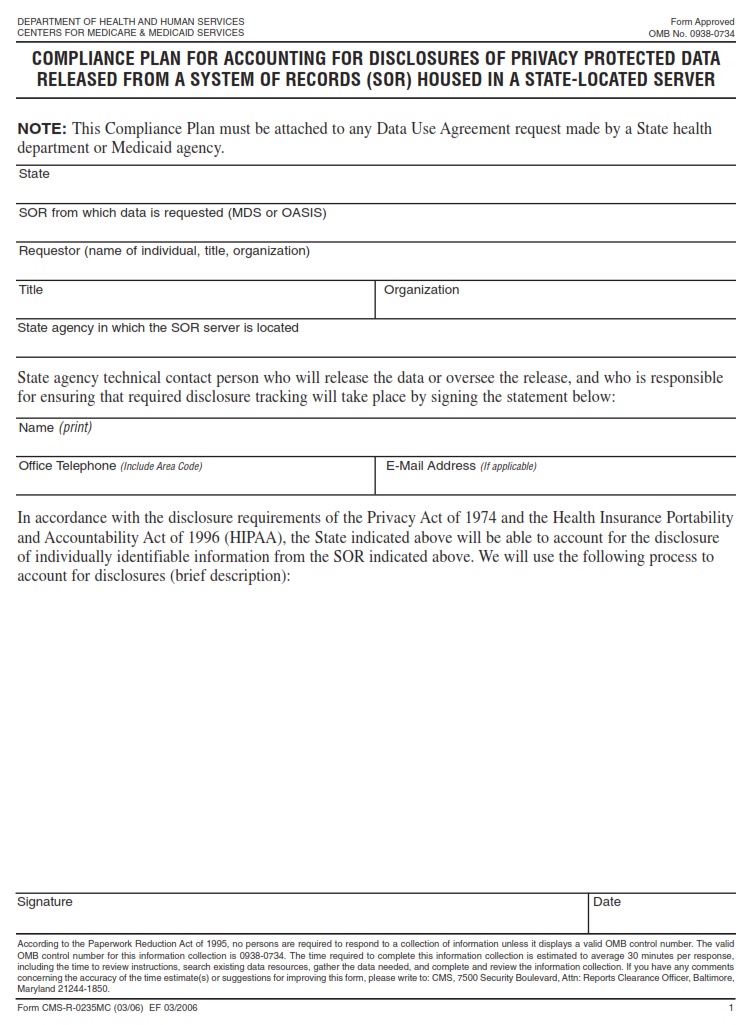
    CMS R-0235MC

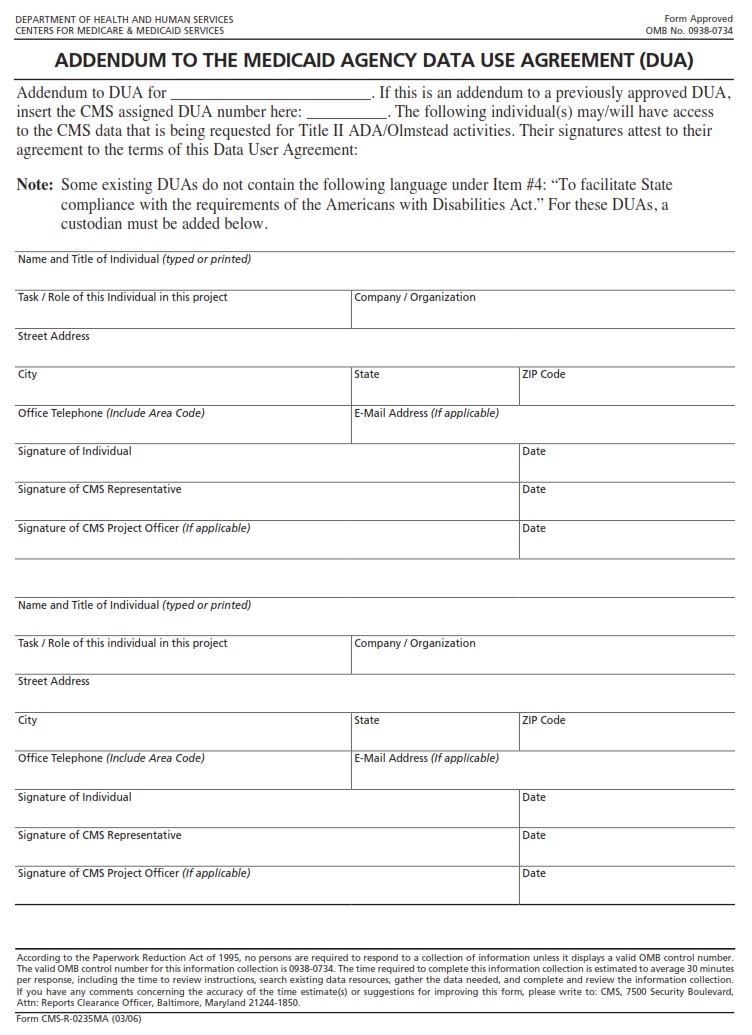
  • CMS R-0235MA – Addendum to the Medicaid State Agency Data Use Agreement

    CMS R-0235MA – Addendum to the Medicaid State Agency Data Use Agreement

    CMSFORM.ORGCMS R-0235MA – Addendum to the Medicaid State Agency Data Use Agreement – In the realm of healthcare data management, the intricate web of regulations and agreements can often seem like a labyrinth to navigate. At the heart of this complex landscape lies CMS R-0235MA – an enigmatic addition known as Addendum to the Medicaid State Agency Data Use Agreement. While its name may not immediately spark excitement, delving into the depths of this document reveals a world where data privacy, security, and collaboration intersect in ways that have far-reaching implications for Medicaid programs across states. As we unravel the mysteries of this addendum and explore its impact on data sharing practices within state agencies, we uncover a compelling narrative of how technology and policy converge to shape the future of healthcare delivery in our modern digital age. Join us on a journey through the corridors of regulation as we uncover the hidden gems within CMS R-0235MA and decipher its significance in today’s evolving healthcare landscape.

    Download CMS R-0235MA – Addendum to the Medicaid State Agency Data Use Agreement

    [su_table responsive=”yes”]

    Form Number CMS R-0235MA
    Form Title Addendum to the Medicaid State Agency Data Use Agreement
    Published 2006-03-01
    O.M.B. 0938-0734
    File Size 291 KB

    [/su_table]

    [download id=’1360′]

    What is a CMS R-0235MA?

    If you’re on the hunt for a CMS R-0235MA, chances are you’ll need to reach out to Medicaid State Agencies directly. These agencies are tasked with overseeing and managing Medicaid programs at the state level, making them a primary source for accessing relevant documents and agreements such as the CMS R-0235MA. Contacting your local Medicaid office or visiting their website can provide information on how to obtain this specific document.

    Another avenue to explore is the Centers for Medicare & Medicaid Services (CMS) website. As a federal agency that administers Medicare, Medicaid, and other healthcare programs, CMS may have resources available online that offer insights into locating the CMS R-0235MA. Additionally, reaching out to industry associations or consulting with healthcare compliance experts could also lead you in the right direction when it comes to finding this particular agreement. Remember, persistence and resourcefulness are key when navigating through bureaucratic processes!

    Where Can I Find a CMS R-0235MA?

    Deciphering the intricacies of healthcare policy can often feel like navigating a maze, with each new regulation adding layers of complexity to an already convoluted system. The CMS R-0235MA Addendum to the Medicaid State Agency Data Use Agreement is no exception, promising both challenges and opportunities for state agencies seeking to comply with evolving guidelines. This addendum represents more than just another piece of paperwork; it symbolizes a shift towards greater data transparency and accountability in Medicaid programs across the country.

    Through this addendum, state agencies are granted access to essential data that can inform critical decision-making processes and drive improved outcomes for Medicaid beneficiaries. By establishing clear parameters for the use and disclosure of sensitive information, this document lays the foundation for collaboration between federal and state entities in pursuit of a shared goal: ensuring high-quality, cost-effective healthcare services for those most in need. As stakeholders continue to adapt to changing regulatory landscapes, embracing tools like the CMS R-0235MA Addendum will be key in fostering a more efficient, equitable healthcare system that puts patients first

    CMS R-0235MA – Addendum to the Medicaid State Agency Data Use Agreement

    CMS R-0235MA – Addendum to the Medicaid State Agency Data Use Agreement has been a game-changer in enhancing data sharing and collaboration among state agencies and CMS. This addendum addresses critical areas such as data security, privacy, and permissible use requirements, ensuring that all parties are aligned with best practices for handling sensitive Medicaid data. By streamlining the process for obtaining and utilizing this data, state agencies can now make more informed decisions, improve program integrity efforts, and enhance overall healthcare outcomes for beneficiaries.

    Furthermore, this addendum paves the way for innovative approaches to leveraging Medicaid data for research purposes. State agencies can now explore opportunities for using de-identified data sets to conduct population health studies, evaluate program effectiveness, and identify trends that could lead to better-targeted interventions. This shift towards a more collaborative and research-focused approach not only benefits individual states but also contributes to advancing our understanding of healthcare delivery systems on a national scale. The potential insights gained from analyzing Medicaid data under this addendum have the power to drive significant improvements in policy-making and resource allocation within the healthcare industry.

    CMS R-0235MA Example

    CMS R-0235MA

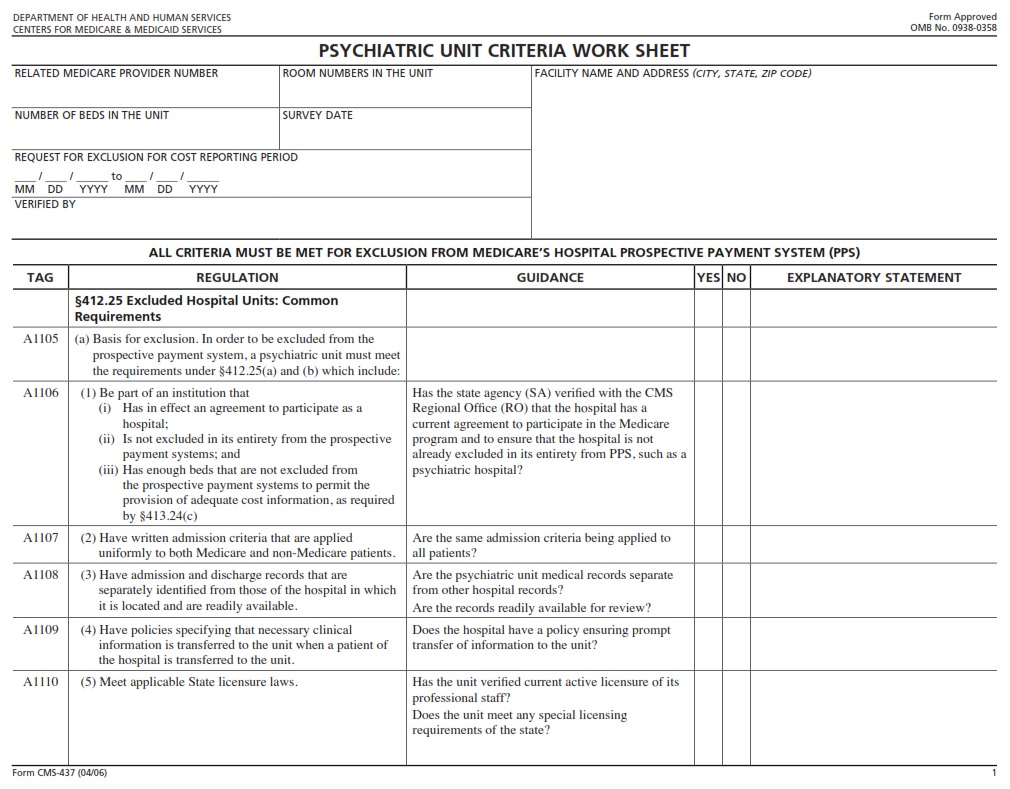
  • CMS 437 – PSYCHIATRIC UNIT CRITERIA WORKSHEET

    CMS 437 – PSYCHIATRIC UNIT CRITERIA WORKSHEET

    CMSFORM.ORGCMS 437 – PSYCHIATRIC UNIT CRITERIA WORKSHEET – As the field of psychiatry continues to evolve, healthcare organizations are constantly seeking ways to enhance the quality of care provided in psychiatric units. The CMS 437 Psychiatric Unit Criteria Worksheet serves as a vital tool in assessing and maintaining the standards of psychiatric facilities across the country. Designed to ensure that patients receive optimal care and treatment, this worksheet outlines specific criteria that must be met by healthcare providers to maintain compliance with federal regulations.

    Imagine a world where mental health is treated with the same level of importance and precision as physical health. The CMS 437 Psychiatric Unit Criteria Worksheet bridges this gap by establishing clear guidelines for evaluating and improving psychiatric services. In an era where mental health issues are increasingly prevalent, understanding and adhering to these criteria has never been more crucial for healthcare professionals working in psychiatric units. Let’s delve into the intricacies of this essential tool and explore its impact on shaping the future of mental healthcare delivery.

    Download CMS 437 – PSYCHIATRIC UNIT CRITERIA WORKSHEET

    [su_table responsive=”yes”]

    Form Number CMS 437
    Form Title PSYCHIATRIC UNIT CRITERIA WORKSHEET
    Published 2006-04-01
    O.M.B. 0938-0358
    File Size 208 KB

    [/su_table]

    [download id=’1361′]

    What is a CMS 437?

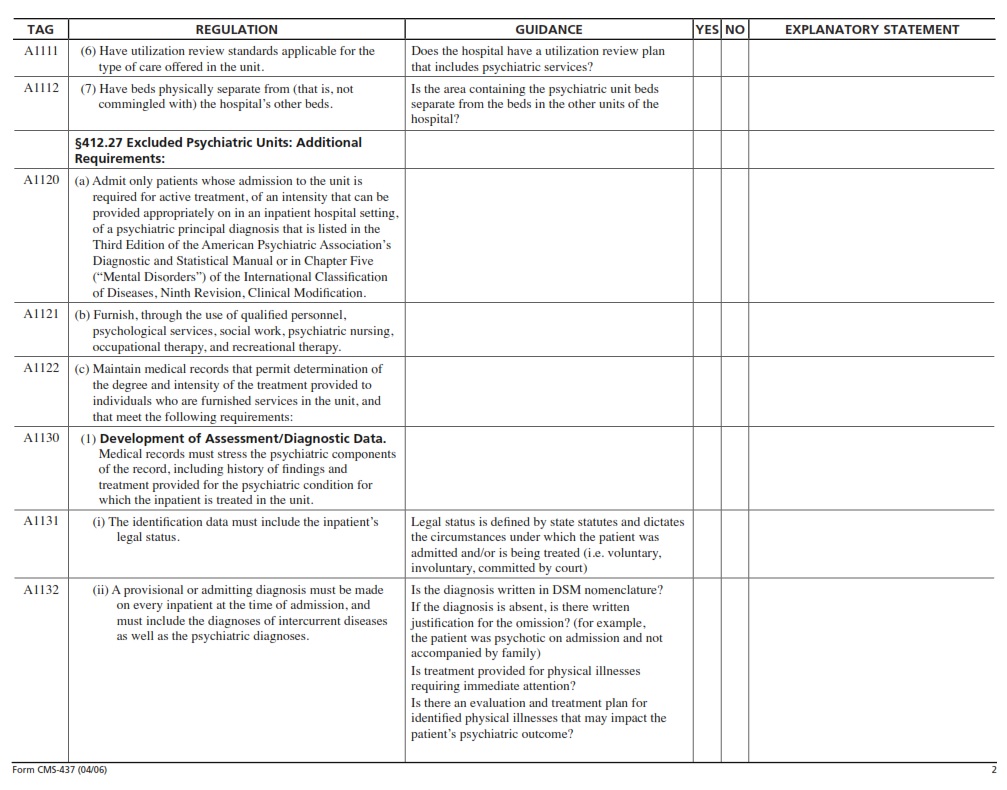
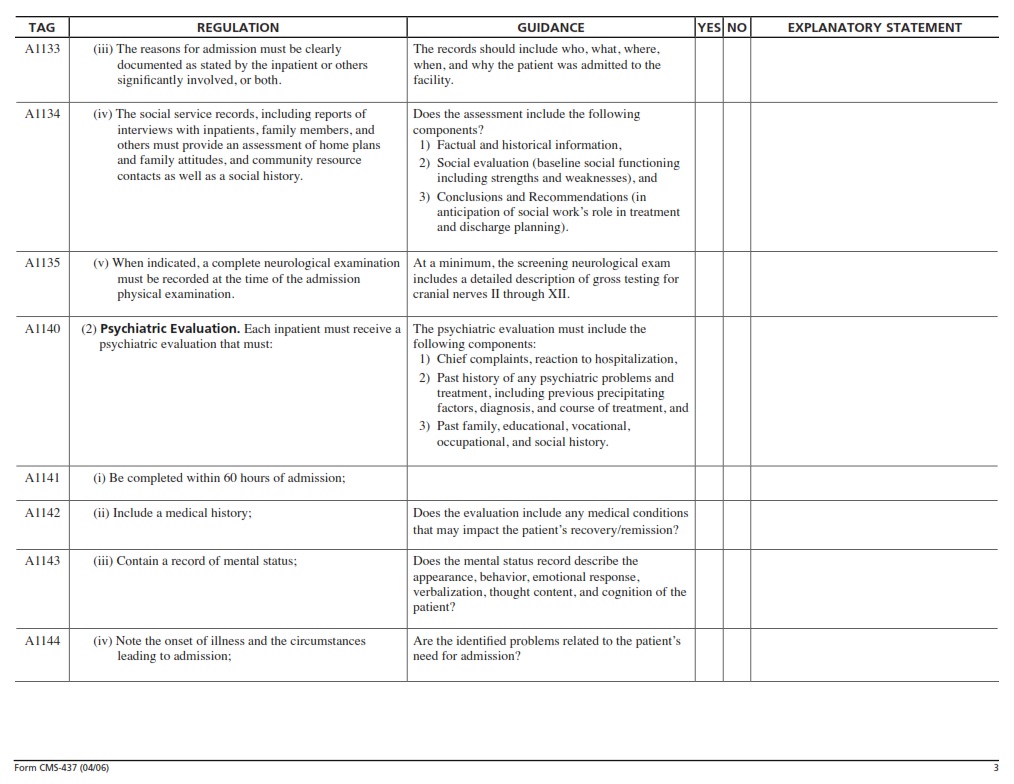
    A CMS 437, also known as the Psychiatric Unit Criteria Worksheet, is a crucial tool used in healthcare facilities to evaluate and ensure compliance with regulations for psychiatric units. This comprehensive document outlines specific criteria that must be met for a unit to operate effectively and provide high-quality care to patients. It covers aspects such as patient rights, safety measures, staffing requirements, treatment protocols, and facility conditions. By following the guidelines outlined in the CMS 437, healthcare providers can ensure that their psychiatric units are meeting standards set by regulatory bodies.

    One key aspect of the CMS 437 is its focus on patient-centered care and safety. The criteria emphasize the importance of creating a therapeutic environment that promotes healing and well-being for individuals in crisis. From ensuring adequate staff training to implementing risk assessment protocols, the CMS 437 highlights the need for psychiatric units to prioritize patients’ physical and emotional safety at all times. Compliance with these criteria not only ensures regulatory adherence but also fosters a culture of care and compassion within psychiatric facilities.

    Overall, the CMS 437 serves as a roadmap for healthcare providers looking to enhance their psychiatric units’ operations and provide optimal care for individuals facing mental health challenges. By adhering to these established guidelines, facilities can create an environment that supports recovery and resilience while upholding essential standards of quality and safety in psychiatric care delivery.

    Where Can I Find a CMS 437?

    If you’re on the search for a CMS 437, look no further than reputable medical supply companies or online platforms specializing in healthcare equipment. Providers like Medline, McKesson, or Henry Schein may have what you need in stock. Additionally, exploring online marketplaces such as eBay or Amazon could lead to promising results.

    Don’t underestimate the power of networking with fellow healthcare professionals or reaching out to psychiatric facilities directly. They may have surplus CMS 437 units available for purchase or know where to direct you. Keep an eye out for industry conferences or trade shows where suppliers showcase their latest products – a perfect opportunity to find a reliable CMS 437 unit that meets your needs.

    CMS 437 – PSYCHIATRIC UNIT CRITERIA WORKSHEET

    CMS 437 – Psychiatric Unit Criteria Worksheet plays a crucial role in determining the appropriate level of care for individuals with mental health needs. By carefully assessing factors such as risk of harm to self or others, ability to function independently, and severity of symptoms, this worksheet helps healthcare professionals make informed decisions about placement in psychiatric units. This structured tool provides a standardized framework for evaluating patients across various dimensions, ensuring consistent and comprehensive assessments that guide treatment planning.

    Beyond its practical application, the CMS 437 worksheet also highlights the complex interplay between mental health conditions and individual circumstances. It underscores the importance of considering each patient holistically, taking into account not just their clinical presentation but also social support systems, coping mechanisms, and past treatment history. Through this multidimensional approach, healthcare providers can tailor interventions to address underlying issues and promote long-term recovery. Ultimately, the use of tools like CMS 437 fosters a more personalized and targeted approach to psychiatric care that enhances outcomes for patients facing mental health challenges.

    CMS 437 Example

    CMS 437 - Page 1 CMS 437 - Page 2 CMS 437 - Page 3

  • CMS 339 – PROVIDER COST REPORT REIMBURSEMENT QUESTIONNAIRE

    CMS 339 – PROVIDER COST REPORT REIMBURSEMENT QUESTIONNAIRE

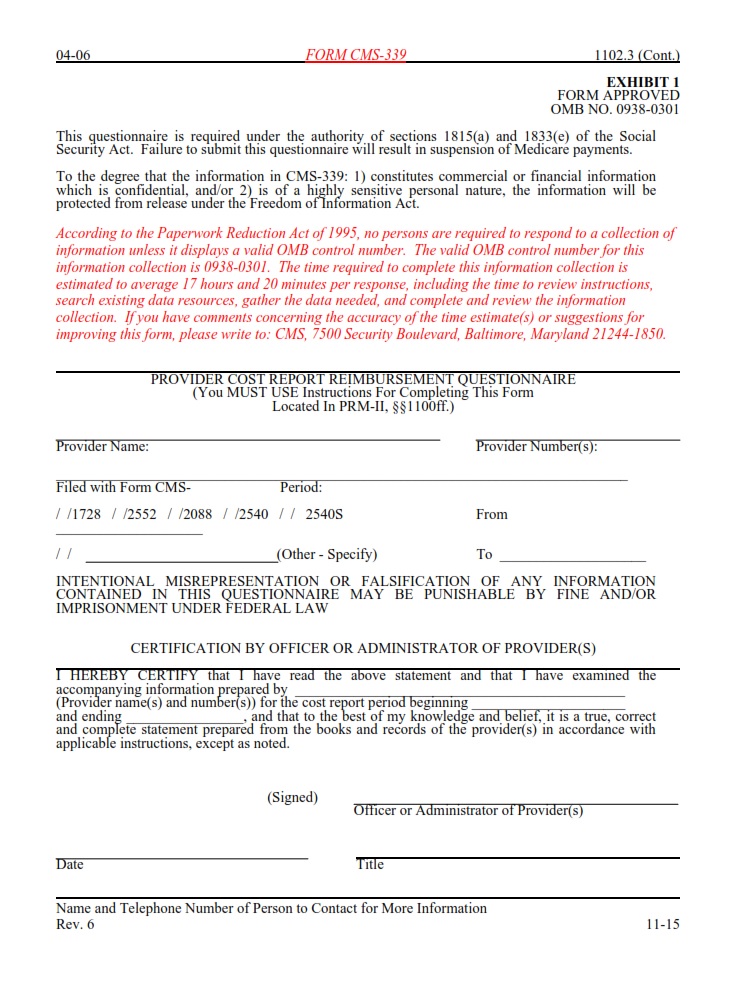
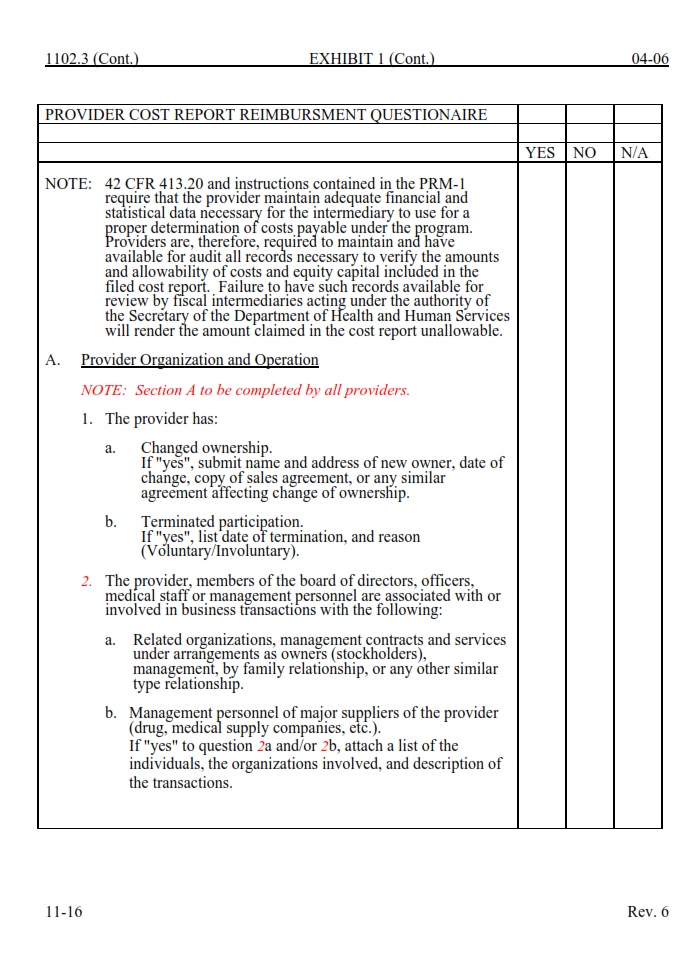
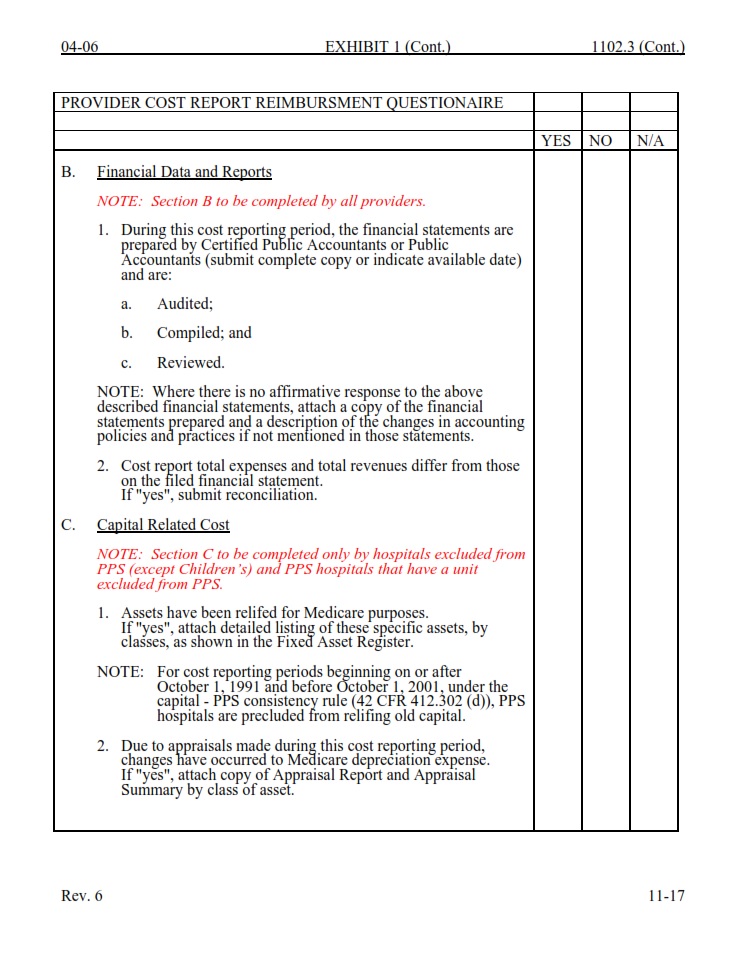
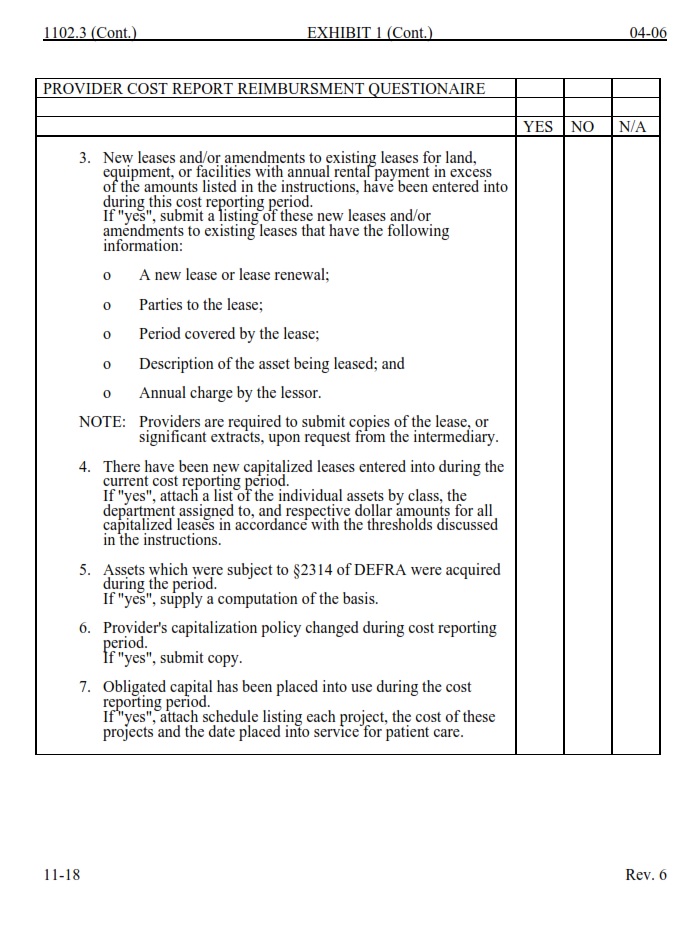
    CMSFORM.ORGCMS 339 – PROVIDER COST REPORT REIMBURSEMENT QUESTIONNAIRE – Navigating the intricate world of healthcare reimbursement can often feel like deciphering a complex puzzle with ever-changing pieces. In this constantly evolving landscape, CMS 339 – Provider Cost Report Reimbursement Questionnaire emerges as a crucial tool in ensuring that healthcare providers receive fair and accurate reimbursements for the services they render. As providers strive to deliver quality care while managing costs effectively, understanding and completing the CMS 339 questionnaire becomes paramount in securing financial stability and sustainability within the healthcare industry. Join us on a deep dive into the nuances of this essential document, exploring its significance, intricacies, and impact on providers’ bottom lines. Let’s unravel the mysteries behind reimbursement methodologies and strategies through the lens of CMS 339 – Provider Cost Report Reimbursement Questionnaire to empower providers in optimizing their financial health amidst a sea of regulatory complexities.

    Download CMS 339 – PROVIDER COST REPORT REIMBURSEMENT QUESTIONNAIRE

    [su_table responsive=”yes”]

    Form Number CMS 339
    Form Title PROVIDER COST REPORT REIMBURSEMENT QUESTIONNAIRE
    Published 2006-04-30
    O.M.B. 0938-0301
    File Size 85 KB

    [/su_table]

    [download id=’1362′]

    What is a CMS 339?

    A CMS 339 form, also known as the Provider Cost Report Reimbursement Questionnaire, is a vital tool used in the healthcare industry to gather essential financial data from healthcare providers. This form plays a crucial role in determining reimbursement rates and ensuring accurate allocation of funds within the healthcare system. By requiring detailed information on costs incurred by providers, the CMS 339 helps regulatory bodies make informed decisions regarding reimbursement amounts.

    Moreover, the CMS 339 form serves as a means of promoting transparency and accountability within the healthcare sector. It allows stakeholders to assess the financial performance of providers, identify areas for improvement, and ensure that resources are allocated efficiently. In essence, this questionnaire enables regulatory bodies to maintain oversight and control over healthcare expenditures while ensuring that patients receive high-quality care at reasonable costs.

    Where Can I Find a CMS 339?

    Finding a CMS 339 form can sometimes feel like searching for a needle in a haystack, especially for healthcare providers navigating the complex landscape of reimbursement regulations. One key avenue to obtaining this crucial document is through the Centers for Medicare & Medicaid Services (CMS) website, where various forms including the CMS 339 are typically available for download. Alternatively, reaching out directly to your Medicare Administrative Contractor (MAC) or local Medicare office can also be fruitful in securing a copy of the CMS 339.

    In addition to traditional offline channels, embracing technology can streamline the process of accessing a CMS 339 form. Online platforms that specialize in healthcare documentation and regulatory compliance may offer downloadable versions of the form, saving valuable time and effort for providers. It’s essential to stay informed about updates and changes to the CMS 339 form by regularly checking official sources and seeking guidance from industry experts to ensure compliance with reimbursement guidelines.

    CMS 339 – PROVIDER COST REPORT REIMBURSEMENT QUESTIONNAIRE

    The CMS 339 Provider Cost Report Reimbursement Questionnaire plays a critical role in shaping healthcare reimbursement strategies for providers. This extensive questionnaire delves deep into the financial aspects of healthcare organizations, requiring detailed information on costs, revenues, and operational data. By completing this questionnaire accurately and thoroughly, providers can ensure they are maximizing their reimbursement potential and complying with Medicare guidelines.

    One key aspect of the CMS 339 questionnaire is its focus on cost allocation methodologies. Providers must carefully allocate costs to different services and departments, ensuring transparency and accuracy in reporting. This process not only influences reimbursement rates but also provides valuable insights into cost drivers within the organization. By evaluating these cost allocations, providers can identify areas for improvement and optimize their financial performance.

    Overall, the CMS 339 Provider Cost Report Reimbursement Questionnaire serves as a powerful tool for healthcare providers to navigate the complex landscape of reimbursement and financial management. It demands attention to detail, strategic thinking, and a proactive approach to financial stewardship. By approaching this questionnaire with diligence and a commitment to accuracy, providers can unlock valuable insights that drive sustainable financial success in an ever-evolving healthcare environment.

    CMS 339 Example

    CMS 339 - Page 1 CMS 339 - Page 2 CMS 339 - Page 3 CMS 339 - Page 4

  • CMS 2540-96 – SNF AND SNF HEALTH CARE COMPLEX COST REPORT

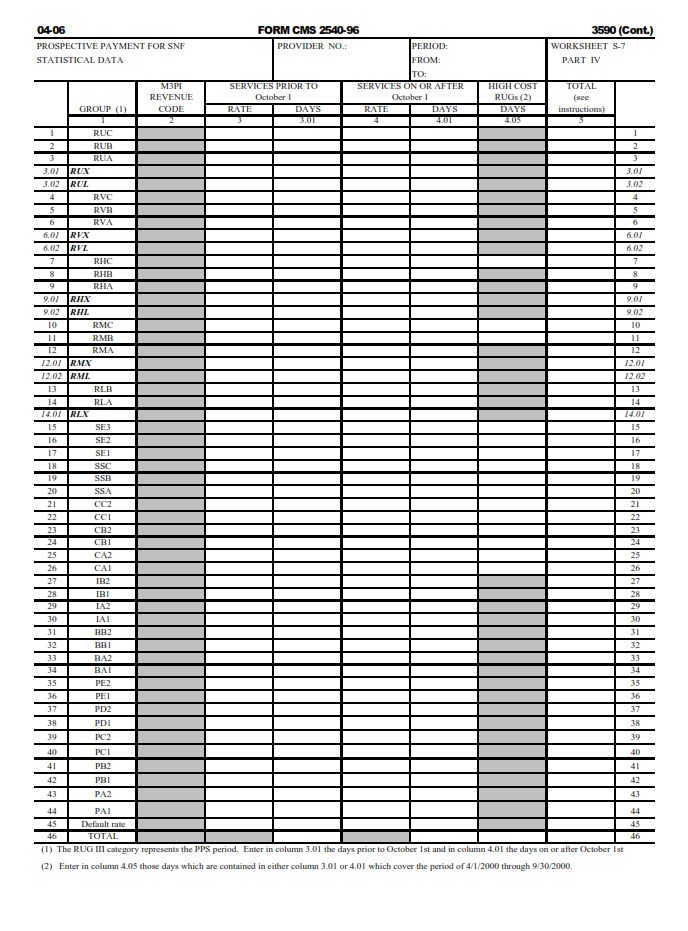
    CMS 2540-96 – SNF AND SNF HEALTH CARE COMPLEX COST REPORT

    CMSFORM.ORGCMS 2540-96 – SNF AND SNF HEALTH CARE COMPLEX COST REPORT – In the intricate web of healthcare administration, one document stands out as a crucial piece in understanding the financial underpinnings of skilled nursing facilities (SNFs) and SNF health care complexes: CMS 2540-96 – the Cost Report. Often overlooked by those outside the industry, this seemingly mundane report holds the key to unraveling the complexities of cost allocation, reimbursement methodologies, and financial sustainability within these vital healthcare settings. Delving into the world of SNFs through the lens of this essential document not only sheds light on the operational intricacies but also unveils a narrative of resilience and adaptation in an ever-evolving landscape of healthcare regulation and economics. Join us as we embark on a journey to uncover the hidden stories behind CMS 2540-96 – stories that shape our understanding of how SNFs navigate challenges and thrive amidst uncertainty.

    Download CMS 2540-96 – SNF AND SNF HEALTH CARE COMPLEX COST REPORT

    [su_table responsive=”yes”]

    Form Number CMS 2540-96
    Form Title SNF AND SNF HEALTH CARE COMPLEX COST REPORT
    Published 2006-05-01
    O.M.B. 0938-0463
    File Size 13 KB

    [/su_table]

    [download id=’1364′]

    What is a CMS 2540-96?

    The Centers for Medicare & Medicaid Services (CMS) 2540-96 form is a crucial tool used by skilled nursing facilities (SNFs) and SNF health care complexes to report their costs effectively. This form requires detailed information on the facility’s financial activities, including revenues, expenses, patient care statistics, and other relevant data. By compiling this detailed information, SNFs are able to assess their financial performance, identify areas for improvement, and ensure compliance with regulatory requirements.

    Moreover, the CMS 2540-96 form plays a key role in determining reimbursement rates for SNFs from Medicare and Medicaid. Accurate completion of this form is vital for securing fair reimbursement based on actual costs incurred in providing care to residents. Additionally, by analyzing the data reported on this form, healthcare administrators can make informed decisions regarding resource allocation, budgeting strategies, and overall operational efficiency within their facilities. Overall, the CMS 2540-96 form serves as a valuable tool in ensuring transparency and accountability in the financial management of SNFs and SNF health care complexes.

    Where Can I Find a CMS 2540-96?

    When it comes to finding a CMS 2540-96 form for your skilled nursing facility or SNF health care complex, there are several avenues you can explore. One of the primary sources is the Centers for Medicare & Medicaid Services (CMS) website, where you can typically download the most up-to-date version of the form. Additionally, many third-party healthcare compliance websites and platforms offer access to CMS forms like the 2540-96 for a fee.

    Another option is to reach out to industry associations or professional organizations that specialize in long-term care facilities. Many of these organizations provide resources and support for SNFs, including access to essential regulatory forms like the CMS 2540-96. Lastly, networking with other healthcare professionals or administrators within the SNF community can also be a valuable way to obtain information on where to find this specific form. By leveraging multiple channels and resources, you can ensure that you have the necessary tools and documentation to complete your cost report accurately and efficiently.

    CMS 2540-96 – SNF AND SNF HEALTH CARE COMPLEX COST REPORT

    CMS 2540-96: SNF and SNF Health Care Complex Cost Report plays a crucial role in ensuring transparency and accountability within skilled nursing facilities (SNFs). By requiring detailed financial data submission, this report enables Medicare to accurately reimburse providers and detect any potential fraud or misuse of funds. Understanding the intricacies of the cost report is essential for SNFs to optimize their financial performance and comply with regulatory requirements.

    One key aspect of the CMS 2540-96 report is its focus on capturing costs related to both direct patient care and facility operations. This comprehensive approach allows SNFs to track expenses across different departments and services, providing valuable insights into areas where cost efficiencies can be achieved. Moreover, by analyzing data from the cost report, SNFs can identify trends, anticipate future expenses, and make informed decisions that ultimately improve the quality of care provided to residents.

    Overall, while completing the CMS 2540-96 report may seem like a tedious task for SNFs, viewing it as a tool for enhancing financial management and operational efficiency can lead to long-term benefits. Embracing this process not only ensures compliance with Medicare regulations but also empowers SNFs to thrive in an increasingly competitive healthcare landscape.

    CMS 2540-96 Example

    CMS 2540-96

  • CMS 576A – Health Insurance Benefits Agreement with Organ Procurement Organization

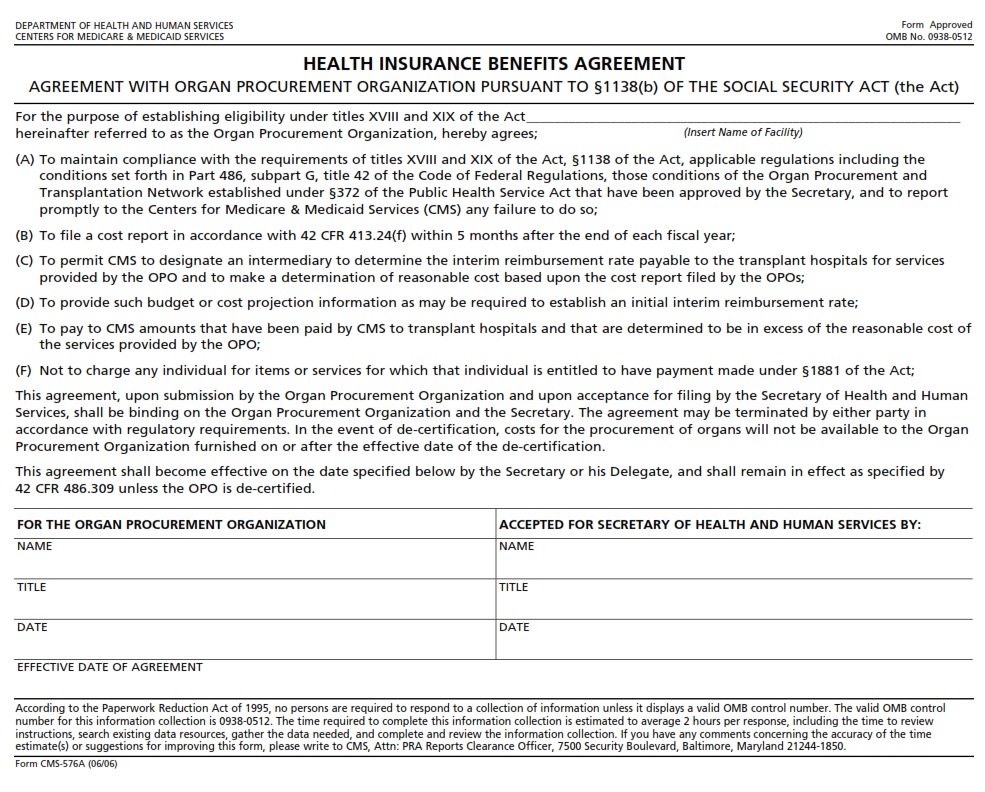
    CMS 576A – Health Insurance Benefits Agreement with Organ Procurement Organization

    CMSFORM.ORGCMS 576A – Health Insurance Benefits Agreement with Organ Procurement Organization – In the intricate web of modern healthcare systems, a vital but often overlooked component is the delicate dance between health insurance providers and organ procurement organizations. Enter CMS 576A – the Health Insurance Benefits Agreement that navigates the complex terrain where medical necessity meets ethical considerations. This agreement not only facilitates access to life-saving organ transplants but also raises thought-provoking questions about resource allocation, patient rights, and societal responsibilities.

    Imagine a world where a simple signature on this document could mean the difference between life and death for someone awaiting a heart, lung, or kidney transplant. The interplay between insurance coverage and organ availability unveils a fascinating intersection of medicine, ethics, economics, and human compassion. Join us as we delve into the nuances of CMS 576A – an agreement that encapsulates both hope for those in need of transplants and challenges for those tasked with balancing financial sustainability with ethical imperatives.

    Download CMS 576A – Health Insurance Benefits Agreement with Organ Procurement Organization

    [su_table responsive=”yes”]

    Form Number CMS 576A
    Form Title Health Insurance Benefits Agreement with Organ Procurement Organization
    Published 2006-06-30
    O.M.B. 0938-0512
    File Size 58 KB

    [/su_table]

    [download id=’1365′]

    What is a CMS 576A?

    A CMS 576A form plays a crucial role in the healthcare industry, specifically within the realm of organ procurement and health insurance benefits. This document serves as an agreement between healthcare providers and Organ Procurement Organizations (OPOs), outlining the terms and conditions related to organ donation and transplant processes. By completing a CMS 576A form, healthcare facilities ensure compliance with federal regulations, facilitate efficient coordination with OPOs, and ultimately contribute to improving patient outcomes through timely access to organ transplantation services.

    Furthermore, the significance of the CMS 576A form extends beyond administrative requirements; it embodies a commitment to upholding ethical standards in healthcare delivery. Through this agreement, both providers and OPOs demonstrate their dedication to promoting transparency, fairness, and patient-centered care in all aspects of organ donation procedures. By fostering collaboration between entities involved in the complex process of organ transplantation, the CMS 576A form not only streamlines administrative tasks but also reinforces a shared mission of saving lives and enhancing quality of life for individuals awaiting transplants.

    Where Can I Find a CMS 576A?

    If you’re in search of a CMS 576A form for your Health Insurance Benefits Agreement with an Organ Procurement Organization, you may be wondering where to find it. One convenient way to locate the form is by visiting the Centers for Medicare & Medicaid Services (CMS) official website. On their website, you can easily access and download the CMS 576A form in a few simple clicks.

    Additionally, another option to consider is reaching out to your healthcare provider or insurance company directly. They should be able to provide you with the necessary form or guide you on where to obtain it. Remember that having a thorough understanding of the agreement and its components is crucial, so don’t hesitate to ask questions and seek clarification if needed.

    In conclusion, acquiring the CMS 576A form may involve some effort but rest assured that various channels are available for you to obtain it. Whether through online resources or direct communication with healthcare professionals, taking the necessary steps towards completing this important agreement can ultimately streamline your health insurance benefits related to organ procurement organizations.

    CMS 576A – Health Insurance Benefits Agreement with Organ Procurement Organization

    In today’s healthcare landscape, the integration of health insurance benefits with organ procurement organizations (OPOs) is paving the way for improved access to life-saving organ transplants. The CMS 576A agreement signifies a crucial partnership between insurance providers and OPOs to streamline the process of organ donation and transplantation, ensuring that patients in need receive timely and comprehensive coverage. This collaboration not only removes financial barriers for individuals seeking organ transplants but also enhances coordination between healthcare entities, ultimately leading to more successful outcomes for patients on transplant waitlists.

    By aligning health insurance benefits with OPO services through the CMS 576A agreement, the healthcare industry is taking proactive steps towards optimizing patient care and increasing transplant rates. This strategic alliance goes beyond just providing financial assistance; it symbolizes a commitment to prioritizing patient well-being while promoting efficiency in the organ donation process. As we forge ahead in this era of transformative healthcare reforms, initiatives like the CMS 576A agreement highlight the power of collaboration in advancing medical technologies and improving patient outcomes across various facets of healthcare delivery.

    CMS 576A Example

    CMS 576A

  • CMS 2746 – ESRD DEATH NOTIFICATION

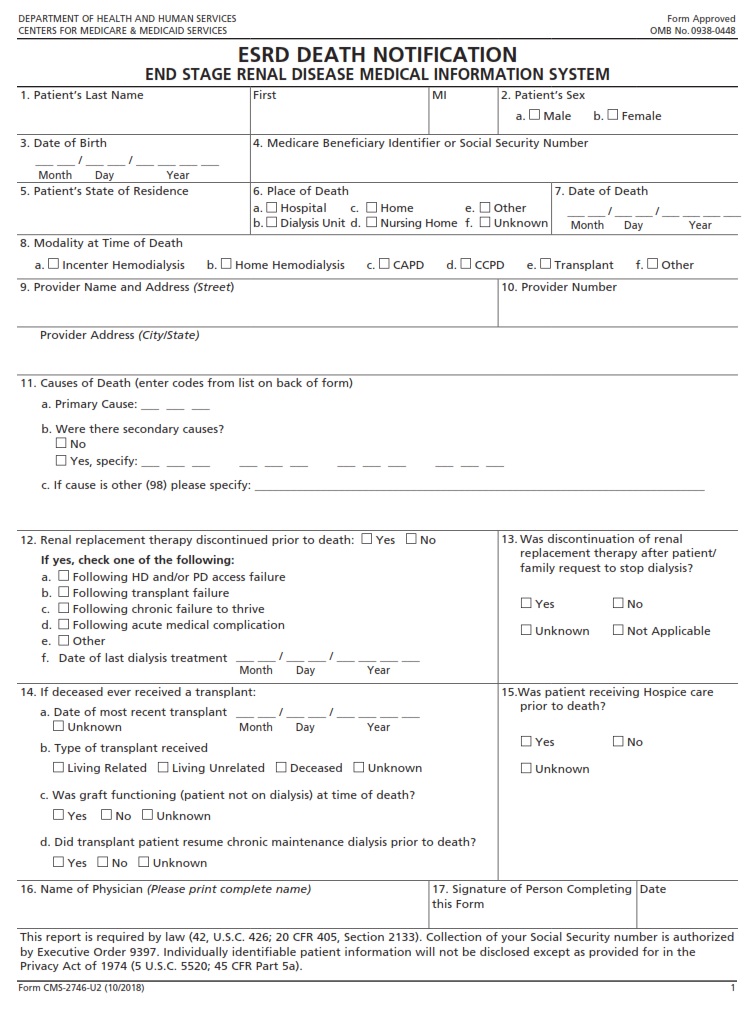
    CMS 2746 – ESRD DEATH NOTIFICATION

    CMSFORM.ORGCMS 2746 – ESRD DEATH NOTIFICATION – Imagine receiving a letter that contains the unsettling words ESRD Death Notification emblazoned across the top. The initials stand for End-Stage Renal Disease, a critical condition that dramatically alters life’s trajectory. This isn’t just any routine correspondence; it is a document that delivers profound news, signaling the end of one chapter and the uncertain beginning of another. In CMS 2746 – ESRD Death Notification, we delve into the complexities surrounding this stark communication. From its solemn significance to the intricate process behind its delivery, this article sheds light on a moment when words hold immense power, shaping destinies and prompting reflections on mortality like never before. Join us as we unravel the layers of emotion and bureaucracy intertwined in these chilling notices and explore how they navigate delicate terrain with precision and compassion.

    Download CMS 2746 – ESRD DEATH NOTIFICATION

    [su_table responsive=”yes”]

    Form Number CMS 2746
    Form Title ESRD DEATH NOTIFICATION
    Published 2006-08-01
    O.M.B. 0938-0448 – 11/30/2022
    File Size 82 KB

    [/su_table]

    [download id=’1366′]

    What is a CMS 2746?

    A CMS 2746 form, also known as the End Stage Renal Disease (ESRD) Death Notification, plays a crucial role in the healthcare landscape. This document is used by healthcare providers to report the death of a patient with ESRD to Medicare. By submitting this form promptly, providers ensure that Medicare accurately adjusts its records and stops payments for deceased patients. The CMS 2746 serves as an official notification that triggers necessary administrative actions within the Medicare system.

    The completion and submission of the CMS 2746 form are vital for both accuracy in record-keeping and compliance with regulatory requirements. It serves as a key communication tool between healthcare providers and Medicare, ensuring seamless coordination during critical moments like patient deaths. Understanding the significance of this form highlights the importance of precise documentation and timely reporting in maintaining efficient healthcare operations within the ESRD context.

    Where Can I Find a CMS 2746?

    If you’re in need of a CMS 2746 form for ESRD death notification, there are several avenues you can explore to obtain it. One option is to visit the official Centers for Medicare & Medicaid Services (CMS) website, where they provide downloadable forms for easy access. Additionally, you may be able to request a copy of the CMS 2746 form from your healthcare provider or local dialysis center.

    Another way to find the CMS 2746 form is by contacting the Medicare helpline or your regional CMS office for assistance. It’s important to ensure that you have the most up-to-date version of the form when submitting ESRD death notifications, as requirements and procedures may change over time. By being proactive and seeking out reliable sources, you can streamline the process of obtaining the necessary documentation for ESRD-related matters.

    CMS 2746 – ESRD DEATH NOTIFICATION

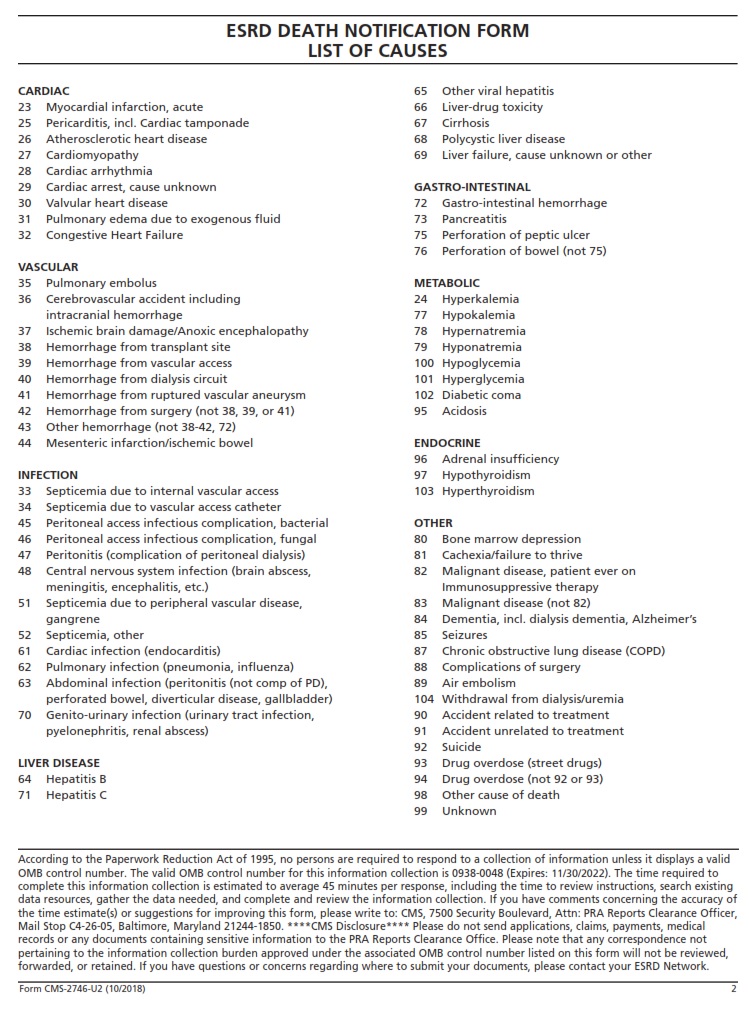
    The CMS 2746 form, also known as the ESRD Death Notification, is a crucial document used in the healthcare industry to report on end-stage renal disease patient deaths. This form serves as a vital communication tool between dialysis facilities and Medicare, ensuring that accurate information is provided promptly. By documenting key details such as patient demographics, primary cause of death, and treatment modality at the time of passing, the CMS 2746 form helps streamline data collection and reporting processes.

    Additionally, the ESRD Death Notification plays a significant role in quality improvement initiatives within nephrology care. Analyzing trends and patterns from these notifications can provide valuable insights into areas for improvement in end-of-life care for ESRD patients. Moreover, by staying up-to-date with these reports, healthcare providers can enhance their strategies for delivering compassionate and personalized care to individuals with chronic kidney disease.

    CMS 2746 Example

    CMS 2746 - Page 1 CMS 2746 - Page 2

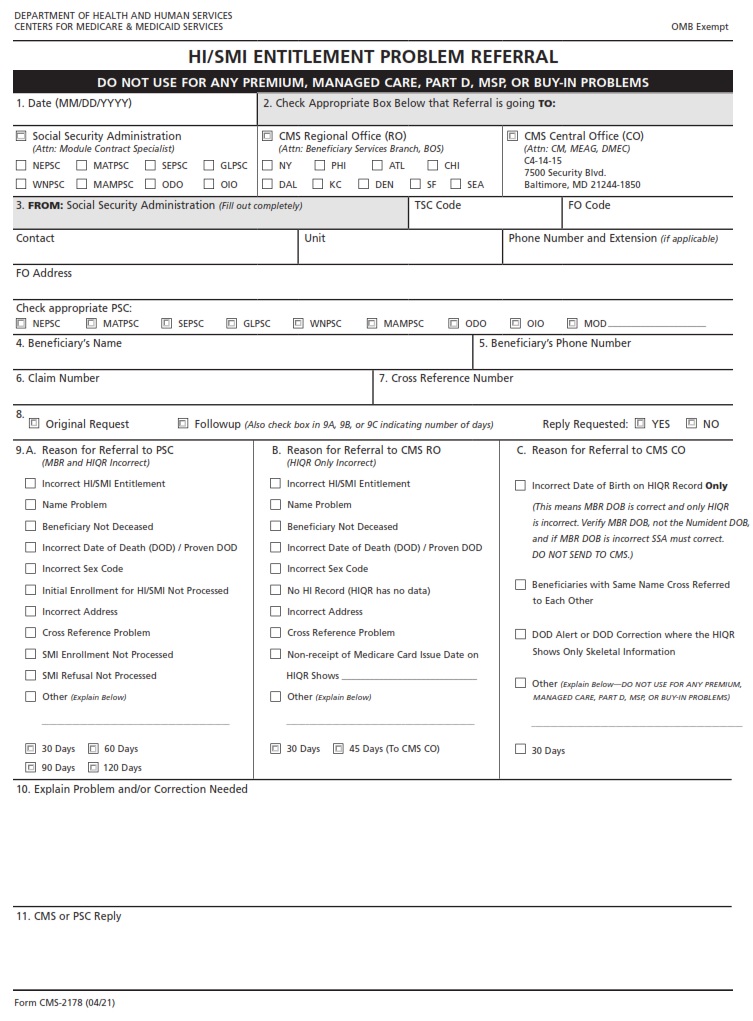
  • CMS 2178 – HI/SMI ENTITLEMENT PROBLEM REFERRAL

    CMS 2178 – HI/SMI ENTITLEMENT PROBLEM REFERRAL

    CMSFORM.ORGCMS 2178 – HI/SMI ENTITLEMENT PROBLEM REFERRAL – In the vast and complicated world of healthcare, one issue that continues to perplex professionals is the entitlement problem related to CMS 2178 – HI SMI. This intricate web of regulations and guidelines presents a challenge that many struggle to navigate, leading to confusion and frustration among both providers and patients alike. The need for clear and effective solutions in addressing this problem has never been more urgent, as it directly impacts access to crucial services for those in need.

    Imagine a scenario where individuals are left stranded at the crossroads of bureaucracy and medical necessity, unable to receive the care they require due to administrative roadblocks. The implications of this entitlement problem reverberate far beyond just paperwork – they affect real people with real health concerns. In this article, we delve deep into the complexities of CMS 2178 – HI SMI entitlement problem referrals, shedding light on the challenges faced by those caught in its tangled web and exploring potential pathways towards resolution. Join us on a journey through the maze of healthcare regulations as we seek clarity amidst the chaos.

    Download CMS 2178 – HI/SMI ENTITLEMENT PROBLEM REFERRAL

    [su_table responsive=”yes”]

    Form Number CMS 2178
    Form Title HI/SMI ENTITLEMENT PROBLEM REFERRAL
    Published 2006-09-01
    O.M.B.
    File Size 125 KB

    [/su_table]

    [download id=’1367′]

    What is a CMS 2178?

    A CMS 2178 form is a crucial document used in healthcare to address HI SMI entitlement problem referrals. This form serves as a tool for healthcare providers to formally refer patients with entitlement issues related to their Medicare coverage. It helps streamline the process of resolving these problems, ensuring that patients receive the care and benefits they are entitled to without unnecessary delays or complications.

    By facilitating communication between providers, patients, and Medicare administrators, the CMS 2178 form plays a vital role in ensuring that individuals receive timely and accurate information regarding their entitlements. Additionally, this form helps track the progress of referral cases and ensures that each case is addressed promptly and efficiently. Overall, understanding the importance of the CMS 2178 form in addressing entitlement problems can lead to better patient outcomes and improved efficiency within the healthcare system.

    Where Can I Find a CMS 2178?

    If you’re searching for a CMS 2178 form, it’s essential to know where to look. One of the most reliable sources is the Centers for Medicare & Medicaid Services (CMS) website, where you can find the latest version of the CMS 2178 form readily available for download. Additionally, healthcare providers and facilities that work with Medicare beneficiaries often have copies of this form on hand and can provide you with one upon request.

    Another avenue worth exploring is contacting your local Social Security office or Medicare office. These offices typically deal with a variety of forms related to entitlement problems and referrals, including the CMS 2178. By reaching out to them directly, you may be able to obtain a copy of the form or receive guidance on how to complete it effectively. In some cases, they may even offer assistance in resolving any issues related to SMI entitlement problems as outlined in the CMS 2178 form.

    CMS 2178 – HI/SMI ENTITLEMENT PROBLEM REFERRAL

    CMS 2178, addressing HI SMI entitlement problem referrals, is an intricate yet crucial aspect of healthcare administration. The challenges surrounding entitlement issues can often be complex and require a tailored approach to ensure accurate and timely resolution. Addressing these problems effectively can not only enhance patient care but also streamline administrative processes within the healthcare system.

    By proactively identifying and resolving HI SMI entitlement problems, healthcare providers can improve patient satisfaction and outcomes while also optimizing resource allocation. Collaboration between various stakeholders such as patients, providers, payers, and government agencies is essential to navigate the intricate landscape of entitlement issues successfully. Leveraging technology and data analytics can further enhance the efficiency and accuracy of resolving these challenges, ultimately leading to a more seamless healthcare experience for all involved parties.

    CMS 2178 Example

    CMS 2178

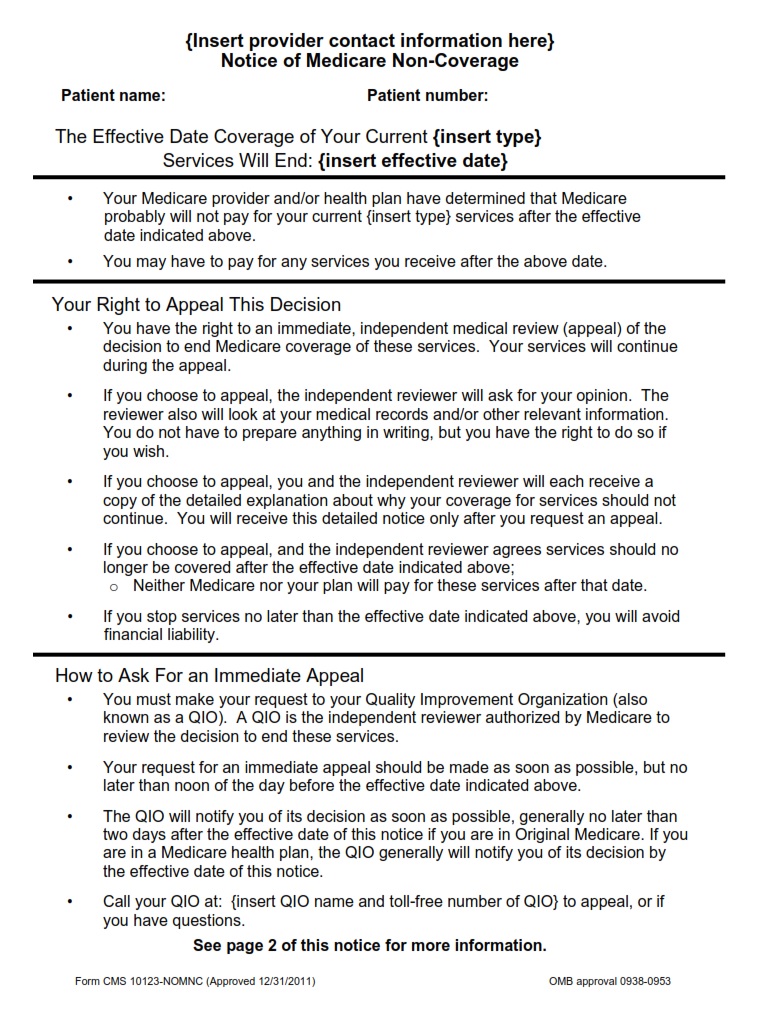
  • CMS 10095NOMNC – NOTICE OF MEDICARE NON-COVERAGE (English)

    CMS 10095NOMNC – NOTICE OF MEDICARE NON-COVERAGE (English)

    CMSFORM.ORGCMS 10095NOMNC – NOTICE OF MEDICARE NON-COVERAGE (English) – Are you familiar with the dreaded moment when a medical service or treatment is denied coverage by Medicare? The CMS 10095NOMNC, also known as the Notice of Medicare Non-Coverage, serves as a stern reminder of this reality for many beneficiaries. Imagine receiving this notice in the mail, signaling the end of coverage for a vital health service. It’s a moment that can evoke frustration, confusion, and even fear about how to proceed. In this article, we delve into the complexities surrounding the CMS 10095NOMNC and explore what steps individuals can take when faced with such a disheartening situation. Let’s unravel the intricacies of Medicare non-coverage notifications and empower ourselves to navigate through these challenging moments with knowledge and confidence.

    Download CMS 10095NOMNC – NOTICE OF MEDICARE NON-COVERAGE (English)

    [su_table responsive=”yes”]

    Form Number CMS 10095NOMNC
    Form Title NOTICE OF MEDICARE NON-COVERAGE (English)
    Published 2006-12-01
    O.M.B. 0938-0910
    File Size 25 KB

    [/su_table]

    [download id=’1368′]

    What is a CMS 10095NOMNC?

    In the world of healthcare, the CMS 10095NOMNC plays a crucial role in informing Medicare beneficiaries about non-coverage decisions. This official notice serves as a formal notification from Medicare to individuals, outlining services or items that will not be covered by the program. By providing clear and concise information, the CMS 10095NOMNC aims to empower beneficiaries with knowledge about their healthcare coverage options.

    Understanding the implications of receiving a CMS 10095NOMNC is vital for both patients and healthcare providers. It prompts important conversations about alternative coverage options, potential out-of-pocket expenses, and appeals processes. By being transparent and informative, this notice helps facilitate decision-making regarding medical treatments and services that may not be coveredA by Medicare. Ultimately, the CMS 10095NOMNC highlights the importance of communication and awareness in navigating the complex landscape of healthcare coverage.

    Where Can I Find a CMS 10095NOMNC?

    Searching for a CMS 10095NOMNC form can often be a daunting task, especially when time is of the essence. One convenient and reliable option is to visit the official Medicare website where you can easily navigate through the forms section to locate the specific document you need. Additionally, many healthcare providers and medical facilities have access to these forms and can provide them to patients upon request.

    Another avenue worth exploring is contacting your local Area Agency on Aging or State Health Insurance Assistance Program (SHIP) for assistance in obtaining the CMS 10095NOMNC form. These organizations are well-equipped to assist individuals with Medicare-related matters and can guide you on how to obtain the necessary paperwork efficiently. Lastly, some online platforms also offer downloadable versions of various Medicare forms, including the CMS 10095NOMNC, making it convenient for individuals to access them from anywhere at any time.

    CMS 10095NOMNC – NOTICE OF MEDICARE NON-COVERAGE

    When it comes to navigating the complex landscape of Medicare coverage, one crucial document that often causes confusion is the CMS 10095NOMNC – Notice of Medicare Non-Coverage. This notice signifies that certain medical services or treatments will not be covered by Medicare, leaving beneficiaries to bear the financial responsibility themselves. Understanding this notification is vital for individuals to make informed decisions about their healthcare options and budget accordingly.

    Receiving a CMS 10095NOMNC can be disheartening, as it implies that the care needed may not align with Medicare’s coverage criteria. However, this notice also serves as an opportunity for beneficiaries to explore alternative payment options or appeal if they believe the denial was made in error. It highlights the importance of staying proactive in discussing coverage concerns with healthcare providers and insurance representatives to ensure access to necessary medical services.

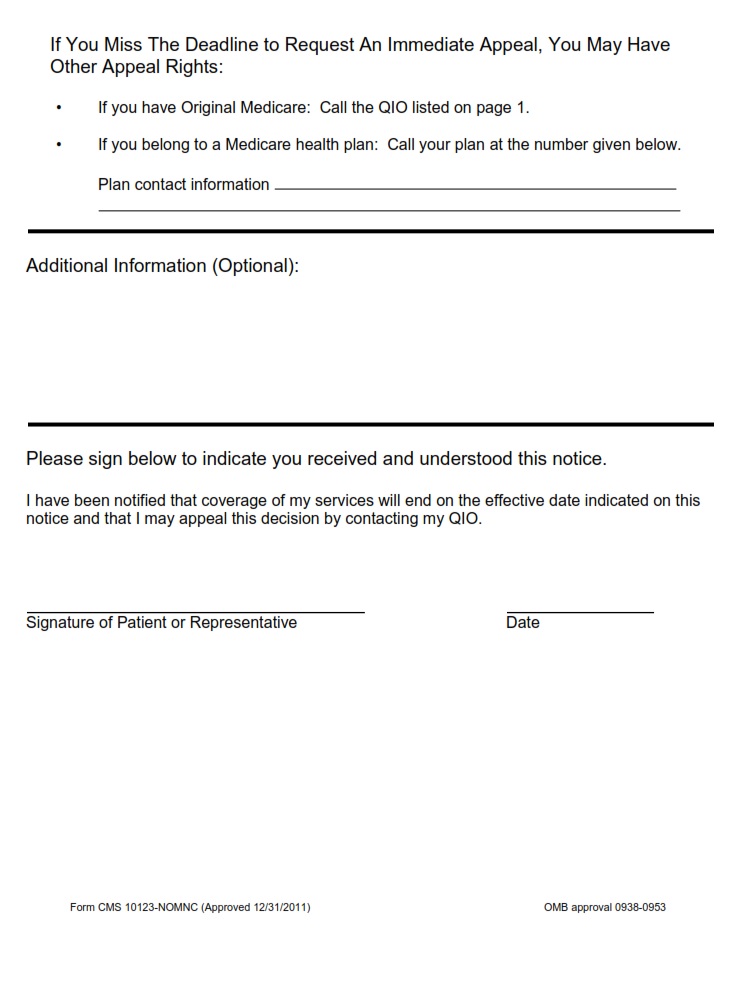
    CMS 10095NOMNC Example

    CMS 10095NOMNC - Page 1 (English) CMS 10095NOMNC - Page 2 (English)

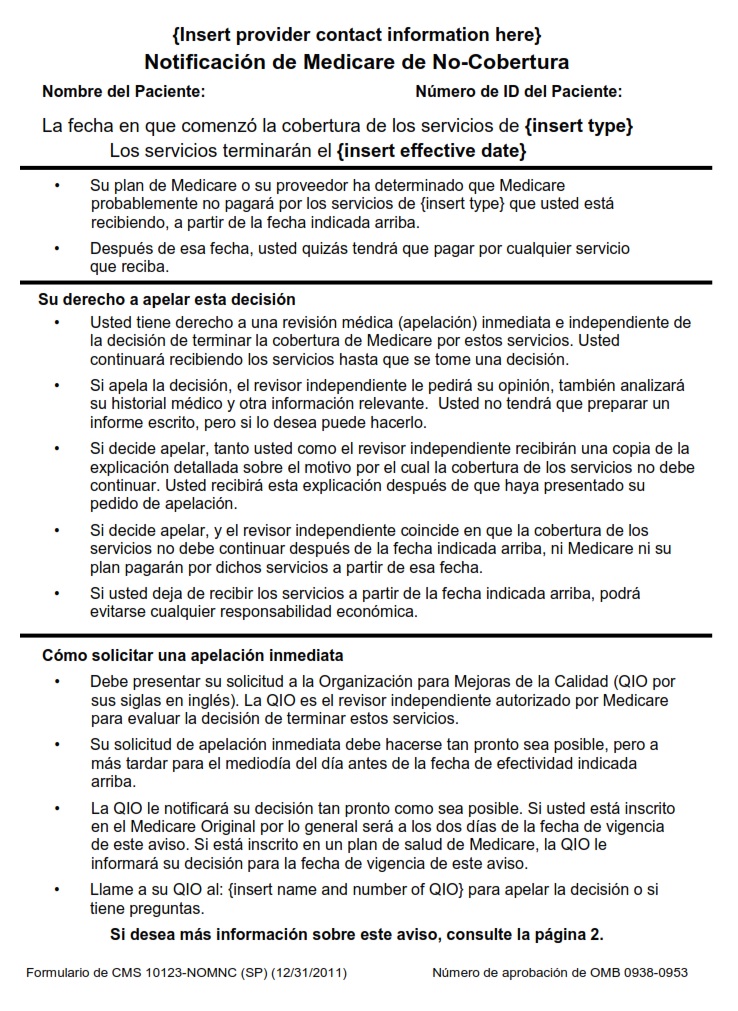
  • CMS 10095NOMNC – NOTICE OF MEDICARE NON-COVERAGE (Spanish)

    CMS 10095NOMNC – NOTICE OF MEDICARE NON-COVERAGE (Spanish)

    CMSFORM.ORGCMS 10095NOMNC – NOTICE OF MEDICARE NON-COVERAGE (Spanish) – Imagine receiving a mysterious letter in the mail labeled CMS 10095NOMNC – NOTICE OF MEDICARE NON-COVERAGE. Your heart skips a beat as you tear open the envelope, wondering what it could possibly contain. Is it a foreboding message denying coverage for a vital medical service? Or perhaps it holds the key to unlocking hidden benefits within the labyrinth of Medicare regulations. In this article, we delve into the enigmatic world of Medicare non-coverage notices, exploring their significance and unraveling the complexities that often shroud them in confusion. Join us on a journey through bureaucratic jargon and legal intricacies as we uncover the secrets behind CMS 10095NOMNC and empower you to navigate the maze of Medicare with confidence and clarity.

    Download CMS 10095NOMNC – NOTICE OF MEDICARE NON-COVERAGE (Spanish)

    [su_table responsive=”yes”]

    Form Number CMS 10095NOMNC
    Form Title NOTICE OF MEDICARE NON-COVERAGE (Spanish)
    Published 2006-12-01
    O.M.B. 0938-0910
    File Size 24 KB

    [/su_table]

    [download id=’1369′]

    What is a CMS 10095NOMNC?

    The CMS 10095NOMNC, also known as the Notice of Medicare Non-Coverage, plays a crucial role in informing Medicare beneficiaries about services that will not be covered by their insurance. This formal notification is issued when a healthcare provider determines that a particular treatment, test, or procedure does not meet the criteria for coverage under Medicare guidelines. Understanding the CMS 10095NOMNC is essential as it empowers patients to make informed decisions regarding their healthcare options and financial responsibilities.

    Receiving a CMS 10095NOMNC can be challenging for individuals expecting Medicare coverage for certain medical services. It prompts patients to explore alternative payment options or discuss potential appeals with their healthcare providers. By embracing the information presented in this notice, patients can proactively navigate the complexities of Medicare coverage and take charge of their health outcomes. Embracing transparency and communication around non-covered services leads to more informed healthcare choices and fosters patient empowerment in managing their medical expenses effectively.

    Where Can I Find a CMS 10095NOMNC?

    If you’re in search of a CMS 10095NOMNC form, you’re likely navigating the complexities of Medicare coverage and non-coverage. One primary source to obtain this form is directly through the official Medicare website. Not only can you download it from there, but you can also find valuable information on eligibility criteria and the non-coverage process.

    Additionally, local Medicare offices or healthcare providers who accept Medicare may have physical copies of the CMS 10095NOMNC form available for patients. It’s worth contacting these institutions to inquire about accessing the necessary paperwork. Remember, staying informed and proactive when dealing with Medicare non-coverage issues is key to ensuring a smooth process.

    CMS 10095NOMNC – NOTICE OF MEDICARE NON-COVERAGE

    CMS 10095NOMNC, commonly known as the Notice of Medicare Non-Coverage, plays a crucial role in informing Medicare beneficiaries about services or items that are not covered by the program. This notice is designed to help individuals understand their healthcare options and make informed decisions regarding their care. By providing clear and concise information about non-covered services, CMS 10095NOMNC empowers beneficiaries to explore alternative options or seek additional coverage through other means.

    Receiving a Notice of Medicare Non-Coverage can be daunting for many individuals, but it also presents an opportunity for proactive decision-making. Instead of viewing it as a roadblock, consider it as a gateway to exploring different care alternatives that may better suit your needs. Whether it’s seeking out supplemental insurance or researching other providers who offer the necessary services within your coverage network, the Notice of Medicare Non-Coverage can serve as a catalyst for taking control of your healthcare journey. By approaching this notice with an open mind and a willingness to explore options, you can navigate the complexities of the healthcare system with confidence and empowerment.

    CMS 10095NOMNC Example

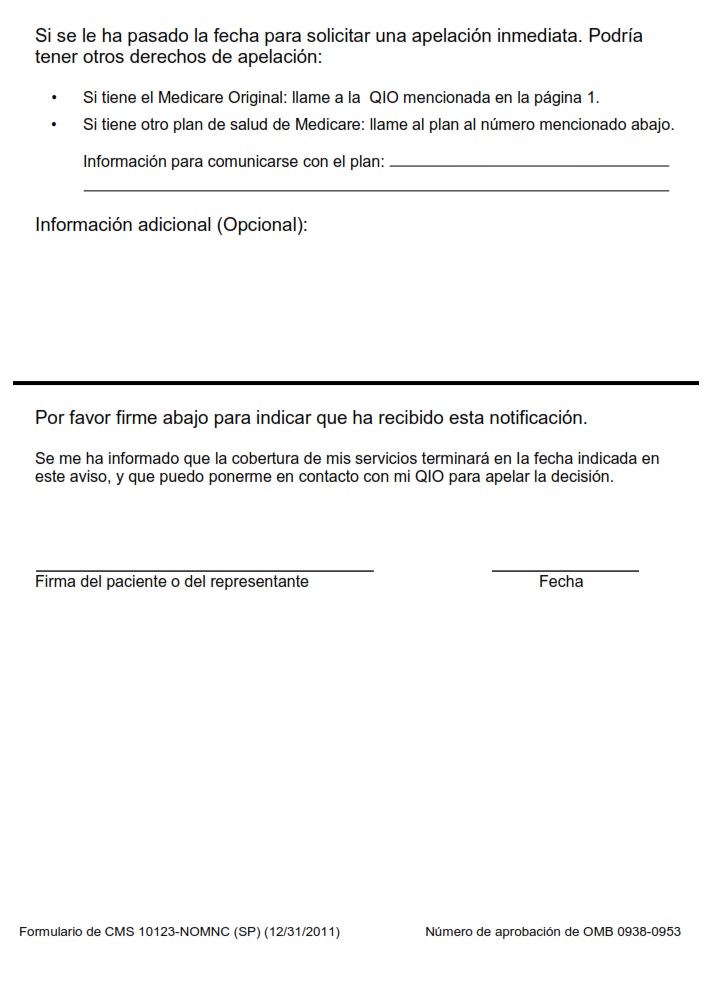
    CMS 10095NOMNC - Page 1 (Spanish) CMS 10095NOMNC - Page 2 (Spanish)