Author: Bismillah

  • CMS 838 – Medicare Credit Balance Reporting Requirements

    CMS 838 – Medicare Credit Balance Reporting Requirements

    CMSFORM.ORGCMS 838 – Medicare Credit Balance Reporting Requirements – Navigating the complex world of healthcare billing and compliance can often feel like traversing a maze without a map. One particularly intricate puzzle that providers must solve is understanding and adhering to Medicare Credit Balance Reporting Requirements outlined in CMS 838. This regulation serves as a vital piece in the larger puzzle of Medicare reimbursement, requiring providers to meticulously report any overpayments received from the program. Failure to comply with these reporting requirements can lead to significant penalties and headaches for healthcare organizations, making it crucial for providers to grasp the intricacies of this regulation. In this article, we will delve into the nuances of CMS 838, demystifying its requirements and providing guidance on how providers can successfully navigate this challenging terrain.

    Download CMS 838 – Medicare Credit Balance Reporting Requirements

    [su_table responsive=”yes”]

    Form Number CMS 838
    Form Title Medicare Credit Balance Reporting Requirements
    Published 2003-10-01
    O.M.B. 0938-0600
    File Size 100 KB

    [/su_table]

    [download id=’1349′]

    What is a CMS 838?

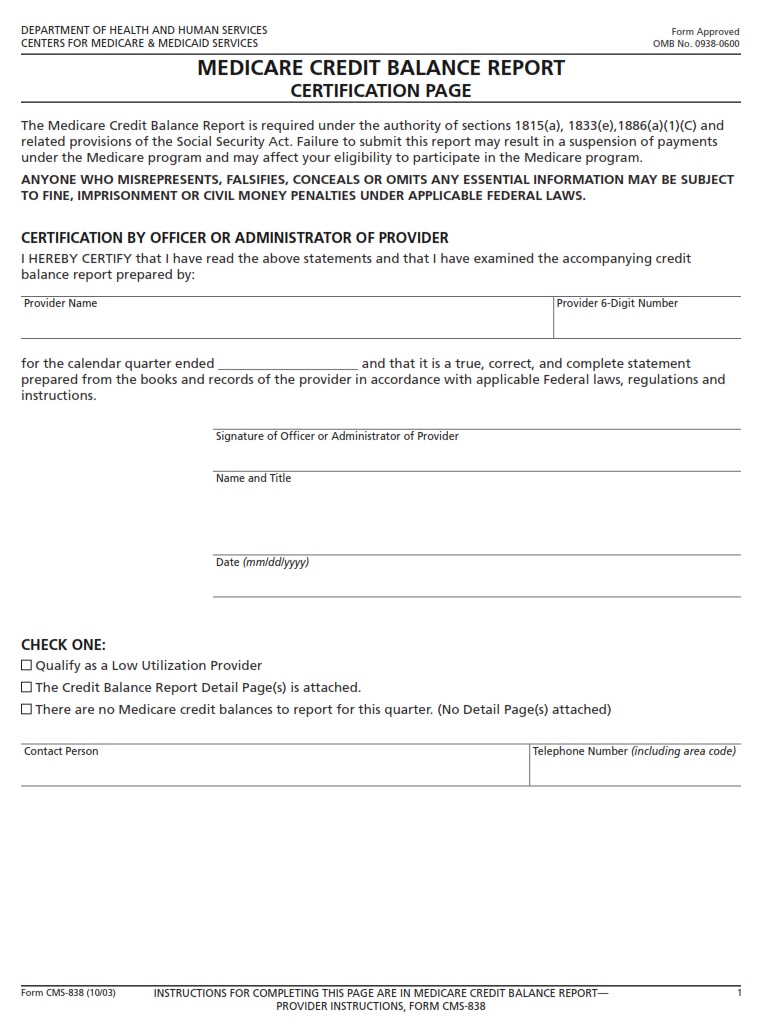
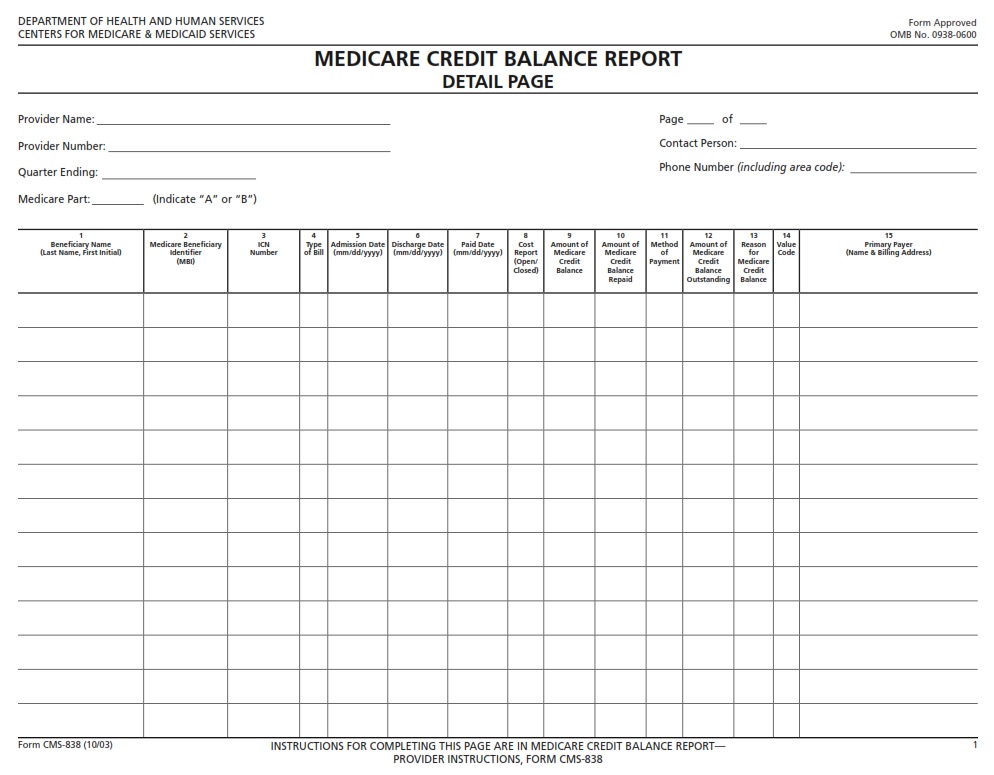
    CMS 838 refers to the form used for Medicare Credit Balance Reporting, a crucial process for healthcare providers to reconcile overpayments from Medicare. This reporting requirement ensures that providers return any excess payments, thus maintaining compliance with Medicare regulations. By accurately completing and submitting CMS 838, providers not only follow legal obligations but also contribute to the integrity and sustainability of the Medicare program.

    One key aspect of CMS 838 is its role in preventing fraud and abuse within the healthcare system. Through diligent credit balance reporting, providers can identify and rectify any discrepancies or errors in billing, reducing the risk of fraudulent activities. Additionally, by adhering to these reporting requirements, healthcare organizations demonstrate their commitment to ethical billing practices and financial transparency. Embracing CMS 838 as a tool for accountability can help foster trust between providers and government payers while supporting overall program efficiency and effectiveness.

    Where Can I Find a CMS 838?

    If you’re in search of a CMS 838 form for Medicare Credit Balance Reporting, you can easily access it on the official website of the Centers for Medicare and Medicaid Services (CMS). The form is readily available for download in PDF format, making it convenient for healthcare providers to submit their credit balance reports. Additionally, many healthcare billing software platforms also offer integration with the CMS 838 form, streamlining the reporting process and reducing manual errors.

    For those looking to ensure compliance with Medicare regulations regarding credit balance reporting, obtaining a CMS 838 form is essential. It serves as a crucial tool for accurately documenting and reporting any overpayments identified by healthcare providers. By using this standardized form, organizations can demonstrate transparency and adherence to regulatory requirements, ultimately enhancing their credibility and trustworthiness within the healthcare industry.

    CMS 838 – Medicare Credit Balance Reporting Requirements

    Healthcare providers participating in Medicare must adhere to CMS 838 regulations regarding credit balance reporting. These requirements aim to ensure accurate accounting and prevent overpayments or discrepancies in reimbursements. By diligently following these guidelines, providers can maintain compliance with Medicare standards and avoid potential audits or penalties.

    Effective management of credit balances is crucial for healthcare organizations to uphold financial integrity and demonstrate accountability in their billing practices. CMS 838 serves as a valuable framework for providers to streamline their reimbursement processes and minimize errors that could lead to costly repercussions. By embracing these reporting requirements proactively, organizations can enhance their operational efficiency while safeguarding their financial health in an ever-evolving healthcare landscape.

    CMS 838 Example
    CMS 838 - Page 2 CMS 838 - Page 1

  • CMS 821 – PERITONEAL DIALYSIS CLINICAL PERFORMANCE MEASURES DATA COLLECTION FORM 2005

    CMS 821 – PERITONEAL DIALYSIS CLINICAL PERFORMANCE MEASURES DATA COLLECTION FORM 2005

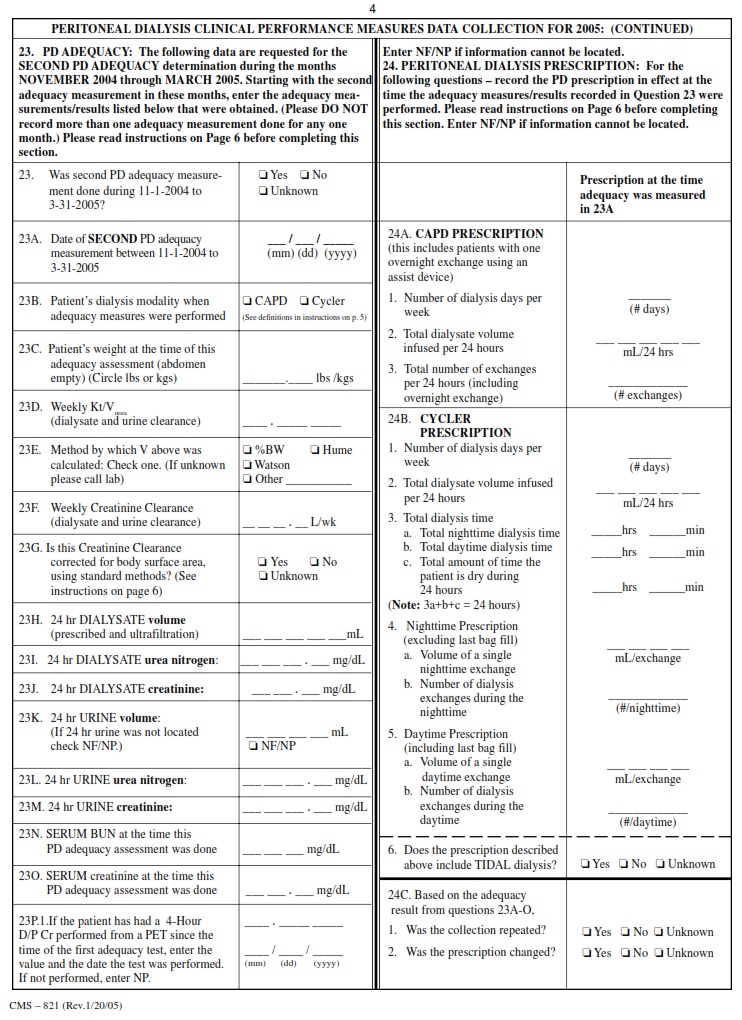
    CMSFORM.ORGCMS 821 – PERITONEAL DIALYSIS CLINICAL PERFORMANCE MEASURES DATA COLLECTION FORM 2005 – In the intricate world of healthcare, the pursuit of excellence in patient care is an ongoing journey fueled by data-driven insights and meticulous analysis. Enter CMS 821 – a seemingly mundane form that holds within it the power to revolutionize the landscape of peritoneal dialysis clinical practices. As we delve into the depths of this unassuming document from 2005, we uncover a treasure trove of information that not only charts the course of patient outcomes but also serves as a beacon guiding healthcare professionals towards optimal performance measures. Join us on this enlightening exploration as we unravel the significance and impact of CMS 821 in shaping the future trajectory of peritoneal dialysis care, one data point at a time. Strap in, dear reader, for a journey through time and numbers that promises to unveil hidden gems within the realm of clinical performance evaluation like never before.

    Download CMS 821 – PERITONEAL DIALYSIS CLINICAL PERFORMANCE MEASURES DATA COLLECTION FORM 2005

    [su_table responsive=”yes”]

    Form Number CMS 821
    Form Title PERITONEAL DIALYSIS CLINICAL PERFORMANCE MEASURES DATA COLLECTION FORM 2005
    Published 2005-01-01
    O.M.B.
    File Size 60 KB

    [/su_table]

    [download id=’1350′]

    What is a CMS 821?

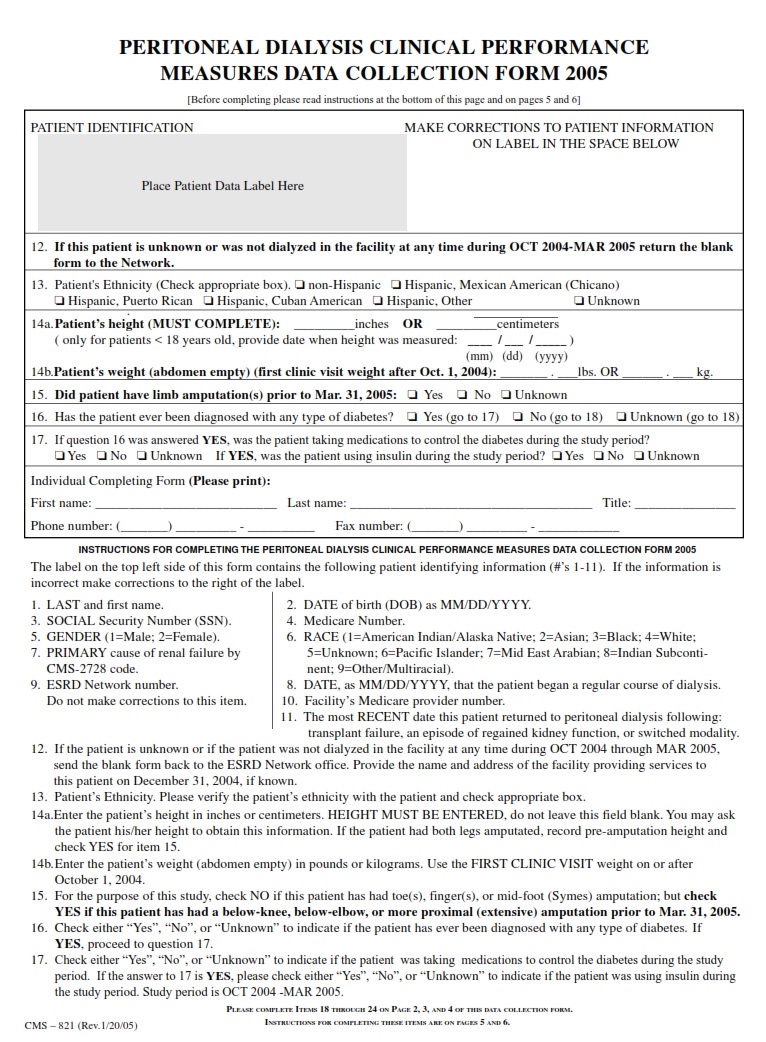
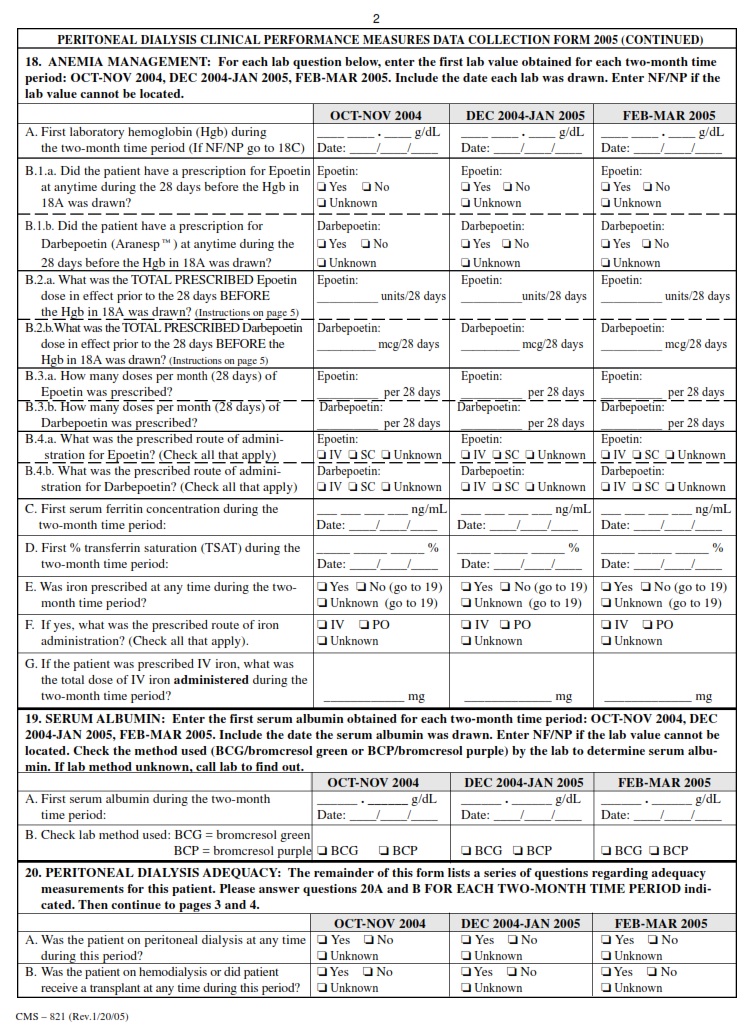
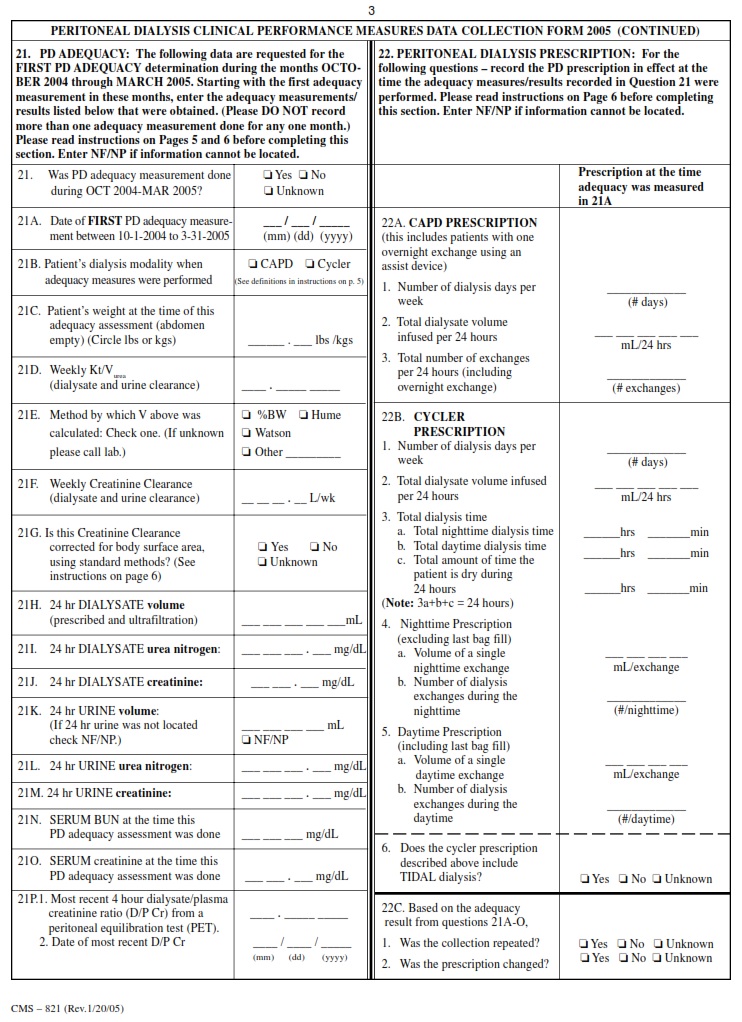
    CMS 821, also known as the Peritoneal Dialysis Clinical Performance Measures Data Collection Form 2005, plays a crucial role in standardizing data collection for patients undergoing peritoneal dialysis. This form is designed to track specific metrics related to the clinical performance of peritoneal dialysis treatments, such as adequacy of dialysis dose, control of anemia and mineral metabolism, and prevention of infections. By consistently collecting and analyzing this data using CMS 821, healthcare providers can evaluate the effectiveness of their treatment protocols and identify areas for improvement in patient care.

    One key advantage of utilizing CMS 821 is its ability to facilitate benchmarking efforts within the healthcare industry. By comparing clinical performance measures across different healthcare facilities, providers can assess their relative performance levels and implement best practices to achieve better outcomes for patients undergoing peritoneal dialysis. Furthermore, the structured nature of CMS 821 promotes transparency and accountability in healthcare delivery by ensuring that all relevant data points are documented accurately and comprehensively. In essence, CMS 821 serves as a vital tool in driving quality improvement initiatives and promoting optimal patient care in the field of peritoneal dialysis.

    Where Can I Find a CMS 821?

    For individuals in search of a CMS 821 form, they can typically be obtained from various sources such as healthcare facilities, medical supply companies, or directly from the Centers for Medicare & Medicaid Services website. These forms are essential for collecting crucial data related to peritoneal dialysis clinical performance measures in medical settings. Healthcare professionals rely on these forms to gather accurate and standardized information to assess the quality of care provided to patients undergoing peritoneal dialysis.

    It is important for healthcare providers to comprehend the significance of accurately completing the CMS 821 form as it plays a vital role in evaluating the effectiveness of patient care practices. This form serves as a tool for monitoring outcomes, identifying areas of improvement, and ensuring compliance with clinical guidelines. By utilizing this data collection form effectively, healthcare organizations can enhance their overall performance and optimize patient outcomes in peritoneal dialysis treatments.

    CMS 821 – PERITONEAL DIALYSIS CLINICAL PERFORMANCE MEASURES DATA COLLECTION FORM 2005

    Peritoneal dialysis is a crucial treatment option for patients with end-stage renal disease, offering flexibility and convenience compared to hemodialysis. The CMS 821 Peritoneal Dialysis Clinical Performance Measures Data Collection Form of 2005 plays a pivotal role in ensuring quality care for these patients by collecting essential data that can drive improvements in clinical outcomes. This form serves as a valuable tool for healthcare providers to monitor and evaluate the effectiveness of peritoneal dialysis treatments, aiding in the identification of areas for enhancement and optimization.

    By meticulously documenting key performance measures such as infection rates, adequacy of dialysis, and fluid management, healthcare teams can track trends over time and implement targeted interventions to enhance patient outcomes. The data captured through the CMS 821 form not only facilitates internal quality improvement initiatives within healthcare facilities but also enables benchmarking against national standards to drive overall excellence in peritoneal dialysis care delivery. Embracing this data-driven approach empowers healthcare providers to make informed decisions, optimize treatment protocols, and ultimately improve patient well-being and satisfaction throughout their peritoneal dialysis journey.

    CMS 821 Example

    CMS 821 - Page 1 CMS 821 - Page 2 CMS 821 - Page 3 CMS 821 - Page 4

  • CMS 377 – AMBULATORY SURGICAL CENTER REQUEST FOR CERTIFICATION IN MEDICARE

    CMS 377 – AMBULATORY SURGICAL CENTER REQUEST FOR CERTIFICATION IN MEDICARE

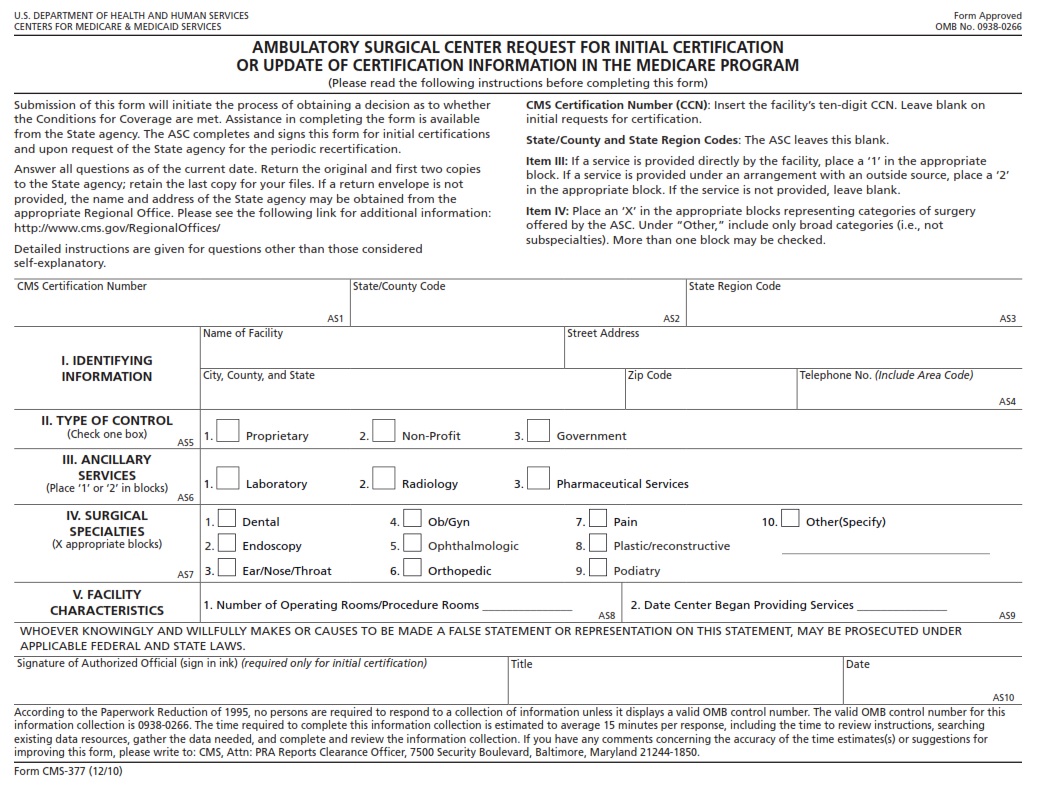
    CMSFORM.ORGCMS 377 – AMBULATORY SURGICAL CENTER REQUEST FOR CERTIFICATION IN MEDICARE – As the healthcare landscape continues to evolve, the role of ambulatory surgical centers (ASCs) in providing efficient and cost-effective care has become increasingly pivotal. In this era of advancing medical technology and patient-centered care, CMS 377 – Ambulatory Surgical Center Request for Certification in Medicare stands at the forefront as a critical document that shapes the future of these facilities. From enhancing accessibility to surgical procedures outside traditional hospital settings to optimizing recovery times and reducing healthcare costs, ASCs offer a multitude of benefits for both patients and providers alike.

    Imagine stepping into a modern facility where state-of-the-art equipment meets personalized care, revolutionizing the way surgeries are conducted. The quest for CMS certification not only signifies adherence to strict quality standards but also symbolizes a commitment to excellence in outpatient surgical services. Join us on an exploration of how ASCs are redefining the healthcare experience, empowering patients with choice and convenience while ensuring top-notch medical outcomes across diverse specialties.

    Download CMS 377 – AMBULATORY SURGICAL CENTER REQUEST FOR CERTIFICATION IN MEDICARE

    [su_table responsive=”yes”]

    Form Number CMS 377
    Form Title AMBULATORY SURGICAL CENTER REQUEST FOR CERTIFICATION IN MEDICARE
    Published 0021-02-28
    O.M.B. 0938-0266
    File Size 223 KB

    [/su_table]

    [download id=’1351′]

    What is a CMS 377?

    A CMS 377 form is an essential document for ambulatory surgical centers seeking certification in Medicare. This form serves as a request for certification and outlines the center’s compliance with Medicare requirements related to patient care, safety protocols, and quality standards. It is a crucial step for ASCs looking to participate in the Medicare program and highlights their commitment to delivering high-quality healthcare services.

    By completing the CMS 377 form, ambulatory surgical centers demonstrate accountability and transparency in their operations, ensuring that they meet the strict guidelines set forth by Medicare. This process not only benefits the ASCs by opening up opportunities for reimbursement from Medicare but also reassures patients of the center’s dedication to maintaining excellence in care delivery. Ultimately, the CMS 377 form plays a pivotal role in establishing trust between ASCs, patients, and regulatory bodies, paving the way for successful collaboration in ensuring optimal healthcare outcomes.

    Where Can I Find a CMS 377?

    If you’re in search of a CMS 377 form for an Ambulatory Surgical Center certification, the first place to look is the official Medicare website. Here, you can navigate through the various forms and easily locate the CMS 377 document. Additionally, reaching out to your regional Medicare administrative contractor can provide you with specific guidance on where to find and submit the necessary paperwork for certification.

    For those who prefer a more hands-on approach, visiting your local Medicare office or contacting their helpline can also lead you in the right direction. Remember that while finding a CMS 377 form may seem like a daunting task at first, there are multiple resources available to assist you in obtaining this essential document for Ambulatory Surgical Center certification.

    CMS 377 – AMBULATORY SURGICAL CENTER REQUEST FOR CERTIFICATION IN MEDICARE

    Navigating the process of obtaining certification in Medicare for an Ambulatory Surgical Center under CMS 377 can be a critical juncture for healthcare facilities. The stringent requirements and complex documentation needed to meet compliance standards can seem overwhelming at first glance. However, viewing this process as an opportunity to enhance the quality of care provided and streamline operational efficiency can shift perspectives positively. By aligning with Medicare guidelines, ASCs not only ensure reimbursement but also demonstrate commitment to patient safety and best practices in healthcare delivery.

    One key aspect often overlooked is thorough preparation and ongoing monitoring post-certification. Establishing robust internal processes for documentation, staff training, and regulatory compliance sets the stage for long-term success. Engaging with consultants or professionals specializing in CMS 377 accreditation can provide invaluable insights into industry best practices and up-to-date regulatory changes. Embracing a culture of continuous improvement within the ASC framework not only drives quality outcomes but also fosters trust among patients seeking advanced surgical care in ambulatory settings.

    CMS 377 Example

    CMS 377

  • CMS 1771 – ATTENDING PHYSICIANS STATEMENT AND DOCUMENTATION FOR MEDICARE EMERGENCY

    CMS 1771 – ATTENDING PHYSICIANS STATEMENT AND DOCUMENTATION FOR MEDICARE EMERGENCY

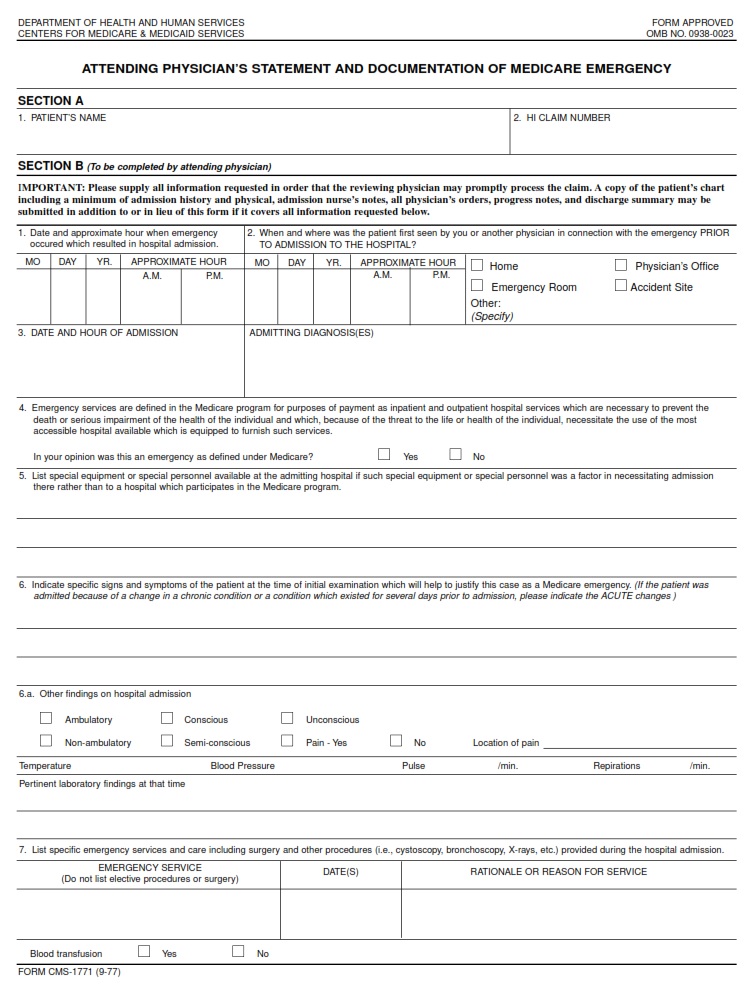
    CMSFORM.ORGCMS 1771 – ATTENDING PHYSICIANS STATEMENT AND DOCUMENTATION FOR MEDICARE EMERGENCY – In the fast-paced world of healthcare, where every second counts and critical decisions can mean the difference between life and death, the role of attending physicians is paramount. CMS 1771 – Attending Physicians Statement and Documentation for Medicare Emergency, serves as the cornerstone for ensuring that accurate and timely information is provided to Medicare in emergency situations. This vital document not only captures essential details about patient care but also acts as a lifeline for healthcare providers navigating the complex landscape of Medicare regulations.

    Imagine a scenario where time is of the essence, and a patient’s well-being hangs in the balance. In such moments, having a clear protocol like CMS 1771 can be a game-changer, streamlining communication between healthcare professionals and government agencies to facilitate swift and effective care. Join us on a journey through the intricacies of this crucial form, exploring its significance in emergency medical settings and unraveling how it empowers physicians to advocate for their patients when it matters most.

    Download CMS 1771 – ATTENDING PHYSICIANS STATEMENT AND DOCUMENTATION FOR MEDICARE EMERGENCY

    [su_table responsive=”yes”]

    Form Number CMS 1771
    Form Title ATTENDING PHYSICIANS STATEMENT AND DOCUMENTATION FOR MEDICARE EMERGENCY
    Published 1977-09-01
    O.M.B. 0938-0023
    File Size 107 KB

    [/su_table]

    [download id=’1352′]

    What is a CMS 1771?

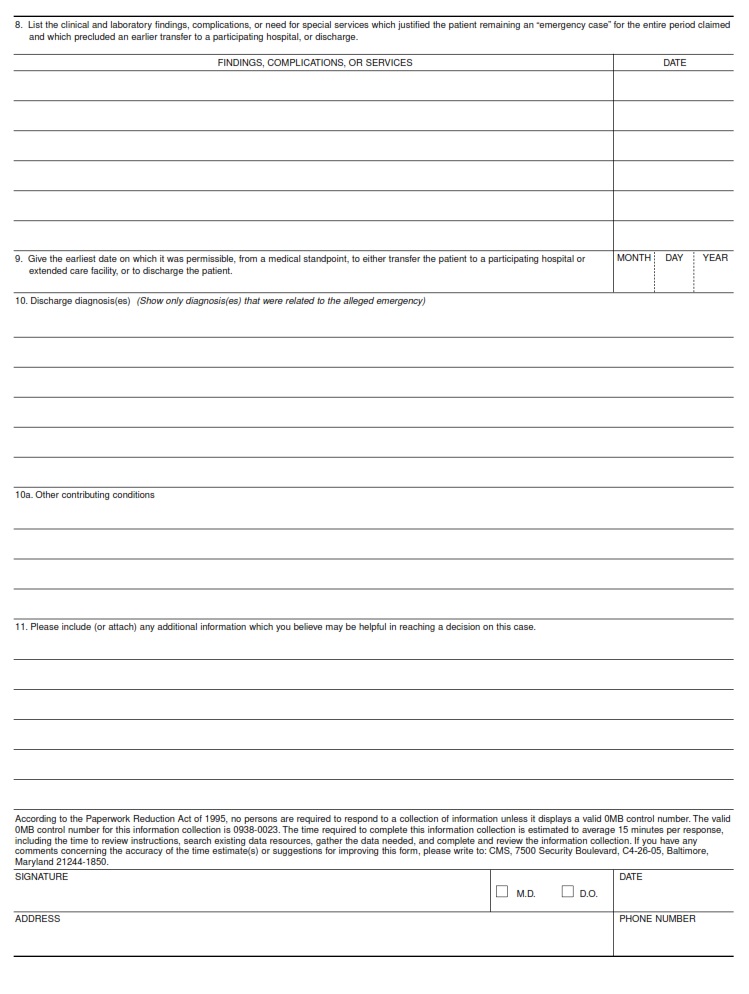
    The CMS 1771, also known as the Attending Physician’s Statement and Documentation for Medicare Emergency, serves as a crucial form in the healthcare system. This document is used to capture essential information regarding a patient’s condition, treatment plan, and overall medical care during emergency situations covered by Medicare. By completing the CMS 1771 accurately and promptly, healthcare providers help ensure proper reimbursement and quality care for patients in urgent need.

    Furthermore, the CMS 1771 plays a vital role in facilitating communication between healthcare providers and Medicare administrators. This form provides a detailed account of the attending physician’s observations, assessments, and recommendations for each patient encounter. It serves as a valuable tool for documenting medical necessity, justifying interventions, and maintaining transparency in emergency medical services under Medicare coverage. Completing the CMS 1771 thoroughly can streamline administrative processes while ensuring patients receive timely access to critical care.

    Where Can I Find a CMS 1771?

    When searching for a CMS 1771 form, one of the first places to turn to is the official Centers for Medicare & Medicaid Services (CMS) website. Here, you can find a searchable database where you can easily locate and download the form. Another option is reaching out to your healthcare provider or local hospital, as they may have copies of the form readily available for patients. Additionally, some pharmacies or medical supply stores might also carry CMS forms like the 1771 for patients in need.

    If all else fails, contacting your Medicare administrator or insurance company can often lead you in the right direction for obtaining a CMS 1771 form. It’s important to remember that having this documentation filled out accurately and promptly is crucial when it comes to navigating emergency medical situations under Medicare coverage. By being proactive in seeking out this form, you are ensuring that you have all necessary documentation ready when unforeseen medical needs arise.

    CMS 1771 – ATTENDING PHYSICIANS STATEMENT AND DOCUMENTATION FOR MEDICARE EMERGENCY

    CMS 1771, also known as the Attending Physicians Statement and Documentation for Medicare Emergency, plays a crucial role in ensuring that patients receive the necessary care during emergencies. This form serves as a vital tool for healthcare providers to communicate essential information about a patient’s condition, treatment plan, and medical history to facilitate timely and appropriate care. By documenting details such as the patient’s diagnosis, prognosis, and recommended treatment interventions, this form helps streamline communication among healthcare professionals involved in the patient’s care.

    Moreover, CMS 1771 is instrumental in establishing accountability and transparency in emergency medical situations. It serves as a legal document that outlines the attending physician’s assessment of the patient’s condition and guides subsequent medical decisions. Furthermore, this documentation is essential for Medicare reimbursement purposes, ensuring that healthcare providers receive adequate compensation for delivering emergency services. Overall, CMS 1771 underscores the importance of clear and comprehensive documentation in safeguarding patients’ well-being during critical moments of need.

    CMS 1771 Example

    CMS 1771 - Page 1 CMS 1771 - Page 2

  • CMS 1980 – CARRIER OR INTERMEDIARY REQUEST FOR SSO ASSISTANCE

    CMS 1980 – CARRIER OR INTERMEDIARY REQUEST FOR SSO ASSISTANCE

    CMSFORM.ORGCMS 1980 – CARRIER OR INTERMEDIARY REQUEST FOR SSO ASSISTANCE – In the ever-evolving landscape of modern technology, the concept of Single Sign-On (SSO) has become a crucial element in streamlining access to various systems and applications. However, what if we took a journey back in time to the year 1980 when this revolutionary idea was just beginning to take shape within Content Management Systems (CMS)? Imagine being transported to an era where computers were bulky, internet was non-existent, and the term intermediary request carried a different connotation altogether. Join us as we delve into the intriguing world of CMS 1980 – where carriers and intermediaries sought assistance for SSO implementation, setting the stage for the digital revolution that would follow in the years to come.

    Download CMS 1980 – CARRIER OR INTERMEDIARY REQUEST FOR SSO ASSISTANCE

    [su_table responsive=”yes”]

    Form Number CMS 1980
    Form Title CARRIER OR INTERMEDIARY REQUEST FOR SSO ASSISTANCE
    Published 1978-03-01
    O.M.B.
    File Size 15 KB

    [/su_table]

    [download id=’1353′]

    What is a CMS 1980?

    In the technology landscape of 1980, Content Management Systems (CMS) were a nascent concept that primarily revolved around document management and collaboration within organizations. These early CMS platforms focused on storing, organizing, and retrieving digital content to streamline business processes and enhance productivity. While the functionalities were limited compared to modern-day CMS systems, these pioneering solutions laid the foundation for the digital content management revolution that was yet to come.

    One key characteristic of CMS in 1980 was their reliance on central servers and mainframe computers for storage and processing power. This centralized approach facilitated better control over access permissions and version control, ensuring data security in an era where digital information was becoming increasingly valuable. Additionally, CMS from this period often required specialized training to operate, reflecting the technical complexity of managing digital content at a time when computer literacy was not as widespread as it is today.

    Where Can I Find a CMS 1980?

    If you find yourself in search of a CMS 1980, the task can prove to be quite challenging. With technology advancements rendering older models obsolete, locating a CMS 1980 may require some ingenuity. One potential avenue to explore is vintage technology marketplaces or forums where collectors and enthusiasts gather to trade or sell rare items from the past. Additionally, reaching out to specialized electronics recyclers or companies that focus on refurbishing vintage equipment might yield positive results in your quest for a CMS 1980.

    Another option worth considering is attending electronics and technology conventions or fairs where vendors sometimes showcase retro gadgets and devices such as the CMS 1980. These events provide a unique opportunity to network with individuals who share an interest in antique technology and might know of sources where vintage CMS systems are available. Embracing alternative channels like online auctions, estate sales, or even contacting historical technology museums could potentially lead you closer to obtaining a cherished piece of computing history like the elusive CMS 1980 system.

    CMS 1980 – CARRIER OR INTERMEDIARY REQUEST FOR SSO ASSISTANCE

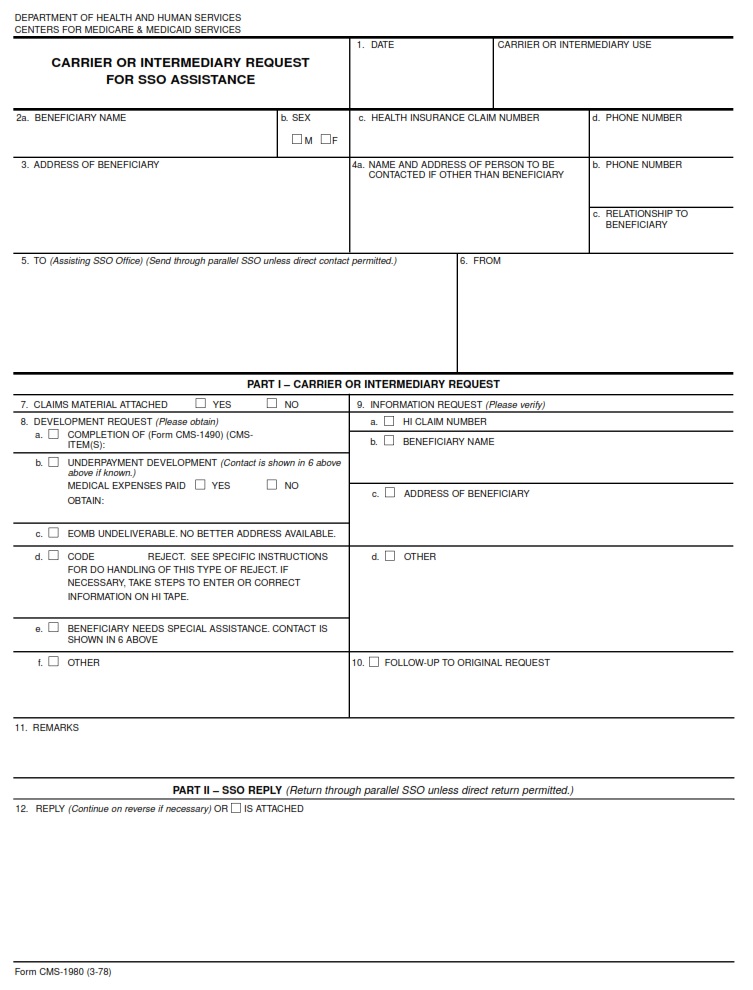
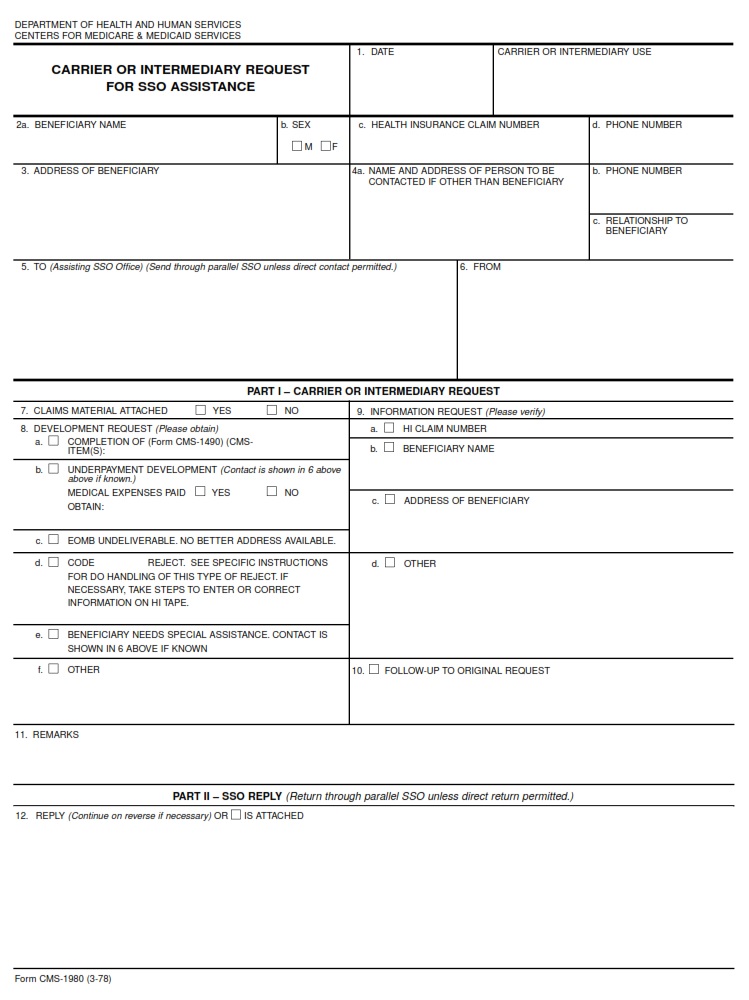
    CMS 1980, the Carrier or Intermediary Request for SSO Assistance, is a pivotal document that plays a crucial role in streamlining the process of requesting assistance from the Single Sign-On (SSO) system. This CMS form serves as a bridge between carriers and intermediaries, ensuring seamless communication and coordination in accessing vital information through the SSO platform. By accurately completing this form, stakeholders can expedite their requests for support and unlock the full potential of the SSO system’s capabilities.

    One key aspect to consider when utilizing CMS 1980 is the importance of providing clear and detailed information regarding the assistance needed. This ensures that all parties involved are on the same page and can work effectively towards resolving any issues or queries. Additionally, understanding the nuances of using this form can significantly enhance organizational efficiency and productivity by leveraging technology to streamline processes effortlessly.

    In today’s fast-paced digital landscape, embracing tools like CMS 1980 is essential in navigating complex healthcare systems efficiently. By mastering these forms and optimizing their utilization within carrier-intermediary relationships, organizations can minimize delays, resolve issues promptly, and ultimately deliver superior service to beneficiaries. The power of CMS 1980 lies in its ability to facilitate collaboration and communication between stakeholders seamlessly – making it an invaluable asset in modern healthcare operations.

    CMS 1980 Example

    CMS 1980 - Page 1 CMS 1980 - Page 2

  • CMS 820 – IN-CENTER HEMODIALYSIS (HD) CLINICAL PERFORMANCE MEASURES DATA COLLECTION FORM 2005

    CMS 820 – IN-CENTER HEMODIALYSIS (HD) CLINICAL PERFORMANCE MEASURES DATA COLLECTION FORM 2005

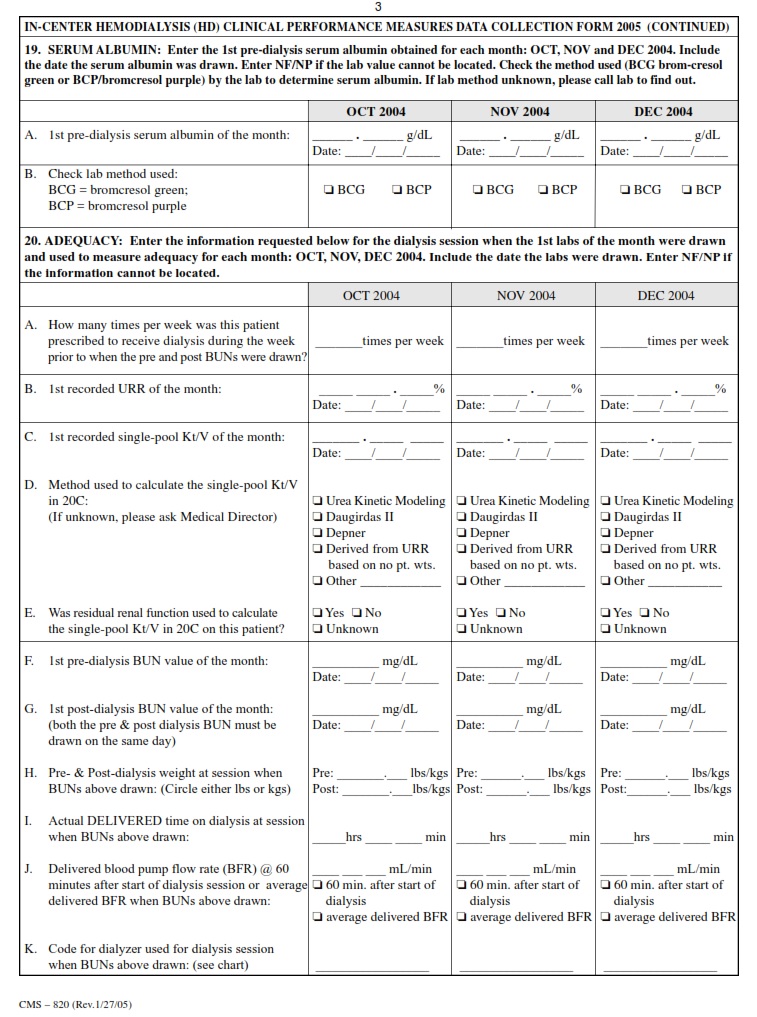
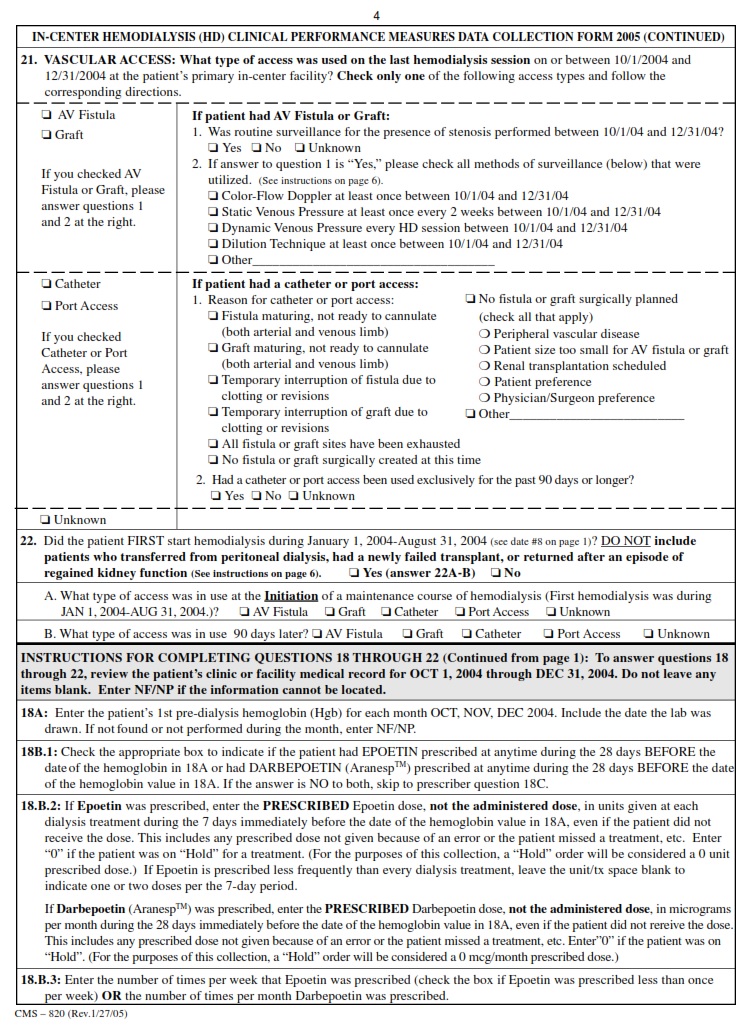
    CMSFORM.ORGCMS 820 – IN-CENTER HEMODIALYSIS (HD) CLINICAL PERFORMANCE MEASURES DATA COLLECTION FORM 2005 – In the intricate world of healthcare data collection, the CMS 820 form stands as a beacon of precision and accountability in the realm of in-center hemodialysis clinical performance measures. As we delve into the depths of this seemingly mundane form from 2005, a treasure trove of insights and revelations awaits us. Imagine stepping back in time, where each tick mark and recorded value on this document represents a moment frozen in the continuum of patient care. From blood pressure readings to dialysis adequacy calculations, every entry tells a story of dedication, expertise, and above all—compassion for those undergoing life-sustaining treatment. Join us on a journey through time as we unravel the significance behind each meticulous data point captured on the CMS 820 form, shedding light on the past to illuminate a path towards improved patient outcomes in the future.

    CMS 820 – IN-CENTER HEMODIALYSIS (HD) CLINICAL PERFORMANCE MEASURES DATA COLLECTION FORM 2005

    [su_table responsive=”yes”]

    Form Number CMS 820
    Form Title IN-CENTER HEMODIALYSIS (HD) CLINICAL PERFORMANCE MEASURES DATA COLLECTION FORM 2005
    Published 2005-01-01
    O.M.B.
    File Size 78 KB

    [/su_table]

    [download id=’1354′]

    What is a CMS 820?

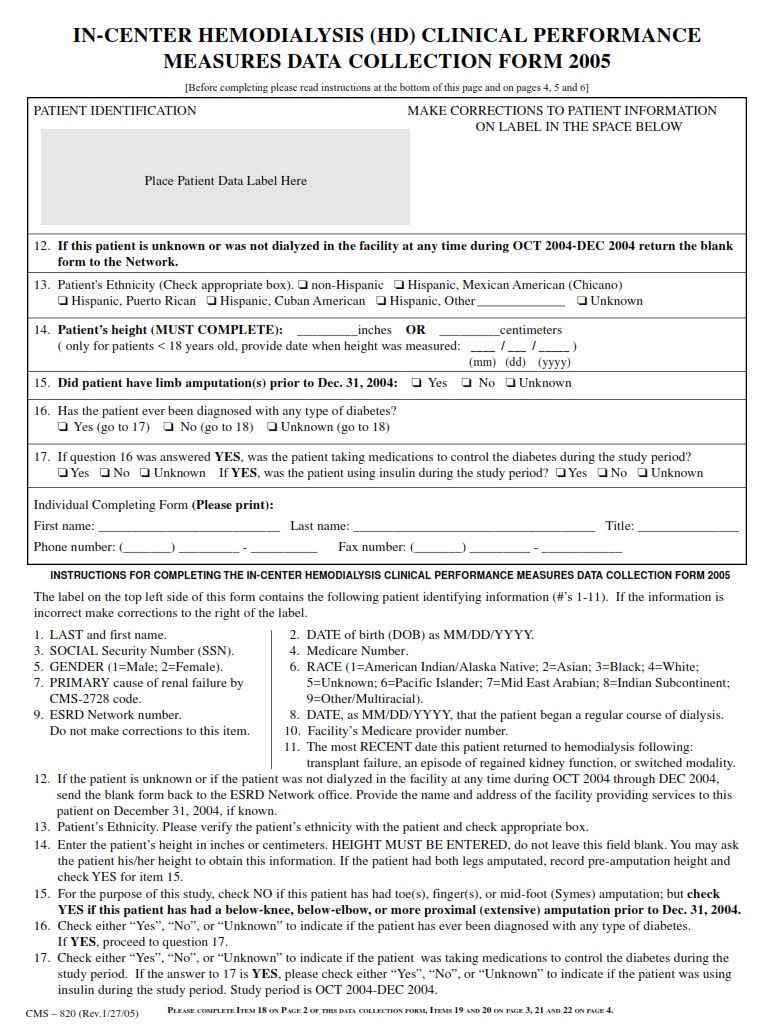
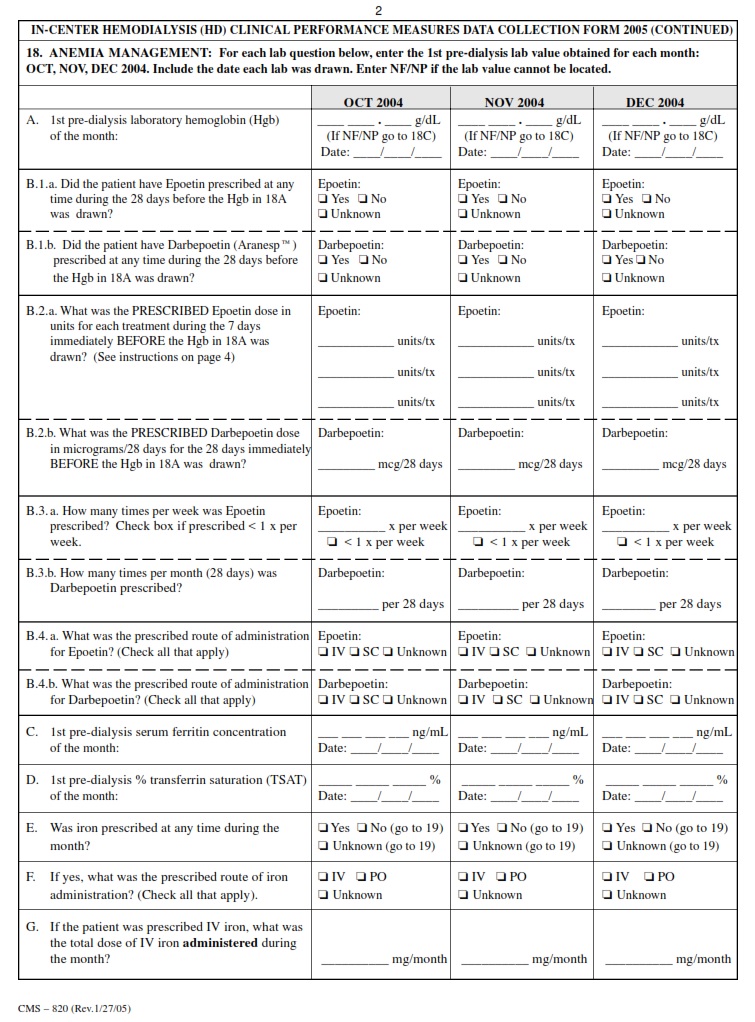
    At its core, the CMS 820 form serves as a crucial tool for healthcare providers in collecting essential data on in-center hemodialysis clinical performance measures. Designed with precision and detail, this form plays a pivotal role in monitoring and evaluating the quality of care provided to patients undergoing hemodialysis treatment. By capturing key metrics such as dialysis adequacy, anemia management, vascular access types, and infection control practices, the CMS 820 empowers healthcare facilities to track their performance and identify areas for improvement.

    The significance of the CMS 820 extends beyond mere data collection; it facilitates standardized reporting across different dialysis centers, enabling benchmarking and peer comparison to drive continuous quality enhancement initiatives. With a focus on transparency and accountability, this form not only fosters internal quality monitoring but also supports broader efforts aimed at enhancing patient outcomes on a larger scale. Embracing the insights gleaned from the CMS 820 can pave the way for evidence-based decision-making and optimized care delivery practices within the realm of in-center hemodialysis services.

    Where Can I Find a CMS 820?

    If you’re wondering where to find a CMS 820 form for in-center hemodialysis clinical performance measures data collection from 2005, look no further than the official website of the Centers for Medicare & Medicaid Services (CMS). The form is readily available for download on their website in the designated section for healthcare providers and facilities. Additionally, many dialysis centers and healthcare institutions may also have physical copies of the CMS 820 form on hand, which can be obtained directly from them upon request.

    For those who prefer a more streamlined approach, electronic health record systems often include templates or modules that encompass data collection forms like the CMS 820. Utilizing these digital resources can not only improve efficiency in data collection but also ensure compliance with regulatory requirements. With advancements in technology and healthcare management software, accessing and utilizing forms such as the CMS 820 has become increasingly convenient and user-friendly for healthcare professionals involved in hemodialysis care.

    CMS 820 – IN-CENTER HEMODIALYSIS (HD) CLINICAL PERFORMANCE MEASURES DATA COLLECTION FORM 2005

    The CMS 820 form revolutionized the way in-center hemodialysis clinical performance is measured and documented. Introduced in 2005, this data collection form enabled healthcare providers to systematically monitor and evaluate various aspects of patient care during HD treatments. By including key performance indicators such as vascular access type, dialysis adequacy, anemia management, mineral metabolism, and fluid management, the CMS 820 form provided a comprehensive snapshot of a patient’s overall health status and treatment efficacy.

    Healthcare facilities that implemented the use of the CMS 820 form saw significant improvements in patient outcomes and quality of care. The standardized approach to data collection allowed for better tracking of trends over time, identification of areas needing improvement, and implementation of targeted interventions for enhanced patient well-being. Furthermore, by benchmarking their clinical performance against national standards based on the CMS 820 data analysis, dialysis centers were able to drive continuous quality improvement initiatives and refine their practices to achieve better outcomes for all patients undergoing in-center hemodialysis treatments.

    CMS 820 Example

    CMS 820 - Page 1 CMS 820 - Page 2 CMS 820 - Page 3 CMS 820 - Page 4

  • CMS 10156 – Retiree Drug Subsidy

    CMS 10156 – Retiree Drug Subsidy

    CMSFORM.ORGCMS 10156 – Retiree Drug Subsidy – As the sun sets on a career well-lived, retirees are often faced with navigating the intricate world of healthcare benefits. Among the plethora of acronyms and forms lies one particularly intriguing puzzle piece: CMS 10156 – Retiree Drug Subsidy. This enigmatic program, shrouded in bureaucratic jargon, holds the key to unlocking substantial savings for both retirees and their former employers. Imagine a treasure trove hidden within the labyrinth of healthcare policies, offering financial relief and peace of mind to those embarking on their golden years. Join us as we unravel the complexities of CMS 10156 – Retiree Drug Subsidy and discover how it can be a beacon of hope amidst the uncertainty of retirement healthcare planning.

    Download CMS 10156 – Retiree Drug Subsidy

    [su_table responsive=”yes”]

    Form Number CMS 10156
    Form Title Retiree Drug Subsidy
    Published 2005-08-01
    O.M.B. 0938-0957
    File Size 214 KB

    [/su_table]

    [download id=’1355′]

    What is a CMS 10156?

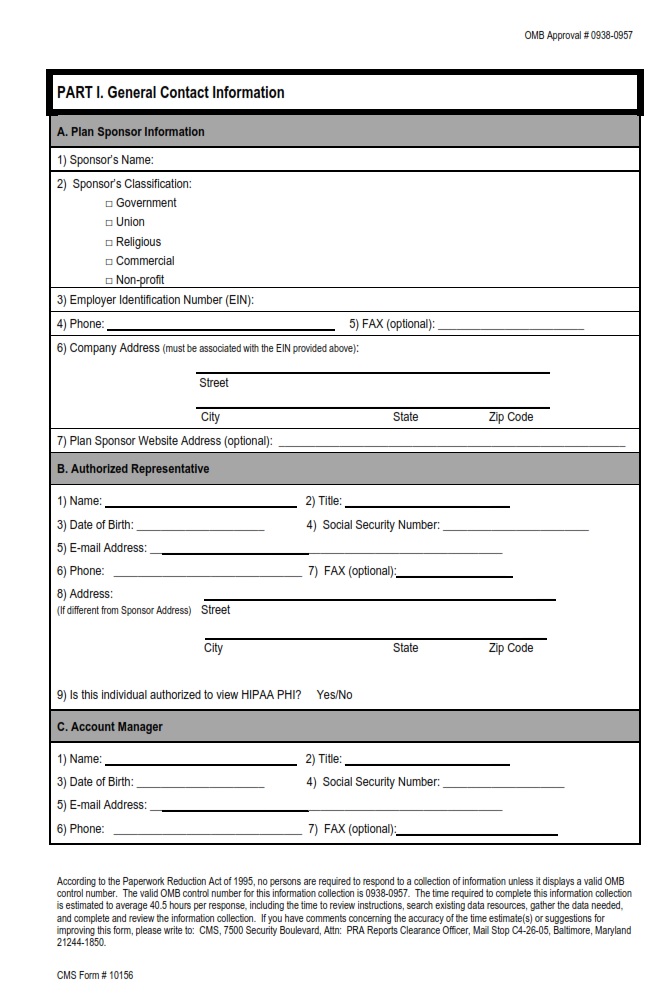
    In the realm of healthcare, CMS 10156 refers to the Retiree Drug Subsidy program offered by the Centers for Medicare & Medicaid Services. This initiative plays a crucial role in helping employers offset some of the costs associated with providing prescription drug coverage to their retired employees. Through financial assistance and reimbursement benefits, CMS 10156 aims to support employer-sponsored health plans and ensure continued access to affordable medications for retirees.

    By leveraging a sophisticated combination of data analysis and regulatory guidelines, CMS 10156 streamlines the process of applying for and receiving subsidies, ultimately easing the administrative burden on participating organizations. In essence, this program acts as a bridge between retirees’ healthcare needs and employers’ financial capabilities, fostering a mutually beneficial relationship that bolsters both employee wellness and organizational sustainability. It underlines a commitment to holistic healthcare management that prioritizes accessibility, affordability, and efficiency in delivering critical pharmaceutical services to retired individuals.

    Where Can I Find a CMS 10156?

    Finding a CMS 10156 form can be a crucial step for retirees seeking to benefit from the Retiree Drug Subsidy program. One of the primary sources to obtain this form is through the Centers for Medicare & Medicaid Services (CMS) website or by directly contacting their office. In addition, retirees can reach out to their former employers who may have the form in their records or access it through third-party healthcare providers.

    Furthermore, many online platforms dedicated to assisting retirees with healthcare benefits offer downloadable versions of the CMS 10156 form. It’s important for retirees to ensure they fully understand the instructions and requirements outlined in the form before submitting it to avoid any delays or potential issues with their subsidy eligibility. Proper documentation and timely submission are key factors in successfully accessing this financial support for prescription drug coverage during retirement.

    CMS 10156 – Retiree Drug Subsidy

    The CMS 10156 Retiree Drug Subsidy program has been a game-changer for many retirees, providing essential financial assistance for prescription medications. By offsetting a portion of the costs, this subsidy has allowed retirees to better manage their healthcare expenses and maintain access to necessary treatments. However, despite its benefits, navigating the complexities of the program can often be daunting for both retirees and employers alike.

    One key aspect to consider is the need for meticulous documentation and adherence to strict guidelines in order to qualify for and maintain eligibility in the program. Failure to comply with these requirements can lead to potential audit issues or even loss of subsidy funding. Moreover, as healthcare regulations continue to evolve, staying informed about any changes or updates to the program is crucial in order to ensure continued support for retirees. Overall, understanding the nuances of CMS 10156 Retiree Drug Subsidy is essential for maximizing its benefits and effectively managing healthcare costs in retirement.

    CMS 10156 Example

    CMS 10156 - Page 1 CMS 10156 - Page 2

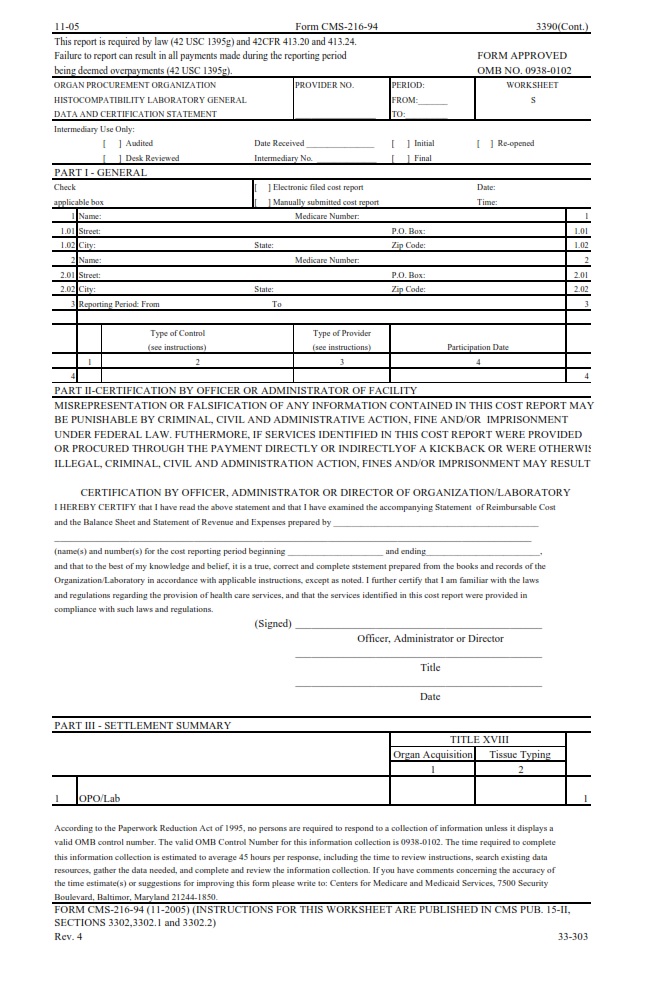
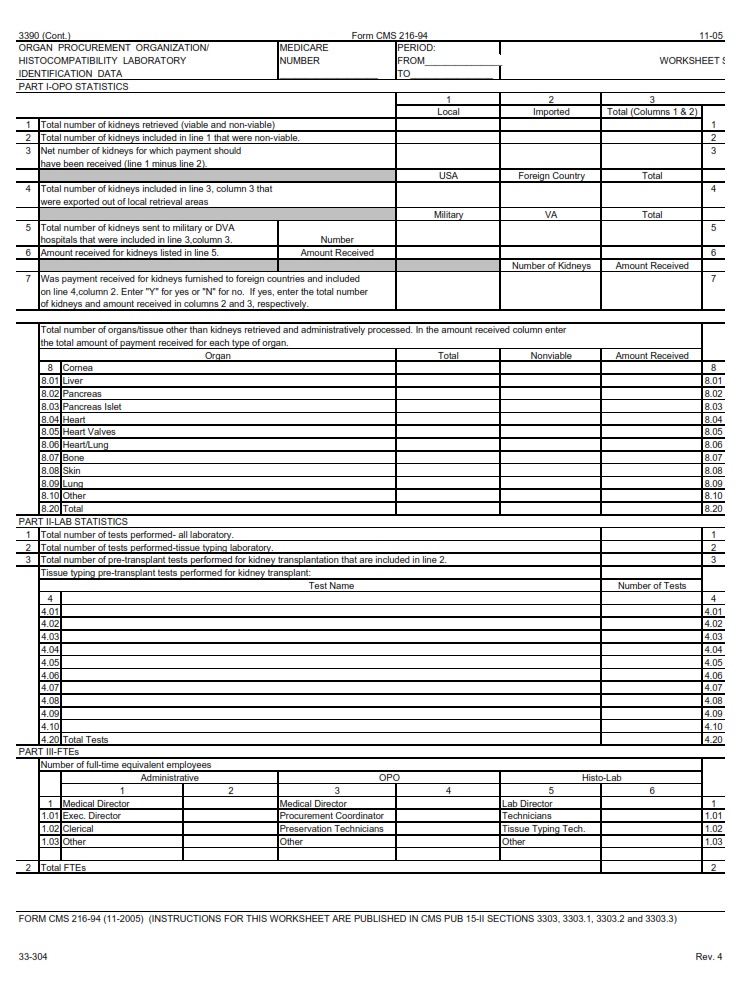
  • CMS 216 – ORGAN PROCUREMENT ORGANIZATION-HISTO-COMPATIBILITY LAB STATEMENT OF REIMBURSABLE COSTS

    CMS 216 – ORGAN PROCUREMENT ORGANIZATION-HISTO-COMPATIBILITY LAB STATEMENT OF REIMBURSABLE COSTS

    CMSFORM.ORGCMS 216 – ORGAN PROCUREMENT ORGANIZATION-HISTO-COMPATIBILITY LAB STATEMENT OF REIMBURSABLE COSTS – As advancements in medical science continue to push the boundaries of what is possible, the field of organ transplantation stands at the forefront of innovation and hope. Central to this process is the crucial role played by Organ Procurement Organizations (OPOs) and their Histo-Compatibility Labs, which ensure that donated organs find suitable matches for recipients in need. The CMS 216 form serves as a vital tool in this intricate dance of life-saving procedures, providing transparency on the reimbursable costs associated with these essential services.

    Imagine a world where every individual in need of a life-saving organ transplant could swiftly find a compatible donor match, thanks to meticulous testing and analysis conducted by dedicated professionals within Histo-Compatibility Labs. The complexities and intricacies involved in this process highlight the critical importance of understanding the detailed breakdown of reimbursable costs outlined in the CMS 216 form. Join us as we delve into the fascinating world of organ procurement organizations, uncovering the financial framework that underpins their noble mission of saving lives through successful transplants.

    Download CMS 216 – ORGAN PROCUREMENT ORGANIZATION-HISTO-COMPATIBILITY LAB STATEMENT OF REIMBURSABLE COSTS

    [su_table responsive=”yes”]

    Form Number CMS 216
    Form Title ORGAN PROCUREMENT ORGANIZATION-HISTO-COMPATIBILITY LAB STATEMENT OF REIMBURSABLE COSTS
    Published 2005-11-01
    O.M.B. 0938-0102
    File Size 47 KB

    [/su_table]

    [download id=’1356′]

    What is a CMS 216?

    A CMS 216, also known as the Organ Procurement Organization-Histo-Compatibility Lab Statement of Reimbursable Costs, plays a crucial role in the healthcare industry. This form is used by organ procurement organizations to report their costs related to histocompatibility testing for organ transplants. By providing transparency and accountability in cost reporting, the CMS 216 helps ensure that organ procurement organizations are adequately reimbursed for their services.

    Furthermore, the data collected through the CMS 216 form helps stakeholders analyze trends in reimbursement and funding for vital healthcare services. Understanding these financial aspects is essential for maintaining high-quality care in organ transplantation and ensuring equitable access to life-saving treatments. In essence, the CMS 216 serves as a tool that promotes efficiency and fairness within the healthcare system, ultimately benefiting both providers and patients alike.

    Where Can I Find a CMS 216?

    If you’re looking for a CMS 216 form to access the Organ Procurement Organization-Histo-Compatibility Lab Statement of Reimbursable Costs, you can typically find it online through official government websites or healthcare provider portals. These forms play a crucial role in detailing the costs associated with laboratory services related to organ procurement and transplantation. Some specialized medical supply companies may also offer CMS 216 forms for purchase or download, making them accessible to a wider audience.

    Additionally, reaching out directly to organ procurement organizations or healthcare facilities that deal with histocompatibility labs could be another avenue to obtain a CMS 216 form. It’s important to ensure that any form obtained is the most up-to-date version and complies with all regulatory requirements surrounding reimbursable costs in this specialized field. By exploring various channels and resources, individuals seeking this specific document can navigate the process more efficiently and effectively.

    CMS 216 – ORGAN PROCUREMENT ORGANIZATION-HISTO-COMPATIBILITY LAB STATEMENT OF REIMBURSABLE COSTS

    In the complex landscape of organ procurement, the Histo-Compatibility Lab plays a pivotal role in ensuring successful transplant outcomes. The State of Reimbursable Costs associated with CMS 216 sheds light on the financial considerations underpinning this critical aspect of organ donation and transplantation. By delineating costs incurred in histocompatibility testing and related services, organizations can navigate the intricacies of reimbursement processes more efficiently.

    Furthermore, understanding the nuances of reimbursable costs enhances transparency and accountability within organ procurement organizations. It underscores the importance of accurate cost reporting to optimize resource allocation and streamline operations. This comprehensive approach fosters a culture of fiscal responsibility while bolstering organizational resilience in delivering life-saving services to patients in need.

    CMS 216 Example

    CMS 216 - Page 1 CMS 216 - Page 2

  • CMS 381 – MODEL LETTER REQUESTING IDENTIFICATION OF EXTENSION LOCATIONS

    CMS 381 – MODEL LETTER REQUESTING IDENTIFICATION OF EXTENSION LOCATIONS

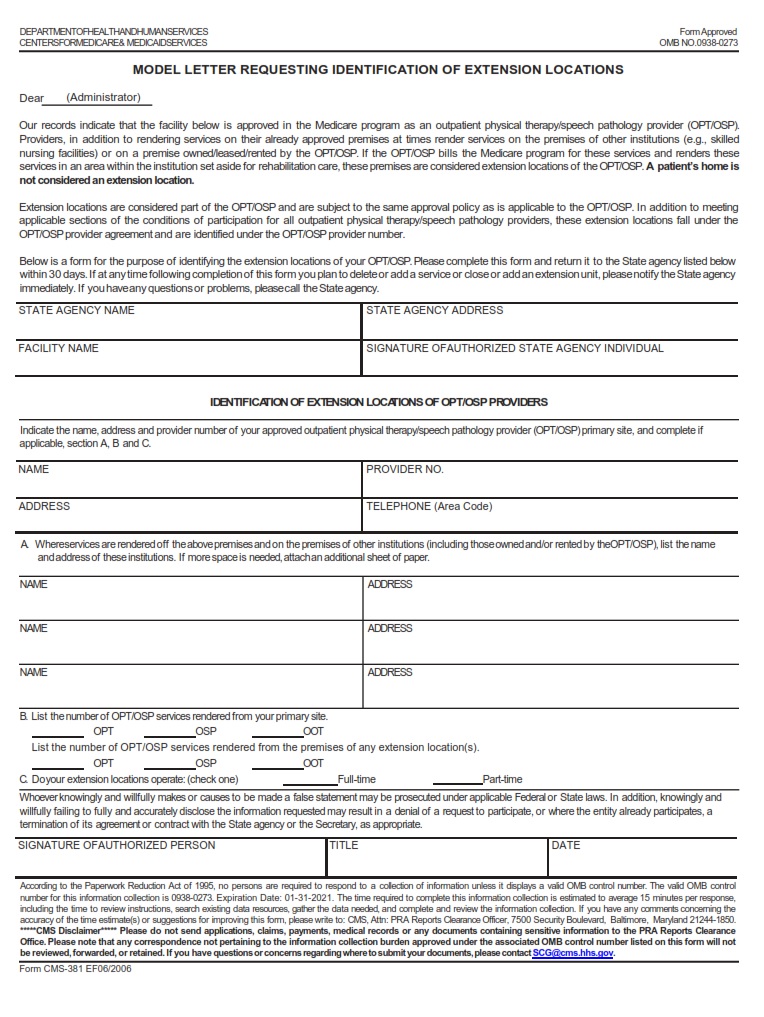
    CMSFORM.ORGCMS 381 – MODEL LETTER REQUESTING IDENTIFICATION OF EXTENSION LOCATIONS – Imagine a world where your online presence is like a puzzle missing a vital piece, leaving you with an incomplete picture of your reach and impact. In today’s digital age, understanding the true extent of your brand’s footprint across various platforms is crucial for strategic decision-making and growth. This is where CMS 381 comes into play – a powerful tool designed to unveil the hidden gems of extension locations that could be shaping the narrative of your online identity. By sending out model letters requesting identification of these elusive corners of cyberspace, businesses can finally connect the dots and unlock new opportunities for expansion and engagement. Join us on a journey through this uncharted territory as we delve deep into the art of mapping out your digital domain with precision and purpose.

    Download CMS 381 – MODEL LETTER REQUESTING IDENTIFICATION OF EXTENSION LOCATIONS

    [su_table responsive=”yes”]

    Form Number CMS 381
    Form Title MODEL LETTER REQUESTING IDENTIFICATION OF EXTENSION LOCATIONS
    Published 2005-12-01
    O.M.B. 0938-0273
    File Size 54 KB

    [/su_table]

    [download id=’1357′]

    What is a CMS 381?

    CMS 381, short for the Model Letter Requesting Identification of Extension Locations, plays a crucial role in streamlining communication between entities seeking to identify extension locations and government agencies regulating such information. This powerful system simplifies the process of gathering essential data pertaining to extension locations, ensuring compliance and efficiency. By utilizing CMS 381, organizations can expedite the identification process while maintaining accuracy and adherence to regulations.

    Furthermore, CMS 381 serves as a valuable tool for enhancing transparency and accountability in various industries by providing a standardized framework for requesting and sharing information on extension locations. Its user-friendly interface and comprehensive features enable businesses to easily navigate through complex regulatory requirements related to expansion activities. Embracing CMS 381 not only facilitates better communication between stakeholders but also fosters a culture of compliance that is essential in today’s dynamic business environment.

    Where Can I Find a CMS 381?

    Looking for a CMS 381 form but not sure where to find it? The first place you should check is the official website of the relevant organization or government agency that typically handles these types of forms. Additionally, many online platforms offer a wide range of form templates, including the CMS 381, which can be easily downloaded and filled out electronically. Another option is to visit your local government office or post office, as they often have physical copies available for in-person pickup.

    If you’re still having trouble locating a CMS 381 form, reaching out directly to the organization requesting it may be your best bet. Sometimes specific extensions or departments within these organizations handle different types of forms, so speaking with someone directly can save you time and effort. Remember to always double-check that you are using the most up-to-date version of the form to ensure accuracy and efficiency in your paperwork process.

    CMS 381 – MODEL LETTER REQUESTING IDENTIFICATION OF EXTENSION LOCATIONS

    In today’s interconnected world, the need for accurate and timely information on extension locations is paramount. CMS 381 provides a structured approach to requesting identification of these crucial points, ensuring that organizations can effectively expand their reach and services. By utilizing this model letter, businesses can streamline their communication process with stakeholders and gather essential data to inform strategic decisions.

    The detailed format of CMS 381 empowers companies to clearly outline their requirements for extension locations, leading to more targeted responses from recipients. This proactive approach not only facilitates effective planning but also enhances transparency within the organization. Moreover, by standardizing the request process through this model letter, businesses can establish a consistent framework for collecting location data, ultimately improving efficiency and decision-making capabilities.

    CMS 381 Example

    CMS 381

  • CMS 10036 – Inpatient Rehabilitation Facility-Patient Assessment Instrument

    CMS 10036 – Inpatient Rehabilitation Facility-Patient Assessment Instrument

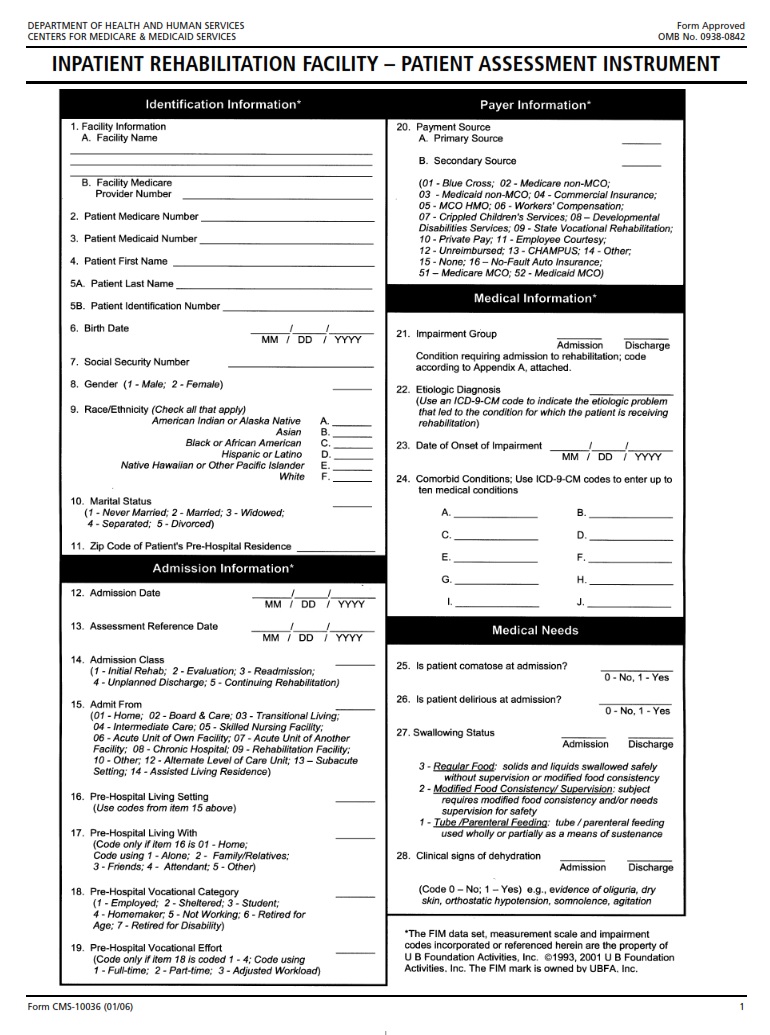
    CMSFORM.ORGCMS 10036 – Inpatient Rehabilitation Facility-Patient Assessment Instrument – In the world of healthcare, where precision and thorough assessment are paramount, one instrument stands out as a beacon of comprehensive patient evaluation – CMS 10036, the Inpatient Rehabilitation Facility-Patient Assessment Instrument. Designed to delve deep into the intricacies of a patient’s condition and rehabilitation potential, this tool is not just a formality but a window into personalized care and targeted treatment strategies. Imagine stepping into the realm of inpatient rehabilitation armed with a meticulously crafted roadmap that guides healthcare providers through every aspect of a patient’s journey towards recovery. CMS 10036 is not just an assessment tool; it is a dynamic compass that navigates healthcare professionals through the complex terrain of inpatient rehabilitation with precision and purpose. Let’s embark on an enlightening exploration of this essential instrument and uncover how it revolutionizes the way we approach patient care in rehabilitation facilities.

    Download CMS 10036 – Inpatient Rehabilitation Facility-Patient Assessment Instrument

    [su_table responsive=”yes”]

    Form Number CMS 10036
    Form Title Inpatient Rehabilitation Facility-Patient Assessment Instrument
    Published 2006-01-01
    O.M.B. 0938-0842
    File Size 442 KB

    [/su_table]

    [download id=’1358′]

    What is a CMS 10036?

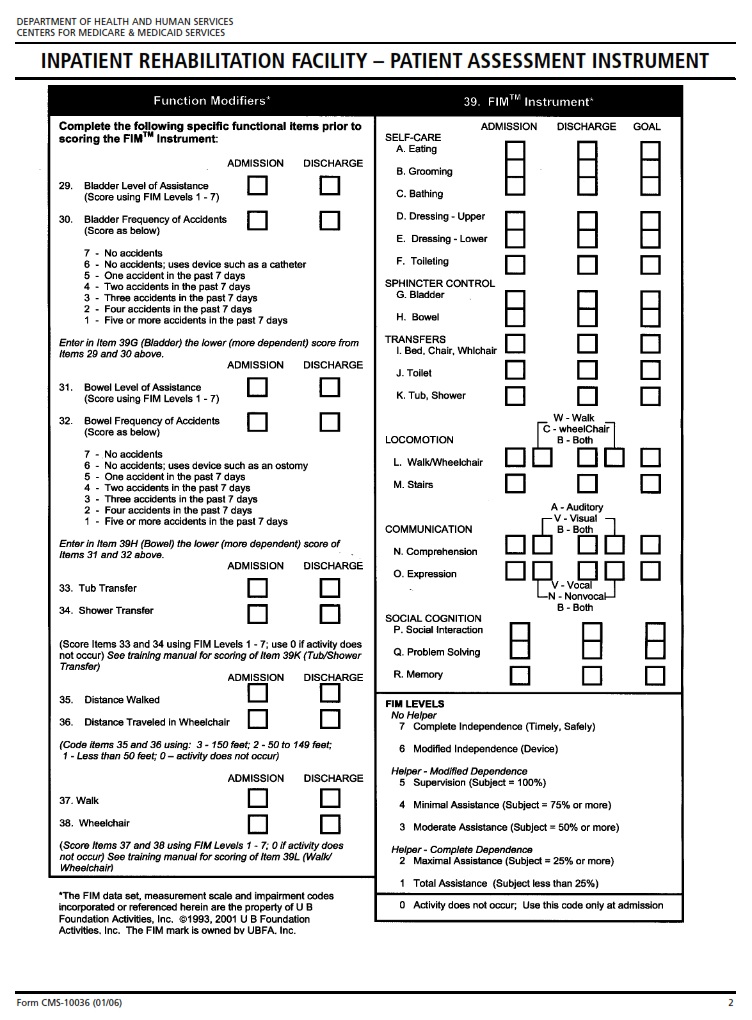
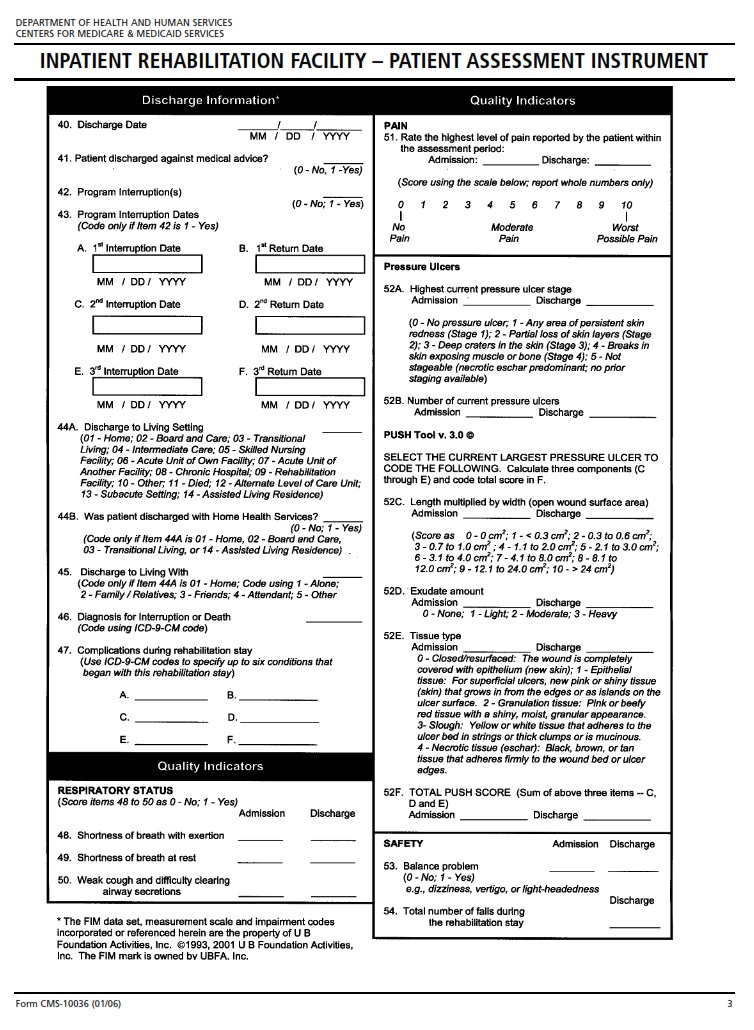
    The CMS 10036, also known as the Inpatient Rehabilitation Facility-Patient Assessment Instrument, is a critical tool used in healthcare settings to assess and monitor patient progress during their stay in an inpatient rehabilitation facility. This assessment instrument helps healthcare providers gather essential information about the patient’s functional status, medical conditions, and rehabilitation needs. By documenting this data, providers can develop personalized treatment plans that aim to improve the patient’s overall well-being and quality of life.

    One key aspect of the CMS 10036 is its focus on comprehensive evaluation across multiple domains such as mobility, self-care abilities, cognition, communication skills, and medical stability. This holistic approach allows healthcare teams to gain a thorough understanding of the patient’s current capabilities and limitations in order to tailor interventions that address specific areas of need. Furthermore, the use of standardized assessment tools like the CMS 10036 promotes consistency in documentation practices and facilitates communication among different members of the care team involved in coordinating the patient’s rehabilitation journey.

    Where Can I Find a CMS 10036?

    Searching for a CMS 10036 form can be a daunting task for many individuals working in the healthcare industry, especially those involved in inpatient rehabilitation facilities. However, there are several resources where you can find this essential document. One of the most convenient ways to access the CMS 10036 is through the official Centers for Medicare & Medicaid Services (CMS) website. Here, you can easily download the form and any associated guidance documents that may be helpful in completing it accurately.

    Furthermore, healthcare organizations often maintain their own repositories of regulatory forms like the CMS 10036 for easy access by staff members. If you work in an inpatient rehabilitation facility, check with your facility’s regulatory compliance or medical records department to inquire about obtaining a copy of this important assessment instrument. Additionally, professional associations and industry forums dedicated to rehabilitation services may also offer resources and support for locating and using the CMS 10036 effectively. By leveraging these various sources, healthcare professionals can ensure they have access to all necessary documentation to comply with regulations and provide quality care to their patients.

    CMS 10036 – Inpatient Rehabilitation Facility-Patient Assessment Instrument

    The Inpatient Rehabilitation Facility-Patient Assessment Instrument (CMS 10036) plays a crucial role in ensuring that patients in rehabilitation facilities receive the appropriate level of care tailored to their individual needs. By assessing various factors such as functional status, cognitive abilities, and medical needs, this instrument helps healthcare providers develop comprehensive treatment plans that aim to improve patients’ outcomes and quality of life.

    One key aspect of CMS 10036 is its emphasis on patient-centered care, where the focus is not only on treating the underlying conditions but also on addressing the individual’s goals and preferences. This person-centered approach fosters a collaborative relationship between the patient and healthcare team, leading to more effective rehabilitation outcomes. Additionally, using standardized assessment tools like CMS 10036 allows for consistent data collection and evaluation, helping facilities track progress over time and make informed decisions regarding treatment strategies.

    Overall, CMS 10036 serves as a valuable tool for inpatient rehabilitation facilities by guiding assessments, facilitating personalized care plans, and promoting ongoing monitoring of patient progress. Embracing this instrument can enhance the quality of care provided to individuals undergoing rehabilitation while supporting a holistic approach that considers both medical needs and personal aspirations.

    CMS 10036 Example

    CMS 10036 - Page 1 CMS 10036 - Page 2 CMS 10036 - Page 3