Author: Bismillah

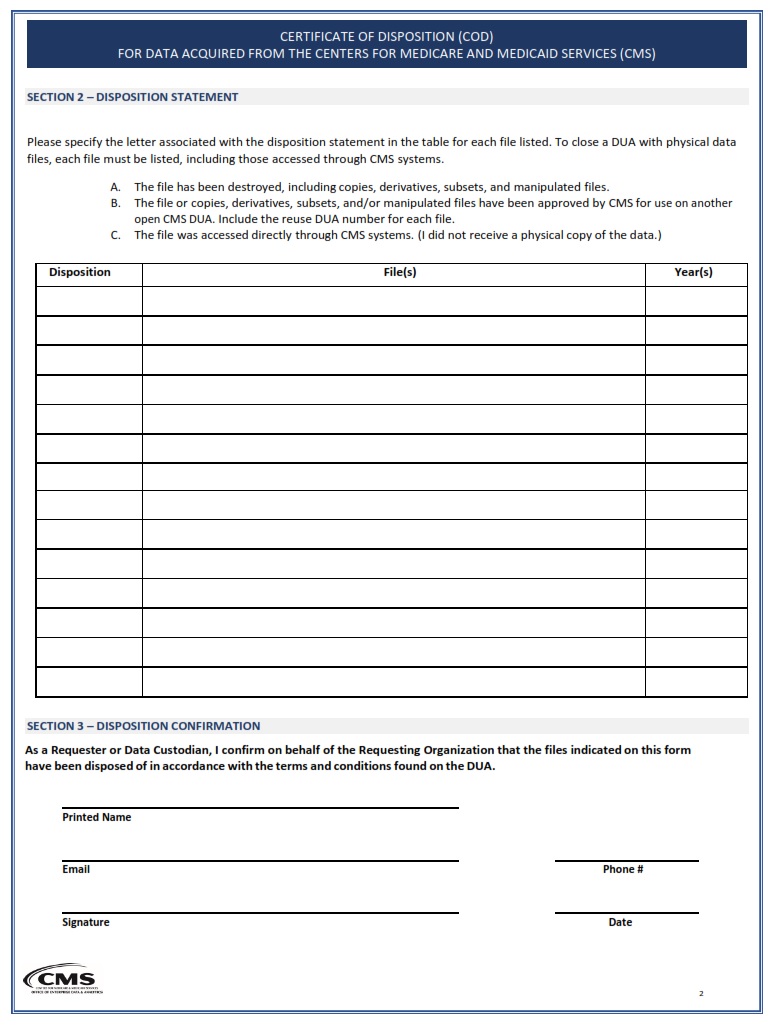
  • CMS 10252 – DATA USE AGREEMENT (DUA) CERTFICATE OF DISPOSITION (COD) FOR DATA ACQUIRED FROM THE CENTERS FOR MEDICARE & MEDICAID SERVICES (CMS)

    CMS 10252 – DATA USE AGREEMENT (DUA) CERTFICATE OF DISPOSITION (COD) FOR DATA ACQUIRED FROM THE CENTERS FOR MEDICARE & MEDICAID SERVICES (CMS)

    CMSFORM.ORGCMS 10252 – DATA USE AGREEMENT (DUA) CERTFICATE OF DISPOSITION (COD) FOR DATA ACQUIRED FROM THE CENTERS FOR MEDICARE & MEDICAID SERVICES (CMS)

    In today’s data-driven world, organizations require access to large volumes of data to make informed decisions. However, with the increase in data sharing comes a greater need for security and privacy protections. The Centers for Medicare & Medicaid Services (CMS) recognize this need and require all entities that receive CMS data to sign a Data Use Agreement (DUA) and obtain a Certificate of Disposition (COD).

    The CMS 10252 DUA outlines the terms and conditions under which an entity may use CMS data, including restrictions on disclosure, confidentiality requirements, and compliance with applicable laws. The COD certifies that an entity has met all DUA requirements and ensures that CMS data is used only for authorized purposes.

    Download CMS 10252 – DATA USE AGREEMENT (DUA) CERTFICATE OF DISPOSITION (COD) FOR DATA ACQUIRED FROM THE CENTERS FOR MEDICARE & MEDICAID SERVICES (CMS)

    [su_table responsive=”yes”]

    Form Number CMS 10252
    Form Title DATA USE AGREEMENT (DUA) CERTFICATE OF DISPOSITION (COD) FOR DATA ACQUIRED FROM THE CENTERS FOR MEDICARE & MEDICAID SERVICES (CMS)
    Published
    O.M.B.
    File Size 363 KB

    [/su_table]

    [download id=”1756″]

    What is a CMS 10252?

    A CMS or content management system is a software application that allows website owners to manage the creation, publishing, and organization of digital content. It enables users to create and edit web pages, upload images and videos, organize page layouts, and manage user permissions. CMSs have become an integral part of modern web development as they simplify the process of managing websites without requiring technical knowledge.

    There are several types of CMS available in the market such as WordPress, Drupal, Joomla!, Magento, and Shopify. Each one has its own unique features and functionalities aimed at catering to specific needs. For instance, WordPress is ideal for bloggers or small businesses while Magento is designed for e-commerce websites that require robust inventory management features. A good CMS should be easy to use with a user-friendly interface that simplifies website management tasks.

    Where Can I Find a CMS 10252?

    If you’re in search of a CMS 10252, there are several options available to you. A CMS (Content Management System) allows users to create, manage and publish content on their website without requiring extensive coding knowledge. With the ever-increasing demand for digital content, having a reliable CMS is essential for businesses and individuals alike.

    One option is to conduct a simple online search for “CMS 10252” which will provide you with a list of potential platforms that may fit your needs. Another approach is to reach out to web development agencies or freelancers who specialize in creating or customizing CMS solutions. They can provide valuable insight into which CMS may be best suited for your specific requirements and budget. Additionally, seeking recommendations from colleagues or industry professionals can also lead you toward finding the right CMS solution.

    CMS 10252 – DATA USE AGREEMENT (DUA) CERTFICATE OF DISPOSITION (COD) FOR DATA ACQUIRED FROM THE CENTERS FOR MEDICARE & MEDICAID SERVICES (CMS)

    CMS 10252 – Data Use Agreement (DUA) Certificate of Disposition (COD) for data acquired from the Centers for Medicare & Medicaid Services (CMS) aims to ensure that the usage of CMS data is in compliance with federal laws and regulations. Any organization or individual seeking access to such data must sign a DUA and abide by its terms, including ensuring that any person with access also understands the confidentiality requirements of the information.

    In addition, organizations must provide evidence of an approved COD when disposing of CMS data. This certificate confirms that all copies and backups have been destroyed and that no further unauthorized use will occur. Failure to comply with DUA requirements may result in legal action, including civil monetary penalties, criminal prosecution, or exclusion from participation in federal health care programs.

    CMS 10252 – Example
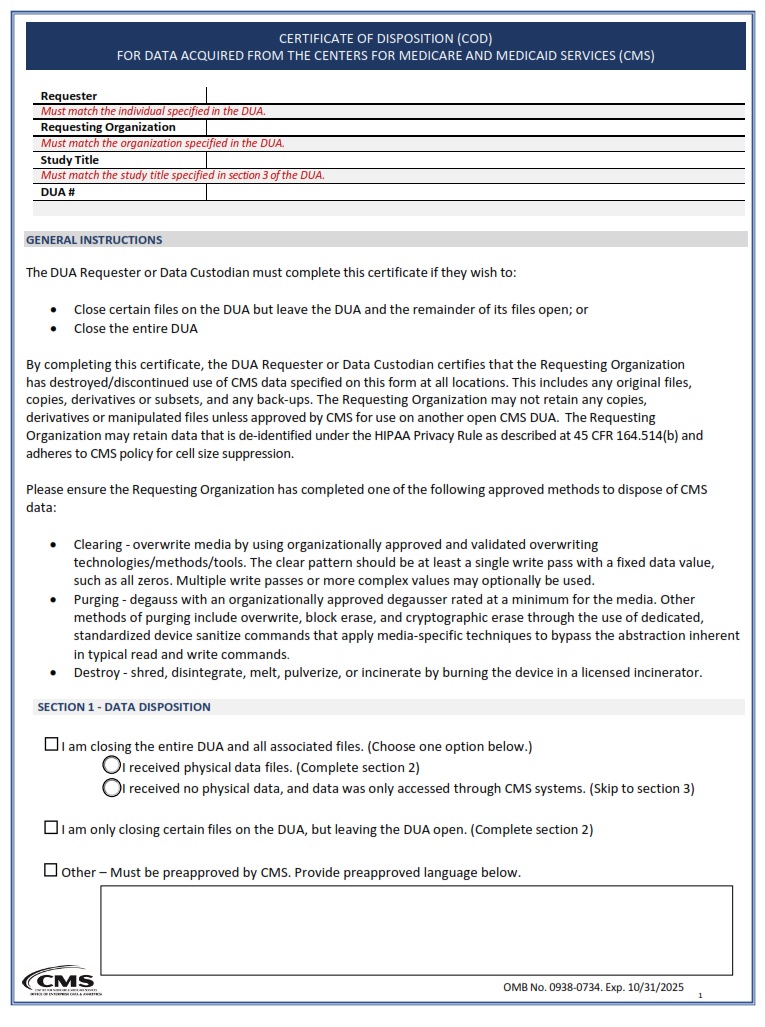
    CMS 10252 - DATA USE AGREEMENT (DUA) CERTFICATE OF DISPOSITION (COD) FOR DATA ACQUIRED FROM THE CENTERS FOR MEDICARE & MEDICAID SERVICES (CMS) page 1 CMS 10252 - DATA USE AGREEMENT (DUA) CERTFICATE OF DISPOSITION (COD) FOR DATA ACQUIRED FROM THE CENTERS FOR MEDICARE & MEDICAID SERVICES (CMS) page 2

  • CMS 29 – VERIFICATION OF CLINIC DATA ? RURAL HEALTH CLINIC PROGRAM

    CMSFORM.ORGCMS 29 – VERIFICATION OF CLINIC DATA ? RURAL HEALTH CLINIC PROGRAM – The Rural Health Clinic (RHC) program is a crucial aspect of healthcare delivery in rural areas. It provides access to essential medical services that would otherwise be unavailable to rural populations. The Centers for Medicare and Medicaid Services (CMS) has established guidelines to ensure the quality and accuracy of data collected from RHCs.

    One such guideline is CMS 29 – Verification of Clinic Data. This guideline outlines the process by which RHCs must verify their clinic data to ensure compliance with CMS regulations. In this article, we will explore the importance of CMS 29 and its implications for RHCs in providing high-quality care to rural communities.

    Download CMS 29 – VERIFICATION OF CLINIC DATA ? RURAL HEALTH CLINIC PROGRAM

    [su_table responsive=”yes”]

    Form Number CMS 29
    Form Title VERIFICATION OF CLINIC DATA ? RURAL HEALTH CLINIC PROGRAM
    Published 2022-06-01
    O.M.B. 0938-0074
    File Size -KB

    [/su_table]

    [su_button url=”https://www.cms.gov/Medicare/CMS-Forms/CMS-Forms/CMS-Forms-Items/CMS008849″ target=”blank” background=”#8ec54f” size=”7″ center=”yes” icon=”icon: file-pdf-o” title=”Download CMS 29″]Download CMS 29 [.PDF][/su_button]

    What is a CMS 29?

    CMS 29, also known as the Verification of Clinic Data – Rural Health Clinic Program, is a form required by the Centers for Medicare & Medicaid Services (CMS) to be filed annually by Rural Health Clinics (RHCs). This form is critical to ensure that RHCs meet eligibility requirements and continue receiving reimbursement from CMS. The data collected in CMS 29 includes basic information about the RHC, such as its name, address, and contact information. Additionally, it requests details on operational aspects like staffing patterns and hours of operation.

    The purpose of this verification process is to ensure that all RHCs are meeting specific program requirements established by CMS. These requirements include providing accessible primary care services to rural communities with shortages in healthcare providers and maintaining proper standards for care delivery. Therefore, CMS 29 helps evaluate whether an RHC can maintain its certification status or not.

    In summary, the completion of CMS 29 is crucial for rural health clinics looking to receive proper reimbursements through the Rural Health Clinic Program from Medicare and Medicaid funds. By making sure that they are meeting all necessary standards set out by CMS regulations through this annual verification process, clinics can continue providing essential medical services to their communities while receiving financial assistance from these programs.

    Where Can I Find a CMS 29?

    If you are looking for a CMS 29 form to verify clinic data for the Rural Health Clinic Program, there are several places where you can find it. One of the easiest ways is to visit the official website of The Centers for Medicare & Medicaid Services (CMS). The site provides an array of resources and information including forms like CMS-29.

    Another option is to check with your state’s Department of Health or Human Services. They may have a copy of the form available online or be able to provide you with one on request. Additionally, some third-party websites also offer downloadable versions of the CMS 29 form.

    It’s important to note that while finding a copy of the form might be simple enough, filling it out correctly requires attention to detail and knowledge about program requirements. If you’re not familiar with what information needs to be included or how to accurately complete it, consider reaching out to an expert in healthcare compliance or billing services for guidance.

    CMS 29 – VERIFICATION OF CLINIC DATA ? RURAL HEALTH CLINIC PROGRAM

    The Rural Health Clinic (RHC) program provides healthcare services in underserved rural areas. In order to ensure that these clinics are providing high-quality care, the Centers for Medicare & Medicaid Services (CMS) requires RHCs to verify their clinic data at least once every two years. This process is known as CMS 29 verification.

    During CMS 29 verification, RHCs must review and update their clinic’s information on file with CMS. This includes verifying basic information such as the clinic’s address, phone number, and ownership structure. RHCs must also provide documentation of compliance with state and federal regulations related to staffing levels, clinical procedures, and quality measures.

    CMS 29 verification is an important part of maintaining the integrity of the RHC program. By ensuring that clinics are meeting regulatory requirements and providing quality care to patients in rural areas, CMS helps to improve access to healthcare for underserved populations.

  • CMS 802 – Roster/Sample Matrix

    CMS 802 – Roster/Sample Matrix

    CMSFORM.ORGCMS 802 – Roster/Sample Matrix – The 802.11r50 standard defines a new radar target detection algorithm that is more accurate than the previous algorithm. The 802.11r50 standard also specifies a new radar target detection algorithm, which is backward compatible with 802.11r40 and earlier standards. This means that 802.11 devices can support both old and new radar targets, without any modification required.

    Download CMS 802 – Roster/Sample Matrix

    [su_table responsive=”yes”]

    Form Number CMS 802
    Form Title Roster/Sample Matrix
    Published 2022-10-24
    O.M.B. EXEMPT
    File Size 207 KB

    [/su_table]

    [download id=”1757″]

    What is a CMS 802?

    The CMS 802 is a roster sample matrix used by healthcare providers to report their services and costs to the Centers for Medicare & Medicaid Services (CMS). It is designed to help providers comply with federal regulations that require them to maintain accurate records of their patients, services, and costs. The CMS 802 form collects data on patient demographics, diagnoses, treatments, and outcomes.

    The roster sample matrix provides a standardized way for healthcare providers to report information about their services and costs. This information is then used by CMS to determine reimbursement rates for Medicare beneficiaries. Providers who participate in Medicare are required by law to submit this form periodically as part of their participation requirements.

    Overall, the CMS 802 roster sample matrix plays an important role in ensuring that healthcare providers are accurately reporting their services and costs. By providing a standardized format for data collection and submission, it helps ensure consistency across different providers and makes it easier for CMS to analyze the information they receive.

    Where Can I Find a CMS 802?

    The CMS 802 is a roster sample matrix form that is used by healthcare providers who participate in Medicare programs. This form helps them to capture data on their patient population and submit it to the Centers for Medicare & Medicaid Services (CMS). Providers are required to complete this form annually, and failure to do so can result in penalties or suspension of their Medicare enrollment.

    So where can healthcare providers find the CMS 802? The easiest way is to visit the CMS website and download it from there. It’s available in both PDF and Excel formats, making it easy for providers to complete electronically or print out and fill in manually. Another option is to contact your state’s Medicare Administrative Contractor (MAC) for assistance with obtaining the form or completing it correctly.

    In conclusion, while completing the CMS 802 may seem like an extra administrative task for busy healthcare providers, it plays a critical role in ensuring accurate data reporting and compliance with Medicare program regulations. By accessing this form through either the CMS website or your MAC, you can be confident that you are meeting all necessary requirements and avoiding any potential negative consequences.

    CMS 802 – Roster/Sample Matrix

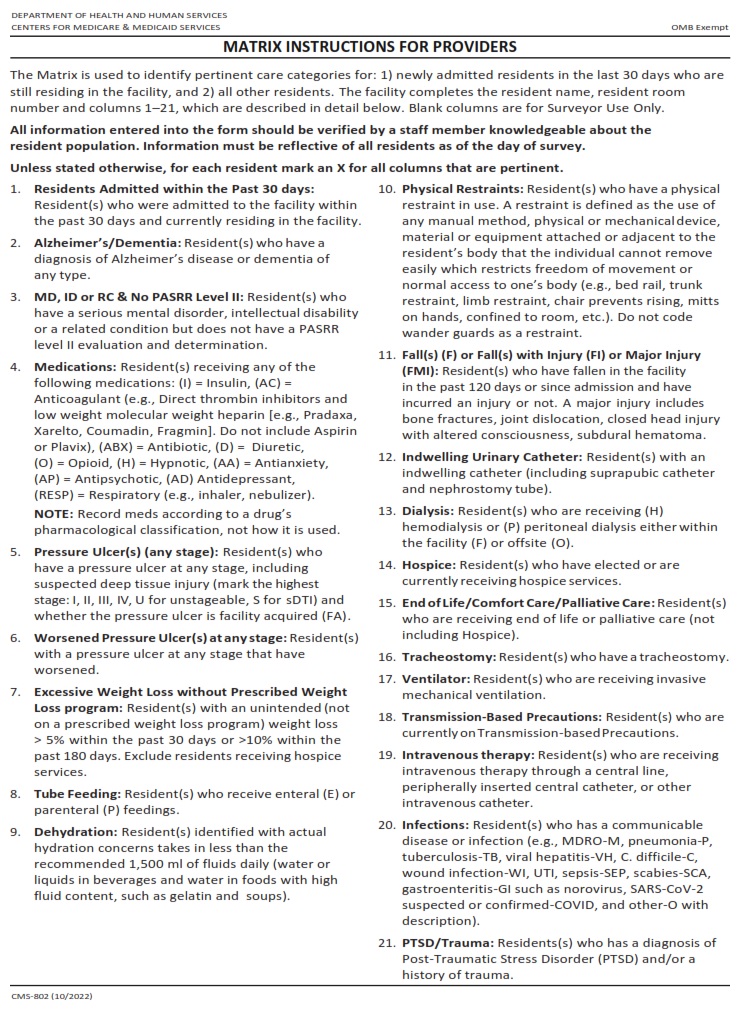
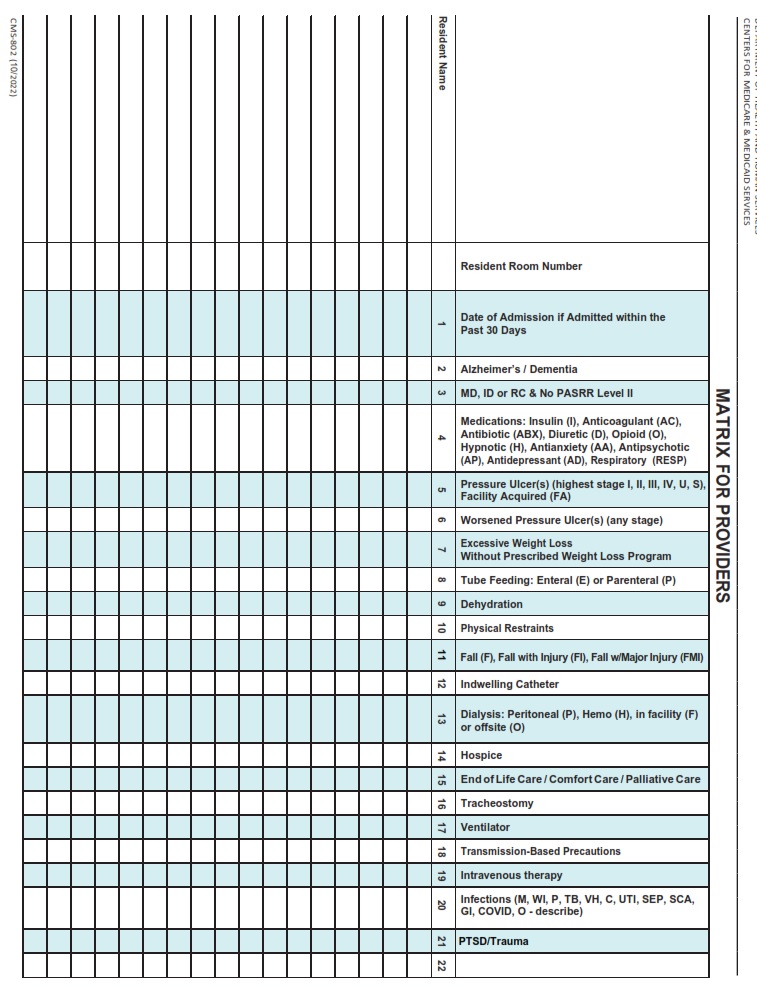
    The CMS 802 – Roster Sample Matrix is a tool designed to simplify the process of selecting medical charts for review by Medicare Administrative Contractors (MACs). The matrix provides a sample size calculator that determines the number of charts to be pulled based on the number of beneficiaries. Additionally, it outlines various stratification options that can help determine which type of beneficiary should be reviewed.

    The CMS 802 – Roster Sample Matrix also contains information about how to select and list patients, including their name, gender, Medicare ID number, date of service, and other pertinent details. The matrix makes it easier for MACs to quickly identify potential issues with patient care and take corrective action as needed. It is an essential tool for ensuring compliance with Medicare regulations and improving patient outcomes.

    In summary, the CMS 802 – Roster Sample Matrix simplifies the process of selecting medical charts for review by providing MACs with a sample size calculator and various stratification options. It also helps ensure compliance with Medicare regulations and improve patient outcomes by identifying potential issues with patient care. This powerful tool is an essential component of any healthcare provider’s compliance program.

    CMS 802 – Example

    CMS 802 - Roster Sample Matrix page 1 CMS 802 - Roster Sample Matrix page 2

  • CMS 460 – MEDICARE PARTICIPATING PHYSICIAN OR SUPPLIER AGREEMENT

    CMS 460 – MEDICARE PARTICIPATING PHYSICIAN OR SUPPLIER AGREEMENT

    CMSFORM.ORGCMS 460 – MEDICARE PARTICIPATING PHYSICIAN OR SUPPLIER AGREEMENT – The Centers for Medicare and Medicaid Services (CMS) is in the process of revising its payment policies for physicians and suppliers. One such policy change is CMS’s proposed revision to its Medicare Part C Participating Physician or Supplier Agreement (PCPA) policies. The PCPA is a contract between a physician or supplier and CMS that outlines the terms and conditions under which the provider will be paid for services rendered to Medicare beneficiaries.

    Download CMS 460 – MEDICARE PARTICIPATING PHYSICIAN OR SUPPLIER AGREEMENT

    [su_table responsive=”yes”]

    Form Number CMS 460
    Form Title MEDICARE PARTICIPATING PHYSICIAN OR SUPPLIER AGREEMENT
    Published 2022-11-01
    O.M.B. 0938-0373
    File Size 205 KB

    [/su_table]

    [download id=”1758″]

    What is a CMS 460?

    The CMS 460 is a Medicare Participating Physician or Supplier Agreement form that is used by medical practitioners to enroll in the Medicare program. The form outlines the terms and conditions of participation in Medicare, including the responsibilities of both the physician or supplier and the federal government.

    By completing and submitting this form, physicians agree to accept Medicare’s approved payment rates as full payment for their services. This means that they cannot charge patients more than what has been approved by Medicare for a specific medical service or procedure. Additionally, participating physicians are required to submit claims electronically to Medicare and must maintain accurate records of all services provided.

    The purpose of the CMS 460 form is to ensure that healthcare providers who participate in the Medicare program adhere to certain standards of care and billing practices. By signing this agreement, physicians demonstrate their commitment to providing quality care while also helping to control healthcare costs for patients enrolled in Medicare.

    Where Can I Find a CMS 460?

    A CMS 460 form is a crucial document for healthcare providers who want to participate in the Medicare program. This form outlines the terms and conditions that physicians or suppliers must agree to before they can bill Medicare for their services. To obtain this form, you can visit the official website of the Centers for Medicare & Medicaid Services (CMS). The CMS website provides various forms, including Form CMS-460, which is available as a PDF file.

    Alternatively, you may also request a copy of Form CMS-460 by contacting your local Medicare Administrative Contractor (MAC) office. MACs are responsible for processing claims and providing information regarding Medicare enrollment and participation requirements. You can find your local MAC’s contact information on the CMS website.

    It’s essential to ensure that you have completed all sections of Form CMS-460 accurately and truthfully before submitting it to your MAC office. Any incomplete or incorrect information could result in delays or even rejection of your application to participate in the Medicare program as a physician or supplier.

    CMS 460 – MEDICARE PARTICIPATING PHYSICIAN OR SUPPLIER AGREEMENT

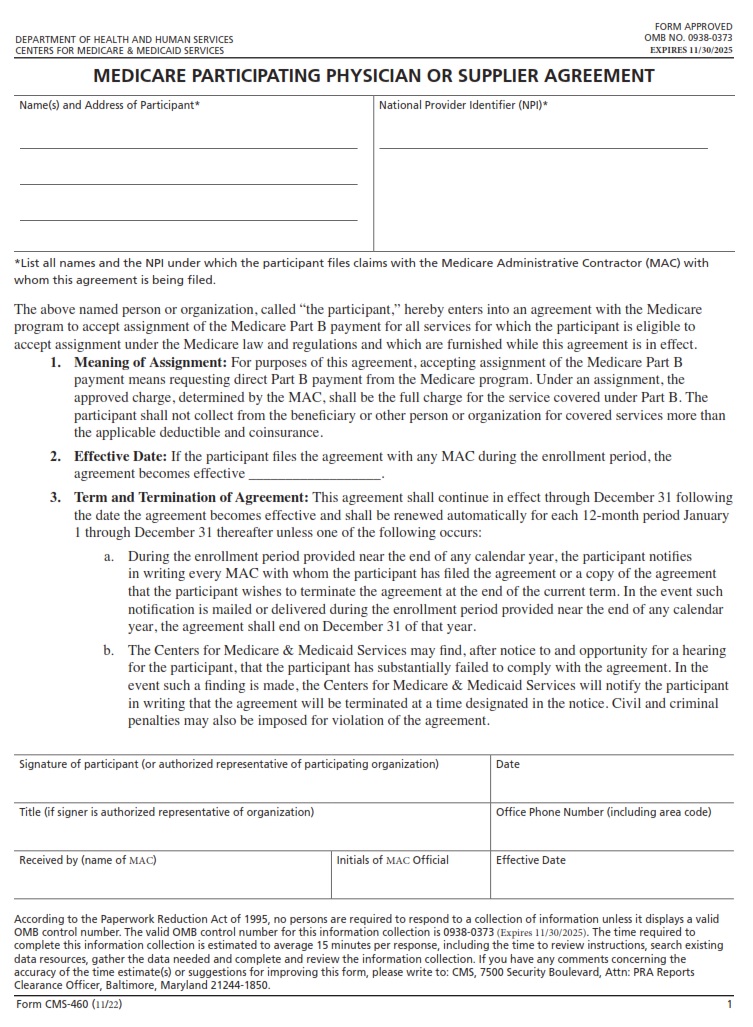
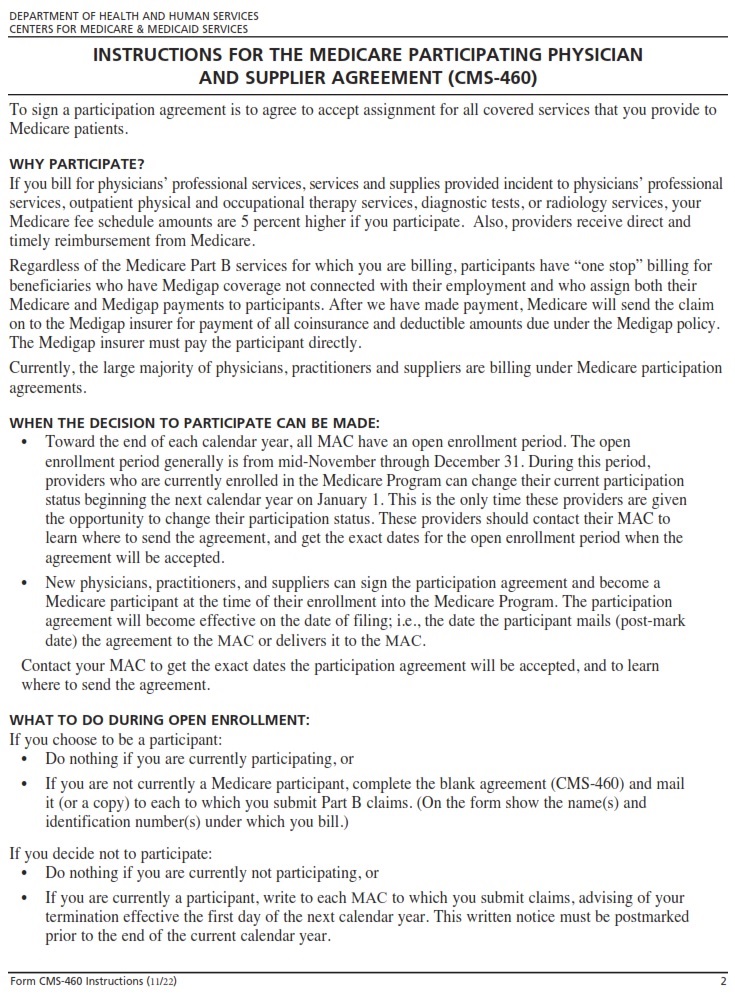
    The CMS 460 form is an agreement between Medicare and physicians or suppliers who wish to participate in the Medicare program. This agreement requires that the physician or supplier agrees to accept payment from Medicare for services rendered, and also agrees to follow all Medicare rules and regulations. In addition, the agreement outlines the responsibilities of both parties, including record-keeping requirements, submission of claims for payment, and compliance with anti-fraud laws.

    One important aspect of the CMS 460 agreement is its provisions regarding the assignment of benefits. Physicians and suppliers who participate in Medicare must agree to accept the assignment of benefits from their patients – meaning they will be paid directly by Medicare for covered services provided to beneficiaries. This ensures that patients do not have to pay out-of-pocket expenses upfront when receiving medical care.

    Overall, signing a CMS 460 agreement is an important step for physicians and suppliers who wish to provide care for Medicare beneficiaries. Doing so helps ensure compliance with government regulations while also making it easier for patients to receive necessary healthcare services without financial burden.

    CMS 460 – Example

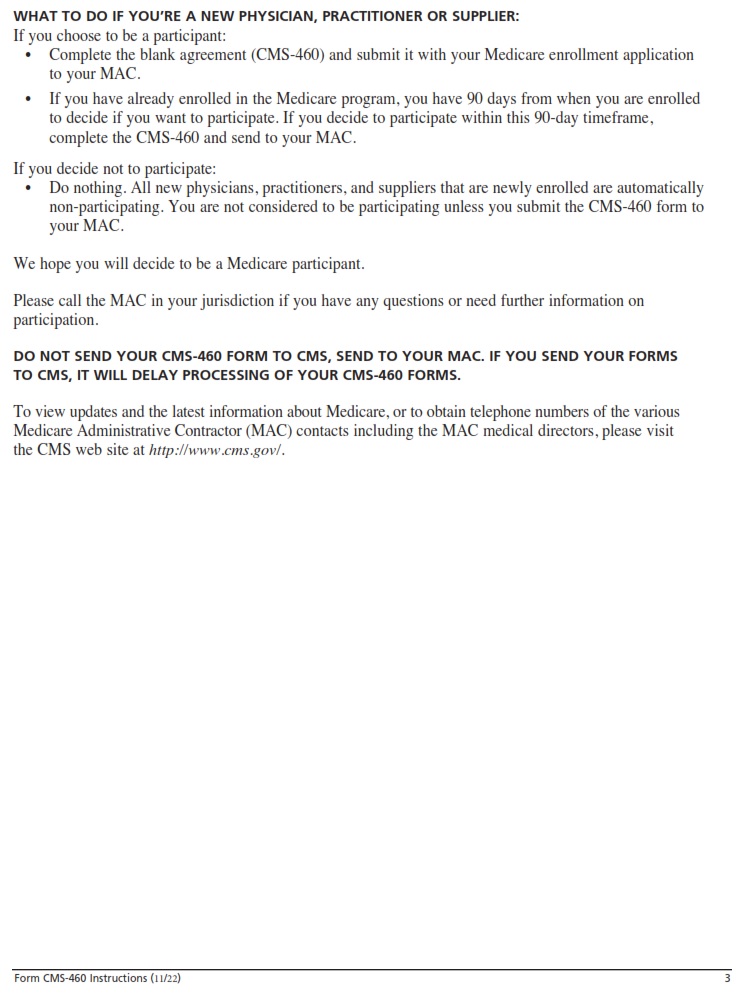
    CMS 460 - MEDICARE PARTICIPATING PHYSICIAN OR SUPPLIER AGREEMENT page 1 CMS 460 - MEDICARE PARTICIPATING PHYSICIAN OR SUPPLIER AGREEMENT page 2 CMS 460 - MEDICARE PARTICIPATING PHYSICIAN OR SUPPLIER AGREEMENT page 3

  • CMS 10798 – Application for Enrollment in Part B Immunosuppressive Drug Coverage

    CMS 10798 – Application for Enrollment in Part B Immunosuppressive Drug Coverage

    CMSFORM.ORGCMS 10798 – Application for Enrollment in Part B Immunosuppressive Drug Coverage – There are many medications available to treat various illnesses, but some medications can have serious side effects. One of the most common types of side effects is a reduction in the number of white blood cells, which can make the person more vulnerable to infection. The Centers for Medicare and Medicaid Services (CMS) has a program that helps people pay for medications that have serious side effects.

    Download CMS 10798 – Application for Enrollment in Part B Immunosuppressive Drug Coverage

    [su_table responsive=”yes”]

    Form Number CMS 10798
    Form Title Application for Enrollment in Part B Immunosuppressive Drug Coverage
    Published 2023-01-31
    O.M.B. 0938-1428
    File Size 128 KB

    [/su_table]

    [download id=”1759″]

    What is a CMS 10798?

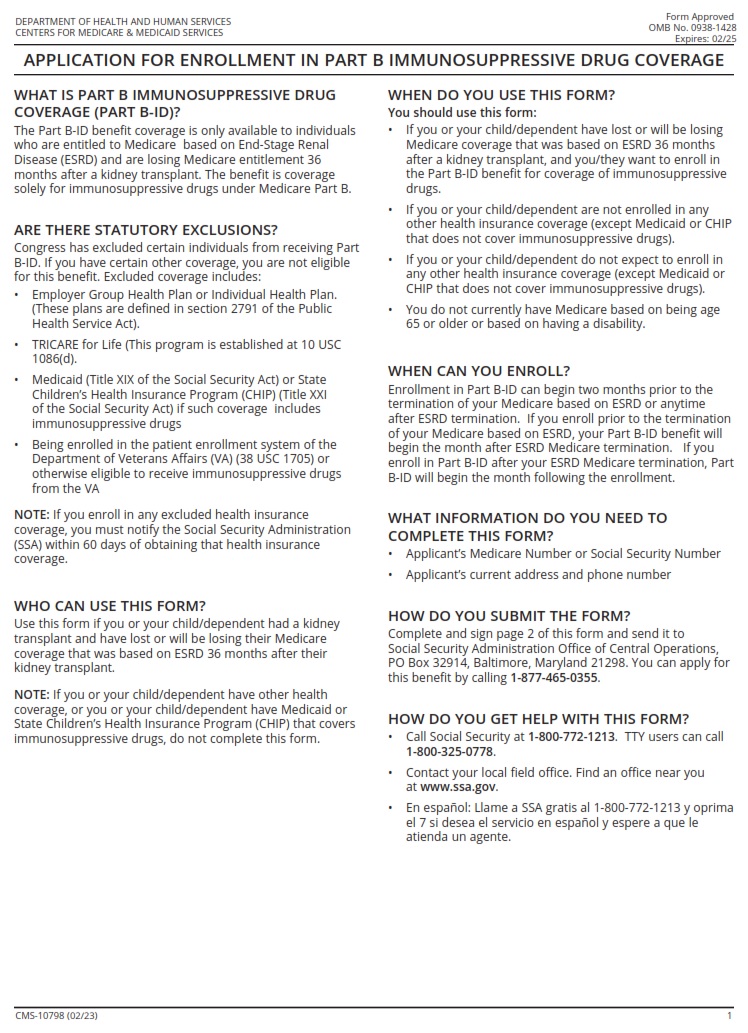
    CMS 10798 is an application form used by Medicare beneficiaries who are undergoing immunosuppressive therapy to obtain coverage under Part B. The purpose of the form is to help eligible patients get access to medications that are crucial for preventing organ rejection in kidney transplant recipients and treating autoimmune diseases.

    To qualify for coverage, applicants must meet certain criteria, including having undergone a kidney transplant within the last 36 months or being diagnosed with a covered autoimmune disease. They must also be enrolled in Medicare Part A and have exhausted their lifetime reserve days. Furthermore, they must not have any other forms of insurance that cover immunosuppressive drugs.

    Once the application is submitted and approved, beneficiaries will receive coverage for their immunosuppressive drugs under Medicare Part B. This program can provide significant financial relief to individuals who would otherwise struggle to afford these life-saving medications, allowing them to focus on their health and wellbeing rather than worrying about how they will pay for treatment.

    Where Can I Find a CMS 10798?

    If you are in need of CMS 10798, there are several places where you can find it. The first option is to visit the official Medicare website. You can download the form directly from their website or request a hard copy to be mailed to your address. Another possible source for CMS 10798 is your local Social Security office. They will be able to provide you with a physical copy of the form and answer any questions you may have about filling it out.

    In addition, many healthcare providers and hospitals have copies of CMS 10798 on hand. If you are currently receiving treatment for an immunosuppressive condition, check with your medical team to see if they can provide you with a copy of the form. Lastly, some pharmacies may also carry copies of CMS 10798 as part of their Medicare-related services.

    No matter where you obtain CMS 10798 from, it’s important to ensure that all information is filled out correctly and completely before submitting it. This will help prevent any delays or issues with coverage for immunosuppressive drugs under Medicare Part B.

    CMS 10798 – Application for Enrollment in Part B Immunosuppressive Drug Coverage

    CMS 10798 is an application for individuals who require immunosuppressive drugs after receiving a transplant. This application allows them to enroll in Medicare Part B coverage for these drugs. Immunosuppressive drugs are necessary to prevent the body from rejecting a transplanted organ, and they can be quite expensive.

    Applying for enrollment in Part B coverage ensures that these medications are covered by Medicare, which can significantly reduce the financial burden on patients. However, it’s important to note that this coverage only applies to individuals who have had a kidney transplant or another type of organ transplant that is covered under Medicare.

    Overall, CMS 10798 is an essential application for those who need immunosuppressive drugs after receiving a transplant. It provides peace of mind knowing that these necessary medications will be covered by Medicare and helps alleviate some of the financial strain associated with post-transplant care.

    CMS 10798 – Example

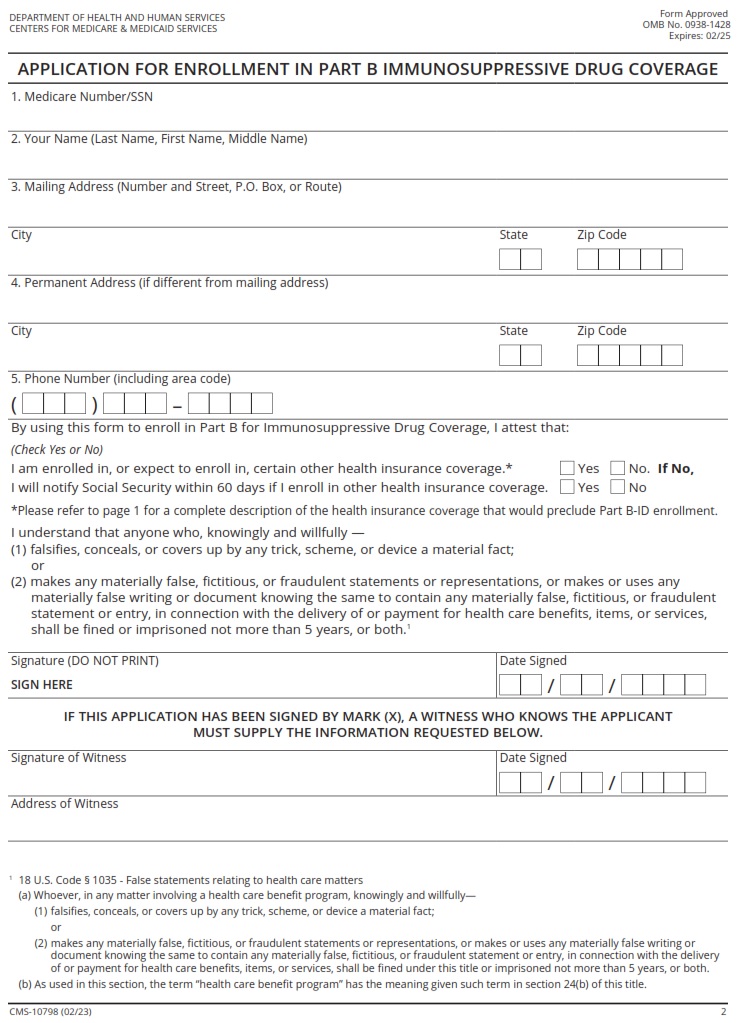
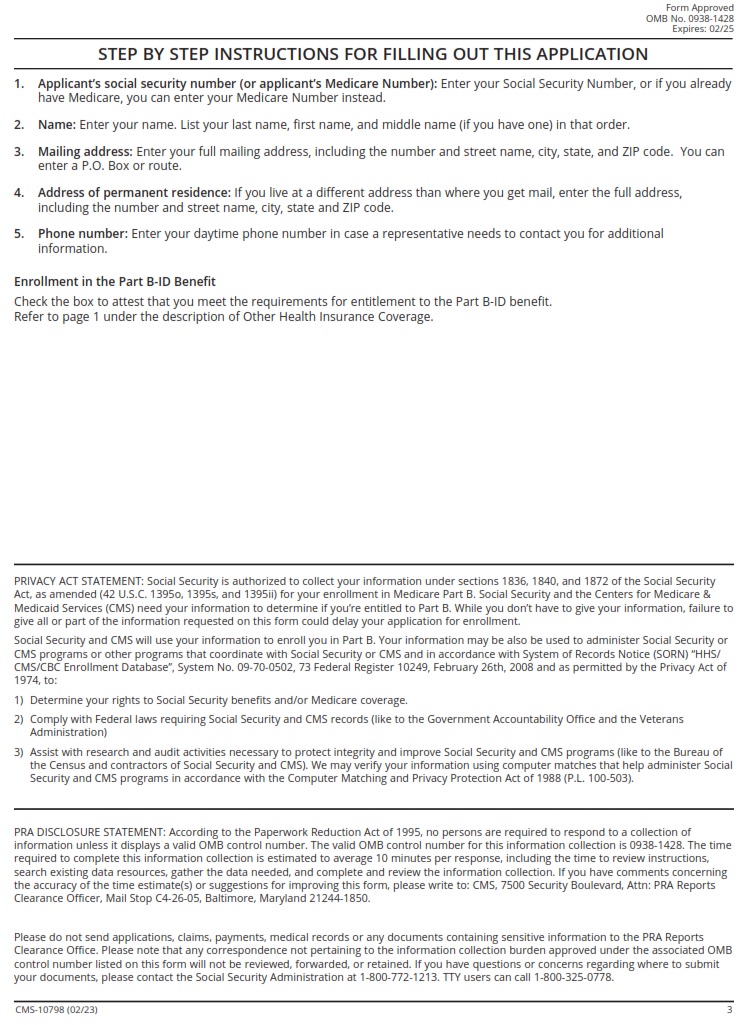
    CMS 10798 - Application for Enrollment in Part B Immunosuppressive Drug Coverage page 1 CMS 10798 - Application for Enrollment in Part B Immunosuppressive Drug Coverage page 2 CMS 10798 - Application for Enrollment in Part B Immunosuppressive Drug Coverage page 3

  • CMS 43 – APPLICATION FOR HOSPITAL INSURANCE BENEFITS FOR INDIVIDUALS WITH END STAGE RENAL DISEASE

    CMS 43 – APPLICATION FOR HOSPITAL INSURANCE BENEFITS FOR INDIVIDUALS WITH END STAGE RENAL DISEASE

    CMSFORM.ORGCMS 43 – APPLICATION FOR HOSPITAL INSURANCE BENEFITS FOR INDIVIDUALS WITH END STAGE RENAL DISEASE – The Centers for Medicare and Medicaid Services (CMS) has issued a new hospital insurance benefit policy – CMS 43 – which will become effective on October 1, 2020. This policy affects individuals with end-stage renal disease (ESRD). Under this new policy, individuals with ESRD will be able to apply for benefits that can help cover the costs of care while they are hospitalized. The benefits include inpatient hospital care, skilled nursing facility care, and home health services.

    Download CMS 43 – APPLICATION FOR HOSPITAL INSURANCE BENEFITS FOR INDIVIDUALS WITH END STAGE RENAL DISEASE

    [su_table responsive=”yes”]

    Form Number CMS 43
    Form Title APPLICATION FOR HOSPITAL INSURANCE BENEFITS FOR INDIVIDUALS WITH END STAGE RENAL DISEASE
    Published 2023-02-28
    O.M.B. 0938-0080
    File Size 327 KB

    [/su_table]

    [download id=”1760″]

    What is a CMS 43?

    CMS 43 is an application form used to apply for hospital insurance benefits by individuals suffering from end-stage renal disease. The Centers for Medicare and Medicaid Services (CMS) developed the form to help patients with kidney failure get access to healthcare coverage through the Medicare program. The CMS 43 application process requires individuals with ESRD to provide personal identifying information, such as their name, address, date of birth, and social security number.

    In addition to personal information, applicants must provide medical-related details about their diagnosis and treatment plan. This includes the date of their first dialysis treatment or kidney transplant, the type of treatment they receive or plan on receiving, and information about any other insurance coverage they may have. Once completed, the CMS 43 application can be submitted at a local Social Security office or mailed directly to the Social Security Administration.

    The CMS 43 form plays a crucial role in helping individuals with end-stage renal disease access necessary medical care without having to worry about financial burdens. It’s important for patients suffering from this condition to understand how this application process works so that they can make informed decisions about their healthcare coverage options.

    Where Can I Find a CMS 43?

    CMS 43, also known as the Application for Hospital Insurance Benefits for Individuals with End Stage Renal Disease, is an important form that patients with ESRD need to fill out to apply for Medicare benefits. This form can be difficult to locate because it is not available on the official Medicare website. However, there are a few ways you can obtain a copy of CMS 43.

    One way to find CMS 43 is by visiting your local Social Security office. They will have copies available for you to fill out in-person or take home with you. Another option is to call Medicare directly and request a copy of the form be mailed or emailed to you. Lastly, some healthcare providers may have copies of CMS 43 available at their offices.

    Regardless of how you obtain CMS 43, it’s important that all sections are filled out accurately and completely before submitting it to Medicare. This will ensure that your application process goes smoothly and you receive the appropriate benefits.

    CMS 43 – APPLICATION FOR HOSPITAL INSURANCE BENEFITS FOR INDIVIDUALS WITH END STAGE RENAL DISEASE

    CMS 43 is an application for hospital insurance benefits that specifically caters to individuals with end-stage renal disease (ESRD). ESRD is a chronic condition where the kidneys are no longer able to function properly, requiring regular dialysis or a kidney transplant. Due to the high cost of treatment and care associated with ESRD, Medicare has made provisions for individuals who suffer from this condition.

    The CMS 43 application enables eligible individuals with ESRD to enroll in Medicare Part A and B, which cover hospital and medical insurance respectively. The application requires information about the individual’s personal details, employment history, and health status. Additionally, it also asks questions about any other health insurance coverage that the applicant may have.

    Overall, CMS 43 is an essential tool for those with ESRD who require access to affordable healthcare services. By completing this application and enrolling in Medicare Part A and B, eligible applicants can receive necessary medical care without worrying about the financial burden of costly treatments.

    CMS 43 – Example

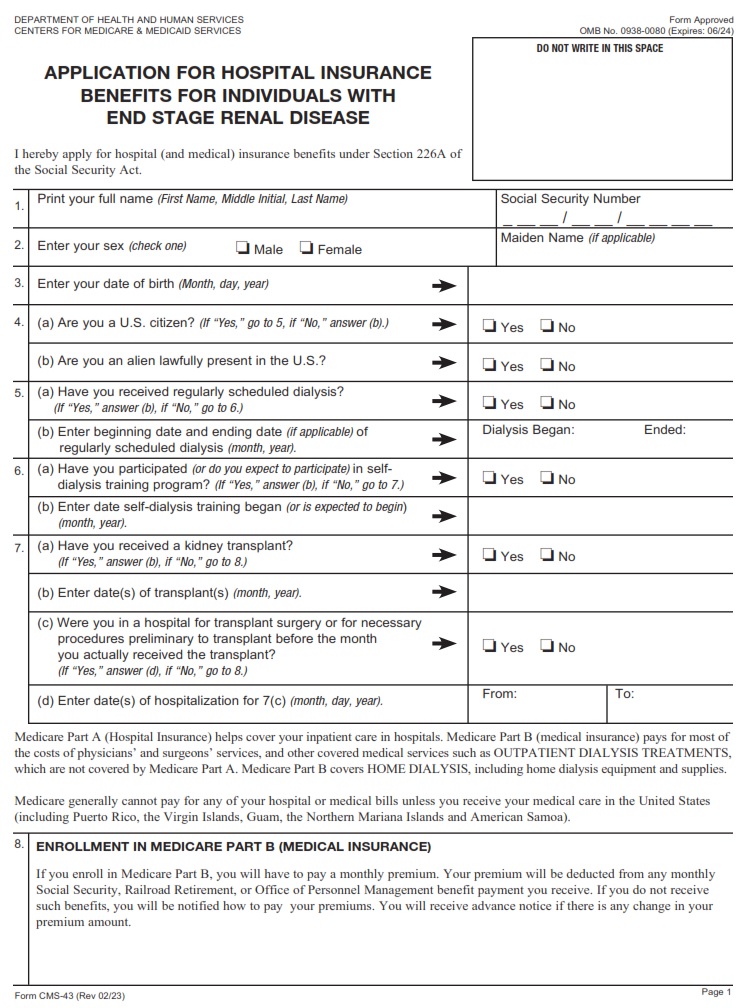
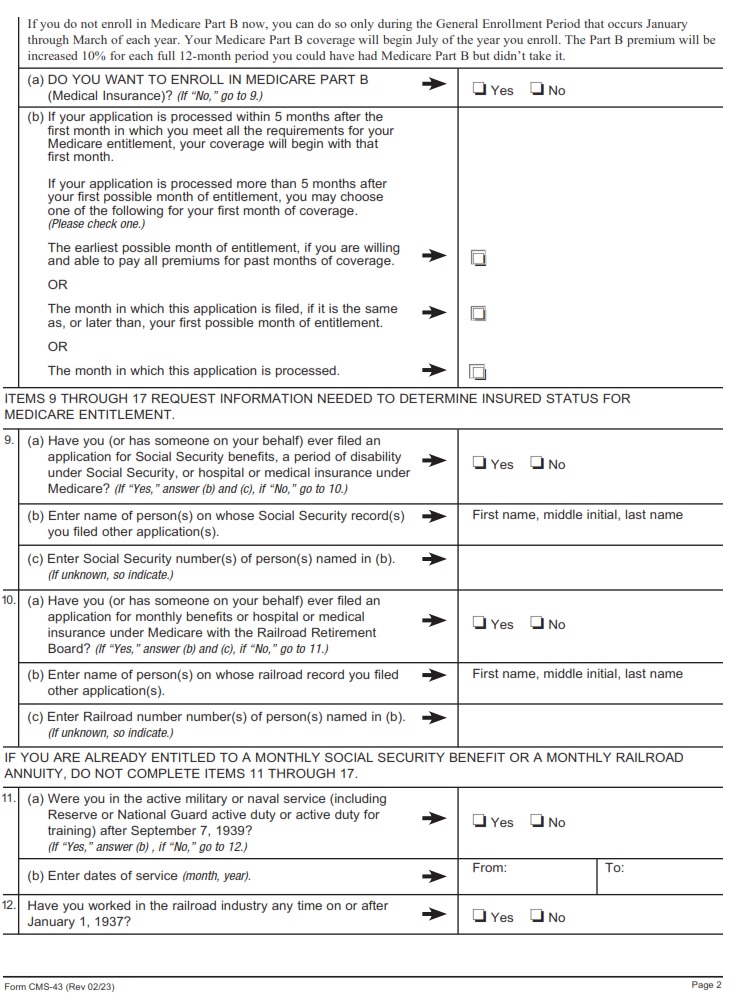
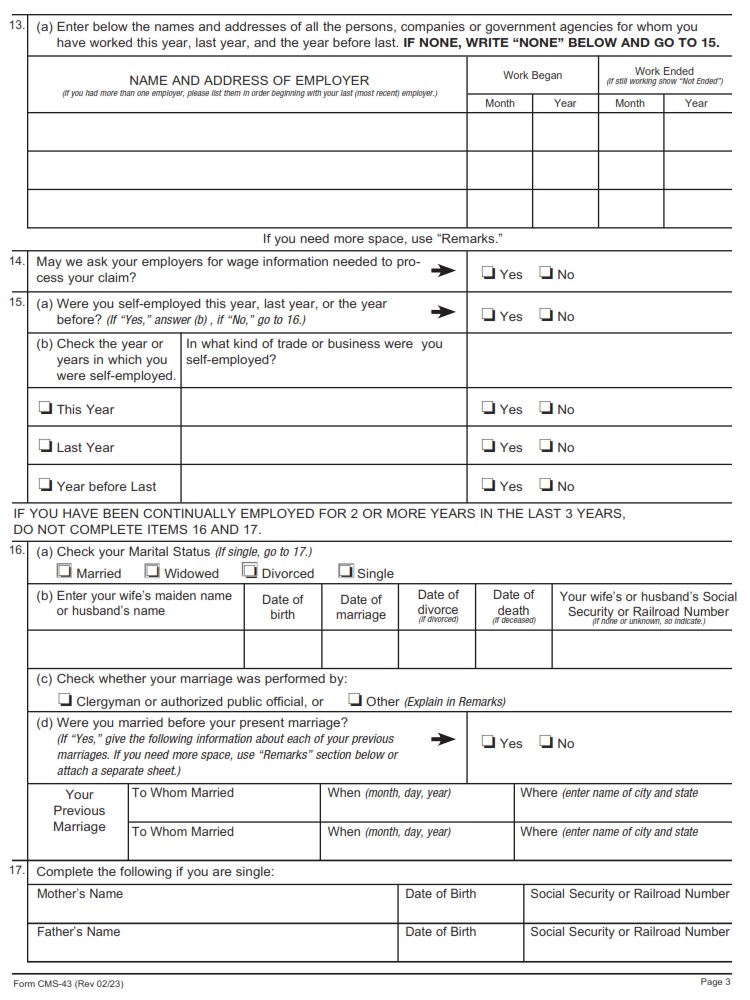
    CMS 43 - APPLICATION FOR HOSPITAL INSURANCE BENEFITS FOR INDIVIDUALS WITH END STAGE RENAL DISEASE PAGE 1 CMS 43 - APPLICATION FOR HOSPITAL INSURANCE BENEFITS FOR INDIVIDUALS WITH END STAGE RENAL DISEASE PAGE 2 CMS 43 - APPLICATION FOR HOSPITAL INSURANCE BENEFITS FOR INDIVIDUALS WITH END STAGE RENAL DISEASE PAGE 3

  • CMS 18-F-5 – APPLICATION FOR PART A (HOSPITAL INSURANCE)

    CMS 18-F-5 – APPLICATION FOR PART A (HOSPITAL INSURANCE)

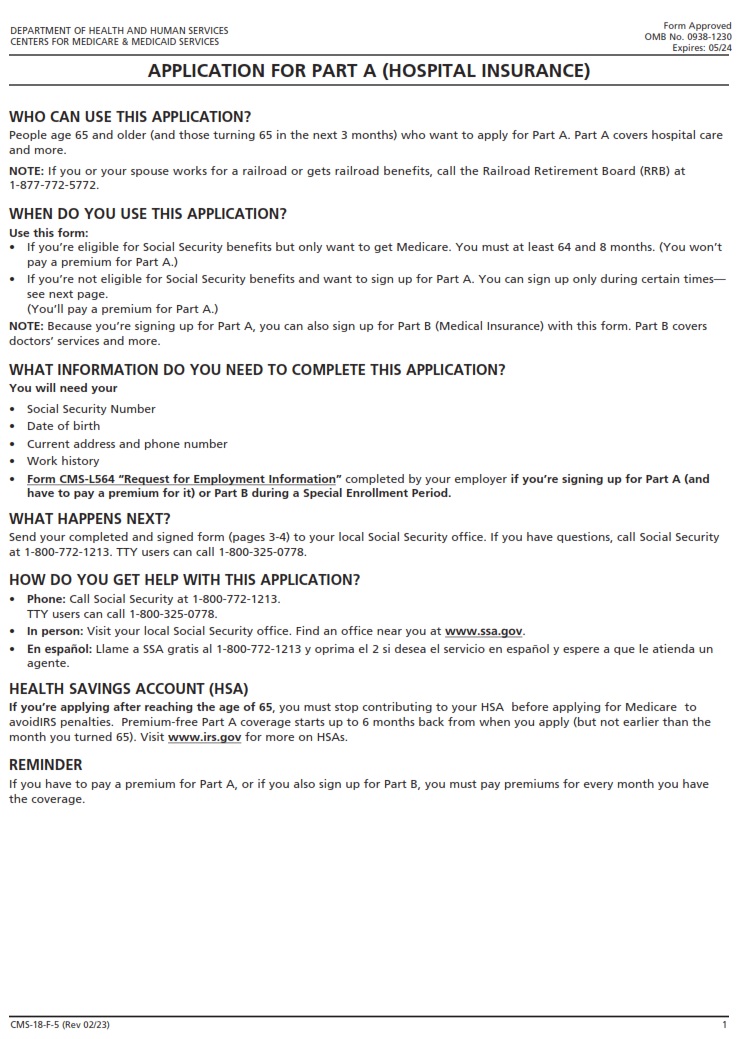
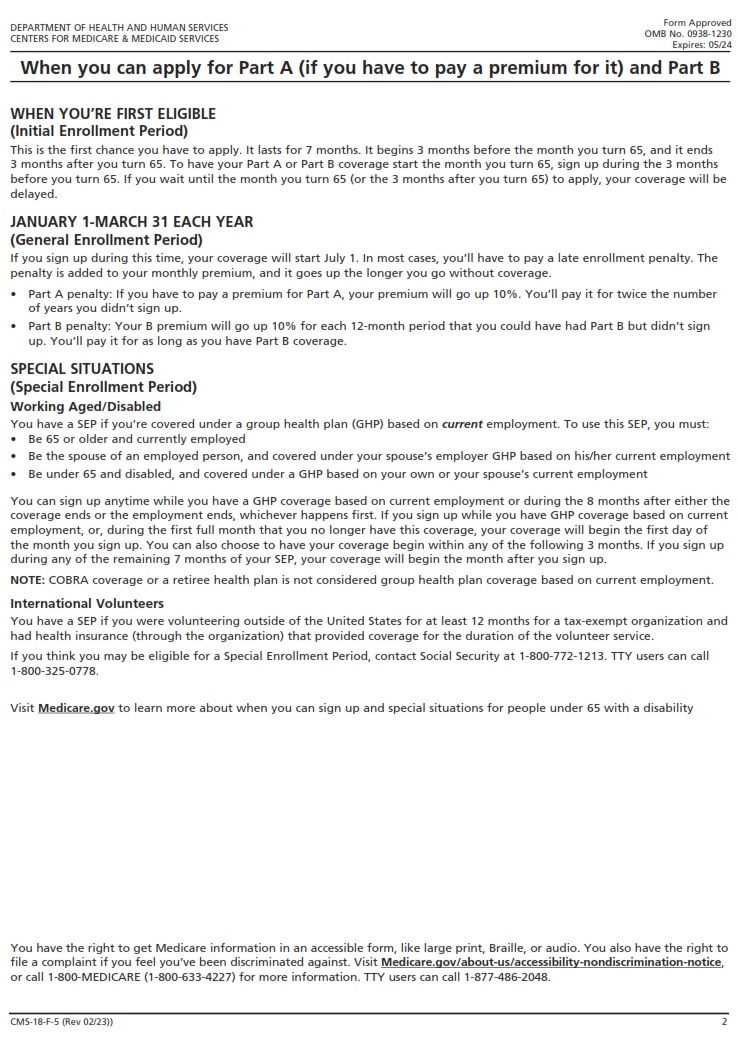
    CMSFORM.ORGCMS 18-F-5 – APPLICATION FOR PART A (HOSPITAL INSURANCE) – The Centers for Medicare & Medicaid Services (CMS) has released new guidance on applying for Part A hospital insurance. The updated document, CMS 18-F-5, is a guide for people who want to apply for coverage through Medicare. The document covers everything from what information is needed to file an application to what to do if an application is denied. What is Part A?

    Medicare Part A provides hospital insurance for people aged 65 and older and younger individuals with disabilities. It is a single-payer program that pays all medical expenses, including doctor’s bills, up to a specified amount (an annual limit) for each beneficiary.

    Download CMS 18-F-5 – APPLICATION FOR PART A (HOSPITAL INSURANCE)

    [su_table responsive=”yes”]

    Form Number CMS 18-F-5
    Form Title APPLICATION FOR PART A (HOSPITAL INSURANCE)
    Published 2023-02-28
    O.M.B. 0938-0251
    File Size 194 KB

    [/su_table]

    [download id=”1761″]

    What is a CMS 18-F-5?

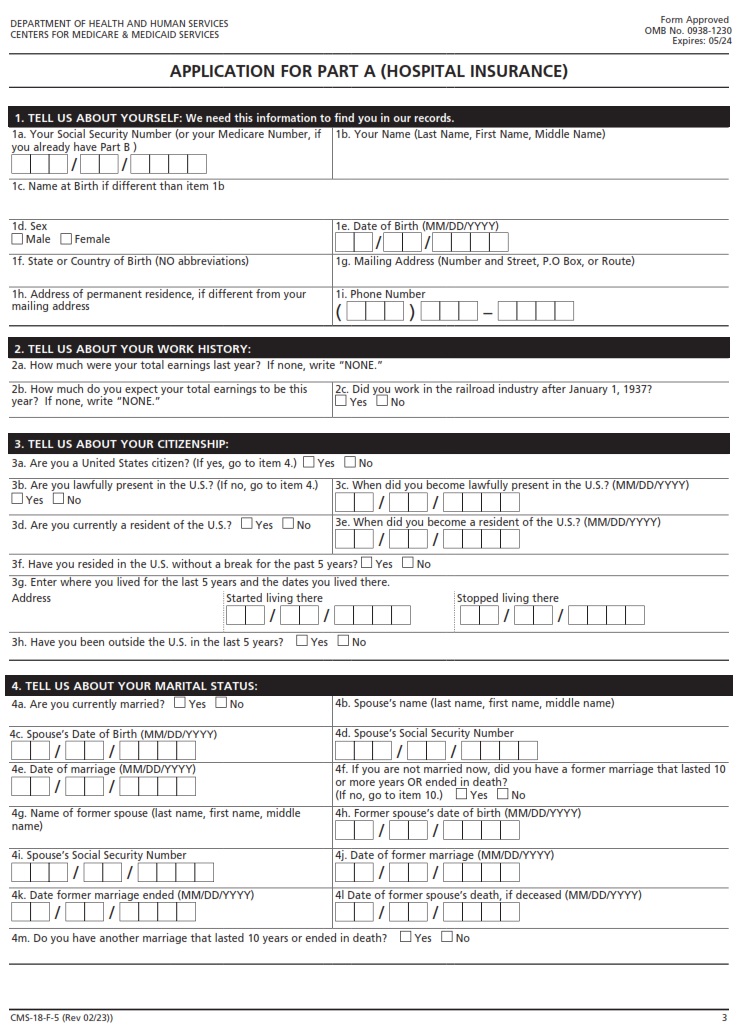
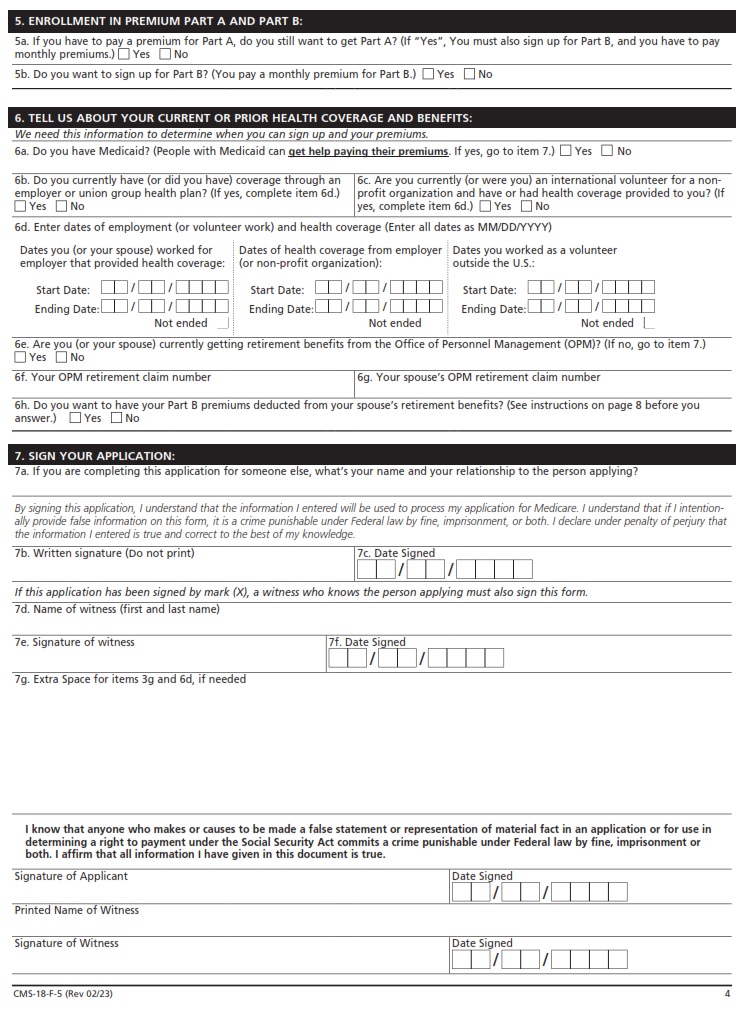
    CMS 18-F-5 is an application form used to apply for Part A Hospital Insurance under the Medicare program. The form requires personal information, such as name, address, and Social Security number, as well as information about previous health insurance coverage. It also asks about any employment history if the applicant or their spouse has worked for a railroad company.

    Part A Hospital Insurance covers inpatient hospital stays, skilled nursing facility care, hospice care, and some home health care services. Eligibility for Part A depends on a person’s age or disability status and whether they have paid into the Medicare system through payroll taxes while working.

    The CMS 18-F-5 application form can be downloaded from the official website of the Centers for Medicare & Medicaid Services (CMS). It is recommended that applicants review their eligibility criteria before filling out the form to ensure they meet all requirements. Once completed and submitted, it may take several weeks to process the application and receive confirmation of enrollment in Part A Hospital Insurance.

    Where Can I Find a CMS 18-F-5?

    If you are looking for a CMS 18-F-5 form, also known as the Application for Part A (Hospital Insurance), there are several ways to access it. Firstly, you can visit the official website of the Centers for Medicare & Medicaid Services (CMS) and download it from there. The CMS website has an extensive collection of forms related to healthcare services that are accessible to people from all backgrounds.

    Secondly, you can get a printed copy of the CMS 18-F-5 form by visiting your local Social Security office or Medicare office. These offices have a wide range of materials available that can help individuals navigate their way through different healthcare processes.

    Lastly, if you prefer to receive assistance with filling out the CMS 18-F-5 form, you can contact a licensed insurance agent who specializes in Medicare-related policies. These agents have experience working with different clients and will help guide them through each step of the application process while answering any questions they may have along the way.

    CMS 18-F-5 – APPLICATION FOR PART A (HOSPITAL INSURANCE)

    CMS 18-F-5 – Example

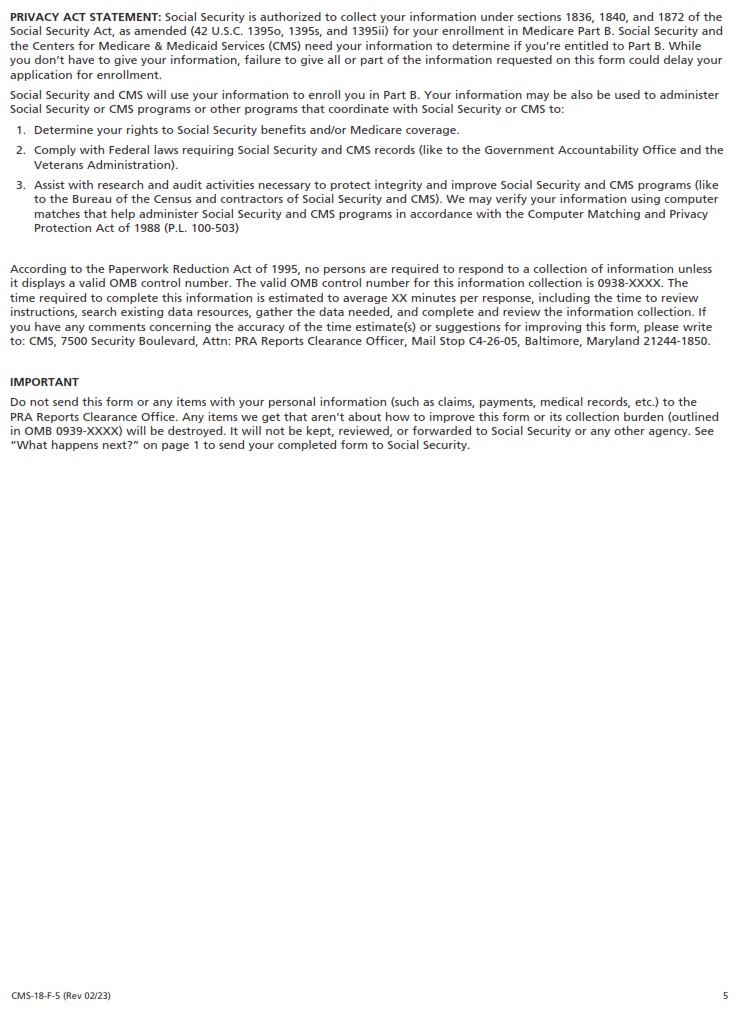
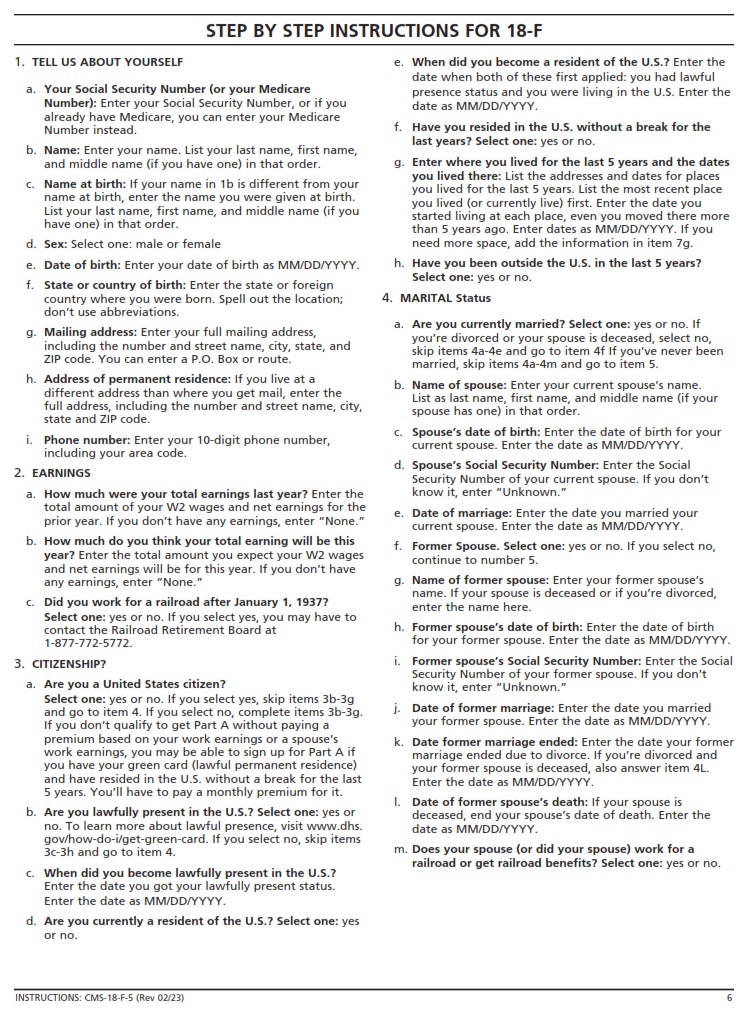
    CMS 18-F-5 - APPLICATION FOR PART A (HOSPITAL INSURANCE) PAGE 1 CMS 18-F-5 - APPLICATION FOR PART A (HOSPITAL INSURANCE) PAGE 2 CMS 18-F-5 - APPLICATION FOR PART A (HOSPITAL INSURANCE) PAGE 3 CMS 18-F-5 - APPLICATION FOR PART A (HOSPITAL INSURANCE) PAGE 4 CMS 18-F-5 - APPLICATION FOR PART A (HOSPITAL INSURANCE) PAGE 5 CMS 18-F-5 - APPLICATION FOR PART A (HOSPITAL INSURANCE) PAGE 6

  • CMS R-285 – Request for Retirement Benefit Information

    CMS R-285 – Request for Retirement Benefit Information

    CMSFORM.ORGCMS R-285 – Request for Retirement Benefit Information – Retirement benefits are a large expense for many Americans. If you are thinking about retirement, it is important to understand your options and make the best decision for yourself and your family. One of the most important decisions you will make is whether or not to request retirement benefit information from your employer. There are a few reasons why you might want to request this information.

    Download CMS R-285 – Request for Retirement Benefit Information

    [su_table responsive=”yes”]

    Form Number CMS R-285
    Form Title Request for Retirement Benefit Information
    Published 2023-02-28
    O.M.B. 0938-0769
    File Size 99 KB

    [/su_table]

    [download id=”1763″]

    What is a CMS R-285?

    CMS R-285 is a form that serves as an official request for retirement benefit information. It is commonly used by employees who are nearing retirement age and wish to obtain detailed information about their pension benefits. The form must be completed accurately and submitted to the relevant authorities in order to initiate the process of obtaining retirement benefits.

    The CMS R-285 form requires various pieces of information, such as the employee’s name, social security number, date of birth, and employment history. This information is used by pension administrators to calculate a retiree’s benefits accurately. The document also includes instructions on how to complete it correctly and where it should be sent once it has been filled out.

    Overall, CMS R-285 plays an essential role in helping retirees obtain accurate information about their pension benefits. It ensures that individuals receive all the necessary documentation needed to make informed decisions regarding their post-retirement finances. Therefore, anyone considering retiring soon should familiarize themselves with this form and ensure they submit it within the required timeframe.

    Where Can I Find a CMS R-285?

    The CMS R-285 form is a request for retirement benefit information that can be filled out by individuals who are looking to retire and receive benefits from the government. It is important to note that this form cannot be found online, as it must be obtained directly from the Centers for Medicare & Medicaid Services (CMS). To request an R-285 form, individuals should contact their local Social Security office or call the CMS hotline.

    Individuals can also obtain the CMS R-285 form by visiting a CMS regional office in person. The CMS has offices located throughout the United States and territories, including Puerto Rico and Guam. Those seeking to obtain an R-285 form in person should bring proper identification, such as a driver’s license or passport.

    Lastly, individuals may also request an R-285 form through their employer if they work for a company that provides retirement benefits through the government. Employers should have access to these forms and can provide them upon request. Overall, while obtaining an R-285 form may take some effort and time, it is crucial for those looking to retire and receive benefits from the government.

    CMS R-285 – Request for Retirement Benefit Information

    The CMS R-285 form is a Request for Retirement Benefit Information used by the Centers for Medicare and Medicaid Services (CMS) to gather information about an individual’s retirement benefits. The form must be completed by individuals who are applying for Medicare Part B enrollment or who are requesting a Special Enrollment Period (SEP). The information gathered on the form includes the individual’s name, Social Security number, date of birth, email address, phone number, and information about their retirement benefits.

    The CMS R-285 form is an important part of the Medicare enrollment process because it helps ensure that individuals receive accurate and timely information about their retirement benefits. It also helps CMS determine whether an individual is eligible for a SEP based on their employment status or other factors. If you are applying for Medicare Part B enrollment or requesting a SEP, it is important to complete this form accurately and provide all requested documentation to avoid delays in processing your application.

    CMS R-285 – Example

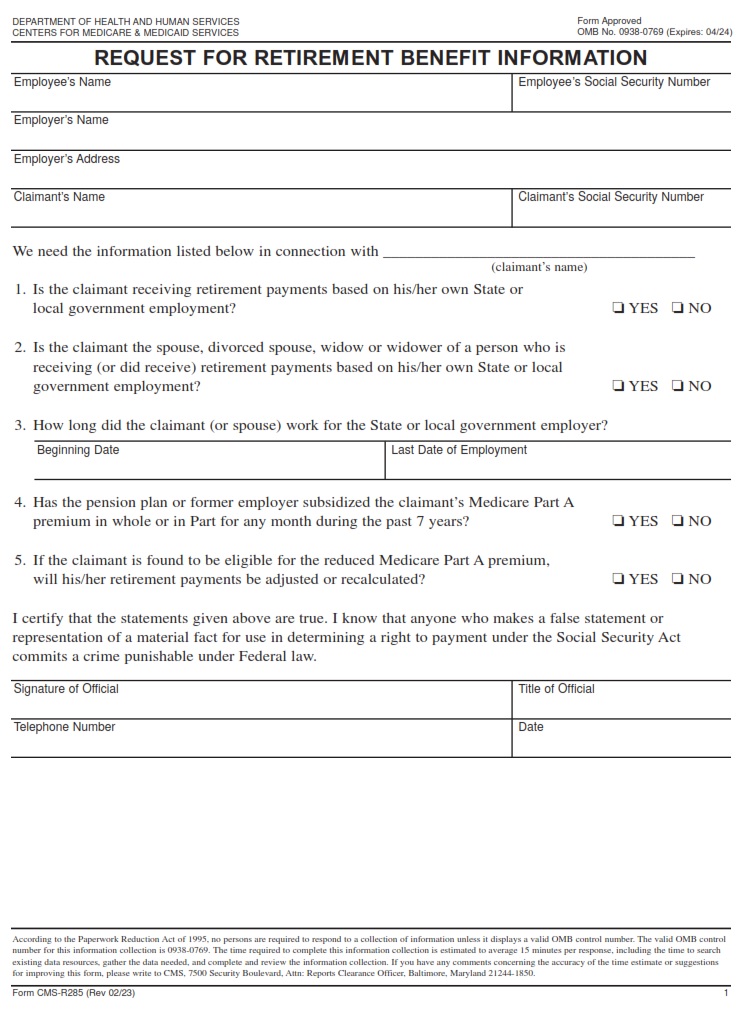
    CMS R-285 - Request for Retirement Benefit Information