Author: Bismillah

  • CMS 588 – Electronic Funds Transfer (EFT) Authorization Agreement

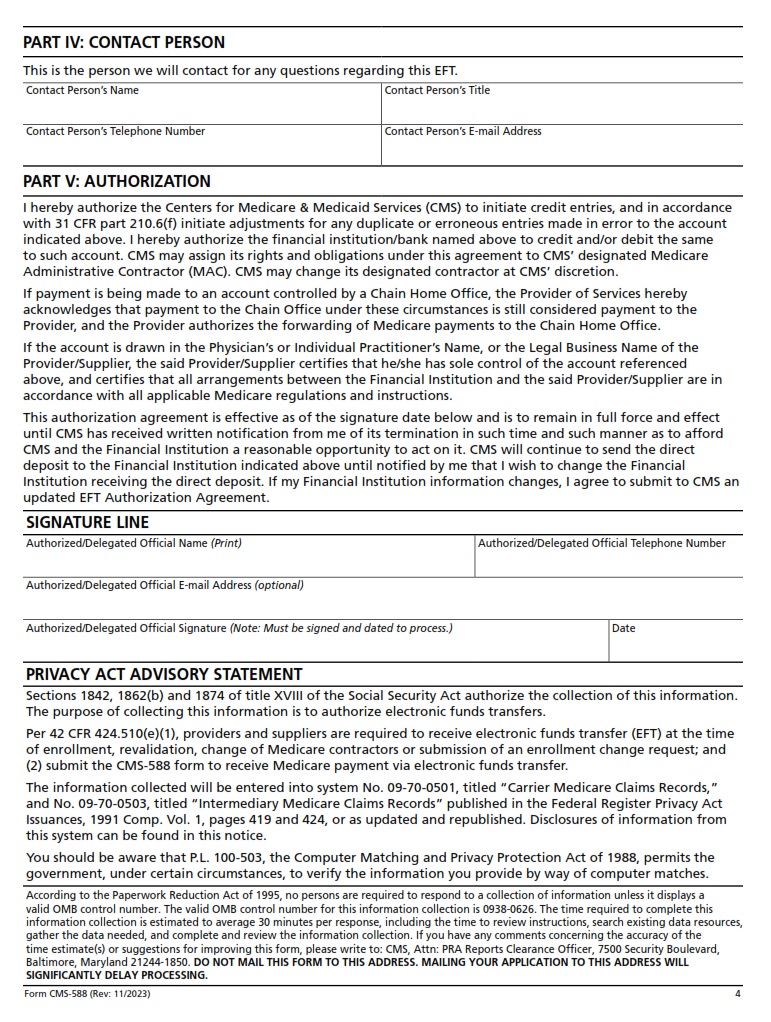
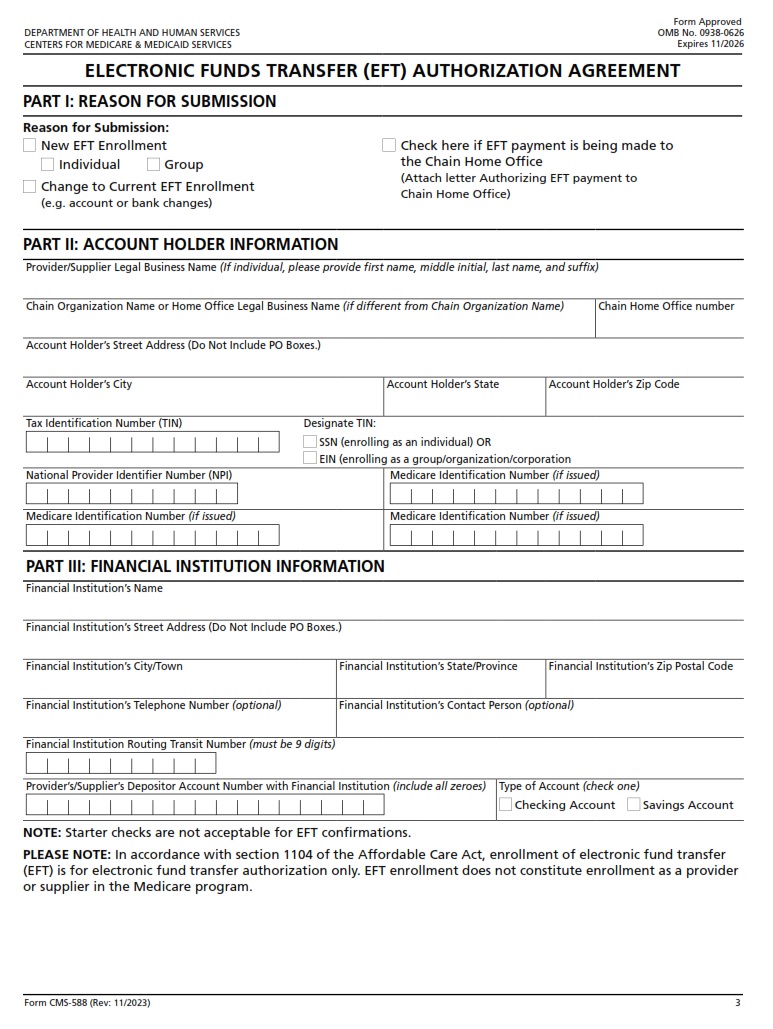
    CMS 588 – Electronic Funds Transfer (EFT) Authorization Agreement

    CMSFORM.ORGCMS 588 – Electronic Funds Transfer (EFT) Authorization Agreement – In today’s fast-paced digital world, the convenience and efficiency of electronic funds transfer (EFT) have revolutionized the way we handle financial transactions. Imagine no more waiting in line at the bank or worrying about lost checks in the mail – with CMS 588, you can securely transfer funds electronically with just a few clicks. This powerful tool not only streamlines payment processes but also reduces paperwork and minimizes errors, making it a game-changer for businesses and individuals alike. Join us as we delve into the intricacies of the CMS 588 Electronic Funds Transfer Authorization Agreement and uncover how this innovative solution is shaping the future of financial transactions.

    Download CMS 588 – Electronic Funds Transfer (EFT) Authorization Agreement

    [su_table responsive=”yes”]

    Form Number CMS 588
    Form Title Electronic Funds Transfer (EFT) Authorization Agreement
    Published 2023-11-02
    O.M.B. 0938-0626
    File Size 86 KB

    [/su_table]

    [download id=’1693′]

    What is a CMS 588?

    A CMS 588, known as the Electronic Funds Transfer (EFT) Authorization Agreement, plays a crucial role in streamlining financial transactions within the healthcare industry. By allowing providers and suppliers to receive payments electronically, this form eliminates the need for cumbersome paper checks and reduces administrative burden. The adoption of EFT through CMS 588 can lead to faster processing times, improved efficiency, and cost savings for both providers and payers.

    One key benefit of utilizing a CMS 588 form is its ability to enhance payment security and reduce the risk of fraud compared to traditional payment methods. With electronic funds transfer, financial information is transmitted securely between parties, reducing the chances of unauthorized access or manipulation. Additionally, by opting for EFT authorization via CMS 588, healthcare organizations can align with industry best practices and modernize their payment processes to better meet evolving regulatory requirements.

    Where Can I Find a CMS 588?

    If you’re in search of a CMS 588 form to complete an Electronic Funds Transfer (EFT) Authorization Agreement, there are several avenues you can explore. One of the most convenient options is to visit the official website of the Centers for Medicare & Medicaid Services (CMS) where you can typically find a downloadable version of the form readily available. Alternatively, healthcare providers and organizations that frequently interact with CMS may have copies of the form on hand or be able to provide guidance on obtaining one.

    In addition to online resources and healthcare providers, local CMS offices or Medicare administrative contractors (MACs) may have physical copies of the CMS 588 form that individuals can request or pick up in person. It’s crucial to ensure you are using the most up-to-date version of the form to avoid any processing delays or complications with your EFT authorization. By exploring these various channels, individuals seeking a CMS 588 form can access it efficiently and proceed with authorizing electronic funds transfers seamlessly.

    CMS 588 – Electronic Funds Transfer (EFT) Authorization Agreement

    CMS 588 – Electronic Funds Transfer (EFT) Authorization Agreement plays a crucial role in streamlining payment processes for healthcare providers. By opting for EFT, providers can enjoy faster and more secure payments, reducing administrative burdens and ensuring timely reimbursements. This electronic method not only enhances efficiency but also promotes cost savings by eliminating paper-based transactions.

    Moreover, embracing EFT through the CMS 588 form demonstrates a commitment to modernizing healthcare payment systems. The shift towards electronic funds transfer aligns with industry trends that emphasize digital transformation and innovation. Providers who embrace EFT are positioned to adapt to the evolving landscape of healthcare payments, paving the way for improved financial operations and enhanced patient care delivery.

    CMS 588 Example
    CMS 588 - Page 1 CMS 588 - Page 2

  • CMS 179 – Transmittal And Notice Of Approval Of State Plan Material

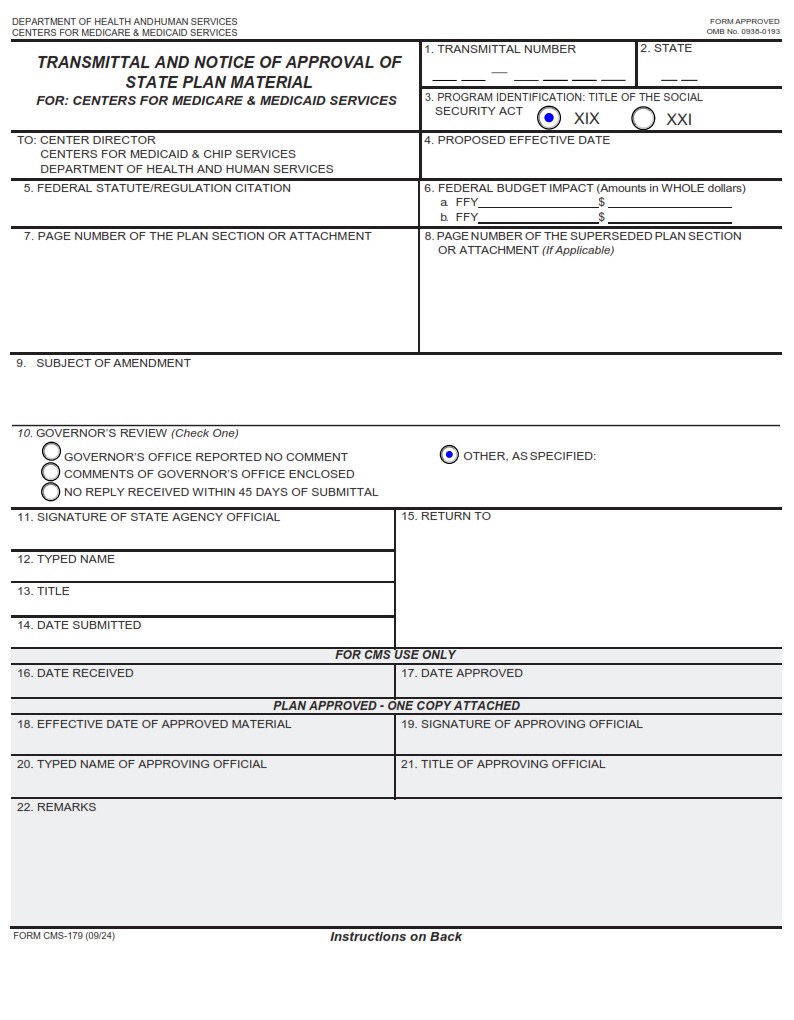
    CMS 179 – Transmittal And Notice Of Approval Of State Plan Material

    CMSFORM.ORGCMS 179 – Transmittal And Notice Of Approval Of State Plan Material – In the intricate web of bureaucratic processes that govern our healthcare system, one document stands out as both crucial and enigmatic: CMS 179 – the Transmittal and Notice of Approval of State Plan Material. As seemingly mundane as its title may suggest, this unassuming form holds the power to shape policies, allocate resources, and impact the lives of millions. It serves as a conduit for change, a beacon of progress in an ocean of regulations. Behind its bland facade lies a world of complexities and implications that few outside the inner circles of healthcare governance fully grasp. Join us on a journey through the labyrinthine corridors of CMS 179, where decisions are made, plans are approved, and states navigate the delicate dance between compliance and innovation.

    Download CMS 179 – Transmittal And Notice Of Approval Of State Plan Material

    [su_table responsive=”yes”]

    Form Number CMS 179
    Form Title Transmittal And Notice Of Approval Of State Plan Material
    Published 2024-01-01
    O.M.B. 0938-0193
    File Size 185 KB

    [/su_table]

    [download id=’1694′]

    What is a CMS 179?

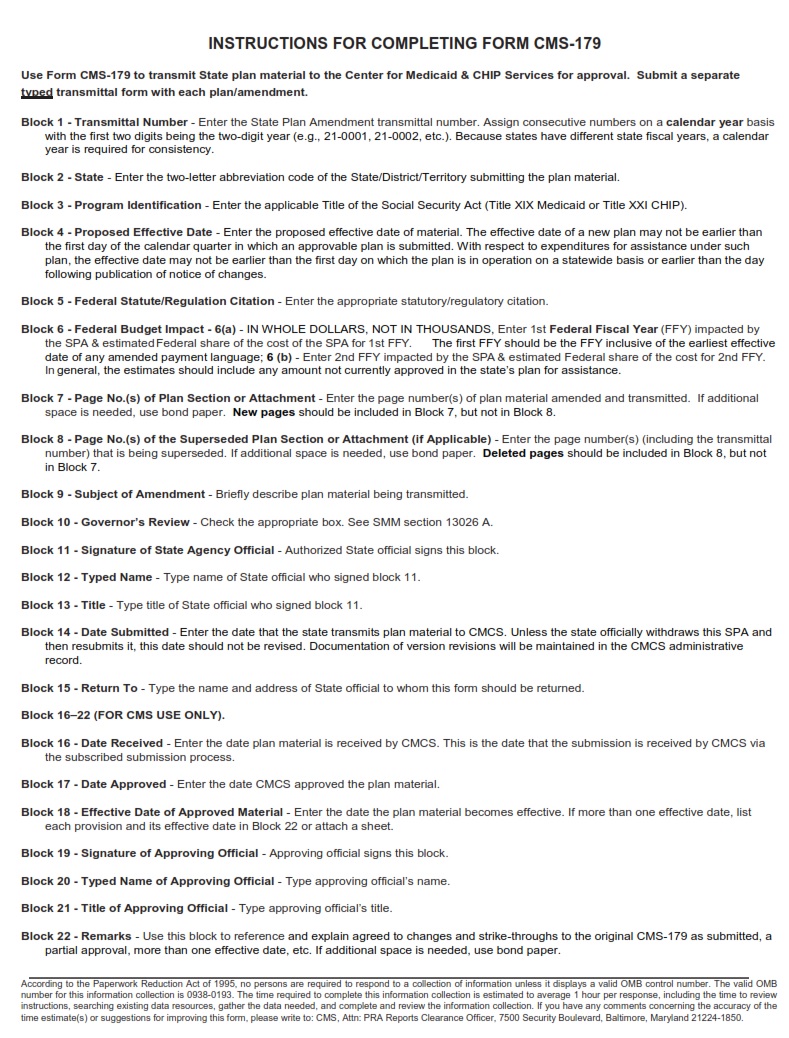
    CMS 179, also known as the Transmittal and Notice of Approval of State Plan Material, plays a crucial role in the healthcare industry. This document serves as a formal notification from the Centers for Medicare & Medicaid Services (CMS) to state agencies regarding approved changes or updates to state plan materials. It ensures that all necessary parties are informed about modifications to Medicaid and CHIP programs, promoting transparency and compliance within the system.

    States must carefully review CMS 179 to understand the implications of any approved changes on their respective healthcare programs. This transmittal is not merely paperwork; it signifies the culmination of a collaborative process between federal and state entities aimed at improving healthcare access and delivery for vulnerable populations. By adhering to CMS guidelines outlined in Transmittal 179, states can effectively implement policy revisions while maintaining alignment with federal requirements.

    Where Can I Find a CMS 179?

    If you’re on the hunt for a CMS 179 form, you may be wondering where to find this crucial document. The Centers for Medicare & Medicaid Services (CMS) typically provides these forms on their official website under the State Plan Amendments section. Alternatively, reaching out to your state’s Medicaid agency or contacting CMS directly could also lead you to the necessary resources.

    Finding a CMS 179 form is like uncovering a key piece of puzzle in the intricate world of healthcare administration. It serves as a vital tool in the process of transmitting and receiving approval for state plan material, ensuring compliance with federal guidelines and regulations. By understanding where to locate this form and how to properly utilize it, healthcare professionals can streamline their administrative tasks and contribute to the efficient delivery of healthcare services within their communities.

    CMS 179 – Transmittal And Notice Of Approval Of State Plan Material

    The CMS 179 form plays a crucial role in the approval process of State Plan material. This transmittal and notice of approval document signifies a significant milestone for states seeking federal approval for their Medicaid and CHIP programs. It serves as an official validation of the state’s compliance with federal regulations and requirements, marking the beginning of implementation activities.

    Once CMS approves a state’s plan material through the CMS 179 process, it opens up opportunities for states to expand coverage, enhance benefits, and improve access to healthcare services for their residents. This approval also signifies a partnership between federal and state governments to provide quality healthcare to vulnerable populations. By understanding the significance of the CMS 179 transmittal and notice of approval process, stakeholders can better appreciate the complexities involved in shaping Medicaid and CHIP programs that meet the needs of diverse populations across various states.

    CMS 179 Example

    CMS 179 - Page 1 CMS 179 - Page 2

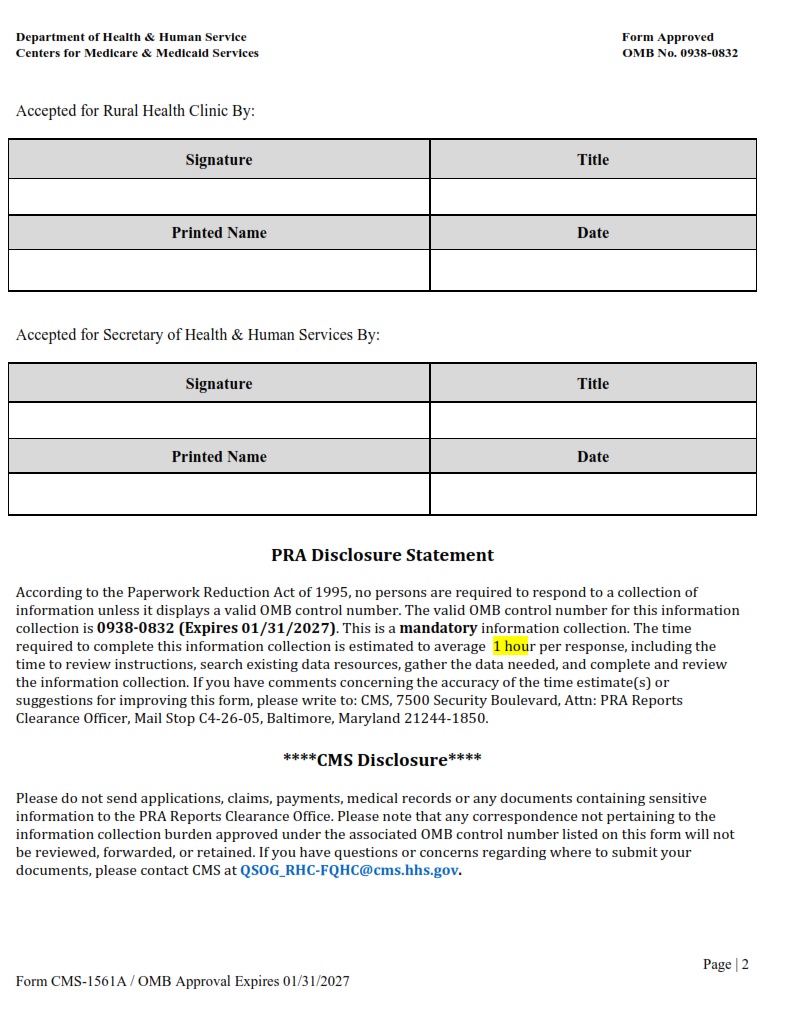
  • CMS 1561A – Health Insurance Benefit Agreement-Rural Health Clinic

    CMS 1561A – Health Insurance Benefit Agreement-Rural Health Clinic

    CMSFORM.ORGCMS 1561A – Health Insurance Benefit Agreement-Rural Health Clinic – Step into the world of rural healthcare and explore the intricate web of regulations governing health insurance benefits with CMS 1561A – Health Insurance Benefit Agreement-Rural Health Clinic. In the vast expanse of rural America, where access to quality healthcare can be a challenge, these agreements play a crucial role in ensuring that residents receive the care they need. From navigating reimbursement processes to understanding the complexities of billing for services, this document is a lifeline for rural health clinics striving to bridge the gap between patients and essential healthcare services. Join us as we unravel the significance of CMS 1561A and delve into the impact it has on shaping the landscape of healthcare delivery in remote communities.

    Download CMS 1561A – Health Insurance Benefit Agreement-Rural Health Clinic

    [su_table responsive=”yes”]

    Form Number CMS 1561A
    Form Title Health Insurance Benefit Agreement-Rural Health Clinic
    Published 2024-01-19
    O.M.B. 0938-0832
    File Size 256 KB

    [/su_table]

    [download id=’1695′]

    What is a CMS 1561A?

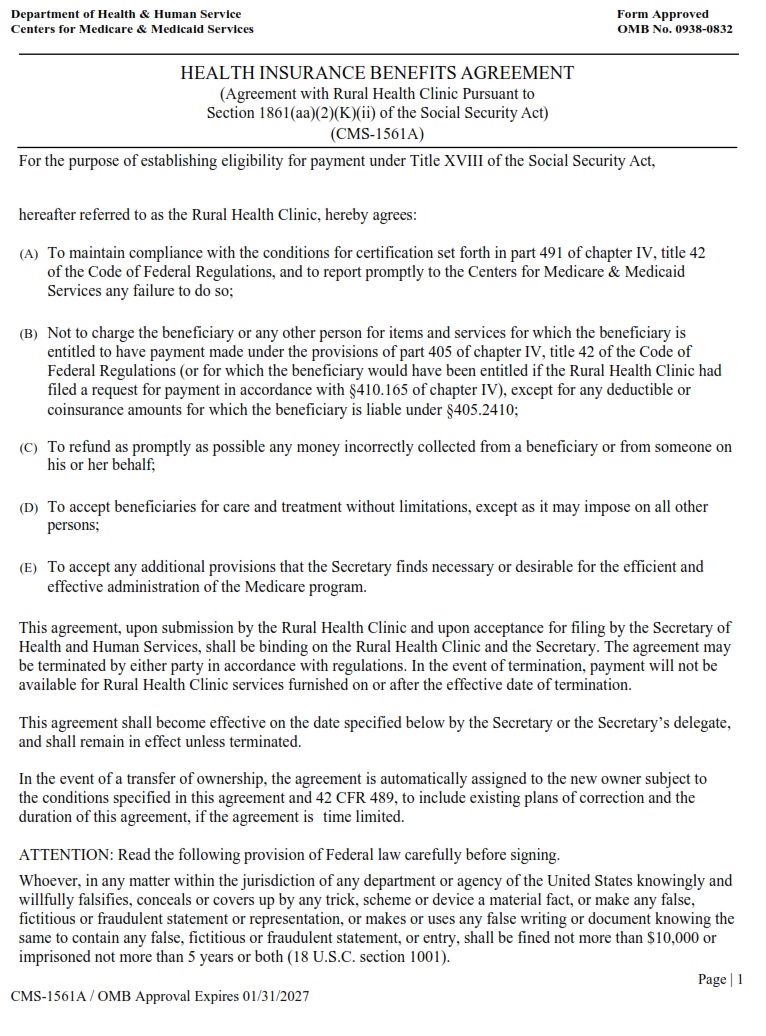
    CMS 1561A, also known as the Health Insurance Benefit Agreement-Rural Health Clinic, is a crucial document that outlines the agreement between rural health clinics and Medicare. This form is designed to clearly define the services provided by the clinic and the payment structure agreed upon with Medicare. By completing this form, rural health clinics ensure compliance with Medicare guidelines and maintain eligibility for reimbursement for services provided to patients.

    The CMS 1561A serves as a vital tool in establishing transparency and accountability in healthcare services offered by rural health clinics. It not only streamlines billing processes but also helps in maintaining accurate records of patient care. By adhering to the guidelines outlined in this agreement, rural health clinics can enhance their operational efficiency and provide quality care to patients while remaining financially sustainable in today’s rapidly evolving healthcare landscape.

    Where Can I Find a CMS 1561A?

    If you’re looking to find a CMS 1561A form, the best place to start is by visiting the official website of the Centers for Medicare & Medicaid Services (CMS). Here, you can access a variety of forms including the CMS 1561A, which is used for Health Insurance Benefit Agreements in Rural Health Clinics. Additionally, many healthcare providers and facilities that participate in Medicare may have copies of this form available for patients who need to review or complete it.

    Another valuable resource for obtaining a CMS 1561A form is your local Rural Health Clinic (RHC). RHC staff are well-versed in Medicare billing and reimbursement processes and can provide assistance with accessing and understanding this important document. Don’t hesitate to reach out to your healthcare provider or RHC if you require further guidance on completing the CMS 1561A form for your health insurance benefits.

    CMS 1561A – Health Insurance Benefit Agreement-Rural Health Clinic

    The CMS 1561A form, also known as the Health Insurance Benefit Agreement-Rural Health Clinic, plays a crucial role in facilitating the provision of healthcare services in rural areas. By establishing a formal agreement between healthcare providers and beneficiaries, this form helps ensure that patients receive quality care while simplifying the billing process for all parties involved. This agreement is especially vital for Rural Health Clinics (RHCs), which often face unique challenges in terms of accessibility and resources.

    One key aspect of CMS 1561A is its focus on promoting cost-effective and efficient healthcare delivery in rural regions. By outlining specific billing requirements and patient responsibilities, this form helps streamline payment processes and enhance transparency between RHCs and insurance providers. Additionally, the agreement encourages collaborative efforts between healthcare professionals and patients, fostering a stronger sense of accountability and trust within rural communities. Overall, the CMS 1561A form serves as a cornerstone for ensuring effective healthcare delivery in underserved areas and deserves recognition for its role in supporting rural health initiatives.

    In conclusion, the Health Insurance Benefit Agreement-Rural Health Clinic form embodies the commitment to improving access to quality healthcare services in remote areas. Through its structured approach to billing agreements and patient engagement strategies, this document exemplifies best practices for promoting sustainable health outcomes in rural communities. By leveraging the provisions outlined in CMS 1561A, stakeholders can work together towards building a resilient healthcare system that prioritizes inclusivity, affordability, and excellence across all aspects of care delivery within RHCs.

    CMS 1561A Example

    CMS 1561A - Page 1 CMS 1561A - Page 2

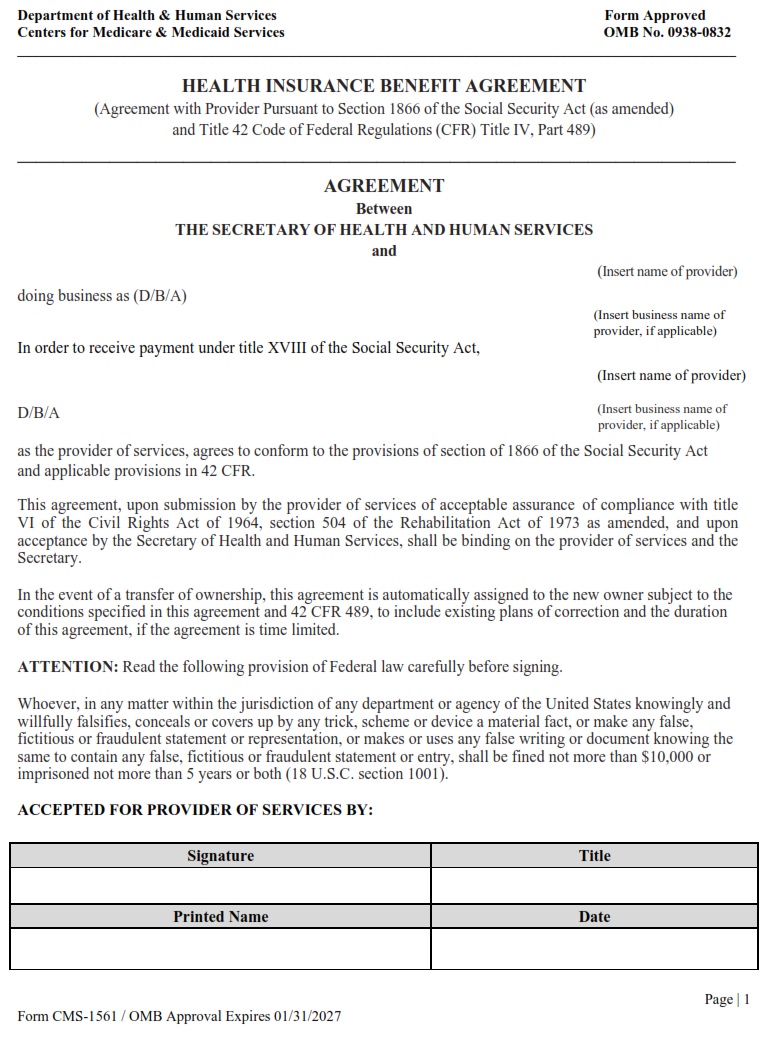
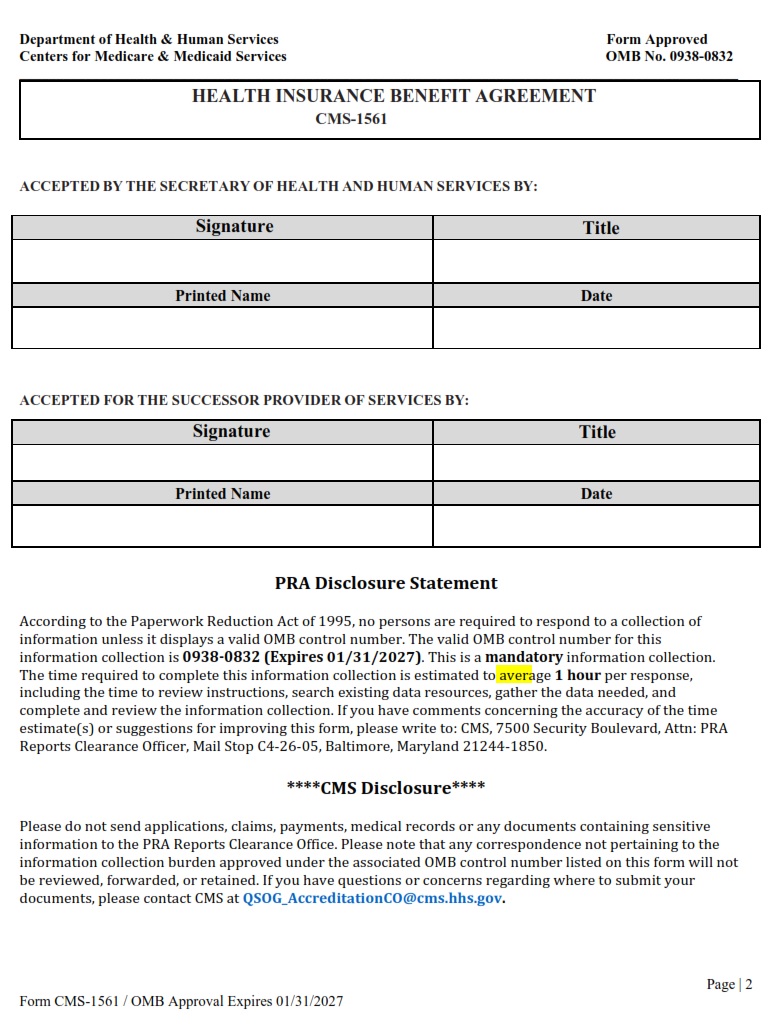
  • CMS 1561 – Health Insurance Benefit Agreement

    CMS 1561 – Health Insurance Benefit Agreement

    CMSFORM.ORGCMS 1561 – Health Insurance Benefit Agreement – In the intricate world of healthcare bureaucracy, one form stands out as both a vital document and a labyrinth of confusion: CMS 1561 – the Health Insurance Benefit Agreement. This seemingly innocuous piece of paper holds within its pages the key to unlocking the mysteries of insurance coverage, medical billing, and patient rights. From deciphering cryptic codes to navigating complex clauses, understanding this form is essential for anyone seeking clarity in their healthcare journey.

    Imagine holding in your hands a document that could mean the difference between financial security and ruin, between accessing life-saving treatments or being denied care. The CMS 1561 is not just another bureaucratic hurdle; it is a map through the maze of health insurance policies that can lead you to optimal care or leave you lost in a sea of jargon. Join us as we delve into the depths of this crucial agreement, unraveling its secrets and empowering you with knowledge to advocate for your health and well-being like never before.

    Download CMS 1561 – Health Insurance Benefit Agreement

    [su_table responsive=”yes”]

    Form Number CMS 1561
    Form Title Health Insurance Benefit Agreement
    Published 2024-01-19
    O.M.B. 0938-0832
    File Size 317 KB

    [/su_table]

    [download id=’1696′]

    What is a CMS 1561?

    CMS 1561, also known as the Health Insurance Benefit Agreement, plays a crucial role in the healthcare system by outlining the agreement between healthcare providers and insurance companies. This form is used to document services provided to patients and ensure that claims for reimbursement are processed accurately. By detailing the services rendered and the associated costs, CMS 1561 helps streamline the billing process and maintain transparency in healthcare transactions.

    One of the key features of CMS 1561 is its ability to track medical expenses incurred by patients and ensure that they are appropriately covered by their insurance plans. This form serves as a vital communication tool between healthcare providers, insurers, and patients, facilitating efficient coordination of care and reimbursement processes. Understanding CMS 1561 is essential for both healthcare professionals and patients to navigate the complex landscape of health insurance benefits effectively.

    In conclusion, CMS 1561 serves as a cornerstone in ensuring smooth operations within the healthcare industry by documenting patient care services accurately and facilitating timely reimbursements from insurance companies. Its importance lies in its ability to streamline administrative processes while maintaining clarity regarding medical expenses. By familiarizing themselves with CMS 1561, stakeholders can actively participate in optimizing healthcare delivery systems for better patient outcomes.

    Where Can I Find a CMS 1561?

    If you’re looking to obtain a CMS 1561 form for your Health Insurance Benefit Agreement, there are a few key avenues to explore. Firstly, the most convenient option is to visit the official Centers for Medicare & Medicaid Services (CMS) website, where you can easily access and download the form in PDF format. Additionally, many healthcare providers and insurance companies also keep these forms readily available either on their websites or at their physical offices for easy access by patients and policyholders. For those who prefer a more personalized approach, contacting your health insurance provider directly via phone or email can also lead to obtaining the necessary form promptly.

    Furthermore, community health centers and local government offices may offer assistance in procuring the CMS 1561 form if needed. In some cases, pharmacies that provide Medicare services might carry these forms as well. Remember that having all required paperwork organized is crucial when dealing with any medical or insurance-related processes; ensuring timely submission of necessary forms like the CMS 1561 will facilitate smoother transactions and communication between you and your healthcare provider or insurer. By familiarizing yourself with various channels through which you can procure this essential document, you empower yourself to navigate the complexities of healthcare bureaucracy efficiently.

    CMS 1561 – Health Insurance Benefit Agreement

    When it comes to navigating the complex world of health insurance, understanding the CMS 1561 form is crucial for beneficiaries. This form, known as the Health Insurance Benefit Agreement, outlines important details about the coverage and benefits individuals are entitled to under their health insurance plan. By carefully reviewing and completing this form accurately, beneficiaries can ensure they are fully aware of their rights and responsibilities when it comes to utilizing their health insurance benefits.

    One key aspect of the CMS 1561 form is its role in facilitating communication between healthcare providers and insurers. By detailing the specific services covered by the insurance plan, this agreement helps streamline the process of submitting claims and receiving reimbursements for medical services. Additionally, signing this form signifies a commitment from both parties to adhere to the terms outlined in the agreement, fostering transparency and accountability in healthcare transactions. Understanding how to effectively utilize and leverage this document can empower beneficiaries to make informed decisions regarding their healthcare needs while maximizing their insurance coverage benefits.

    CMS 1561 Example

    CMS 1561 - Page 1 CMS 1561 - Page 2

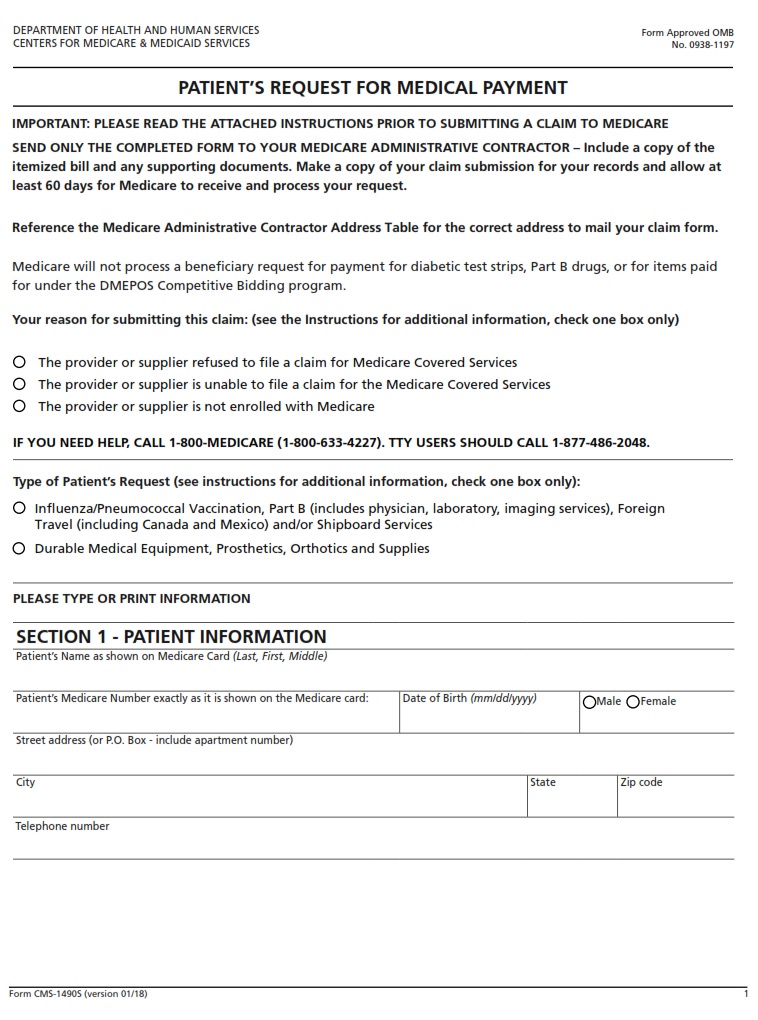
  • CMS 1490S – PATIENT’S REQUEST FOR MEDICAL PAYMENT (English)

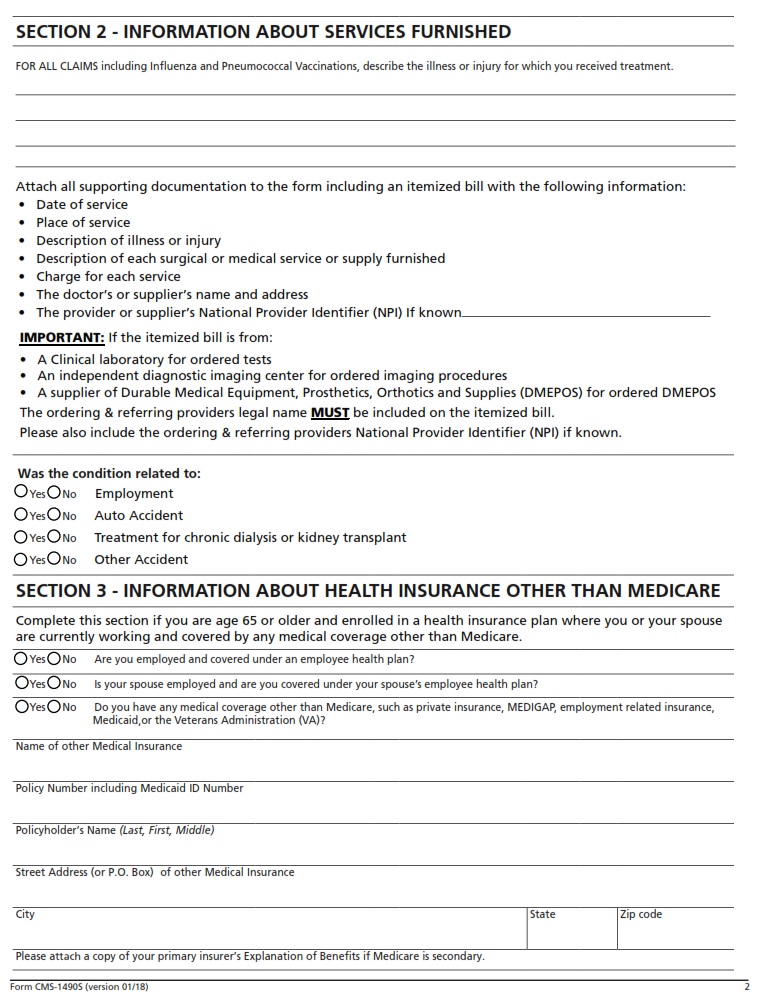
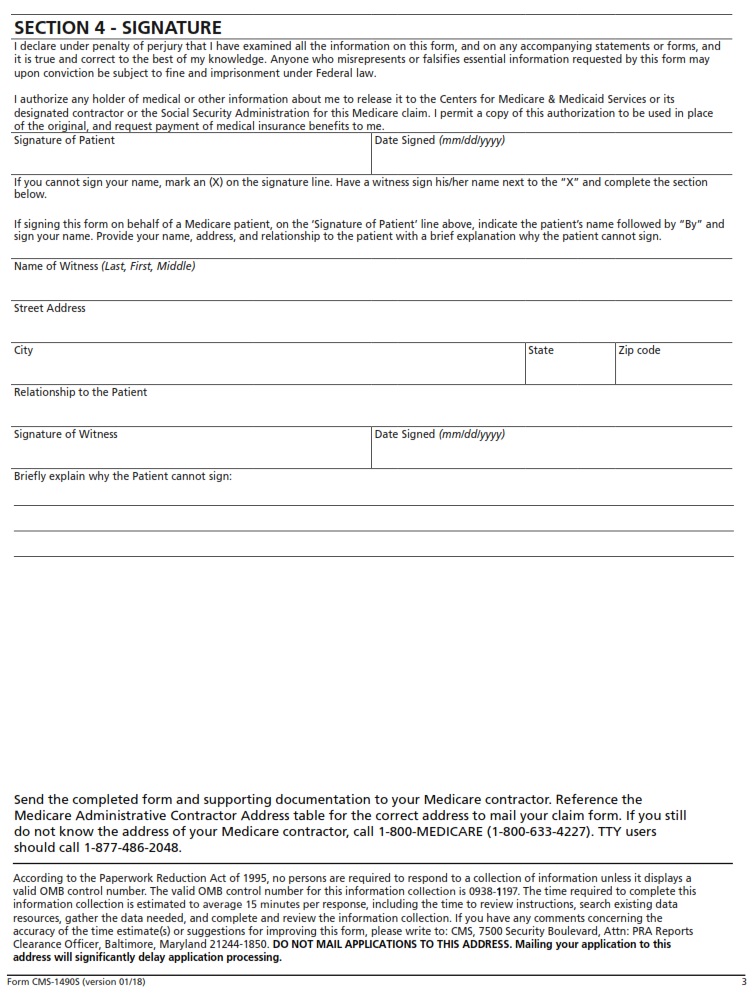
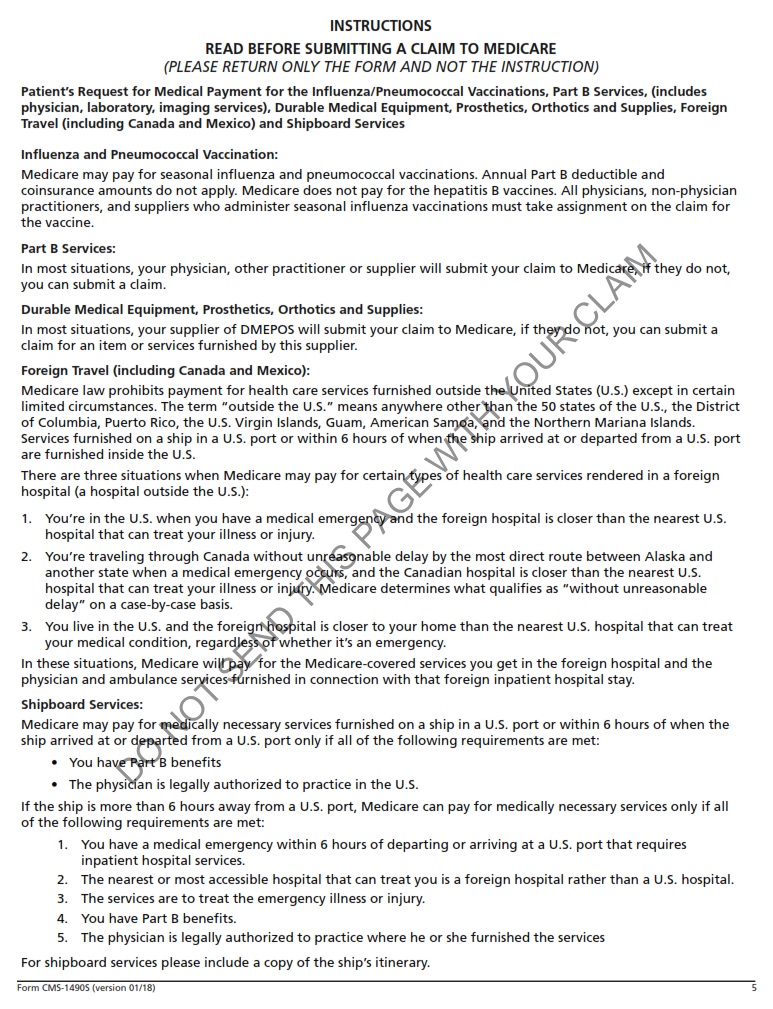
    CMS 1490S – PATIENT’S REQUEST FOR MEDICAL PAYMENT (English)

    CMSFORM.ORGCMS 1490S – PATIENT’S REQUEST FOR MEDICAL PAYMENT (English) – Medical bills can be overwhelming and confusing for patients, especially when dealing with the administrative processes of submitting claims to insurance companies. Fortunately, there’s a form that can simplify this process: CMS 1490S – Patient’s Request for Medical Payment.

    In this article, we’ll explore the benefits of using the CMS 1490S form as well as provide a bilingual version in English and Spanish to ensure that all patients have access to this important tool. Understanding how to properly complete and submit this form can help patients receive reimbursement for medical expenses in a timely and efficient manner.

    Download CMS 1490S – PATIENT’S REQUEST FOR MEDICAL PAYMENT (English)

    [su_table responsive=”yes”]

    Form Number CMS 1490S
    Form Title CMS 1490S – PATIENT’S REQUEST FOR MEDICAL PAYMENT (English)
    Published 0938-1197
    O.M.B. 2024-12-31
    File Size 1 MB

    [/su_table]

    [download id=’1697′]

    What is a CMS 1490S?

    A CMS 1490S form is a request for medical payment made by a patient. It is also known as the Patient’s Request for Medical Payment form and can be used in both English and Spanish languages. This form is commonly used by individuals who do not have health insurance or are not enrolled in any government healthcare program.

    The CMS 1490S form serves as an official document that patients can submit to their healthcare provider to request reimbursement for the medical expenses they incurred. This includes expenses related to hospital stays, doctor visits, diagnostic tests, and other medical treatments. The information provided on this form must be accurate and complete, including details of the treatment received and any associated costs.

    When submitting the CMS 1490S form, patients should ensure that they attach all necessary supporting documents such as receipts or invoices. The completed form should then be sent to the appropriate Medicare Administrative Contractor (MAC) for processing. Overall, this form provides an important avenue through which patients can obtain reimbursement for their medical expenses when they might otherwise struggle to pay out-of-pocket costs.

    Where Can I Find a CMS 1490S?

    CMS 1490S is a form that patients use to request medical payments from Medicare. It is also known as the Patient’s Request for Medical Payment form, and it is available in both English and Spanish. This form is used when the healthcare provider does not accept Medicare assignments, meaning they do not agree to be paid directly by Medicare. In such cases, the patient must fill out this form and submit it to Medicare for reimbursement.

    So where can you find CMS 1490S? The easiest way to obtain this form is by visiting the official website of the Centers for Medicare & Medicaid Services (CMS). You can either download a printable PDF version or fill out an interactive online version of the form, which can be submitted electronically. Additionally, you may also find this form at your doctor’s office or local Social Security office.

    It is important to note that filling out CMS 1490S correctly and completely is crucial for receiving timely reimbursement from Medicare. If you have any questions or concerns about this process, you may contact your local State Health Insurance Assistance Program (SHIP) for assistance.

    CMS 1490S – PATIENT’S REQUEST FOR MEDICAL PAYMENT (English)

    The CMS 1490S form is a request for medical payment that patients can submit to their healthcare provider or insurance company. This form is available in both English and Spanish, making it accessible to a wider range of patients. The purpose of the form is to allow patients to take control of their medical payments and ensure they are submitted correctly.

    Filling out the CMS 1490S form requires attention to detail as it includes several sections such as patient information, provider information, and details about the medical service provided. Patients must provide accurate information in order for their claims to be processed effectively. Additionally, patients may need to attach additional documentation such as receipts or invoices with their claim.

    Having access to the CMS 1490S form in Spanish helps bridge communication gaps between healthcare providers and Spanish-speaking patients. It ensures that all parties involved can understand important details related to medical services rendered and payments made. Overall, the CMS 1490S form plays an important role in empowering patients when it comes to managing their medical expenses while also promoting inclusivity within the healthcare industry.

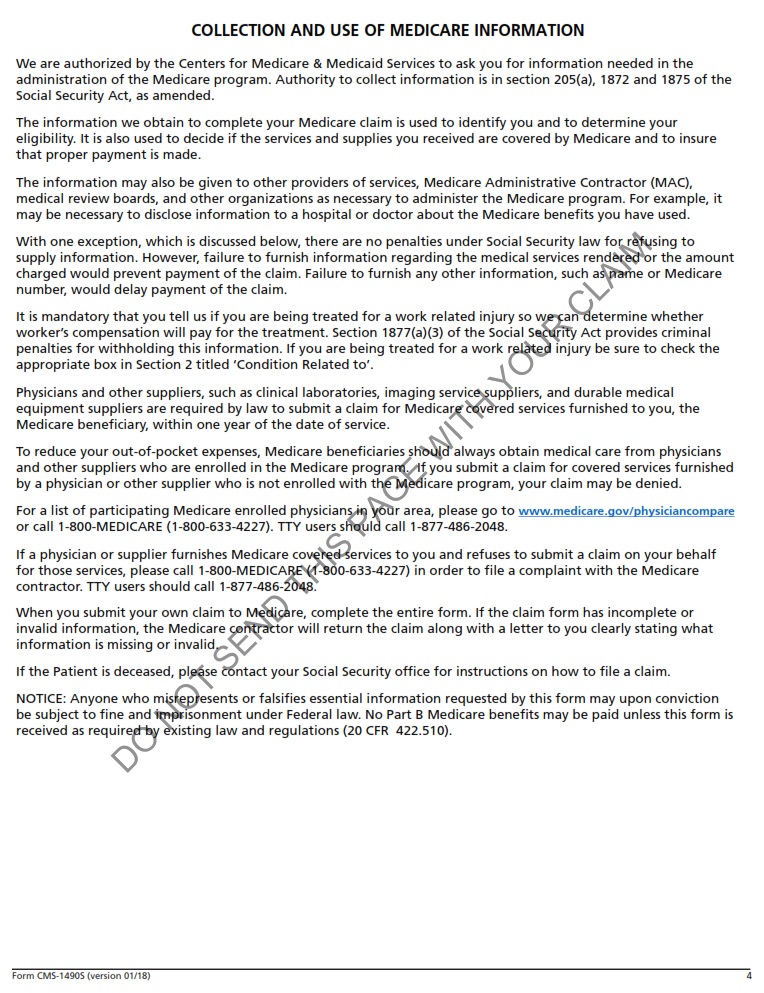
    CMS 1490S – Example

    CMS 1490S - PATIENT'S REQUEST FOR MEDICAL PAYMENT (English_Spanish) Page 1 CMS 1490S - PATIENT'S REQUEST FOR MEDICAL PAYMENT (English_Spanish) Page 2 CMS 1490S - PATIENT'S REQUEST FOR MEDICAL PAYMENT (English_Spanish) Page 3 CMS 1490S - PATIENT'S REQUEST FOR MEDICAL PAYMENT (English_Spanish) Page 4 CMS 1490S - PATIENT'S REQUEST FOR MEDICAL PAYMENT (English_Spanish) Page 5

  • CMS 40B – Application for Enrollment in Medicare – Part B (Medical Insurance)

    CMS 40B – Application for Enrollment in Medicare – Part B (Medical Insurance)

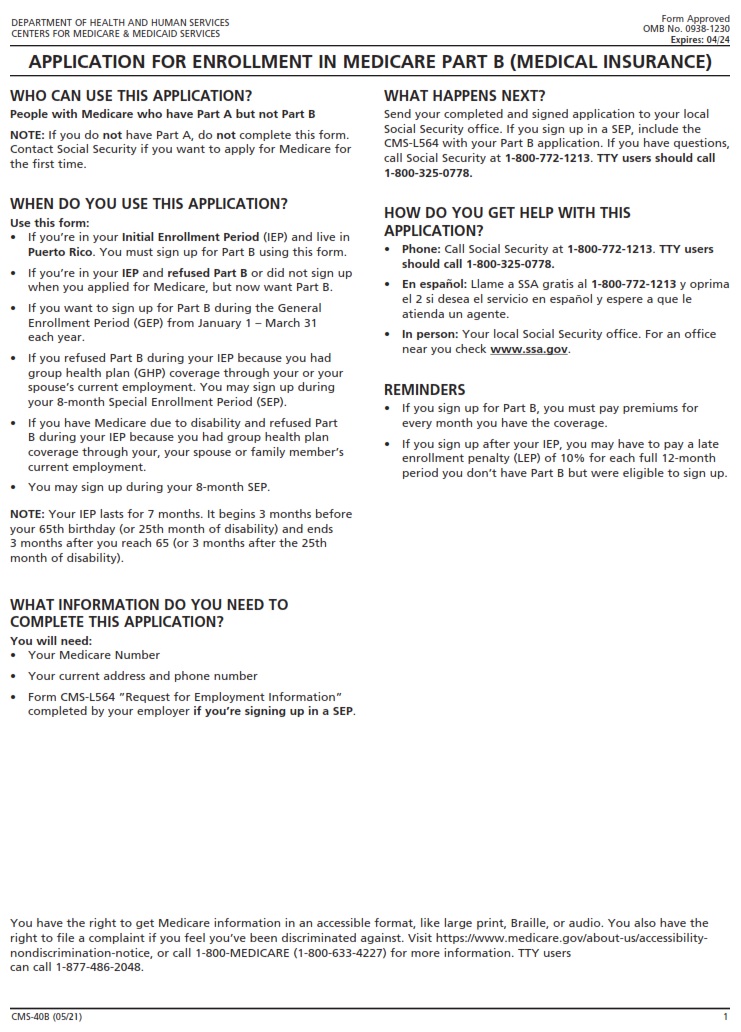
    CMSFORM.ORGCMS 40B – Application for Enrollment in Medicare – Part B (Medical Insurance) – As you approach the age of 65, it’s important to start thinking about your Medicare enrollment. While Medicare Part A (hospital insurance) is automatic for most people, you’ll need to enroll in Medicare Part B (medical insurance) yourself. This is where form CMS 40B comes in.

    Form CMS 40B is the Application for Enrollment in Medicare – Part B. It’s a simple form that allows you to apply for medical insurance coverage under the Medicare program. In this article, we will explore what exactly CMS 40B is, who needs to fill it out, and how to do so correctly.

    Download CMS 40B – Application for Enrollment in Medicare – Part B (Medical Insurance)

    [su_table responsive=”yes”]

    Form Number CMS 40B
    Form Title Application for Enrollment in Medicare – Part B (Medical Insurance)
    Published 2021-07-31
    O.M.B. 0938-1230
    File Size 74 KB

    [/su_table]

    [download id=’1698′]

    What is a CMS 40B?

    CMS 40B is a critical form that seniors in the US must fill out if they want to enroll in Part B of Medicare. This particular form serves as an application for medical insurance, which means it is essential to complete correctly and thoroughly. It is crucial to note that some people may have already been enrolled automatically in Part B when they turned 65, but others will need to submit this form by mail or online.

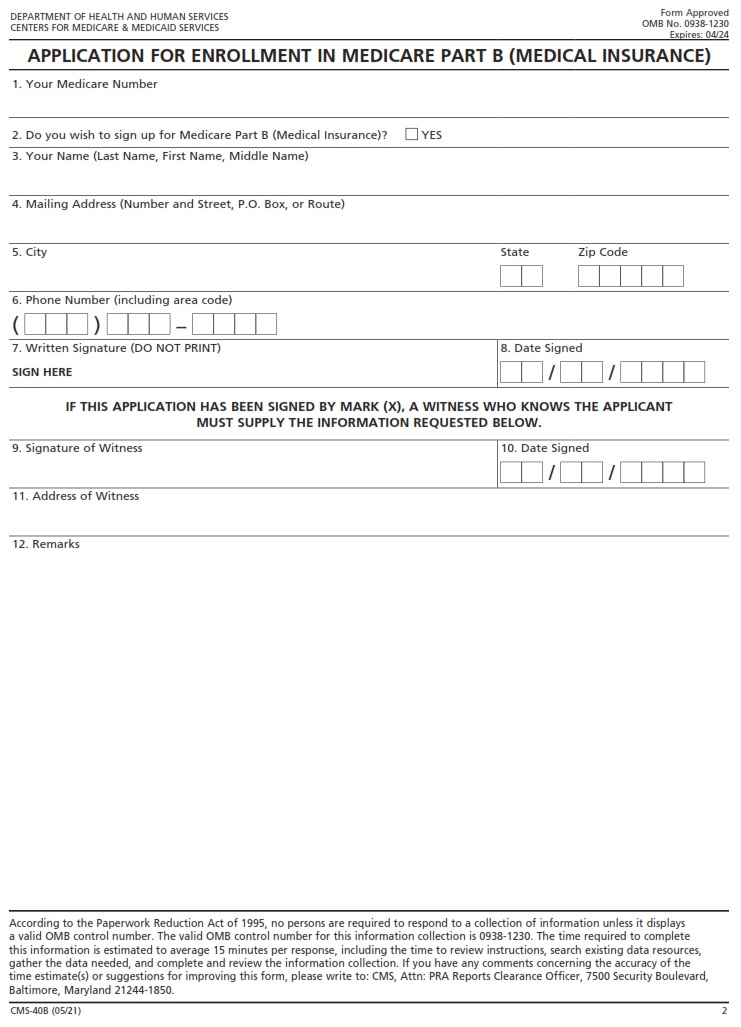
    The CMS 40B form asks for basic information such as your name, date of birth, Social Security number, and contact details. You’ll also be required to provide information about any current health coverage you have and answer questions regarding your eligibility for Medicare. Once you’ve completed the CMS 40B form, you can submit it via mail or online using the official government website.

    Overall, while filling out the CMS 40B might seem like a daunting task at first glance, completing it accurately and on time will ensure you receive all eligible medical benefits under Medicare Part B. As a result, seniors should prioritize giving this task adequate attention and care when submitting their applications via mail or online.

    Where Can I Find a CMS 40B?

    The CMS 40B is a vital form for those who want to enroll in Medicare Part B (Medical Insurance) coverage. There are several ways you can obtain the CMS 40B form, including visiting your nearest Social Security office or downloading it from the official Medicare website. You can also call the Social Security Administration and request that they mail you the form.

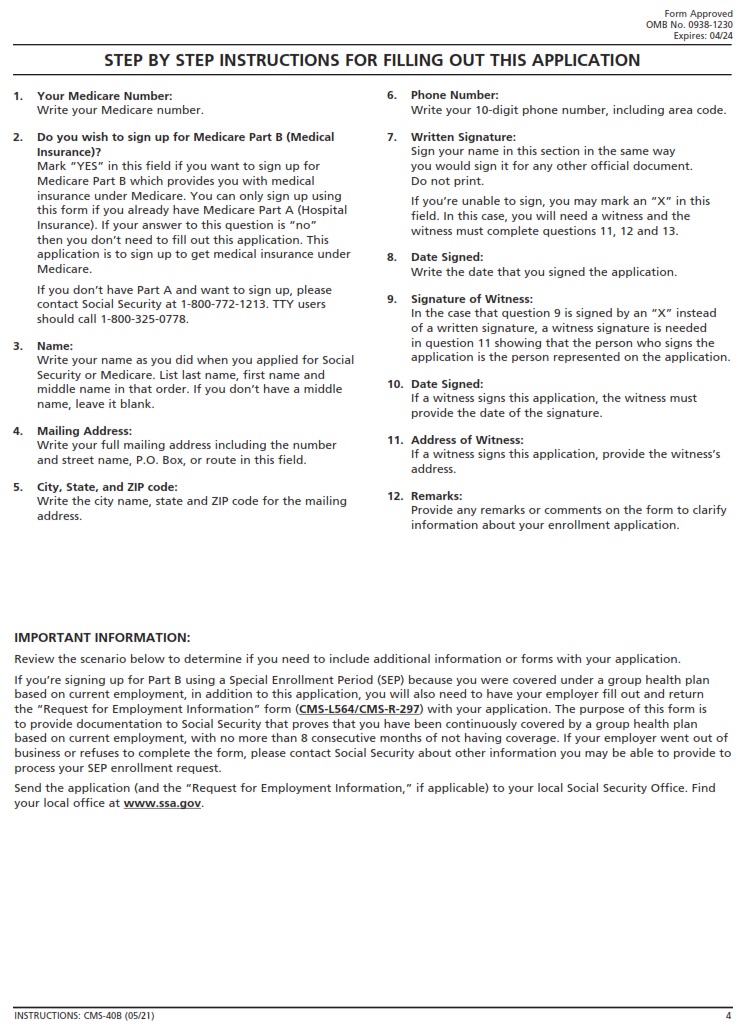
    Once you have obtained the CMS 40B form, it is important to fill it out accurately and completely. The information provided on this form will determine your eligibility for Medicare Part B coverage, so take your time and make sure all of the information you provide is correct.

    Submitting your completed CMS 40B form promptly ensures that any waiting period for coverage begins as soon as possible. If you are unsure about any aspect of filling out this application or need assistance completing it, don’t hesitate to reach out to a Social Security representative or an insurance agent who specializes in Medicare enrollment.

    CMS 40B – Application for Enrollment in Medicare – Part B (Medical Insurance)

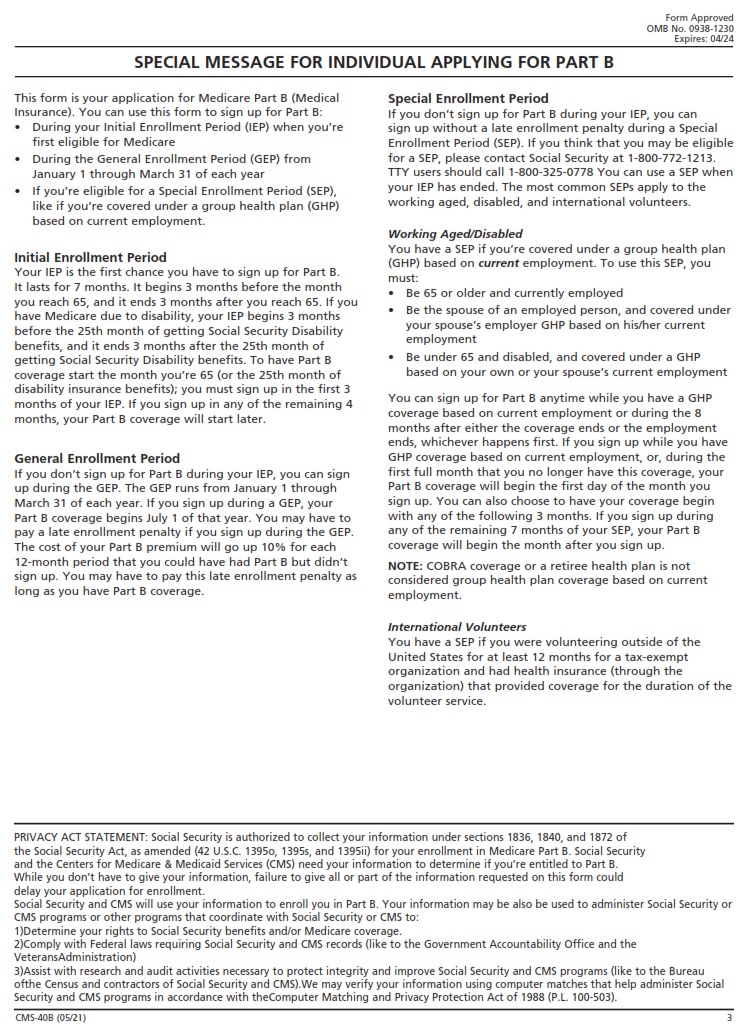
    The CMS 40B form is an application for enrollment in Medicare Part B, which provides coverage for medical services such as doctor visits, outpatient care, and preventive services. This form is used by those who are eligible to enroll in Medicare but did not sign up during their initial enrollment period. The application can also be used to apply for a Special Enrollment Period if certain qualifying events occur.

    To complete the CMS 40B form, applicants should provide personal information such as their name, date of birth, Social Security number, and contact information. They will also need to indicate the date they want their Part B coverage to begin and provide information about any other health insurance coverage they have. Depending on the situation, additional documentation may be required.

    It’s important to note that failure to enroll in Medicare Part B when eligible could result in a penalty fee added onto future premiums. Therefore, it’s crucial for those who are eligible but have not yet enrolled to complete the CMS 40B form as soon as possible in order to avoid these penalties and ensure they have access to necessary medical services.

    CMS 40B – Example

    CMS 40B - Application for Enrollment in Medicare - Part B (Medical Insurance) Page 1 CMS 40B - Application for Enrollment in Medicare - Part B (Medical Insurance) Page 2 CMS 40B - Application for Enrollment in Medicare - Part B (Medical Insurance) Page 3 CMS 40B - Application for Enrollment in Medicare - Part B (Medical Insurance) Page 4

  • CMS 10114 – NATIONAL PROVIDER IDENTIFIER (NPI) APPLICATION/UPDATE FORM

    CMS 10114 – NATIONAL PROVIDER IDENTIFIER (NPI) APPLICATION/UPDATE FORM

    CMSFORM.ORG – CMS 10114 – NATIONAL PROVIDER IDENTIFIER (NPI) APPLICATION/UPDATE FORMe – The National Provider Identifier (NPI) is a unique identification number assigned to healthcare providers by the Centers for Medicare & Medicaid Services (CMS). This number is used to identify providers in all standard transactions, such as billing and claims processing. The NPI application update form is a vital part of maintaining accurate provider information in the CMS database.

    In this article, we will provide an overview of the CMS 10114 form and its purpose. We will also discuss the importance of keeping your NPI information up-to-date, as well as provide guidance on how to complete and submit the form successfully.

    Download CMS 10114 – NATIONAL PROVIDER IDENTIFIER (NPI) APPLICATION/UPDATE FORM

    [su_table responsive=”yes”]

    Form Number CMS 10114
    Form Title NATIONAL PROVIDER IDENTIFIER (NPI) APPLICATION/UPDATE FORM
    Published 2021-08-01
    O.M.B. 0938-0931
    File Size 126 KB

    [/su_table]

    [download id=’1699′]

    What is a CMS 10114?

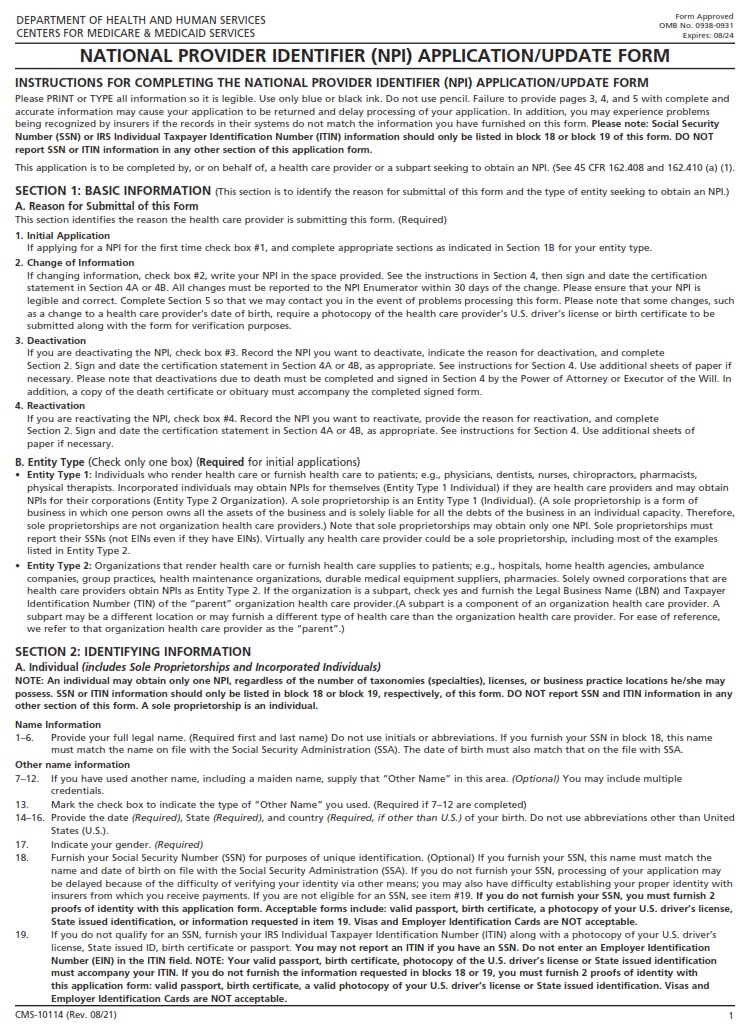
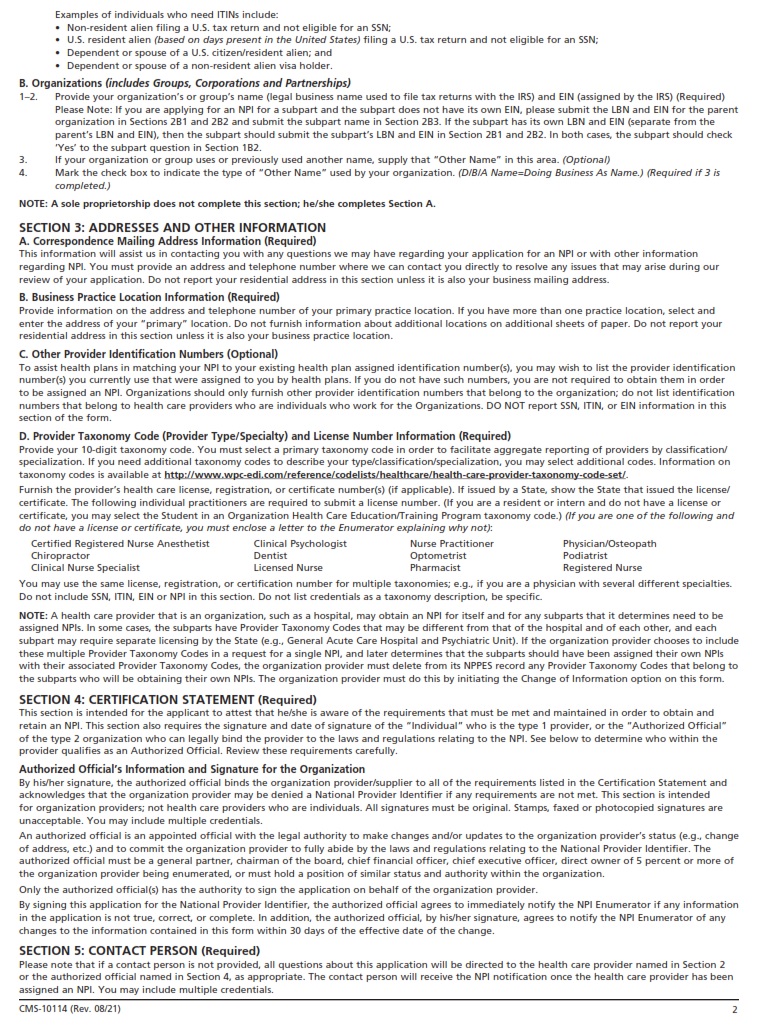
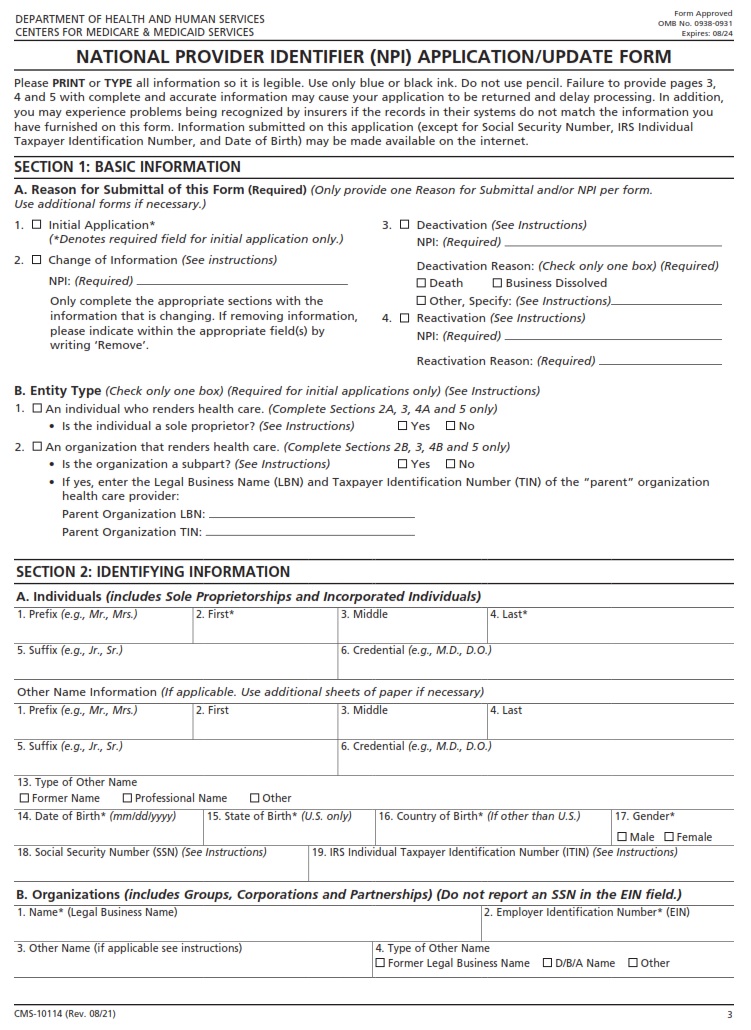
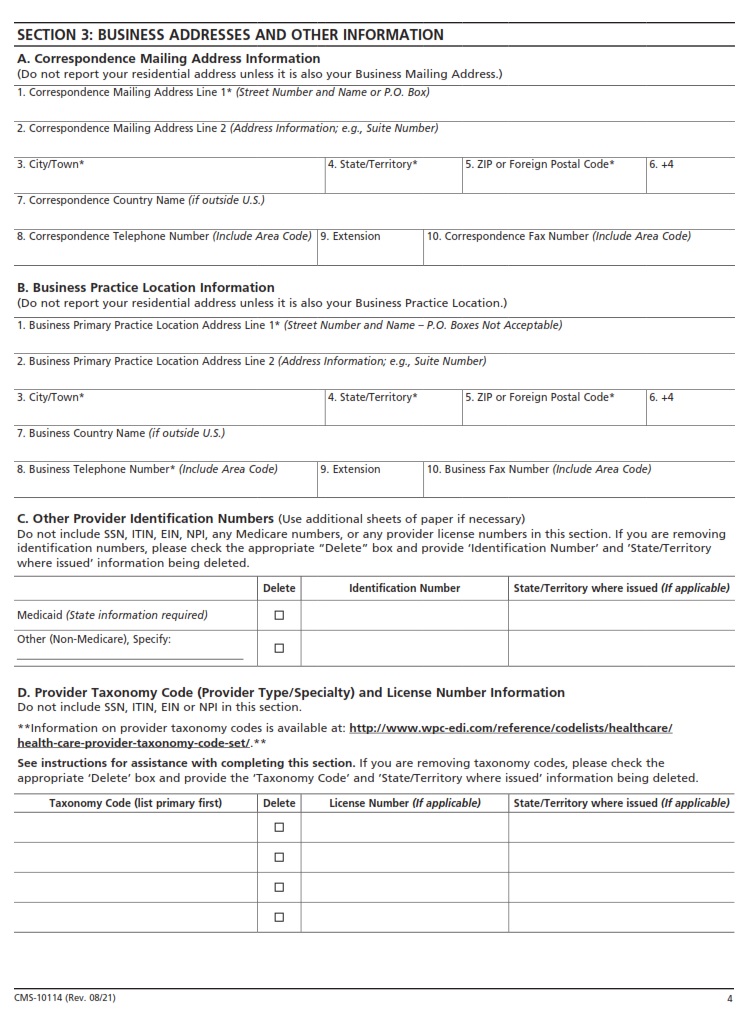
    CMS 10114 is a form used by healthcare providers to update their National Provider Identifier (NPI) application information. The NPI is a unique identification number assigned to healthcare providers by the Centers for Medicare and Medicaid Services (CMS). This number is used to identify the provider in electronic transactions, such as billing and claims processing.

    The CMS 10114 form allows providers to update their NPI application information, including their name, address, phone number, taxonomy code(s), and other key details. Providers can also use this form to add or remove practice locations or change their organizational structure. It’s important for healthcare providers to keep their NPI information up-to-date in order to ensure accurate billing and claims processing.

    Overall, the CMS 10114 form is an essential tool for healthcare providers looking to update or maintain their NPI information. By completing this form accurately and promptly, providers can ensure that they are able to participate in electronic transactions with ease and efficiency.

    Where Can I Find a CMS 10114?

    If you’re looking for a CMS 10114 form, the best place to start is the official website of the Centers for Medicare & Medicaid Services (CMS). The National Provider Identifier (NPI) Application Update Form CMS-10114 is available on their site in PDF format. You can download and print it out straight from there.

    In addition to the official CMS website, you may also be able to find the CMS 10114 form on other healthcare-related websites or portals. These sites might offer more information about how to fill out and submit your NPI application update form. Some third-party sites may even provide additional resources like guides or FAQs that will help you navigate through your NPI application process.

    Lastly, if you’re still having trouble finding a CMS 10114 form online, don’t hesitate to reach out directly to your local Medicare Administrative Contractor (MAC). They should be able to provide you with an updated version of the form as well as any other assistance that you may need when completing it.

    CMS 10114 – NATIONAL PROVIDER IDENTIFIER (NPI) APPLICATION/UPDATE FORM

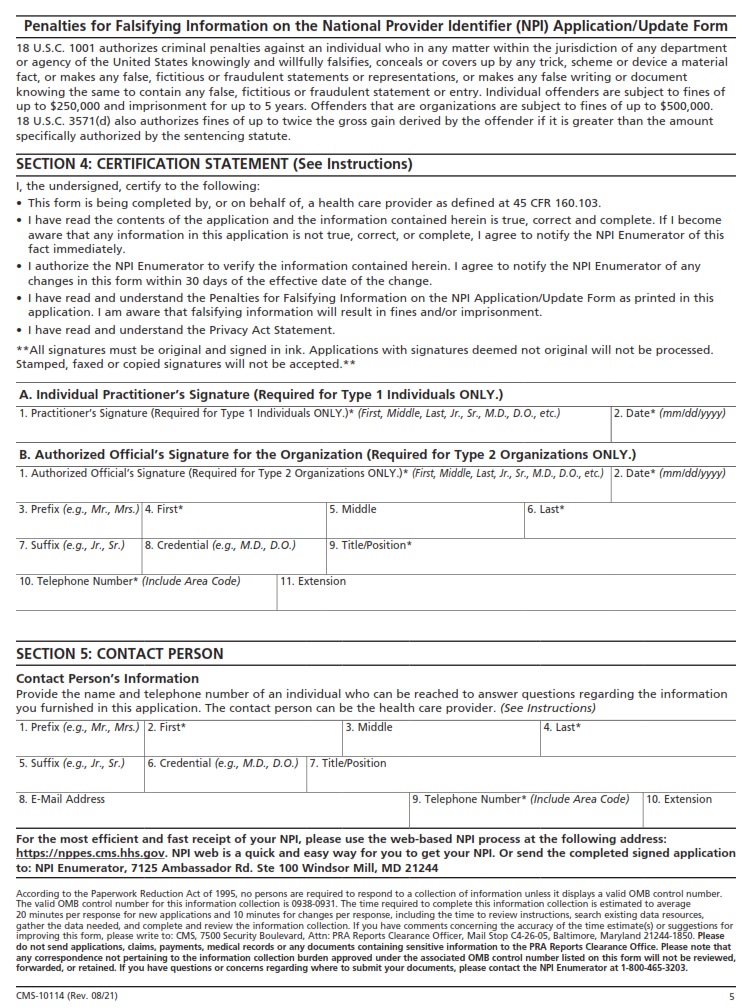
    The National Provider Identifier (NPI) is a unique identification number assigned by the Centers for Medicare & Medicaid Services (CMS) to healthcare providers in the United States. The NPI Application Update Form, also known as CMS 10114, is used to update or make changes to an existing NPI record. This form can be submitted electronically through the NPPES (National Plan and Provider Enumeration System) website or by mail.

    Healthcare providers are required to keep their NPI information up-to-date in order to comply with federal regulations and ensure accurate billing and payment processes. The CMS 10114 form allows providers to add or remove practice locations, change contact information, update taxonomy codes, and more. It’s important for healthcare providers to review their NPI records periodically and submit updates if any changes occur.

    Overall, the CMS 10114 – NATIONAL PROVIDER IDENTIFIER (NPI) APPLICATION UPDATE FORM serves as a crucial tool for healthcare providers to maintain accurate and compliant records with CMS. By keeping their NPI information up-to-date, providers not only meet federal requirements but also help improve patient care coordination and billing processes within the healthcare system.

    CMS 10114 – Example

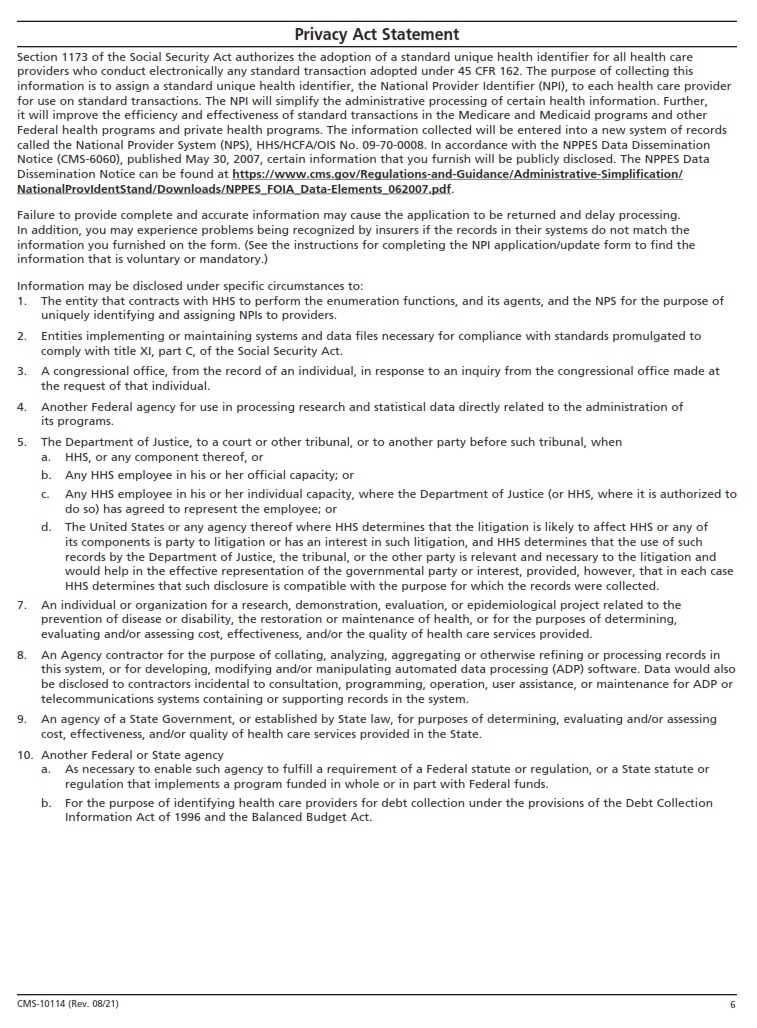
    CMS 10114 - NATIONAL PROVIDER IDENTIFIER (NPI) APPLICATION_UPDATE FORM Page 1 CMS 10114 - NATIONAL PROVIDER IDENTIFIER (NPI) APPLICATION_UPDATE FORM Page 2 CMS 10114 - NATIONAL PROVIDER IDENTIFIER (NPI) APPLICATION_UPDATE FORM Page 3 CMS 10114 - NATIONAL PROVIDER IDENTIFIER (NPI) APPLICATION_UPDATE FORM Page 4 CMS 10114 - NATIONAL PROVIDER IDENTIFIER (NPI) APPLICATION_UPDATE FORM Page 5 CMS 10114 - NATIONAL PROVIDER IDENTIFIER (NPI) APPLICATION_UPDATE FORM Page 6

  • CMS 1696 – APPOINTMENT OF REPRESENTATIVE

    CMS 1696 – APPOINTMENT OF REPRESENTATIVE

    CMSFORM.ORGCMS 1696 – APPOINTMENT OF REPRESENTATIVE – CMS 1696, also known as “Appointment of Representative,” is a crucial form for those who need assistance in navigating the complexities of the healthcare system. This form allows individuals to appoint someone else, such as a family member or friend, to act on their behalf when communicating with Medicare and other healthcare providers.

    The Appointment of Representative form ensures that individuals have a designated advocate who can help them understand their medical benefits and make informed decisions about their care. In this article, we will explore the purpose of CMS 1696 and provide guidance on how to complete it accurately, so you can feel confident in entrusting your healthcare decisions to the right person.

    Download CMS 1696 – APPOINTMENT OF REPRESENTATIVE

    [su_table responsive=”yes”]

    Form Number CMS 1696
    Form Title APPOINTMENT OF REPRESENTATIVE
    Published 2021-09-01
    O.M.B. 0938-0950
    File Size 41 KB

    [/su_table]

    [download id=’1700′]

    What is a CMS 1696?

    CMS 1696 refers to the official form that Medicare beneficiaries can use to appoint a representative. The purpose of this form is to allow someone else, such as a family member or friend, to act on behalf of the beneficiary when it comes to their healthcare decisions. This may include receiving medical information, making medical decisions, and handling Medicare claims.

    The CMS 1696 form is important because it ensures that the beneficiary’s wishes are respected in situations where they may be unable to make decisions for themselves. For example, if someone becomes mentally incapacitated or otherwise unable to communicate their preferences regarding healthcare treatment, having a representative appointed through this form can help ensure that they receive care consistent with their values and beliefs.

    It’s important for both beneficiaries and those who may be appointed as representatives to understand the implications of using the CMS 1696 form. Beneficiaries should carefully consider who they want acting on their behalf and what specific powers they want them to have. Representatives should also understand what responsibilities come with being appointed and what limitations there may be on their actions. Ultimately, using the CMS 1696 form can help ensure that Medicare beneficiaries receive appropriate care even in challenging circumstances.

    Where Can I Find a CMS 1696?

    If you are looking for a CMS 1696 form, you can find it on the official website of the Centers for Medicare and Medicaid Services. The form is titled “Appointment of Representative” and is used to designate an individual who will act as a representative on your behalf in dealings with Medicare or Medicaid. This may include handling claims, appeals, grievances, or other administrative tasks.

    The CMS 1696 form can be downloaded directly from the CMS website in PDF format. It is important to note that this form must be completed accurately and signed by both the beneficiary and their designated representative. Additionally, the representative must submit documentation validating their authority to act as a representative.

    Overall, if you need assistance navigating the complex world of Medicare or Medicaid benefits, designating a trusted representative can provide peace of mind and help ensure your needs are met effectively. The CMS 1696 form serves as an important tool in establishing this representation.

    CMS 1696 – APPOINTMENT OF REPRESENTATIVE

    CMS 1696 is a form used by Medicare beneficiaries to appoint a representative who will act on their behalf for matters related to their healthcare coverage. The appointment of a representative can be necessary when the beneficiary is unable to manage their own affairs or make decisions due to physical or mental limitations.

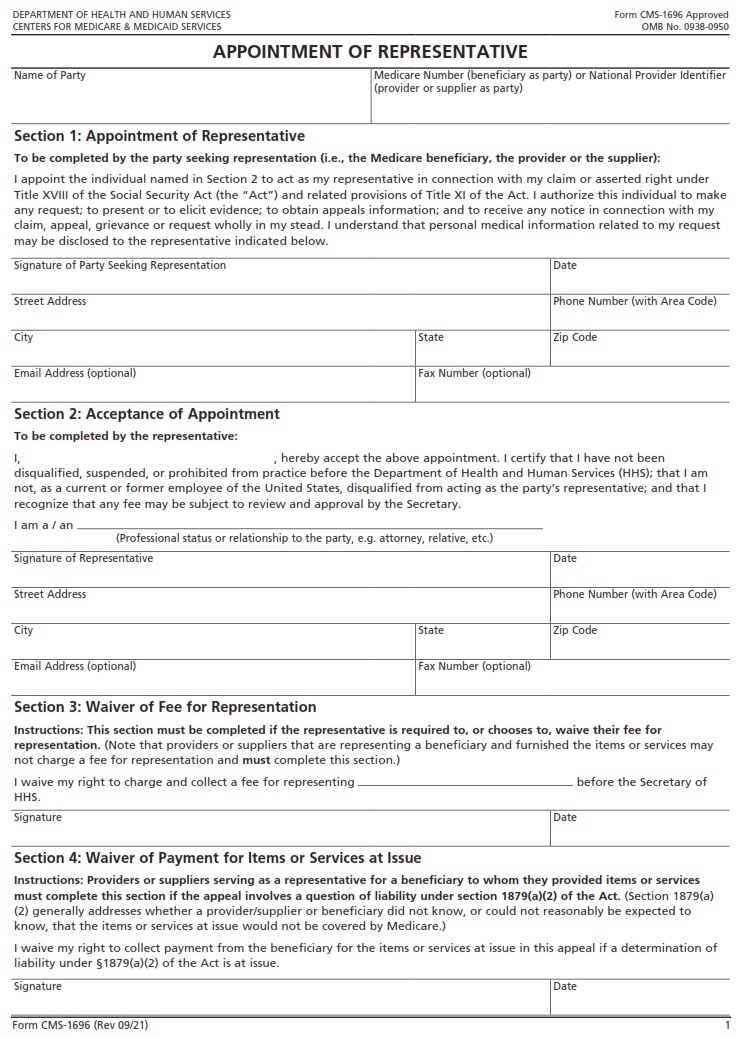
    The CMS 1696 form must be filled out completely and accurately, with all required information provided. This includes the name and contact information of both the beneficiary and the appointed representative, as well as details about the beneficiary’s healthcare coverage and any specific limitations or conditions that may impact decision-making.

    Once the CMS 1696 form is completed and submitted, it allows the appointed representative to access the beneficiary’s personal health information, communicate with Medicare on behalf of the beneficiary, and make decisions about healthcare coverage options. It is important for both parties to understand their rights and responsibilities under this arrangement in order to ensure that appropriate care is provided at all times.

    CMS 1696 – Example

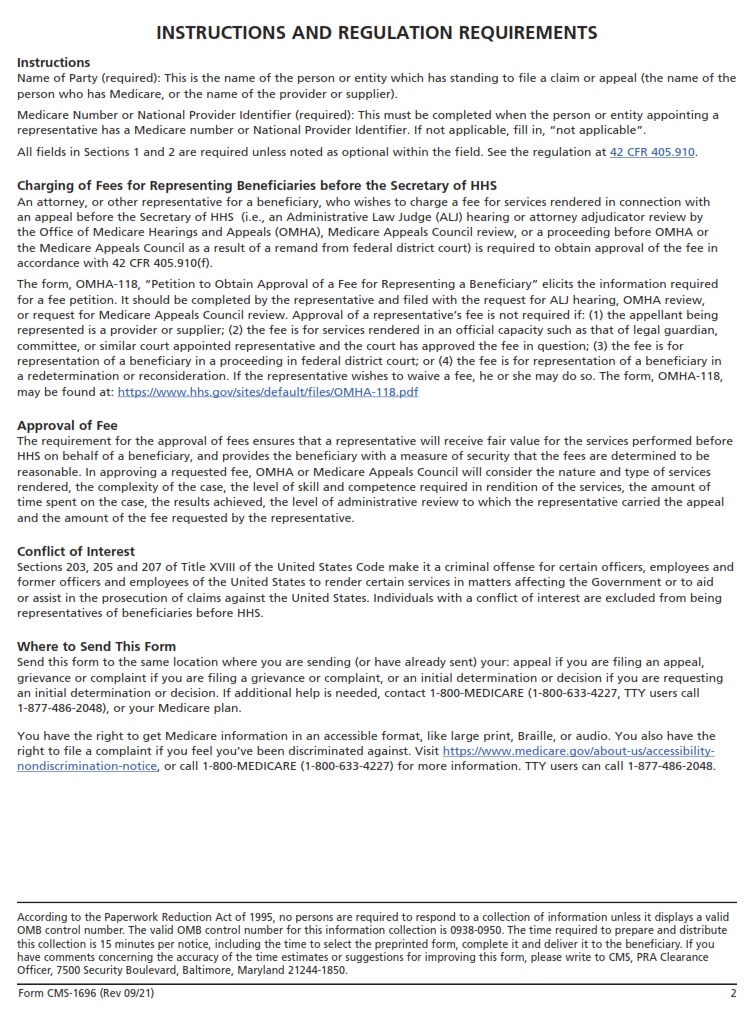
    CMS 1696 - APPOINTMENT OF REPRESENTATIVE Page 1 CMS 1696 - APPOINTMENT OF REPRESENTATIVE Page 2

  • CMS 500 – MEDICARE PREMIUM BILL

    CMS 500 – MEDICARE PREMIUM BILL

    CMSFORM.ORGCMS 500 – MEDICARE PREMIUM BILL – As we age, healthcare becomes an increasingly important aspect of our lives. Medicare is a federal health insurance program that provides coverage for millions of Americans over the age of 65. If you’re enrolled in Medicare, you’ll receive a monthly bill known as CMS 500 – Medicare Premium Bill.

    Understanding your CMS 500 bill is crucial to ensure that you are paying the correct amount for your Medicare premiums and avoiding any potential issues with coverage. In this article, we will break down everything you need to know about the CMS 500 bill, including what it includes, how to read it, and how to pay your premiums on time.

    Download CMS 500 – MEDICARE PREMIUM BILL

    [su_table responsive=”yes”]

    Form Number CMS 500
    Form Title MEDICARE PREMIUM BILL
    Published 2021-11-01
    O.M.B. N/A
    File Size 2 MB

    [/su_table]

    [download id=’1701′]

    What is a CMS 500?

    CMS 500 is a Medicare Premium Bill that is sent to people who are enrolled in Medicare Part B. The bill is usually sent out every three months and it shows the amount of premium that needs to be paid for the upcoming quarter. It is important to note that not all Medicare beneficiaries receive this bill, as some have their premiums automatically deducted from their Social Security checks.

    The CMS 500 form includes information about the beneficiary, including their name and address, as well as the months covered by the premium payment. The bill also provides details on how much needs to be paid and when it is due. There are different payment options available, including online payments or mailing a check.

    It’s essential for beneficiaries to pay their premiums on time because failure to do so may result in coverage termination. The CMS 500 serves as a helpful reminder for recipients and helps ensure they stay up-to-date with their Medicare payments while avoiding any potential issues with coverage.

    Where Can I Find a CMS 500?

    The CMS 500 form is an essential document for people enrolled in Medicare Part B. This form serves as a premium bill, which tells the enrollee how much they owe for their monthly Medicare premiums. Typically, the Social Security Administration (SSA) sends out these forms to beneficiaries each month; however, there are several other ways to obtain this information.

    One option is to visit the official Medicare website and use their online payment system. Here, you can view and pay your monthly premium bill directly from your computer or mobile device. Another way to get a copy of your CMS 500 form is by calling the SSA’s toll-free number at 1-800-772-1213. A representative will assist you in obtaining a copy of your bill or directing you on how to access it online.

    In conclusion, managing healthcare expenses can be challenging without the right resources and guidance. The CMS 500 form provides critical information about monthly premiums that ensure beneficiaries stay current with payments and avoid penalties. Whether accessing it through government channels or online portals, obtaining a copy of this document should be a priority for every Medicare beneficiary.

    CMS 500 – MEDICARE PREMIUM BILL

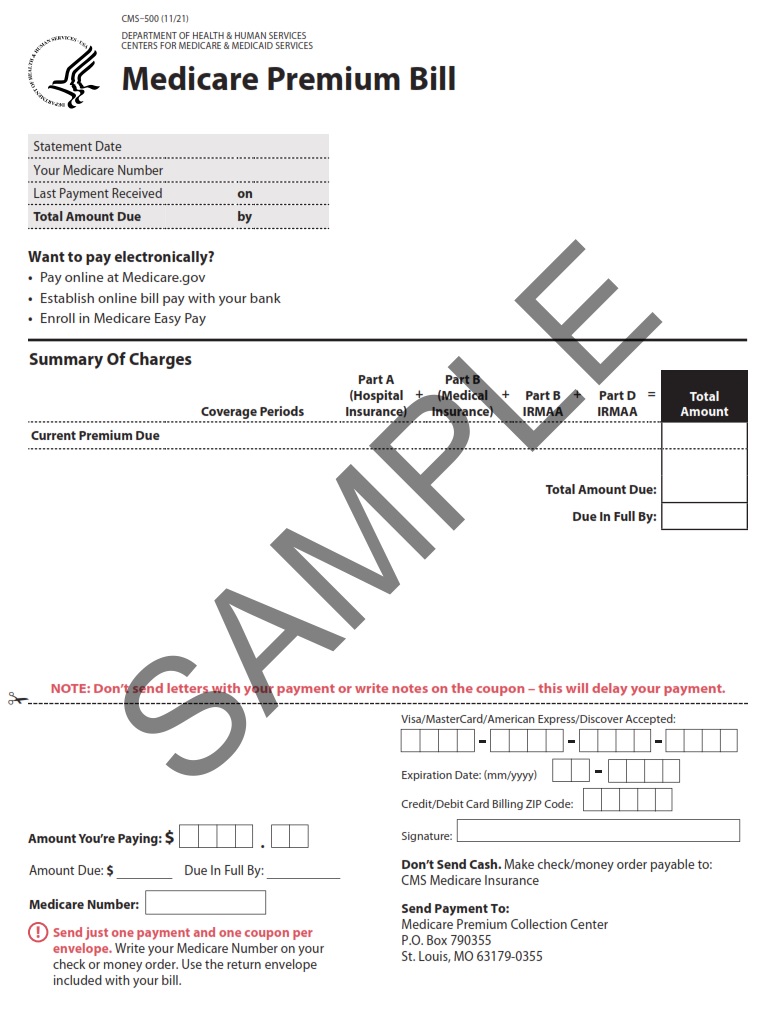
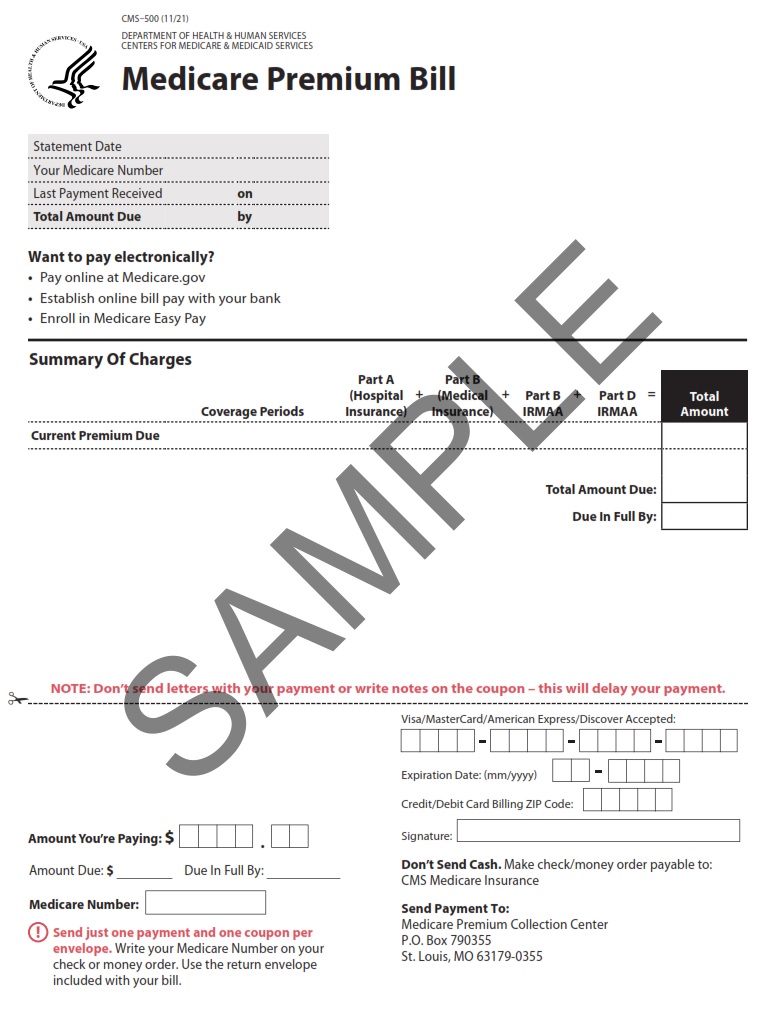
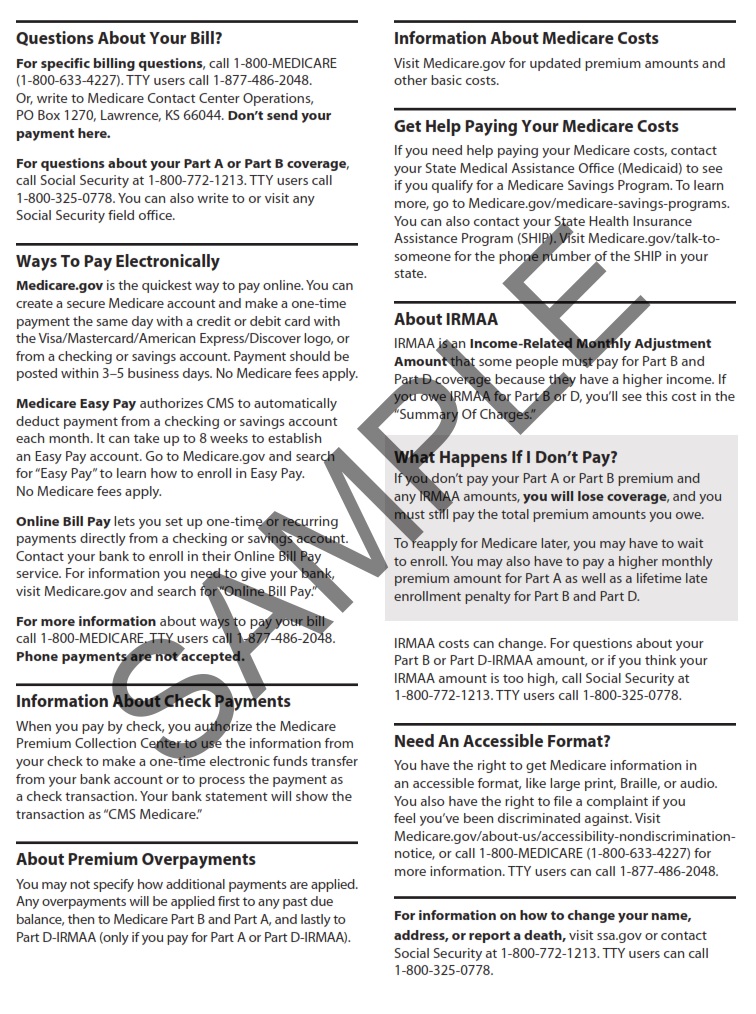
    The CMS-500 Medicare Premium Bill is a document that outlines the details of your monthly premium payment for Medicare Part B. This bill is typically sent to you every three months, and it provides information such as the amount due, the due date, and any changes in your premium amount. It’s important to carefully review the information on this bill and pay it on time to avoid any late fees or disruptions in your coverage.

    If you’re enrolled in Medicare Part B, you’ll receive a premium bill from CMS each month. The amount of your premium will depend on various factors such as income level, whether you’re receiving Social Security benefits, and whether or not you have other insurance coverage. If there are changes to your premium amount, CMS will send you a notice explaining why the change occurred.

    In addition to providing information about your monthly premiums for Medicare Part B, the CMS-500 also includes instructions for making payments online or by mail. You can use this document as a reference if you have questions about how much you owe or when payments are due. Overall, paying close attention to your CMS-500 bills can help ensure that your Medicare coverage stays up-to-date and uninterrupted.

    CMS 500 – Example

    CMS 500 - MEDICARE PREMIUM BILL Page 1 CMS 500 - MEDICARE PREMIUM BILL Page 2

  • CMS 20143 – Medicare Easy Pay Premium Statement

    CMS 20143 – Medicare Easy Pay Premium Statement

    CMSFORM.ORGCMS 20143 – Medicare Easy Pay Premium Statement – If you’re a Medicare beneficiary, managing your healthcare premiums can be a hassle. Fortunately, CMS 20143 – Medicare Easy Pay Premium Statement makes the process much simpler. With this program, you can have your monthly premiums automatically deducted from your bank account or credit card, ensuring that you never miss a payment or incur late fees.

    In this article, we’ll take a closer look at CMS 20143 and how it works. We’ll explore its benefits for seniors who rely on Medicare for their healthcare needs and provide step-by-step instructions for enrolling in the program. Whether you’re new to Medicare or simply looking to simplify your premium payments, read on to learn more about how CMS 20143 can make managing your healthcare easier than ever before.

    Download CMS 20143 – Medicare Easy Pay Premium Statement

    [su_table responsive=”yes”]

    Form Number CMS 20143
    Form Title Medicare Easy Pay Premium Statement
    Published 2021-11-01
    O.M.B. N/A
    File Size 615 KB

    [/su_table]

    [download id=’1702′]

    What is a CMS 20143?

    CMS 20143 is a Medicare Easy Pay Premium Statement that serves as an easy and convenient way for beneficiaries to pay their Medicare premiums. This statement is used by those who have signed up for the Medicare Easy Pay service, which automatically deducts the premium amount from their bank account every month. The CMS 20143 statement includes details of the payment and confirms that it has been successfully processed.

    The CMS 20143 form is sent out on a quarterly basis and provides beneficiaries with a record of their premium payments over the last three months. It also highlights any changes in the premium amount or billing period, making it easy for beneficiaries to keep track of their healthcare costs. Additionally, this statement can be used as proof of premium payment if needed.

    In summary, CMS 20143 is an important part of Medicare’s Easy Pay service that simplifies premium payments for beneficiaries. By providing detailed information about premium payments and serving as proof of payment, this statement helps ensure that beneficiaries remain informed about their healthcare costs and avoid any potential issues with unpaid premiums.

    Where Can I Find a CMS 20143?

    Medicare Easy Pay is a free, secure, and convenient way to have monthly Medicare premiums automatically deducted from a savings or checking account. It is an optional service provided by the Centers for Medicare & Medicaid Services (CMS) that allows beneficiaries to save time and avoid missed payments. To enroll in the program, beneficiaries need to complete the CMS 20143 form.

    To find the CMS 20143 form, there are several options available. The first option is to visit the official website of CMS at www.cms.gov/forms. From there, search for “CMS 20143” using the search bar on top of the page, and download it directly onto your device. Alternatively, you can also request a copy of the form by calling Medicare’s toll-free number at 1-800-MEDICARE (1-800-633-4227) and ask them to mail it to your address.

    In conclusion, finding CMS 20143 shouldn’t pose any difficulties as it can be easily accessed online or through direct correspondence with Medicare officials. Beneficiaries who wish to enroll in Medicare Easy Pay should not hesitate in obtaining this important document as this will facilitate their payment transactions and help them better manage their healthcare expenses throughout their coverage period.

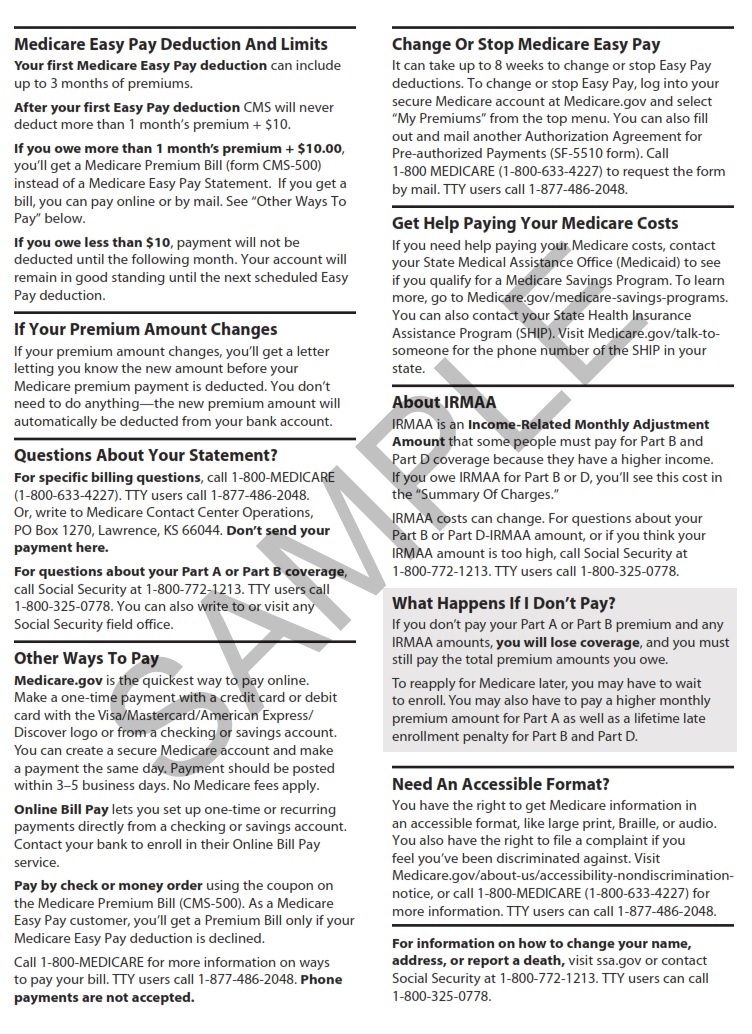
    CMS 20143 – Medicare Easy Pay Premium Statement

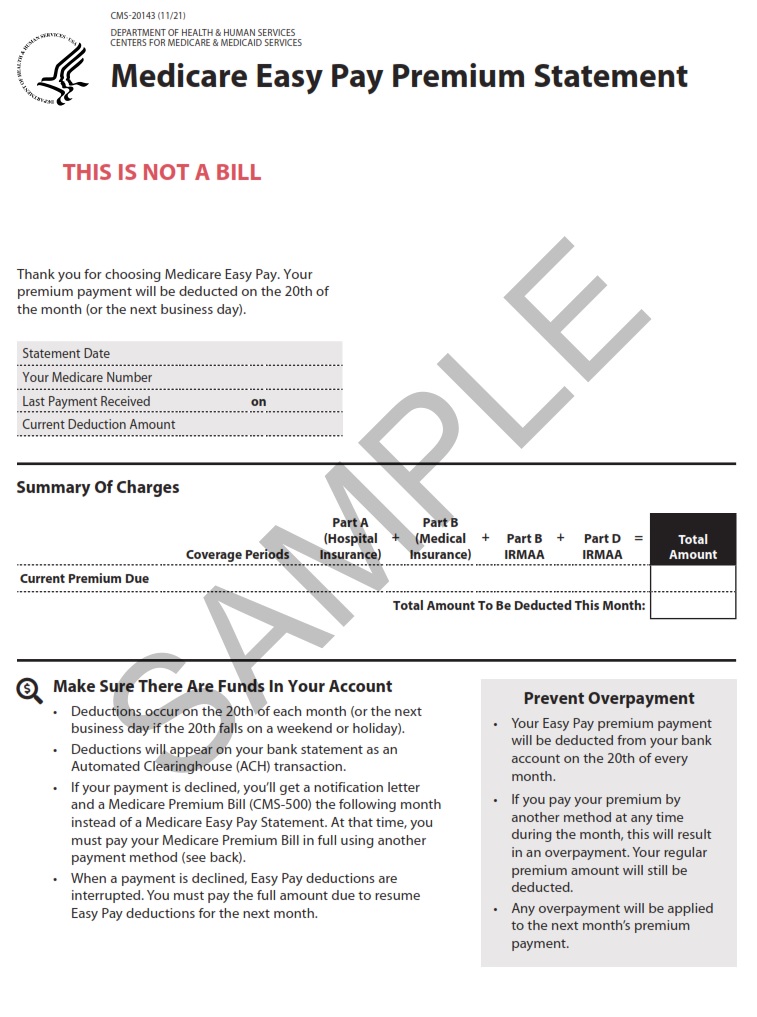
    The CMS 20143 form is an important document for Medicare beneficiaries who have opted to enroll in the Easy Pay program. This program allows individuals to have their monthly premiums automatically deducted from their bank account, eliminating the need for manual payments and reducing the risk of missed payments. The premium statement provides a detailed breakdown of the premium amount, including any adjustments or changes that may have occurred since the previous statement.

    In addition to providing information on premium amounts, the CMS 20143 form also serves as a record-keeping tool for Medicare beneficiaries. It includes details such as payment dates and confirmation numbers, which can be helpful in tracking payment history and ensuring that all payments are properly credited. Overall, this form helps make managing Medicare premiums more convenient and efficient for those enrolled in Easy Pay.

    It’s worth noting that while enrolling in Easy Pay can simplify your Medicare premium payments, it’s not a requirement. Beneficiaries can still choose to pay manually by check or through their online MyMedicare account if they prefer. However, those who struggle with remembering payment due dates or worry about missed payments may find peace of mind by choosing to take advantage of this automated option through CMS 20143 – Medicare Easy Pay Premium Statement.

    CMS 20143 – Example

    CMS-20143 Standard-Template-English-FINAL as of 092321 Sample with Watermark Page 1 CMS-20143 Standard-Template-English-FINAL as of 092321 Sample with Watermark Page 2