Author: Bismillah

  • CMS 2802C – REQUEST FOR VALIDATION OF ACCREDITATION SURVEY FOR HOME HEALTH AGENCY

    CMS 2802C – REQUEST FOR VALIDATION OF ACCREDITATION SURVEY FOR HOME HEALTH AGENCY

    CMSFORM.ORGCMS 2802C – REQUEST FOR VALIDATION OF ACCREDITATION SURVEY FOR HOME HEALTH AGENCY – As the healthcare landscape continues to evolve, ensuring the quality and reliability of services provided by home health agencies becomes paramount. In this digital era, where data reigns supreme, the Centers for Medicare & Medicaid Services (CMS) has introduced the form CMS 2802C – Request for Validation of Accreditation Survey for Home Health Agency to streamline and enhance accreditation processes. This document serves as a critical tool in evaluating the performance and adherence of home health agencies to established standards, ultimately safeguarding the well-being of patients and promoting excellence in care delivery. Join us as we delve into the intricacies of this validation process, unraveling its significance in shaping the future of home healthcare services.

    Download CMS 2802C – REQUEST FOR VALIDATION OF ACCREDITATION SURVEY FOR HOME HEALTH AGENCY

    [su_table responsive=”yes”]

    Form Number CMS 2802C
    Form Title REQUEST FOR VALIDATION OF ACCREDITATION SURVEY FOR HOME HEALTH AGENCY
    Published 2019-03-31
    O.M.B.
    File Size 57 KB

    [/su_table]

    [su_button url=”https://cmsforms.org/wp-content/uploads/2024/12/CMS-2802C-REQUEST-FOR-VALIDATION-OF-ACCREDITATION-SURVEY-FOR-HOME-HEALTH-AGENCY.pdf” target=”blank” background=”#8ec54f” size=”7″ center=”yes” icon=”icon: file-pdf-o” title=”Download CMS 2802C”]Download CMS 2802C [.PDF][/su_button]

    What is a CMS 2802C?

    The CMS 2802C, also known as the Request for Validation of Accreditation Survey for Home Health Agency, is a crucial document in the healthcare industry. It serves as a means for home health agencies to validate and demonstrate their compliance with accreditation standards set by the Centers for Medicare & Medicaid Services (CMS). Through this survey, agencies are able to showcase their commitment to providing quality care and meeting regulatory requirements.

    This validation process is essential for ensuring that home health agencies deliver safe and effective services to patients. By undergoing accreditation surveys using the CMS 2802C form, these agencies can identify areas for improvement and implement best practices in patient care. Ultimately, this helps in enhancing transparency, accountability, and overall quality of care within the home health sector.

    Where Can I Find a CMS 2802C?

    If you’re on the hunt for a CMS 2802C form to request validation of accreditation survey for your home health agency, there are several avenues you can explore. One option is to visit the official Centers for Medicare & Medicaid Services (CMS) website. Here, you may be able to download a digital copy of the form or find information on where to obtain a physical version.

    Another valuable resource is reaching out to your state’s department of health or local healthcare regulatory agencies. They often have copies of important forms like the CMS 2802C available for providers in their jurisdiction. Additionally, networking with other home health agencies or industry professionals can lead you to sources where these forms are readily accessible. Remember, staying informed and proactive in seeking out such documentation is crucial in maintaining compliance and quality care standards within your agency.

    CMS 2802C – REQUEST FOR VALIDATION OF ACCREDITATION SURVEY FOR HOME HEALTH AGENCY

    Navigating the intricate world of healthcare accreditation can be a daunting task for home health agencies. The CMS 2802C form, requesting validation of accreditation survey, is a crucial step in ensuring compliance and quality care delivery. This process serves as a checkpoint to evaluate the agency’s adherence to established standards and regulations.

    For home health agencies, undergoing accreditation surveys is not just about meeting requirements but also about upholding their commitment to providing exceptional care. The CMS 2802C form signifies the agency’s dedication to continuous improvement and patient safety, showcasing a proactive approach towards enhancing healthcare services. Embracing this validation process as an opportunity for growth can lead to increased trust from patients, improved outcomes, and a competitive edge in the ever-evolving healthcare landscape.

    CMS 2802C Example
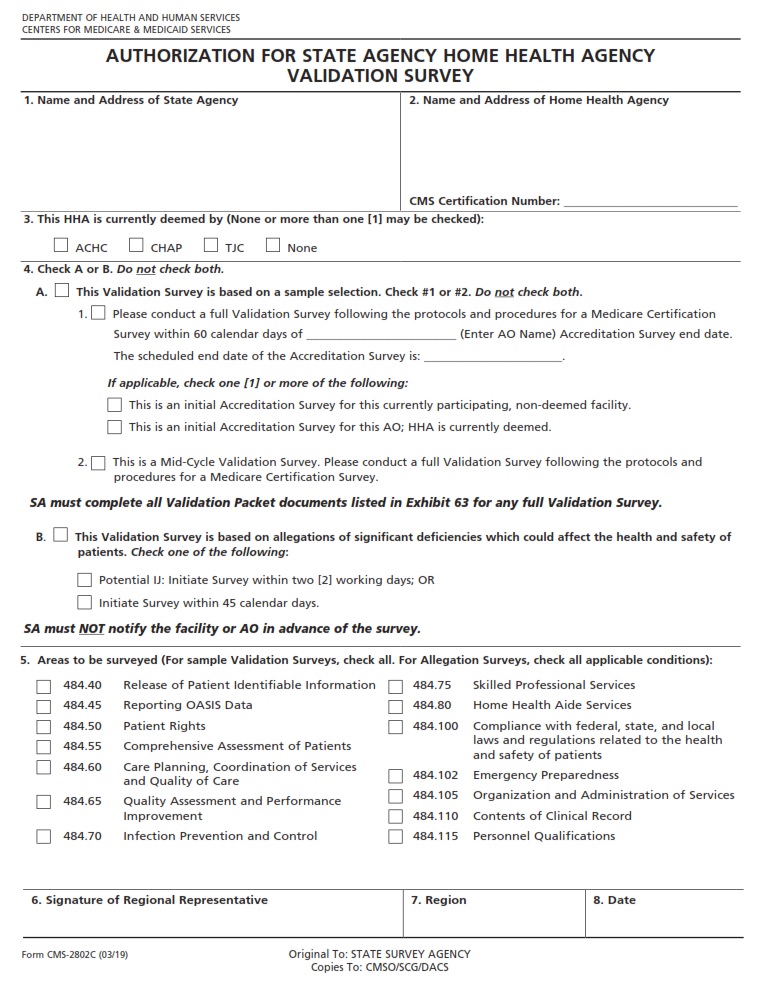
    CMS 2802C

  • CMS 10221 – Independent Diagnostic Testing Facilities-Site Investigation

    CMS 10221 – Independent Diagnostic Testing Facilities-Site Investigation

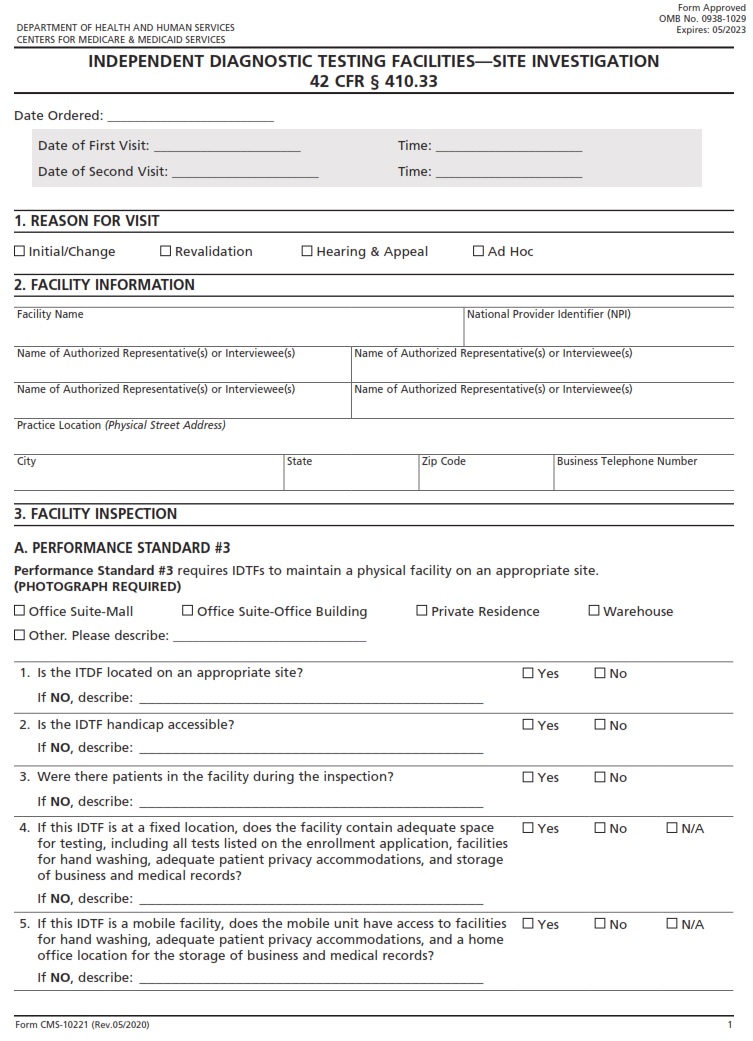
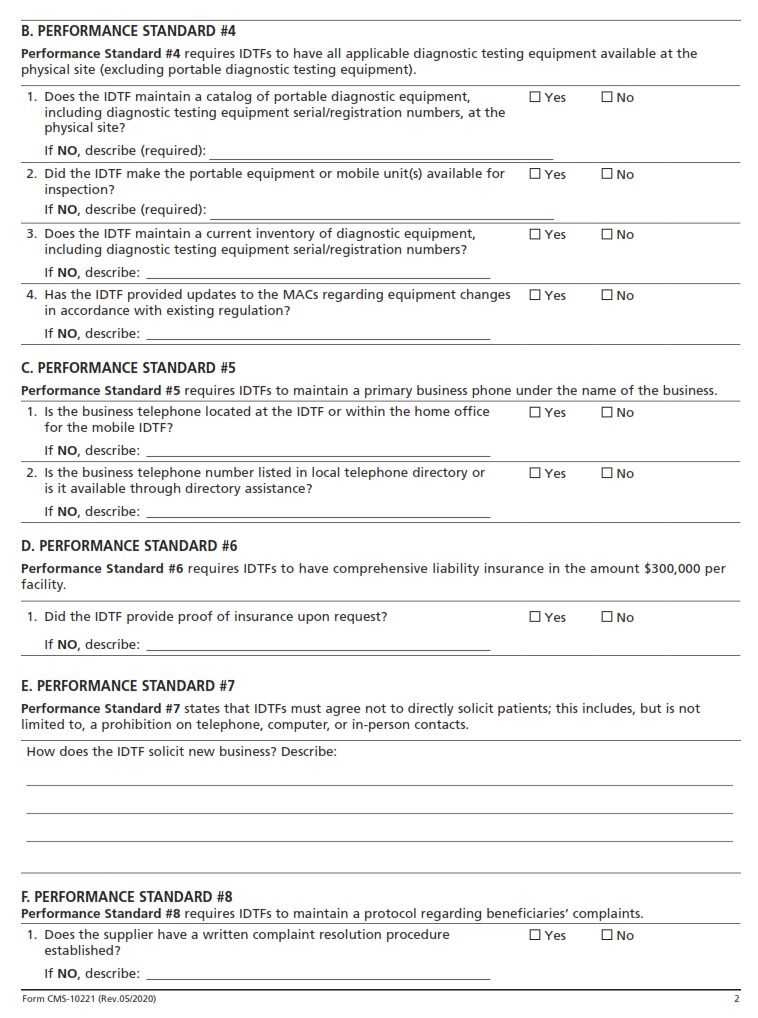
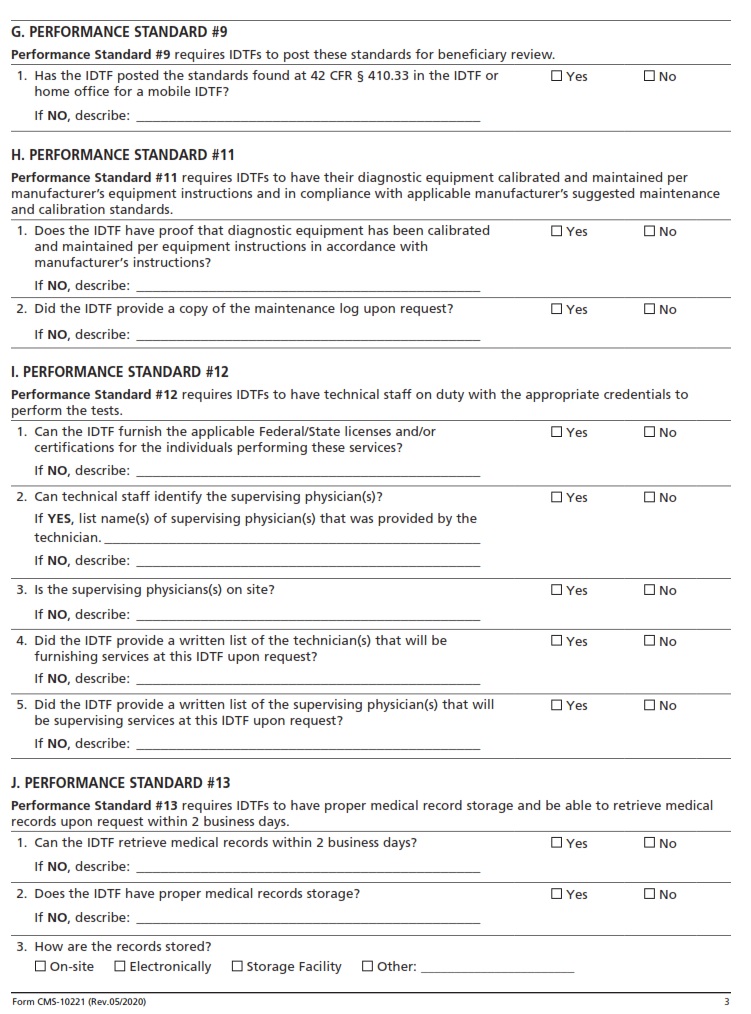
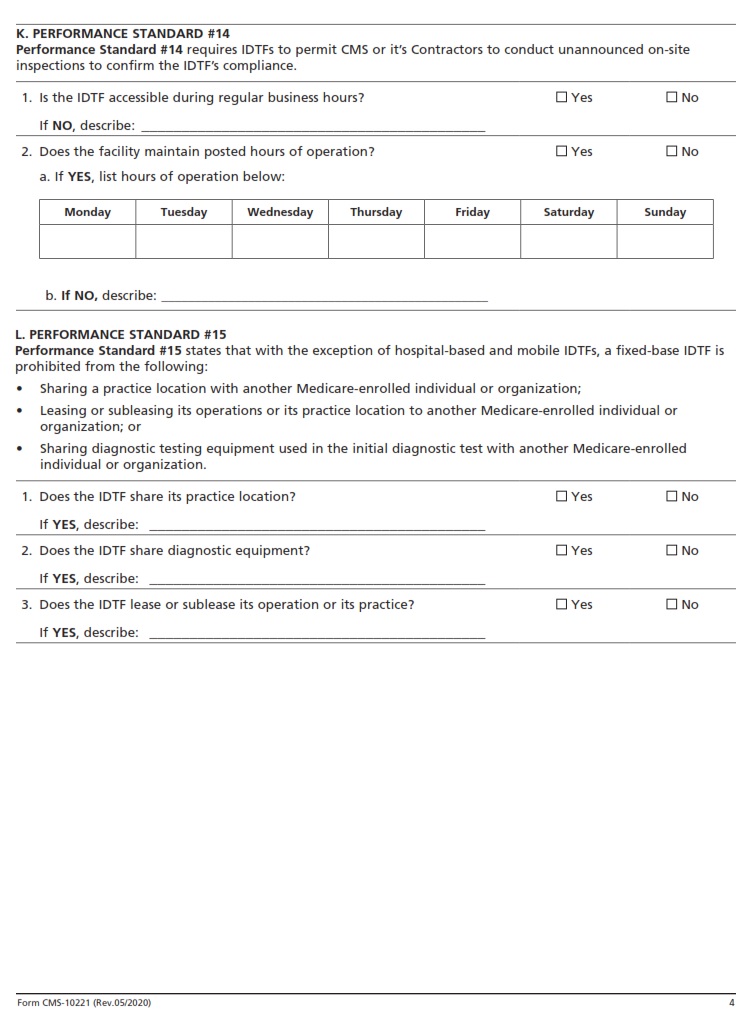
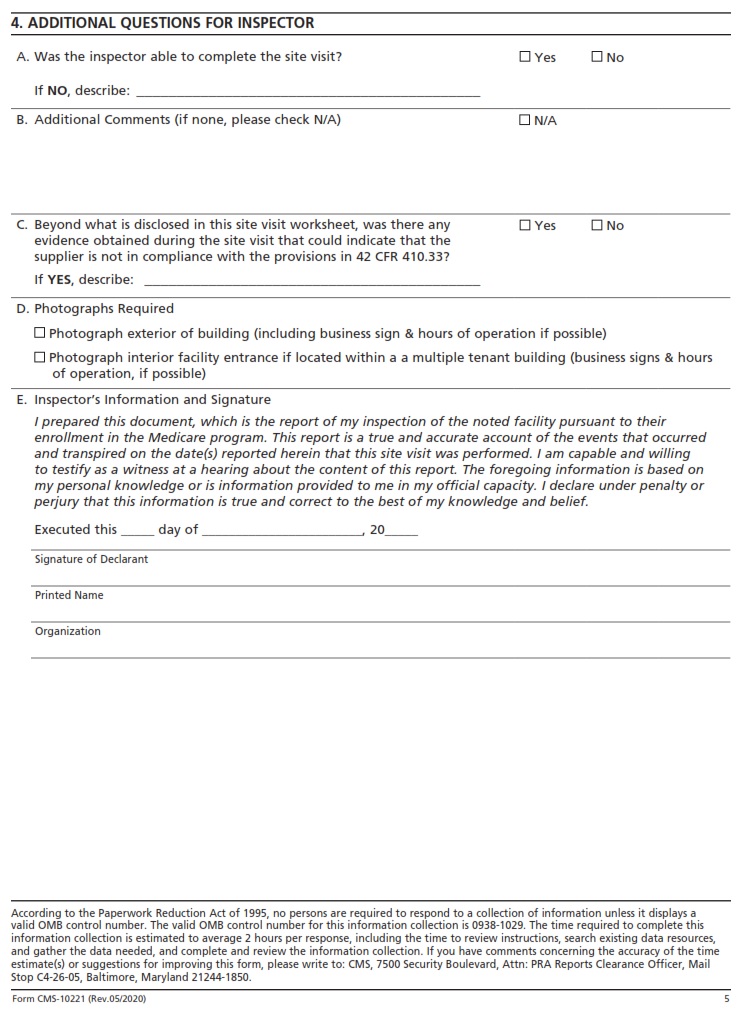
    CMSFORM.ORGCMS 10221 – Independent Diagnostic Testing Facilities-Site Investigation – Have you ever wondered what goes on behind the scenes at Independent Diagnostic Testing Facilities (IDTFs)? CMS 10221 sheds light on the intricate process of site investigation that plays a crucial role in ensuring the quality and accuracy of diagnostic testing. Picture this: a team of investigators meticulously combing through every detail of an IDTF, scrutinizing equipment, protocols, and documentation with a fine-toothed comb. This article delves into the nitty-gritty of CMS 10221 regulations, uncovering the challenges and complexities faced by these facilities as they strive to meet rigorous standards set forth by Medicare. Join us on a journey behind closed doors as we unravel the secrets of IDTF site investigations and explore how they impact patient care and healthcare compliance.

    Download CMS 10221 – Independent Diagnostic Testing Facilities-Site Investigation

    [su_table responsive=”yes”]

    Form Number CMS 10221
    Form Title Independent Diagnostic Testing Facilities-Site Investigation
    Published 2020-05-01
    O.M.B. 0938-1029
    File Size 186 KB

    [/su_table]

    [su_button url=”https://cmsforms.org/wp-content/uploads/2024/12/CMS-10221-Independent-Diagnostic-Testing-Facilities-Site-Investigation.pdf” target=”blank” background=”#8ec54f” size=”7″ center=”yes” icon=”icon: file-pdf-o” title=”Download CMS 10221″]Download CMS 10221 [.PDF][/su_button]

    What is a CMS 10221?

    CMS 10221, also known as the Independent Diagnostic Testing Facilities-Site Investigation, is a crucial set of regulations established by the Centers for Medicare & Medicaid Services (CMS) to ensure the quality and integrity of diagnostic testing facilities. These guidelines cover a wide range of aspects, including facility cleanliness, equipment maintenance, staff qualifications, and patient safety protocols. Compliance with CMS 10221 is essential for healthcare facilities to maintain their accreditation and ensure high standards of service delivery.

    One key aspect of CMS 10221 is its focus on patient-centric care and safety. The regulations outline specific requirements for ensuring that patients are provided with a safe and comfortable environment during diagnostic testing procedures. Additionally, CMS 10221 emphasizes the importance of maintaining accurate records and documentation to track patient outcomes and facilitate continuous quality improvement initiatives within diagnostic testing facilities. Overall, adherence to these guidelines not only ensures regulatory compliance but also enhances patient trust in healthcare institutions and promotes better health outcomes for individuals undergoing diagnostic testing procedures.

    Where Can I Find a CMS 10221?

    When searching for a CMS 10221, it’s crucial to look in the right places. Independent Diagnostic Testing Facilities (IDTFs) are often the primary locations where these specific CMS forms can be found. These facilities play a critical role in providing diagnostic services to patients and maintaining high standards of healthcare delivery. By contacting IDTFs directly or reaching out to relevant healthcare organizations, individuals seeking CMS 10221 forms are more likely to obtain accurate and up-to-date information.

    Additionally, exploring online resources and government websites can also yield valuable results when searching for CMS 10221 forms. Government portals such as the Centers for Medicare & Medicaid Services website may offer downloadable versions of the form, making it easier for individuals to access and utilize them. Furthermore, staying informed about any updates or changes in regulations regarding CMS forms is essential for ensuring compliance with healthcare protocols and procedures.

    CMS 10221 – Independent Diagnostic Testing Facilities-Site Investigation

    The CMS 10221 regulation plays a crucial role in ensuring the quality and integrity of independent diagnostic testing facilities (IDTFs) through rigorous site investigations. These site investigations are designed to assess various aspects of an IDTF’s operations, including equipment maintenance, staff qualifications, and compliance with regulatory standards. By conducting thorough site investigations, CMS aims to uphold the highest standards of patient care and safety within IDTFs.

    One key aspect of the CMS 10221 regulation is its focus on preventing fraud and abuse within IDTFs. Through detailed site investigations, CMS can identify any red flags or irregularities that may indicate fraudulent practices such as overbilling or providing unnecessary tests. This proactive approach not only protects patients from potential harm but also helps safeguard the integrity of the healthcare system as a whole.

    Overall, the strict requirements outlined in CMS 10221 underscore the importance of accountability and transparency within IDTFs. By holding these facilities to a high standard through comprehensive site investigations, CMS is working towards ensuring that patients receive accurate diagnoses and appropriate treatment without being subjected to unnecessary tests or procedures. The ongoing efforts to enforce these regulations reflect a commitment to promoting quality care and ethical practices in healthcare settings across the board.

    CMS 10221 Example

    CMS 10221 - Page 1 CMS 10221 - Page 2 CMS 10221 - Page 3 CMS 10221 - Page 4 CMS 10221 - Page 5

  • CMS 116 – CLINICAL LABORATORY IMPROVEMENT AMENDMENTS OF 1988 (CLIA) APPLICATION FOR CERTIFICATION

    CMS 116 – CLINICAL LABORATORY IMPROVEMENT AMENDMENTS OF 1988 (CLIA) APPLICATION FOR CERTIFICATION

    CMSFORM.ORGCMS 116 – CLINICAL LABORATORY IMPROVEMENT AMENDMENTS OF 1988 (CLIA) APPLICATION FOR CERTIFICATION – In the ever-evolving landscape of healthcare, ensuring the accuracy and reliability of clinical laboratory testing is paramount. Enter CMS 116 – the Clinical Laboratory Improvement Amendments (CLIA) of 1988, a pivotal regulatory framework that revolutionized laboratory standards in the United States. This application for certification serves as a beacon of quality assurance, setting forth rigorous guidelines to safeguard patient care and enhance diagnostic precision. Delving into the intricate world of CLIA certification unveils a realm where meticulous protocols intersect with cutting-edge technology, shaping the backbone of modern healthcare practices. Join us on a journey through the labyrinthine corridors of CLIA certification and discover how this transformative legislation continues to shape the future of clinical diagnostics.

    Download CMS 116 – CLINICAL LABORATORY IMPROVEMENT AMENDMENTS OF 1988 (CLIA) APPLICATION FOR CERTIFICATION

    [su_table responsive=”yes”]

    Form Number CMS 116 –
    Form Title CLINICAL LABORATORY IMPROVEMENT AMENDMENTS OF 1988 (CLIA) APPLICATION FOR CERTIFICATION
    Published 2020-04-01
    O.M.B. 0938-0581
    File Size 445 KB

    [/su_table]

    [su_button url=”https://cmsforms.org/wp-content/uploads/2024/12/CMS-116-CLINICAL-LABORATORY-IMPROVEMENT-AMENDMENTS-OF-1988-CLIA-APPLICATION-FOR-CERTIFICATION.pdf” target=”blank” background=”#8ec54f” size=”7″ center=”yes” icon=”icon: file-pdf-o” title=”Download CMS 116″]Download CMS 116 [.PDF][/su_button]

    What is a CMS 116?

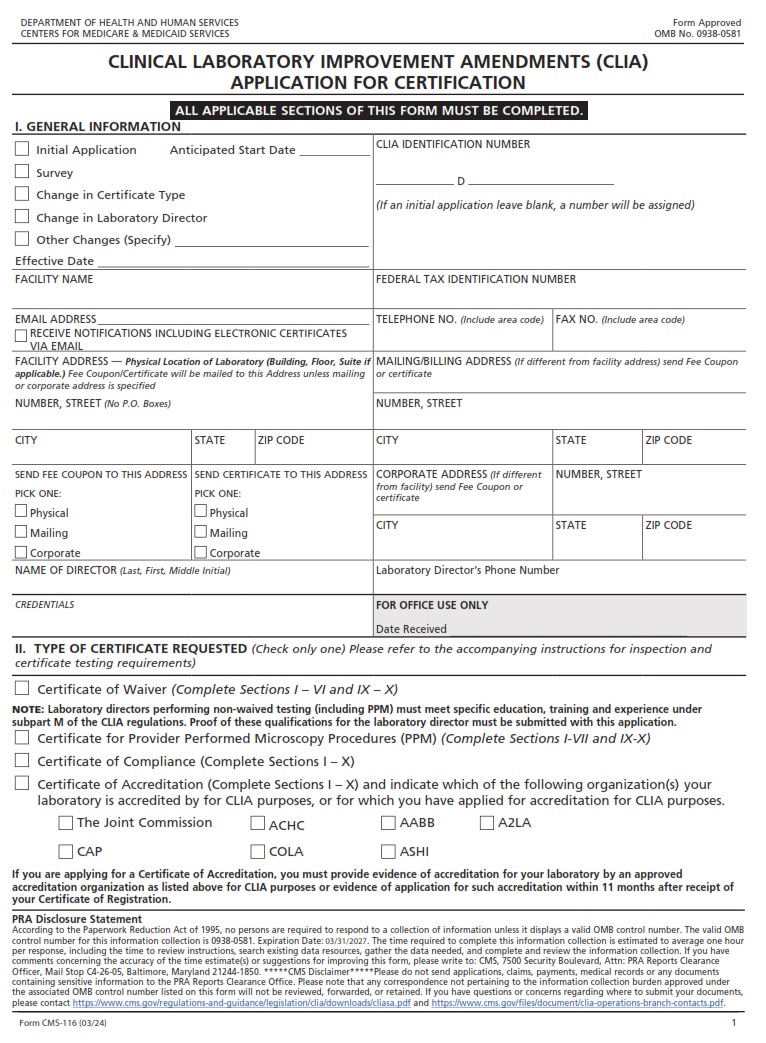
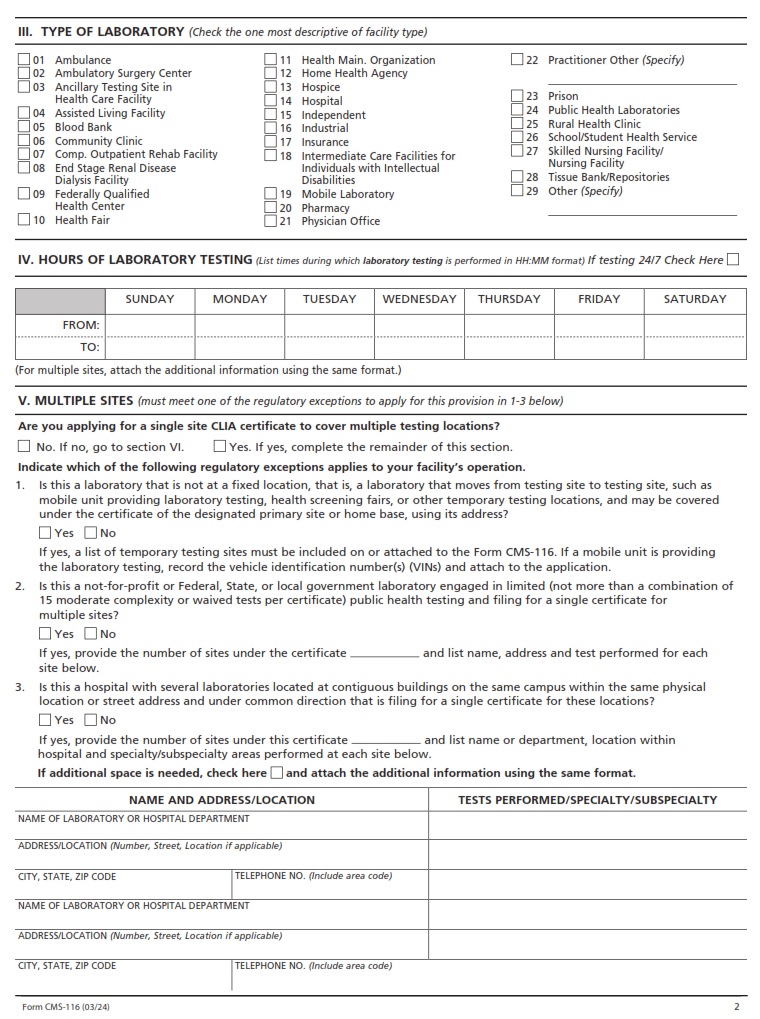
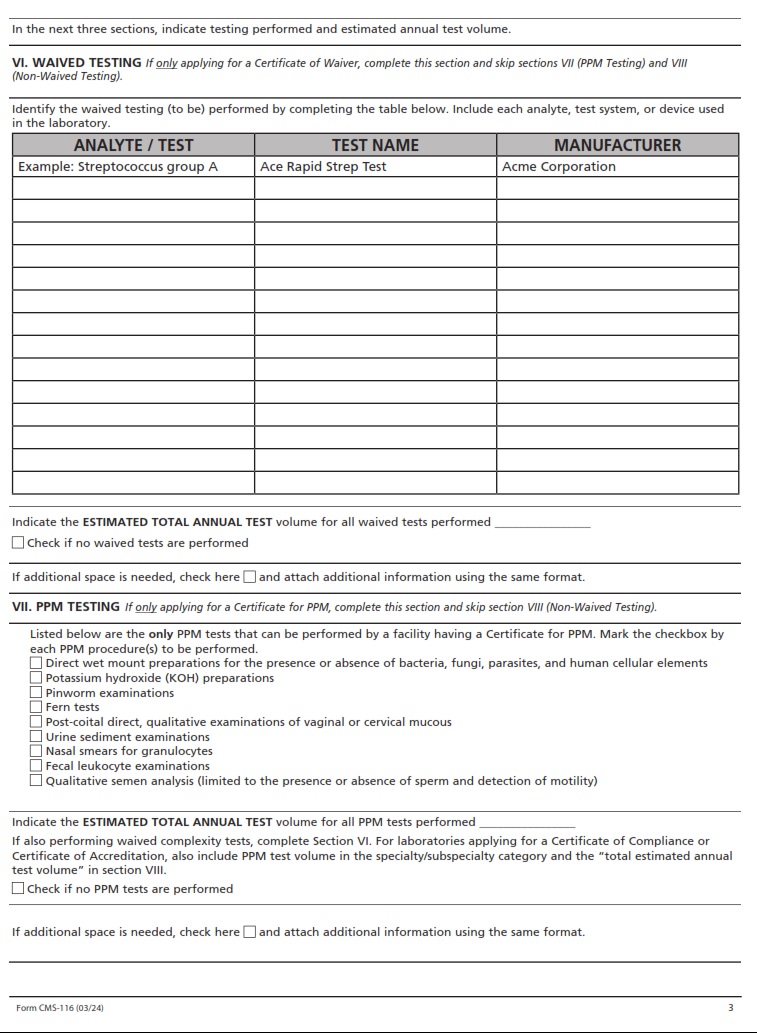
    A CMS 116 form, also known as the Clinical Laboratory Improvement Amendments (CLIA) Application for Certification, plays a crucial role in ensuring the quality and reliability of clinical laboratory testing. This form is required for labs seeking certification to conduct testing on human specimens. By completing the CMS 116, laboratories are declaring their compliance with CLIA regulations and committing to maintaining high-quality standards in their testing procedures. It serves as a formal application process through which laboratories demonstrate their proficiency in performing accurate and reliable tests for patient care.

    The CMS 116 application encompasses detailed information about the laboratory’s personnel qualifications, quality control procedures, test methods, and overall operational structure. Laboratories must provide evidence of adherence to CLIA requirements such as participating in proficiency testing programs and implementing proper quality assurance measures. This comprehensive documentation process ensures that certified labs meet strict regulatory standards to safeguard patient health and maintain credibility within the healthcare industry. The CMS 116 form signifies a commitment to excellence and accountability in clinical laboratory practices, ultimately benefiting both patients and healthcare providers alike.

    Where Can I Find a CMS 116?

    When seeking to acquire a CMS 116 form for CLIA certification, several avenues can be explored. One primary source is the Centers for Medicare & Medicaid Services (CMS) website, where the form can typically be downloaded in PDF format. Alternatively, reaching out to your state’s Department of Health or local CLIA program can provide guidance on obtaining the necessary documentation for certification.

    For those looking beyond official channels, online platforms offering resources and services for healthcare compliance may also have the CMS 116 form available for download or purchase. It is important to ensure that any version obtained is up-to-date and compliant with current regulations to streamline the application process without setbacks. In navigating the complexities of CLIA certification, tapping into various sources can lead to a smoother journey towards compliance and quality improvement in clinical laboratory practices.

    CMS 116 – CLINICAL LABORATORY IMPROVEMENT AMENDMENTS OF 1988 (CLIA) APPLICATION FOR CERTIFICATION

    Applying for certification under the Clinical Laboratory Improvement Amendments of 1988 (CLIA) can seem like a daunting task, but it is a crucial step in ensuring the quality and accuracy of laboratory testing. The process involves thorough documentation of quality control procedures, personnel qualifications, and facility standards to demonstrate compliance with CLIA regulations. By successfully navigating the CLIA application process, laboratories can not only meet regulatory requirements but also enhance their credibility and reputation.

    One key aspect of the CLIA certification application is demonstrating proficiency in conducting accurate and reliable laboratory tests. This involves implementing standard operating procedures (SOPs), establishing quality controls, and participating in proficiency testing programs to validate the accuracy and reliability of test results. By investing time and resources into ensuring compliance with CLIA requirements, laboratories can build trust among patients, healthcare providers, and regulatory agencies.

    In today’s rapidly evolving healthcare landscape, stringent regulations like CLIA play a vital role in safeguarding patient safety and maintaining high standards of care. Laboratories that undergo the certification process demonstrate their commitment to quality assurance and continuous improvement in laboratory practices. Ultimately, obtaining CLIA certification not only signifies regulatory compliance but also signifies a dedication to delivering accurate diagnostic services that contribute to better patient outcomes.

    CMS 116 Example

    CMS 116 - Page 1 CMS 116 - Page 2 CMS 116 - Page 3

  • CMS R-0235U (48 KB) – Data Use Agreement (DUA) – Update to Existing DUA

    CMS R-0235U (48 KB) – Data Use Agreement (DUA) – Update to Existing DUA

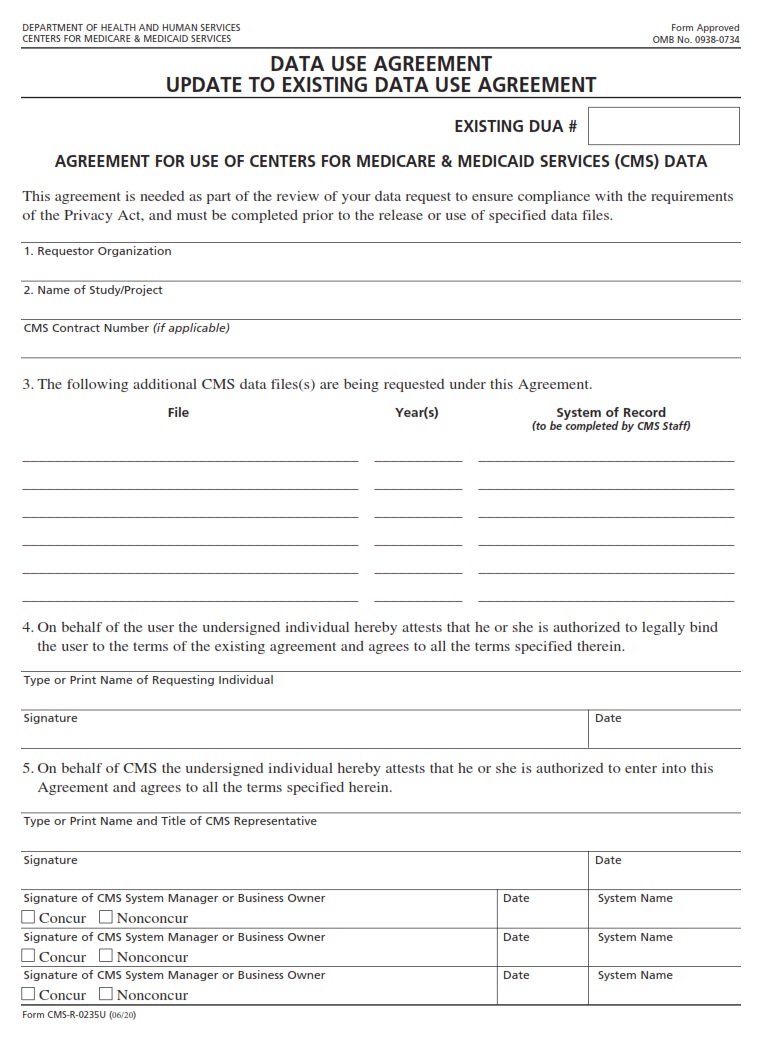
    CMSFORM.ORGCMS R-0235U (48 KB) – Data Use Agreement (DUA) – Update to Existing DUA – In the fast-paced world of data management, staying up-to-date with regulations and agreements is crucial for ensuring compliance and protecting sensitive information. Enter CMS R-0235U (48 KB) – the latest update to an existing Data Use Agreement (DUA) that has sent ripples through the industry. This seemingly innocuous document holds immense power, dictating how valuable data can be accessed, utilized, and shared among parties involved in research and analysis.

    With technology advancing at breakneck speed, the need for robust agreements like CMS R-0235U has never been more pressing. The implications of this update are far-reaching, impacting not only how organizations handle data but also how individuals’ privacy rights are safeguarded in an increasingly interconnected world. Join us as we delve into the nuances of this pivotal DUA update and explore its significance in shaping the future of data governance and security.

    Download CMS R-0235U (48 KB) – Data Use Agreement (DUA)- Update to Existing DUA

    [su_table responsive=”yes”]

    Form Number CMS R-0235U (48 KB)
    Form Title Data Use Agreement (DUA) – Update to Existing DUA
    Published 2020-06-11
    O.M.B. 0938-0734
    File Size 61 KB

    [/su_table]

    [su_button url=”https://cmsforms.org/wp-content/uploads/2024/12/CMS-R-0235U-48-KB-Data-Use-Agreement-DUA-Update-to-Existing-DUA.pdf” target=”blank” background=”#8ec54f” size=”7″ center=”yes” icon=”icon: file-pdf-o” title=”Download CMS R-0235U (48 KB)”]Download CMS R-0235U (48 KB) [.PDF][/su_button]

    What is a CMS R-0235U (48 KB)?

    CMS R-0235U (48 KB) stands as a crucial component in the realm of data utilization, particularly within the context of Data Use Agreements (DUA). This updated version brings a range of enhancements and refinements to the existing framework, aiming to streamline data management processes efficiently. With a focus on improved functionality and security measures, this CMS signifies a pivotal step towards ensuring data privacy and integrity.

    The 48 KB capacity of CMS R-0235U underscores its ability to handle substantial volumes of information effectively. This expanded storage capability enables users to store and access diverse datasets with ease, fostering increased flexibility in data management strategies. By optimizing resource allocation and enhancing accessibility, this updated CMS empowers organizations to harness the full potential of their data assets for informed decision-making and strategic planning purposes.

    Where Can I Find a CMS R-0235U (48 KB)?

    If you’re on the hunt for a CMS R-0235U (48 KB) form, navigating through various channels can be a daunting task. One of your best bets would be to reach out directly to the Centers for Medicare & Medicaid Services (CMS) or check their official website for any available resources. Additionally, consulting with healthcare professionals or organizations that are familiar with such forms may lead you in the right direction.

    Another avenue to explore could be online forums or communities dedicated to discussing healthcare-related documents and agreements. You might find individuals who have previously dealt with the CMS R-0235U (48 KB) form and are willing to share insights or tips on where to obtain it. Ultimately, persistence and resourcefulness are key when attempting to locate specific forms like the CMS R-0235U (48 KB), so don’t hesitate to explore multiple avenues until you achieve success in your search.

    CMS R-0235U (48 KB) – Data Use Agreement (DUA)- Update to Existing DUA

    The CMS R-0235U (48 KB) Data Use Agreement (DUA) brings about a significant update to existing DUAs, signaling a shift towards more streamlined and efficient data sharing practices. This updated agreement reaffirms the commitment to safeguarding data security and confidentiality while also fostering collaboration among stakeholders in the healthcare industry. By incorporating new provisions and guidelines, the CMS R-0235U aims to address emerging challenges in data governance and ensure that sensitive information is handled responsibly.

    Furthermore, this latest version of the DUA highlights the importance of transparency and accountability in data usage, emphasizing the need for clear communication and documentation throughout the data sharing process. Stakeholders are encouraged to adhere to best practices outlined in the agreement to uphold ethical standards and promote trust within the healthcare community. Overall, the updates made to CMS R-0235U pave the way for enhanced data exchange practices that prioritize compliance with regulations while promoting innovation and information sharing for improved patient outcomes.

    CMS R-0235U (48 KB) Example

    CMS R-0235U

  • CMS R-0235L (64 KB) – Data Use Agreement (DUA) – Limited Data Sets

    CMS R-0235L (64 KB) – Data Use Agreement (DUA) – Limited Data Sets

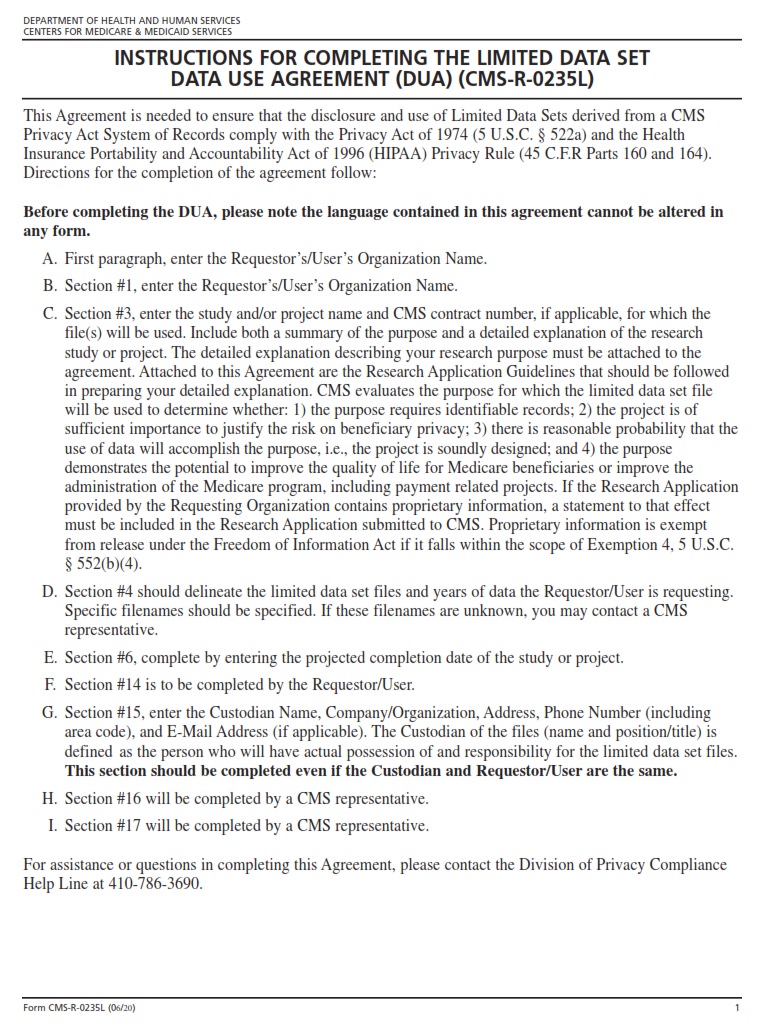
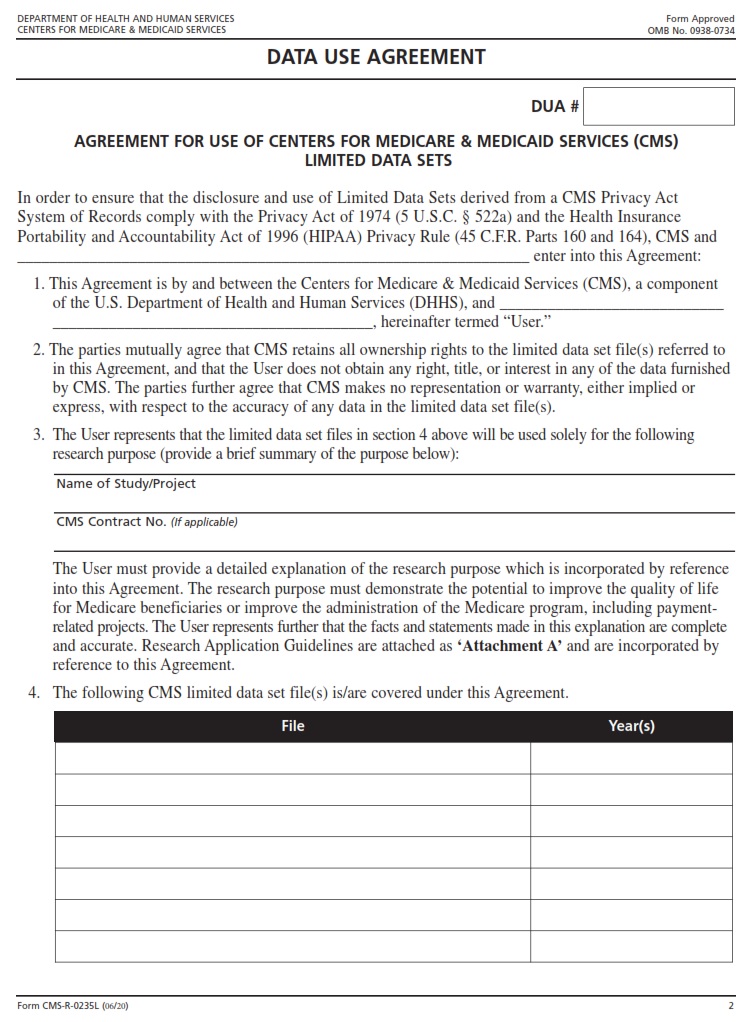
    CMSFORM.ORGCMS R-0235L (64 KB) – Data Use Agreement (DUA) – Limited Data Sets – In a world where data is king and privacy concerns loom large, the CMS R-0235L (64 KB) Data Use Agreement (DUA) offers a ray of hope for organizations seeking to leverage valuable information while protecting sensitive data. This groundbreaking agreement introduces the concept of Limited Data Sets, opening up a realm of possibilities for researchers, healthcare providers, and policymakers alike. With strict guidelines on data usage and sharing, this DUA promises to revolutionize how organizations handle information in the ever-evolving landscape of data governance.

    Imagine unlocking a treasure trove of insights without compromising individual privacy – that’s precisely what the CMS R-0235L (64 KB) DUA aims to achieve. By striking a delicate balance between innovation and confidentiality, this agreement paves the way for collaborative research endeavors that have the power to shape the future of healthcare delivery and policy-making. Join us as we delve into the intricacies of Limited Data Sets and discover how this pioneering approach is reshaping the narrative around data utilization in today’s digital age.

    Download CMS R-0235L (64 KB) – Data Use Agreement (DUA)- Limited Data Sets

    [su_table responsive=”yes”]

    Form Number CMS R-0235L (64 KB)
    Form Title Data Use Agreement (DUA) – Limited Data Sets
    Published 2020-06-11
    O.M.B. 0938-0734
    File Size 113 KB

    [/su_table]

    [su_button url=”https://cmsforms.org/wp-content/uploads/2024/12/CMS-R-0235L-64-KB-Data-Use-Agreement-DUA-Limited-Data-Sets.pdf” target=”blank” background=”#8ec54f” size=”7″ center=”yes” icon=”icon: file-pdf-o” title=”Download CMS R-0235L (64 KB)”]Download CMS R-0235L (64 KB) [.PDF][/su_button]

    What is a CMS R-0235L (64 KB)?

    The CMS R-0235L (64 KB) is a crucial component in the realm of healthcare data management. This specific DUA falls under the category of Limited Data Sets, offering a restricted view into patient information while maintaining their privacy. The 64 KB size limitation plays a significant role in ensuring only relevant and necessary data points are shared among authorized parties without compromising individuals’ privacy rights.

    Understanding the intricacies of the CMS R-0235L (64 KB) is essential for healthcare entities handling sensitive patient information. By utilizing this DUA, organizations can strike a balance between sharing data for research or operational purposes while upholding strict confidentiality standards. Compliance with the regulations surrounding Limited Data Sets, including proper handling and secure transmission protocols, is paramount to maintaining trust and integrity within the healthcare industry.

    Where Can I Find a CMS R-0235L (64 KB)?

    If you’re in search of a CMS R-0235L (64 KB), your first step should be to reach out to authorized data providers or organizations that have access to this specific data set. Keep in mind that due to the sensitive nature of health information, accessing the CMS R-0235L (64 KB) requires adherence to strict data use agreements and guidelines outlined by the Centers for Medicare & Medicaid Services. Collaborating with research institutions, academic centers, or government agencies involved in healthcare analytics may increase your chances of obtaining access to this limited data set.

    It’s essential to understand the restrictions and limitations associated with using a CMS R-0235L (64 KB) dataset under a Data Use Agreement (DUA). By partnering with entities experienced in managing and analyzing restricted healthcare data, you can ensure compliance with privacy laws and regulations while leveraging valuable insights for research or analytical purposes. Remember, staying informed about the latest updates on data sharing policies and practices within the healthcare industry can help streamline your search for a CMS R-0235L (64 KB) dataset under an appropriate DUA framework.

    CMS R-0235L (64 KB) – Data Use Agreement (DUA)- Limited Data Sets

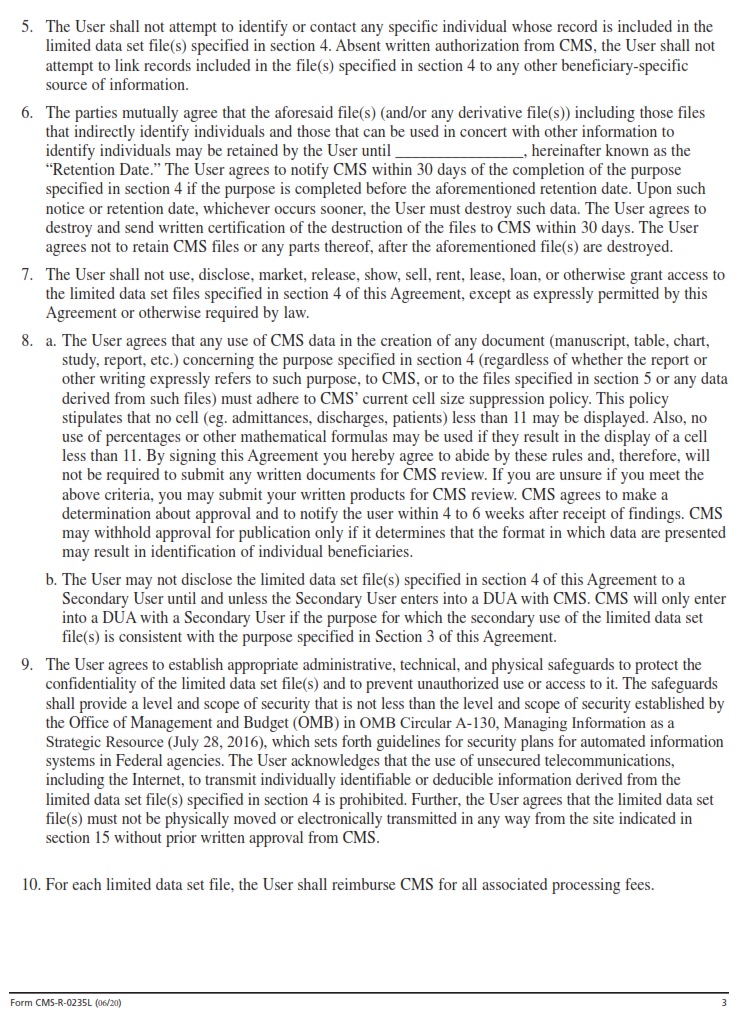
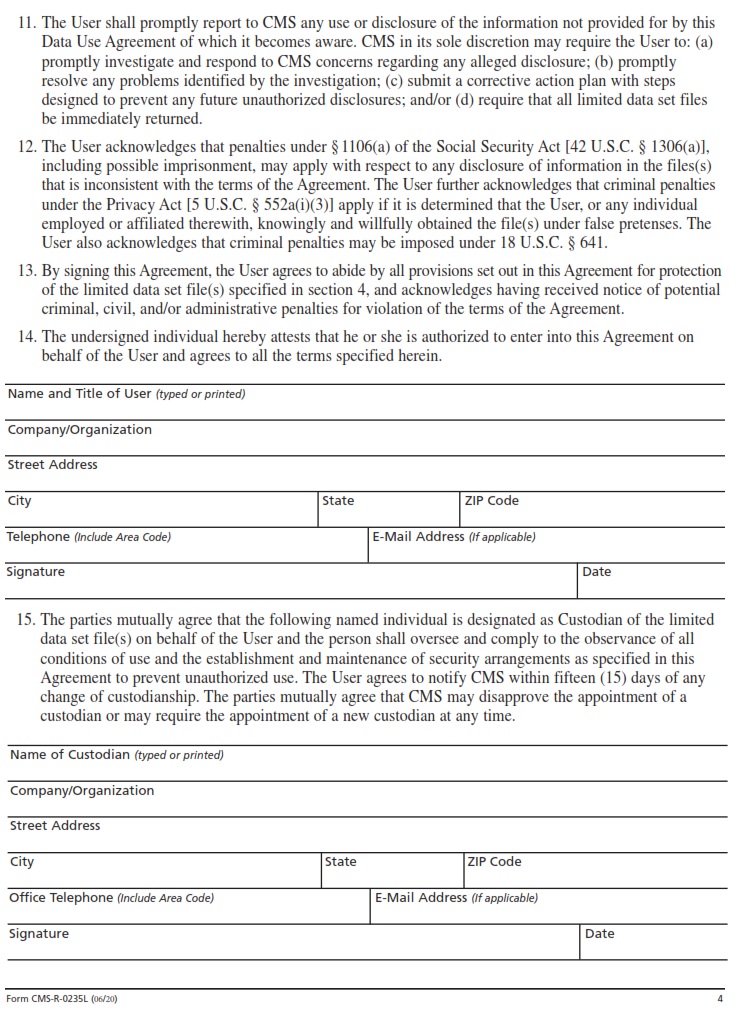
    With the growing concerns about data privacy and security, the CMS R-0235L (64 KB) Data Use Agreement (DUA) for Limited Data Sets plays a critical role in ensuring that sensitive information is handled with the utmost care. By limiting certain identifiers within the data set, organizations can utilize this valuable information for research and analysis while still protecting individual privacy. This agreement sets clear guidelines on how data can be accessed, used, and shared, allowing researchers to delve into important healthcare trends without compromising confidentiality.

    Moreover, the use of Limited Data Sets under the CMS R-0235L provides a balance between data utility and privacy protection. Researchers can benefit from access to a wealth of information while adhering to strict regulations that safeguard patient identities. This approach fosters trust between healthcare organizations and researchers, promoting collaboration in generating insights that can improve healthcare outcomes and drive innovation within the industry. The stringent guidelines outlined in this agreement serve as a foundation for ethical data practices, setting a standard for responsible handling of sensitive health information.

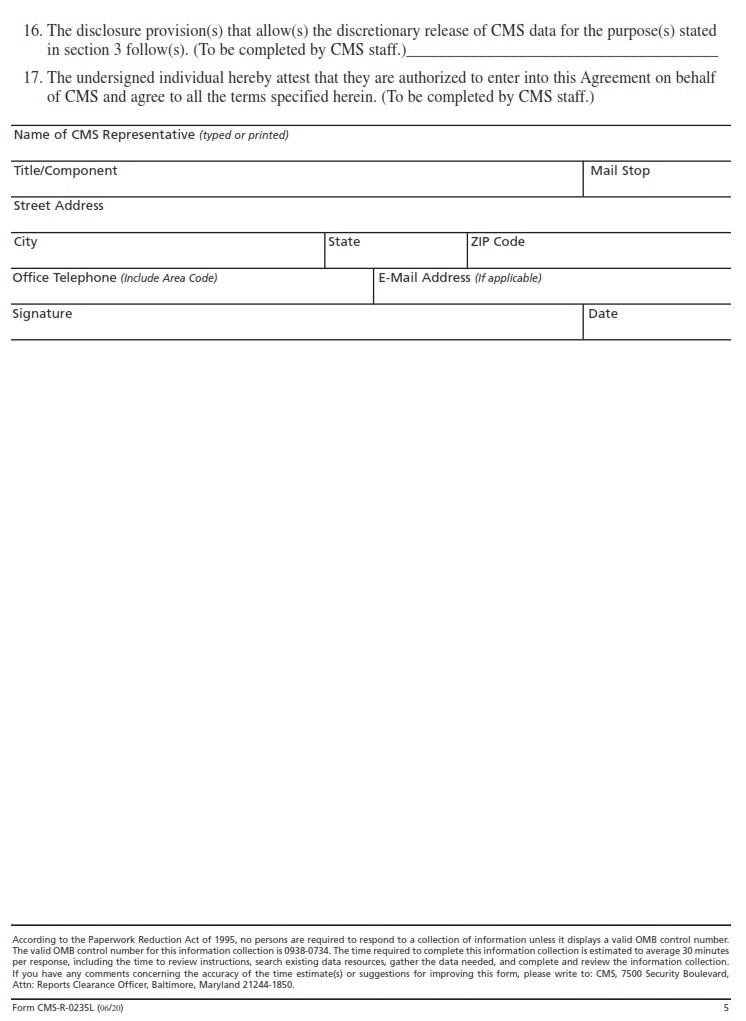
    CMS R-0235L (64 KB) Example

    CMS R-0235L - Page 1 CMS R-0235L - Page 2 CMS R-0235L - Page 3 CMS R-0235L - Page 4 CMS R-0235L - Page 5

  • CMS R-0235A (35 KB) – Addendum to Data Use Agreement (DUA)

    CMS R-0235A (35 KB) – Addendum to Data Use Agreement (DUA)

    CMSFORM.ORGCMS R-0235A (35 KB) – Addendum to Data Use Agreement (DUA) – In the ever-evolving landscape of data sharing and privacy regulations, the introduction of CMS R-0235A (35 KB) – Addendum to Data Use Agreement (DUA) marks a significant milestone in ensuring compliance and protection of sensitive information. The intricate dance between technological advancements and ethical considerations has thrust data agreements into the spotlight, prompting organizations to reevaluate their approach to data management. As we delve into the nuances of this addendum, it becomes clear that it embodies not just legal jargon but a pivotal shift towards transparency and accountability in data handling practices.

    Imagine a world where every digital interaction leaves a trail of breadcrumbs, each carrying crucial information about our lives and activities. With CMS R-0235A (35 KB) – Addendum to Data Use Agreement (DUA), stakeholders are confronted with a robust framework that aims to balance the scales between harnessing valuable insights from data and safeguarding individuals’ privacy rights. This article will unravel the complexities surrounding this addendum, shedding light on its implications for various industries grappling with the intricacies of data governance. Join us on this exploration as we navigate through uncharted territories where technology meets ethics in an ever-turbulent sea of digital transformation.

    Download CMS R-0235A (35 KB) – Addendum to Data Use Agreement (DUA)

    [su_table responsive=”yes”]

    Form Number CMS R-0235A (35 KB)
    Form Title Addendum to Data Use Agreement (DUA)
    Published 2020-06-11
    O.M.B. 0938-0734
    File Size 196 KB

    [/su_table]

    [su_button url=”https://cmsforms.org/wp-content/uploads/2024/12/CMS-R-0235A-35-KB-Addendum-to-Data-Use-Agreement-DUA.pdf” target=”blank” background=”#8ec54f” size=”7″ center=”yes” icon=”icon: file-pdf-o” title=”Download CMS R-0235A (35 KB)”]Download CMS R-0235A (35 KB) [.PDF][/su_button]

    What is a CMS R-0235A (35 KB)?

    The CMS R-0235A (35 KB) is a critical addendum to the Data Use Agreement (DUA) that signifies a shift towards more comprehensive data management practices in the healthcare industry. This 35 KB document encapsulates various provisions regarding the use, sharing, and safeguarding of sensitive patient information, emphasizing confidentiality and compliance with regulations. By incorporating this addendum into existing DUAs, healthcare organizations can enhance their data governance frameworks and bolster trust among stakeholders.

    With the rapid evolution of technology and data proliferation in healthcare, the CMS R-0235A (35 KB) serves as a proactive measure to address emerging challenges in data security and privacy. It not only outlines specific protocols for handling patient data but also reinforces accountability among organizations when it comes to maintaining the integrity of sensitive information. By focusing on issues like access controls, encryption standards, and audit trails within this addendum, healthcare providers can better align their practices with industry best practices and regulatory requirements.

    Where Can I Find a CMS R-0235A (35 KB)?

    Have you been tirelessly searching for the elusive CMS R-0235A (35 KB) document to complete your Data Use Agreement (DUA)? Look no further, as this sought-after file can be securely downloaded directly from the official CMS website. Many users often overlook this simple solution and waste valuable time on unnecessary online searches. By accessing the document through its authentic source, you ensure accuracy and safeguard against potential errors in the DUA process.

    Furthermore, understanding the importance of complying with CMS regulations highlights the significance of obtaining the correct version of form R-0235A. Mistakenly using outdated or incorrect forms can lead to delays or complications in your agreement submission. Embracing a proactive approach by verifying the authenticity and validity of your documents showcases professionalism and dedication towards maintaining compliance standards set forth by regulatory bodies like CMS.

    CMS R-0235A (35 KB) – Addendum to Data Use Agreement (DUA)

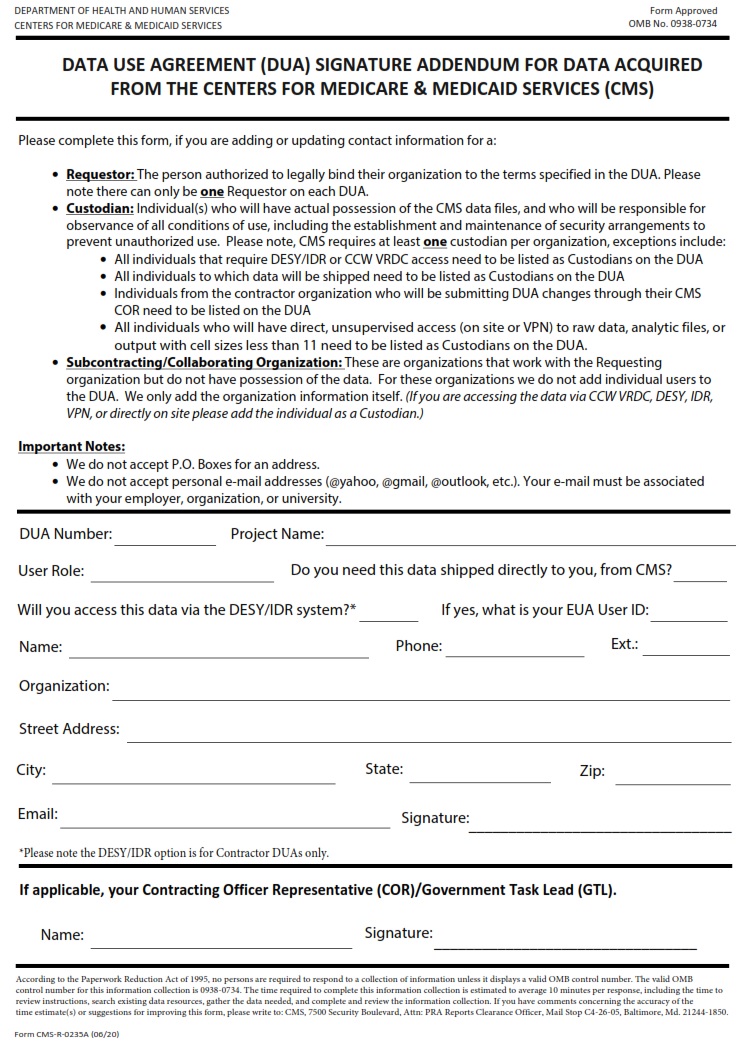
    CMS R-0235A (35 KB) serves as a crucial addendum to the Data Use Agreement (DUA) within the healthcare sector. This document plays a pivotal role in outlining additional terms and conditions, ensuring that data sharing is conducted ethically and in compliance with regulations. By addressing specific details related to data usage, confidentiality, and security measures, the addendum enhances transparency and accountability among involved parties, fostering a trusted environment for data exchange.

    One key aspect of CMS R-0235A is its emphasis on protecting sensitive patient information while facilitating necessary data transfers between entities. This balance between privacy and accessibility underscores the importance of establishing clear guidelines for handling health-related data securely. Moreover, by incorporating provisions tailored to individual agreements, this addendum can adapt to evolving industry standards and legal requirements, keeping pace with technological advancements that continue to shape the landscape of healthcare data management.

    In conclusion, CMS R-0235A offers a structured framework for enhancing data governance practices within healthcare organizations. By formalizing protocols around information sharing through comprehensive agreements like this addendum, stakeholders can navigate complex regulatory landscapes with confidence while upholding the highest standards of patient privacy and data security. As technology continues to revolutionize healthcare delivery systems, adherence to such agreements becomes indispensable in promoting trust among stakeholders navigating the ever-evolving terrain of health information management.

    CMS R-0235A (35 KB) Example

    CMS R-0235A

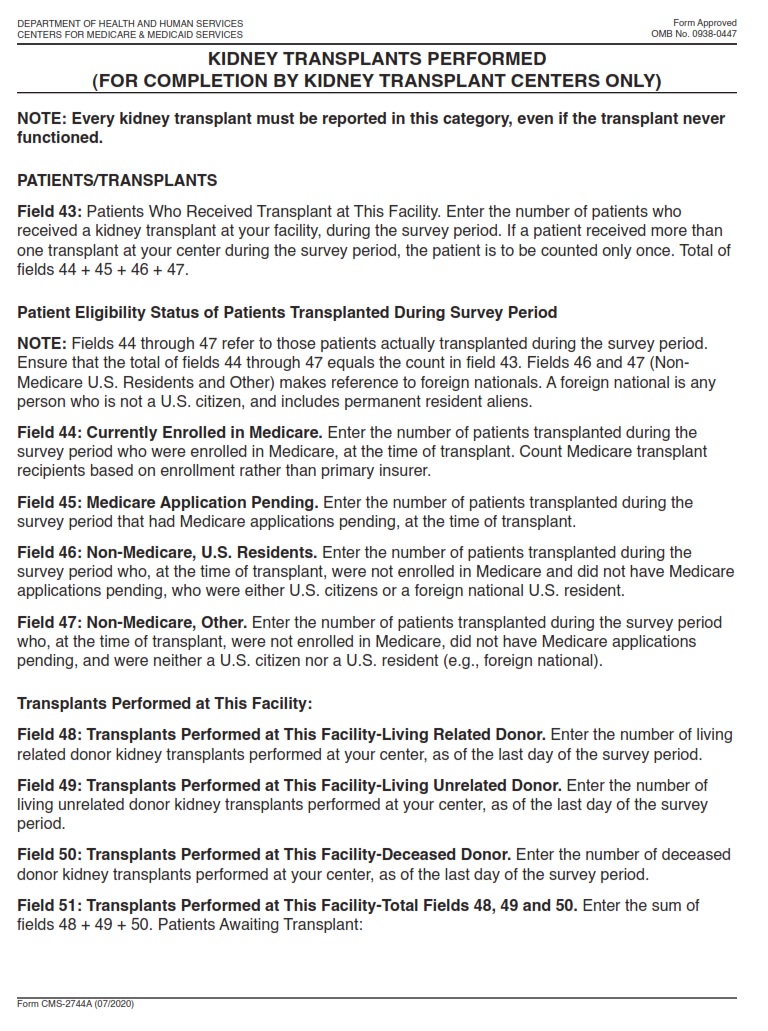
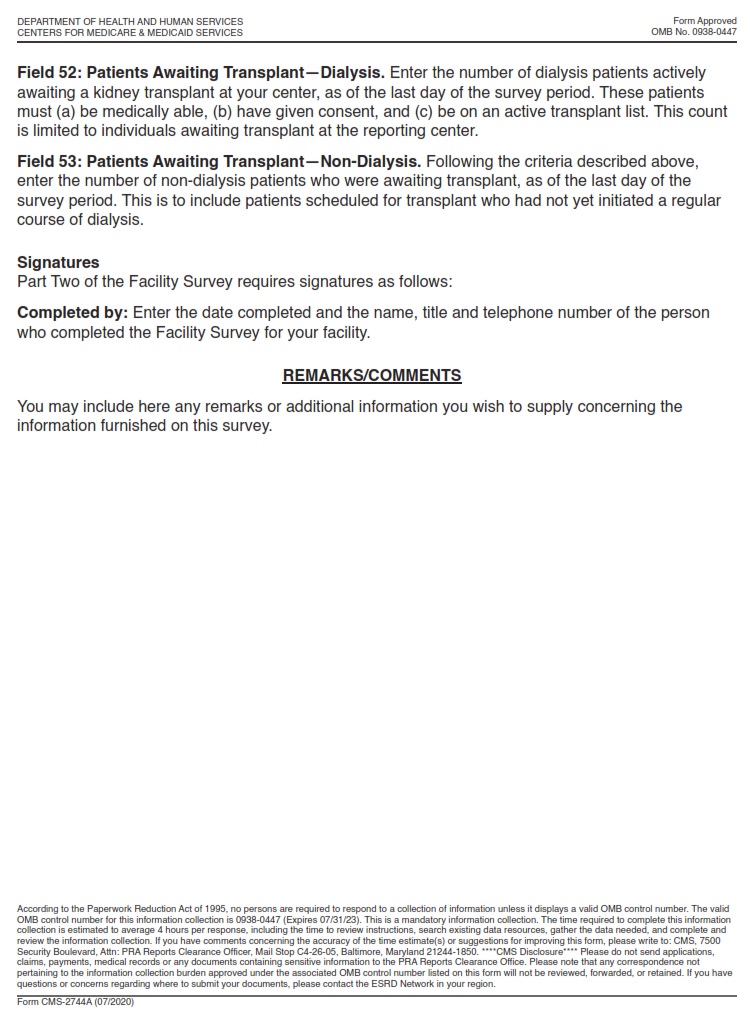
  • CMS 2744B – END STAGE RENAL DISEASE MEDICAL INFORMATION SYSTEM ESRD FACILITY SURVEY (TRANSPLANT CENTERS ONLY)

    CMS 2744B – END STAGE RENAL DISEASE MEDICAL INFORMATION SYSTEM ESRD FACILITY SURVEY (TRANSPLANT CENTERS ONLY)

    CMSFORM.ORGCMS 2744B – END STAGE RENAL DISEASE MEDICAL INFORMATION SYSTEM ESRD FACILITY SURVEY (TRANSPLANT CENTERS ONLY) – In the realm of healthcare, the pursuit of better patient outcomes is an ever-evolving journey filled with challenges and innovations. Enter CMS 2744B – a crucial tool in the fight against End Stage Renal Disease (ESRD), designed specifically for transplant centers to gather vital medical information. This survey delves deep into the operations and protocols of ESRD facilities, offering a comprehensive snapshot of their practices and capabilities. With kidneys being one of the most sought-after organs for transplantation, understanding the inner workings of these specialized facilities becomes paramount in ensuring successful outcomes for patients in need. Join us as we uncover the complexities and intricacies behind this essential survey, shedding light on how it plays a pivotal role in shaping the landscape of renal care today.

    Download CMS 2744B – END STAGE RENAL DISEASE MEDICAL INFORMATION SYSTEM ESRD FACILITY SURVEY (TRANSPLANT CENTERS ONLY)

    [su_table responsive=”yes”]

    Form Number CMS 2744B
    Form Title END STAGE RENAL DISEASE MEDICAL INFORMATION SYSTEM ESRD FACILITY SURVEY (TRANSPLANT CENTERS ONLY)
    Published 2020-07-01
    O.M.B. 0938-0447
    File Size 138 KB

    [/su_table]

    [su_button url=”https://cmsforms.org/wp-content/uploads/2024/12/CMS-2744B-END-STAGE-RENAL-DISEASE-MEDICAL-INFORMATION-SYSTEM-ESRD-FACILITY-SURVEY-TRANSPLANT-CENTERS-ONLY.pdf” target=”blank” background=”#8ec54f” size=”7″ center=”yes” icon=”icon: file-pdf-o” title=”Download CMS 2744B”]Download CMS 2744B [.PDF][/su_button]

    What is a CMS 2744B?

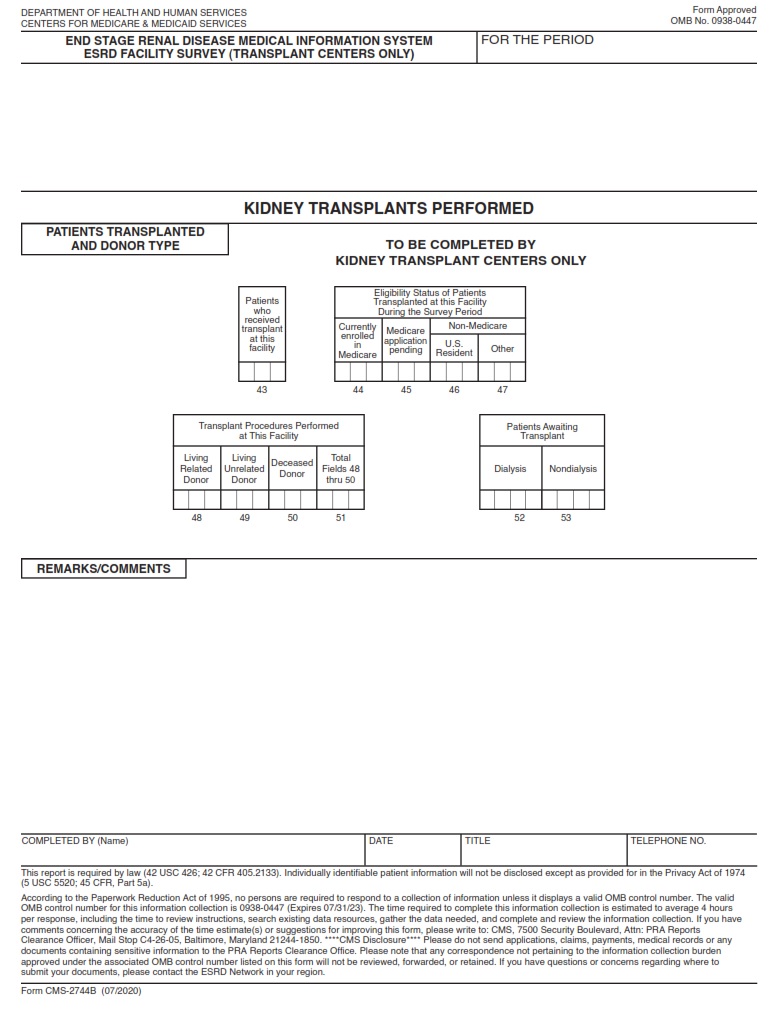
    A CMS 2744B form is a crucial tool used by end-stage renal disease (ESRD) facilities for surveying transplant centers. This form gathers vital medical information related to ESRD patients undergoing transplantation, helping healthcare providers track and monitor patient outcomes effectively. By streamlining data collection on key aspects such as transplantation procedures and patient demographics, the CMS 2744B plays a pivotal role in supporting transplant center operations.

    With the rising demand for renal transplants and increased emphasis on quality care delivery, the importance of accurate data reporting through the CMS 2744B cannot be overstated. This system not only facilitates communication among healthcare professionals but also ensures compliance with regulatory standards governing ESRD facilities. By harnessing technology and centralized data management, ESRD facilities can enhance patient care coordination and improve overall transplant center performance.

    Where Can I Find a CMS 2744B?

    If you’re searching for a CMS 2744B form, look no further than the official Centers for Medicare & Medicaid Services (CMS) website. This form is specifically designed for End Stage Renal Disease (ESRD) facilities and transplant centers to gather essential medical information. Alternatively, you can also reach out to your local ESRD facility or transplant center to inquire about obtaining a copy of the CMS 2744B.

    Another option is to explore online databases that specialize in providing healthcare forms and resources. These platforms often have downloadable versions of the CMS 2744B form available for easy access. Remember, having this form on hand is crucial for maintaining accurate medical records and ensuring compliance with regulatory requirements within the field of ESRD management and transplantation services.

    CMS 2744B – END STAGE RENAL DISEASE MEDICAL INFORMATION SYSTEM ESRD FACILITY SURVEY (TRANSPLANT CENTERS ONLY)

    The CMS 2744B survey plays a crucial role in evaluating the performance and quality of care provided by End Stage Renal Disease (ESRD) facilities, specifically focusing on transplant centers. This survey serves as a key tool for ensuring compliance with regulatory standards and guidelines set forth by the Centers for Medicare & Medicaid Services. Through this comprehensive assessment, transplant centers are able to showcase their adherence to protocols that ultimately impact patient outcomes and safety.

    Transplant centers participating in the CMS 2744B survey must demonstrate excellence in various areas such as patient care coordination, infection control practices, staff competency, and transplantation success rates. By actively engaging in this survey process, these facilities engage in continuous quality improvement efforts that prioritize patient well-being above all else. The data collected from these surveys not only aids in benchmarking performance against industry standards but also enables transplant centers to identify areas for enhancement and innovation within their operations.

    CMS 2744B Example

    CMS 2744B - Page 1 CMS 2744B - Page 2 CMS 2744B - Page 3

  • CMS 2744A – ESRD FACILITY SURVEY (DIALYSIS UNIT ONLY)

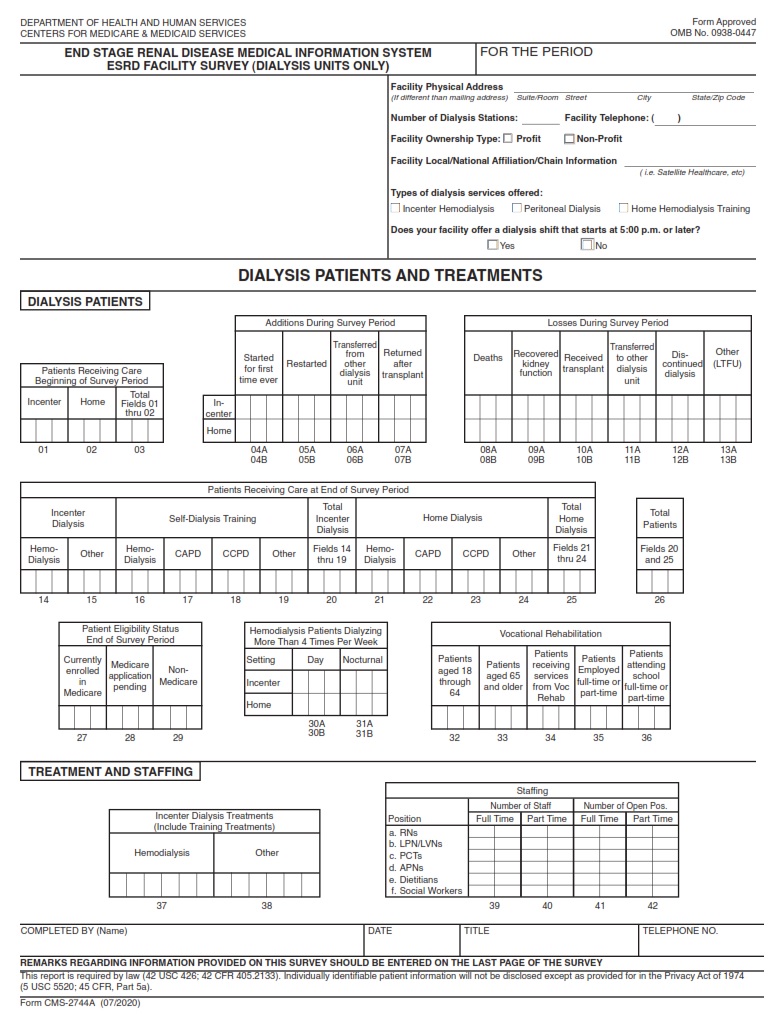
    CMS 2744A – ESRD FACILITY SURVEY (DIALYSIS UNIT ONLY)

    CMSFORM.ORGCMS 2744A – ESRD FACILITY SURVEY (DIALYSIS UNIT ONLY) – Picture this: a bustling dialysis unit, filled with the steady hum of machines and the quiet determination of healthcare professionals. Behind the scenes, a crucial survey is taking place – one that holds the key to ensuring high-quality care for those battling End-Stage Renal Disease (ESRD). Welcome to CMS 2744A, a comprehensive evaluation tool designed specifically for ESRD facilities. In this article, we will delve into the intricacies of this survey process and uncover its significance in maintaining standards of excellence within dialysis units across the country. From patient safety protocols to staff training requirements, join us on a journey through the inner workings of ESRD facility surveys and discover how they play a vital role in shaping the future of kidney care.

    Download CMS 2744A – ESRD FACILITY SURVEY (DIALYSIS UNIT ONLY)

    [su_table responsive=”yes”]

    Form Number CMS 2744A
    Form Title ESRD FACILITY SURVEY (DIALYSIS UNIT ONLY)
    Published 2020-07-01
    O.M.B. 0938-0447
    File Size 663 KB

    [/su_table]

    [su_button url=”https://cmsforms.org/wp-content/uploads/2024/12/CMS-2744A-ESRD-FACILITY-SURVEY-DIALYSIS-UNIT-ONLY.pdf” target=”blank” background=”#8ec54f” size=”7″ center=”yes” icon=”icon: file-pdf-o” title=”Download CMS 2744A”]Download CMS 2744A [.PDF][/su_button]

    What is a CMS 2744A?

    The CMS 2744A form, specifically designed for End Stage Renal Disease (ESRD) facilities, serves as a vital tool for maintaining high standards of care in dialysis units. This survey instrument essentially acts as a blueprint for ESRD facility operators to assess and document the quality of services provided to patients undergoing dialysis treatment. Through meticulous data collection and analysis, the CMS 2744A fosters transparency and accountability within the healthcare system while ensuring compliance with regulatory guidelines. By enabling regular evaluations of key performance indicators, this form plays a crucial role in promoting continuous improvement and enhancing overall patient outcomes in dialysis settings.

    Furthermore, the comprehensive nature of the CMS 2744A facilitates an in-depth evaluation of various aspects crucial to delivering exceptional care in ESRD facilities. From infection control protocols to staff training procedures and patient satisfaction measures, this survey encompasses a wide range of factors that directly impact the quality of dialysis services offered. By highlighting areas for enhancement and recognizing best practices, the CMS 2744A empowers healthcare providers to adapt their approaches effectively and tailor interventions that address specific needs within their dialysis units. Ultimately, this form not only serves as a regulatory requirement but also as a dynamic tool that drives innovation and fosters excellence in ESRD care delivery.

    Where Can I Find a CMS 2744A?

    One reliable place to find the CMS 2744A form is on the official website of the Centers for Medicare & Medicaid Services (CMS). Their online forms library includes various survey forms, including the CMS 2744A for ESRD facility surveys. Additionally, you can also contact your regional CMS office to inquire about obtaining a copy of the form or guidance on completing it accurately.

    Another option is to reach out to dialysis facility associations or organizations such as the National Kidney Foundation for assistance in locating the CMS 2744A form. These groups often provide resources and support for healthcare facilities dealing with ESRD patients and can point you in the right direction for accessing necessary survey documents. Remember to ensure that you have all relevant information and documentation ready when seeking out this crucial form.

    CMS 2744A – ESRD FACILITY SURVEY (DIALYSIS UNIT ONLY)

    CMS-2744A, the ESRD Facility Survey for Dialysis Units, plays a critical role in ensuring the quality of care provided to patients with end-stage renal disease. This survey serves as a comprehensive evaluation tool that assesses various aspects of dialysis facilities, including patient care practices, infection control protocols, staff training, and facility maintenance. By conducting these surveys regularly, CMS aims to uphold high standards of quality and safety within dialysis units across the country.

    One key focus of the CMS-2744A survey is the assessment of infection prevention and control measures within dialysis units. Given that ESRD patients are particularly vulnerable to infections due to their weakened immune systems, maintaining strict protocols and monitoring adherence becomes paramount in ensuring patient safety. Through detailed inspections and observations, surveyors evaluate the implementation of hand hygiene procedures, use of personal protective equipment, disinfection practices, and overall cleanliness within the facility.

    Moreover, beyond regulatory compliance requirements, undergoing the CMS-2744A survey can also serve as an opportunity for dialysis units to identify areas for improvement and enhance the overall quality of care delivered to their patients. By proactively engaging with these surveys and addressing any identified deficiencies promptly, facilities can demonstrate their commitment to continuous quality enhancement and ultimately contribute towards better outcomes for individuals undergoing dialysis treatment.

    CMS 2744A Example

    CMS 2744A - Page 1

  • CMS 209 – LABORATORY PERSONNEL REPORT (CLIA)

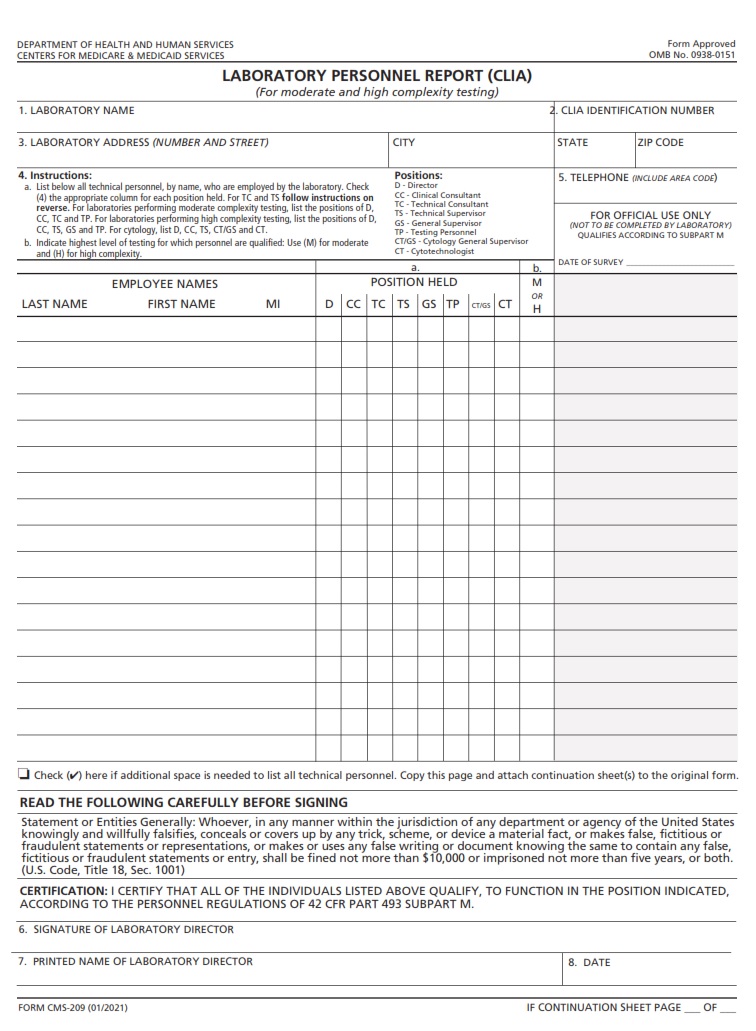
    CMS 209 – LABORATORY PERSONNEL REPORT (CLIA)

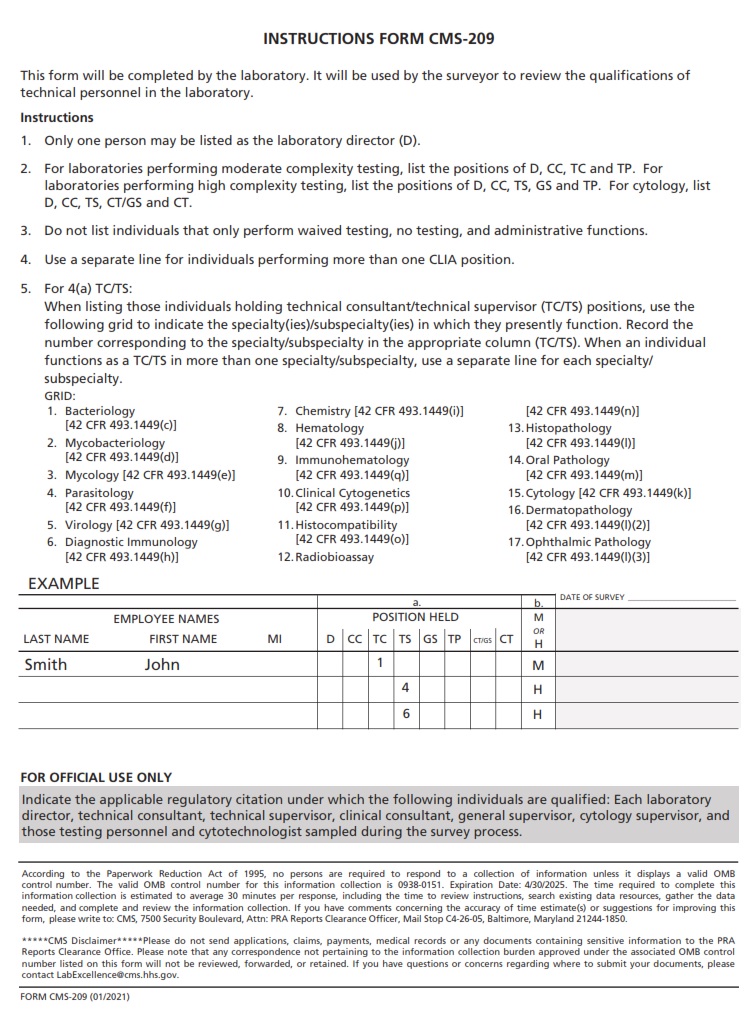
    CMSFORM.ORG CMS 209 – LABORATORY PERSONNEL REPORT (CLIA) – Laboratory personnel play a vital role in the healthcare industry, ensuring accurate and timely test results that inform crucial medical decisions. In the dynamic landscape of clinical laboratories, compliance with regulations is paramount to maintaining quality standards. The Clinical Laboratory Improvement Amendments (CLIA) serve as a cornerstone for ensuring proficiency and competence among laboratory personnel. In this article, we delve into CMS 209 – the Laboratory Personnel Report under CLIA – shedding light on the requirements, significance, and impact on healthcare delivery. Join us as we unravel the intricate web of regulations governing laboratory personnel and explore how adherence to CLIA guidelines shapes the future of diagnostic testing.

    Download CMS 209 – LABORATORY PERSONNEL REPORT (CLIA)

    [su_table responsive=”yes”]

    Form Number CMS 209
    Form Title LABORATORY PERSONNEL REPORT (CLIA)
    Published 2021-01-01
    O.M.B. 938-0151
    File Size 187 KB

    [/su_table]

    [su_button url=”https://cmsforms.org/wp-content/uploads/2023/05/CMS-209-LABORATORY-PERSONNEL-REPORT-CLIA.pdf” target=”blank” background=”#8ec54f” size=”7″ center=”yes” icon=”icon: file-pdf-o” title=”Download CMS 209″]Download CMS 209 [.PDF][/su_button]

    What is a CMS 209?

    CMS 209, also known as the Laboratory Personnel Report under CLIA (Clinical Laboratory Improvement Amendments), plays a crucial role in maintaining the quality and accuracy of lab testing procedures. This reporting requirement ensures that laboratory personnel are properly qualified and trained to perform tests effectively. By documenting information such as education, training, and certification of laboratory staff, CMS 209 helps uphold standards of excellence in healthcare settings.

    Compliance with CMS 209 is essential for laboratories to demonstrate their commitment to patient safety and quality care. Through this reporting mechanism, labs can identify any gaps in personnel qualifications and take proactive steps to address them. Furthermore, by continuously updating and submitting accurate CMS 209 reports, laboratories contribute to the overall improvement of testing practices and promote a culture of excellence within the field of clinical diagnostics.

    Where Can I Find a CMS 209?

    When it comes to finding a CMS 209 form, the first place to look is the Centers for Medicare & Medicaid Services (CMS) website. They provide access to all necessary forms and documentation related to laboratory personnel reporting under the Clinical Laboratory Improvement Amendments (CLIA). Another option is to reach out to your state’s health department or relevant regulatory agency, as they often have resources and information on where to obtain the CMS 209 form.

    For those working in clinical laboratories, it’s crucial to stay updated on CLIA regulations and requirements, including the proper completion and submission of the CMS 209 form. By ensuring compliance with these guidelines, laboratory personnel can contribute to maintaining high standards of quality and safety in healthcare settings. Remember that accurate reporting on the CMS 209 form plays a significant role in demonstrating competence and adherence to regulatory standards within the laboratory environment.

    CMS 209 – LABORATORY PERSONNEL REPORT (CLIA)

    The CMS 209 form, commonly known as the Laboratory Personnel Report under CLIA regulations, plays a crucial role in ensuring the quality and competency of laboratory professionals. By collecting detailed information about laboratory personnel, including their qualifications and job responsibilities, this form helps to maintain standards and uphold the integrity of diagnostic testing processes. Compliance with CLIA regulations is essential for laboratories to provide accurate and reliable test results to ensure patient safety.

    Laboratory personnel are at the forefront of delivering high-quality healthcare services through accurate testing and analysis. The CMS 209 form serves as a tool for monitoring staffing levels, training requirements, and competency assessments within laboratories. This comprehensive approach not only safeguards patient care but also enhances cross-collaboration among healthcare professionals to achieve optimal outcomes in disease diagnosis and management. As technology advances and new challenges arise in the healthcare landscape, maintaining an efficient system for monitoring laboratory personnel becomes increasingly vital in meeting evolving regulatory standards.

    CMS 209 Example

    CMS 209 - Page 1 CMS 209 - Page 2

  • CMS 359 – CORF REPORT FOR CERTIFICATION TO PARTICIPATE IN MEDICARE

    CMS 359 – CORF REPORT FOR CERTIFICATION TO PARTICIPATE IN MEDICARE

    CMSFORM.ORGCMS 359 – CORF REPORT FOR CERTIFICATION TO PARTICIPATE IN MEDICARE – As the healthcare industry continues to evolve, the importance of compliance and certification for Medicare participation cannot be overstated. In the complex landscape of healthcare regulations, one crucial aspect that providers must navigate is the CMS 359 – CORF report. This report serves as a critical tool for facilities seeking certification to participate in Medicare, outlining essential requirements and standards that must be met to ensure quality care delivery.

    Understanding the intricacies of the CMS 359 – CORF report is not only vital for regulatory compliance but also fundamental for maintaining high-quality patient care standards. From detailing staffing requirements to specifying facility policies and procedures, this report delves into every aspect of a facility’s operations with precision and thoroughness. For healthcare providers looking to enter or maintain their presence in the Medicare program, mastering the nuances of this certification process is paramount in ensuring both regulatory adherence and optimal patient outcomes.

    Download CMS 359 – CORF REPORT FOR CERTIFICATION TO PARTICIPATE IN MEDICARE

    [su_table responsive=”yes”]

    Form Number CMS 359
    Form Title CORF REPORT FOR CERTIFICATION TO PARTICIPATE IN MEDICARE
    Published 2021-04-01
    O.M.B. 0938-0267
    File Size 132 KB

    [/su_table]

    [su_button url=”https://cmsforms.org/wp-content/uploads/2023/05/CMS-359-CORF-REPORT-FOR-CERTIFICATION-TO-PARTICIPATE-IN-MEDICARE.pdf” target=”blank” background=”#8ec54f” size=”7″ center=”yes” icon=”icon: file-pdf-o” title=”Download CMS 359″]Download CMS 359 [.PDF][/su_button]

    What is an CMS 359?

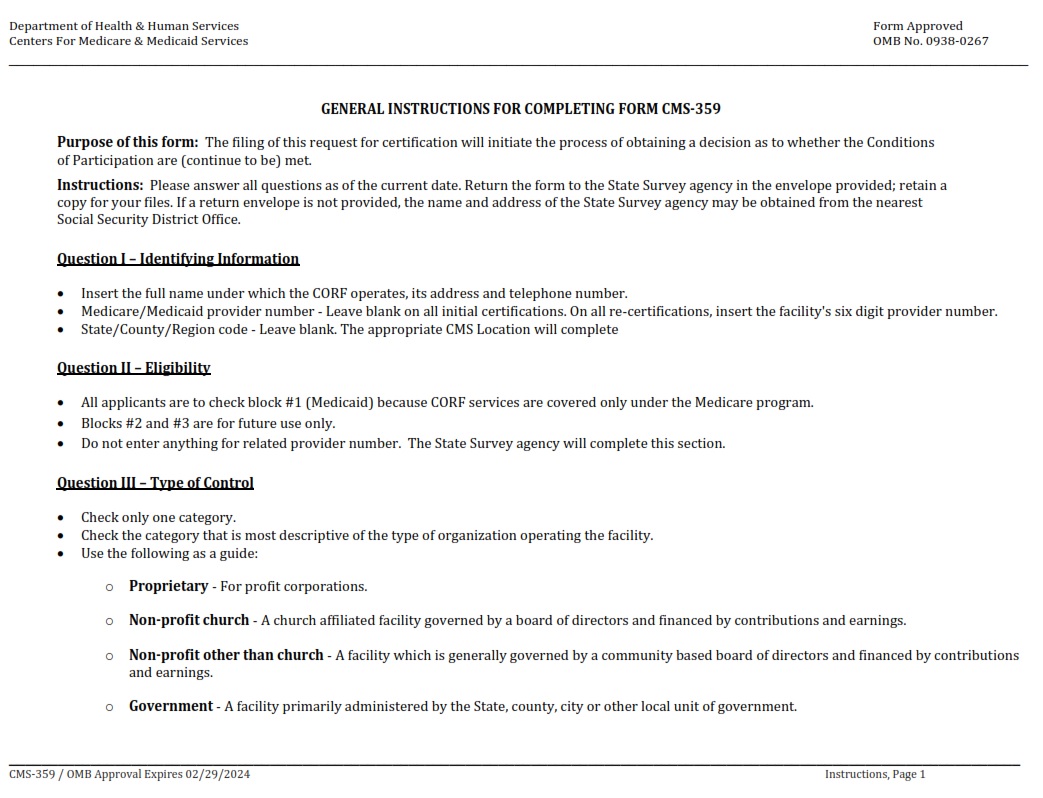
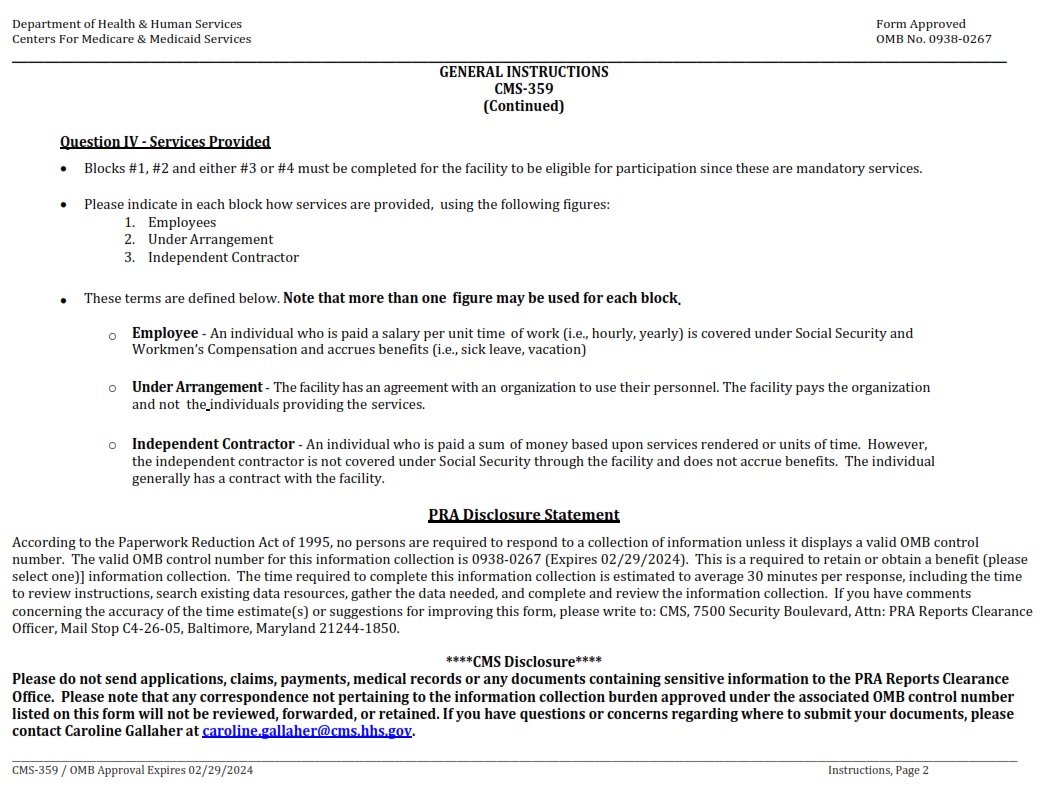
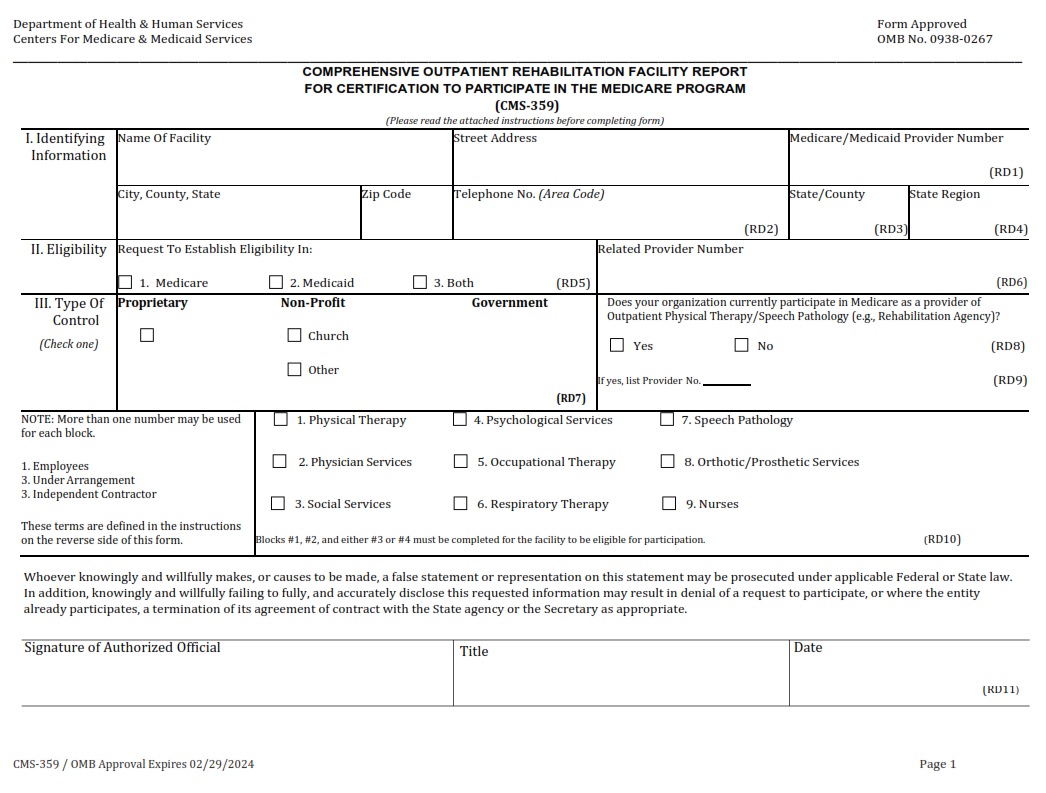
    CMS 359, also known as the CORF Report for Certification to Participate in Medicare, plays a crucial role in the healthcare industry. This form is designed to assess and certify that facilities meet the necessary standards to participate in Medicare programs. It covers various aspects such as patient care protocols, facility management practices, staffing requirements, and compliance with regulations.

    Completing the CMS 359 form requires detailed documentation of policies and procedures, quality assurance measures, and evidence of patient care outcomes. Facilities must demonstrate their commitment to providing high-quality care while adhering to Medicare guidelines. Successfully completing this certification process not only allows facilities to participate in Medicare but also reflects their dedication to maintaining excellence in service delivery within the healthcare sector.

    Where Can I Find an CMS 359?

    Are you on the hunt for a CMS 359 form to obtain certification to participate in Medicare? Look no further than the Centers for Medicare & Medicaid Services (CMS) official website. The CMS 359 form, also known as the CORF Report for Certification, is typically available for download directly from their site. However, make sure to double-check for any updates or revisions that may have been made to the form.

    Alternatively, you can contact your regional CMS office or reach out to your state’s healthcare regulatory agency for assistance with obtaining a copy of the CMS 359 form. These agencies often provide valuable resources and guidance on navigating the certification process. Don’t get discouraged if locating the form seems daunting at first – persistence and reaching out to the right channels will lead you in the right direction towards acquiring the necessary documentation for Medicare participation.

    CMS 359 – CORF REPORT FOR CERTIFICATION TO PARTICIPATE IN MEDICARE

    So, you’ve navigated the complex world of healthcare and now find yourself facing the hurdle of CMS 359 – CORF Report for Certification to Participate in Medicare. This critical step towards Medicare certification can seem daunting, but with a strategic approach and attention to detail, you can successfully complete this process. The key lies in thorough documentation of your facility’s compliance with all Medicare regulations and guidelines, showcasing your commitment to providing high-quality care to patients.

    As you dive into the intricacies of CMS 359, consider it as an opportunity to strengthen your facility’s operations and enhance patient outcomes. While the paperwork may feel overwhelming at times, view it as a chance to showcase your dedication to delivering top-notch care and ensuring compliance with Medicare standards. By approaching the CORF Report for Certification with diligence and precision, you demonstrate your readiness to participate in the Medicare program and serve as a trusted healthcare provider in your community.

    CMS 359 Example

    CMS 359 - Page 1 CMS 359 - Page 2 CMS 359 - Page 3