Author: Bismillah

  • CMS 484 – CERTIFICATE OF MEDICAL NECESSITY – Oxygen DME 484.5

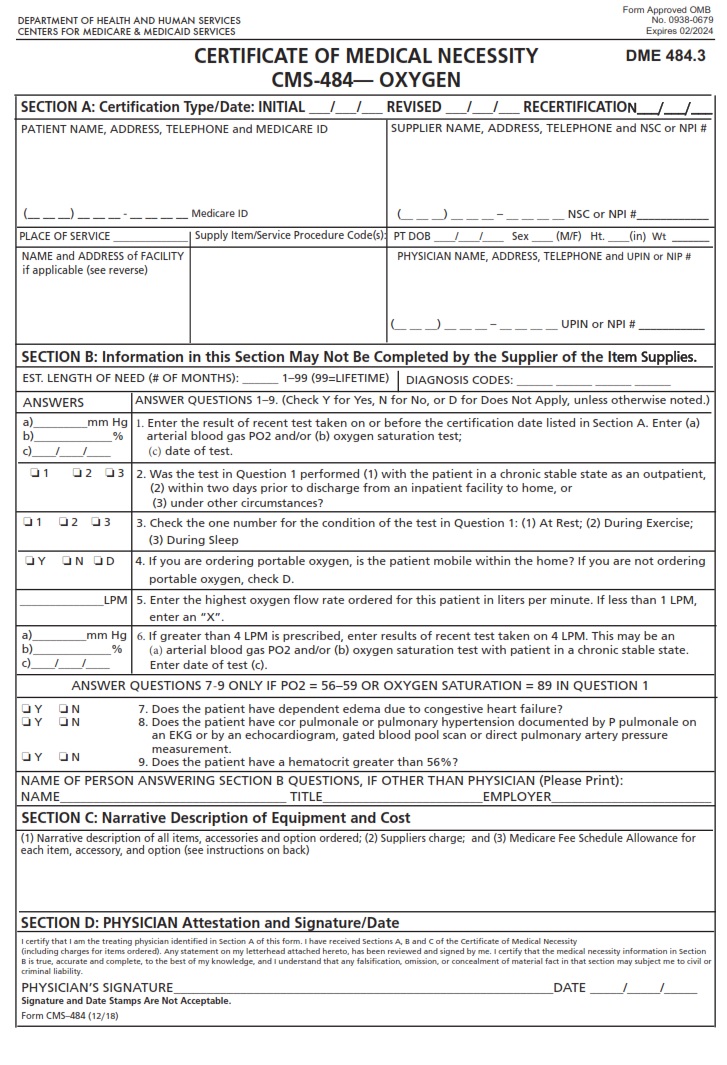
    CMS 484 – CERTIFICATE OF MEDICAL NECESSITY – Oxygen DME 484.5

    CMSFORM.ORGCMS 484 – CERTIFICATE OF MEDICAL NECESSITY – Oxygen DME 484.5 – In the intricate landscape of healthcare administration, one form holds a pivotal role in ensuring patients receive essential medical equipment: the CMS 484 Certificate of Medical Necessity for Oxygen Durable Medical Equipment (DME) 484.5. While it may seem like just another bureaucratic requirement, this seemingly mundane document has the power to make a profound impact on the lives of individuals dependent on oxygen therapy. From chronic respiratory conditions to post-operative recovery, the CMS 484 serves as a gateway between patients and crucial oxygen supplies, safeguarding their access to life-sustaining treatment. Join us on a journey through the intricacies of medical necessity assessment and discover how this seemingly simple form plays a vital role in advocating for patient well-being and quality care.

    Download CMS 484 – CERTIFICATE OF MEDICAL NECESSITY – Oxygen DME 484.5

    [su_table responsive=”yes”]

    Form Number CMS 484
    Form Title CERTIFICATE OF MEDICAL NECESSITY – Oxygen DME 484.5
    Published 2017-02-01
    O.M.B. 0938-0534
    File Size 3 MB

    [/su_table]

    [download id=’1593′]

    What is a CMS 484?

    A CMS 484, also known as a Certificate of Medical Necessity (CMN) for Oxygen Durable Medical Equipment (DME) 484.5, is a crucial document in the healthcare industry. It serves as a prescription from a licensed physician that justifies the medical need for oxygen-related equipment such as tanks or concentrators. This certificate helps ensure proper reimbursement for necessary medical supplies and equipment by demonstrating the clinical necessity to insurance providers and government agencies.

    Obtaining a CMS 484 involves detailed documentation of the patient’s condition, medical history, and treatment plan to support the request for oxygen therapy. Healthcare providers must accurately complete this form and update it regularly to reflect changes in the patient’s health status or treatment needs. Compliance with CMS guidelines is essential in securing approval for DME coverage and ensuring that patients receive adequate care tailored to their specific medical requirements.

    Where Can I Find a CMS 484?

    If you’re on the quest for a CMS 484 form to facilitate your Oxygen DME 484.5 needs, here’s where you can uncover this vital document. Firstly, dive into the realm of online resources; platforms like the Centers for Medicare & Medicaid Services website can be a goldmine for locating precise forms like the CMS 484. Secondly, collaborating with your healthcare provider or DME supplier can prove beneficial; they are well-versed in navigating these administrative waters and might streamline the process for you seamlessly. Lastly, don’t overlook personalized assistance from your local Medicare office or support services that specialize in medical documentation – they could offer crucial guidance tailored to your specific requirements.

    Remember, accessing a CMS 484 is pivotal in ensuring the smooth provision of oxygen Durable Medical Equipment (DME) 484.5 and any associated healthcare needs. By leveraging diversified approaches mentioned above and embracing technology advancements, securing this certificate becomes not just a mundane task but a gateway to streamlined care arrangements and efficient service delivery.

    CMS 484 – CERTIFICATE OF MEDICAL NECESSITY – Oxygen DME 484.5

    A Certificate of Medical Necessity (CMS 484) is a crucial document in the world of durable medical equipment (DME), especially when it comes to oxygen therapy. For patients requiring oxygen DME, this certificate serves as a key tool for healthcare providers to justify the need for such equipment. It outlines specific details about the patient’s condition, treatment plan, and why oxygen therapy is necessary for their well-being.

    In the realm of DME 484.5, focusing on oxygen-related items, the importance of accuracy and thoroughness in completing the CMS 484 cannot be overstated. Healthcare providers must ensure that all relevant information is included to support the medical necessity of oxygen equipment. This includes documenting specific diagnoses, clinical findings, and treatment goals to meet regulatory requirements and facilitate timely processing of claims by insurance providers.

    By understanding the significance and intricacies of CMS 484 – Certificate of Medical Necessity for Oxygen DME 484.5, healthcare professionals can streamline processes and improve patient outcomes in oxygen therapy management. Proper documentation not only enhances communication between healthcare teams but also ensures that patients receive appropriate care tailored to their unique needs. Ultimately, adherence to these guidelines leads to better coordination of services and paves the way for more efficient delivery of vital medical equipment like oxygen DME.

    CMS 484 Example
    CMS 484

  • CMS 10126 – DME Information Form – Enteral and Parenteral Nutrition DME 10.03

    CMS 10126 – DME Information Form – Enteral and Parenteral Nutrition DME 10.03

    CMSFORM.ORGCMS 10126 – DME Information Form – Enteral and Parenteral Nutrition DME 10.03 – As we navigate the intricate world of healthcare and medical equipment, one crucial aspect that often goes unnoticed is the pivotal role played by forms like CMS 10126 – DME Information Form. In particular, when it comes to Enteral and Parenteral Nutrition Durable Medical Equipment (DME) 10.03, this form serves as a vital link between patients, healthcare providers, and insurers. By delving into the intricacies of this form, we unravel a web of information critical for ensuring seamless access to life-sustaining nutrition support.

    From deciphering complex terminology to understanding the nuanced requirements for coverage approval, this article aims to demystify CMS 10126 – DME Information Form related to Enteral and Parenteral Nutrition DME 10.03. Join us on this enlightening journey as we explore how these seemingly mundane forms hold the power to transform lives and streamline healthcare processes with precision and efficiency.

    Download CMS 10126 – DME Information Form – Enteral and Parenteral Nutrition DME 10.03

    [su_table responsive=”yes”]

    Form Number CMS 10126
    Form Title DME Information Form – Enteral and Parenteral Nutrition DME 10.03
    Published 2017-02-01
    O.M.B. 0938-0679
    File Size 119 KB

    [/su_table]

    [download id=’1594′]

    What is a CMS 10126?

    A CMS 10126 form, specifically designed for Durable Medical Equipment (DME) suppliers, plays a crucial role in streamlining the documentation process for enteral and parenteral nutrition needs. This form serves as a comprehensive information guide that ensures accurate billing and efficient delivery of necessary medical equipment to patients requiring specialized nutritional support. By providing detailed information such as patient demographics, physician orders, and specific nutritional requirements, the CMS 10126 form acts as a vital communication tool between healthcare providers and DME suppliers.

    Moreover, the utilization of the CMS 10126 form enhances coordination among healthcare team members involved in managing enteral and parenteral nutrition therapy. This standardized form helps facilitate seamless communication regarding patient care plans and ensures that all parties are aligned on the necessary equipment and supplies required for optimal patient outcomes. With clear guidelines outlined in the form, healthcare professionals can collaborate effectively to address individual patient needs while adhering to regulatory standards set forth by Medicare and other insurance providers.

    In conclusion, understanding the significance of the CMS 10126 form is essential for healthcare organizations striving to deliver high-quality enteral and parenteral nutrition services efficiently. By leveraging this standardized document effectively, providers can streamline their administrative processes, improve communication across multidisciplinary teams, and ultimately enhance patient care experiences within the realm of DME supply management. It is through such streamlined approaches that healthcare facilities can optimize resource utilization while prioritizing patient well-being in specialized nutritional support interventions.

    Where Can I Find a CMS 10126?

    If you are in search of a CMS 10126 form for DME information on Enteral and Parenteral Nutrition, there are several ways to obtain it. One option is to visit the official CMS website where you can download the form directly. Additionally, healthcare providers and DME suppliers may also have physical copies of the form available for patients in need.

    Another avenue to explore is contacting your healthcare provider’s office or medical facility directly to inquire about obtaining a copy of the CMS 10126 form. They may be able to provide you with the necessary information or direct you on how to access the form online. Remember that having accurate and complete documentation is crucial when dealing with enteral and parenteral nutrition DME, so make sure to follow up diligently in obtaining the required forms for proper care management.

    CMS 10126 – DME Information Form – Enteral and Parenteral Nutrition DME 10.03

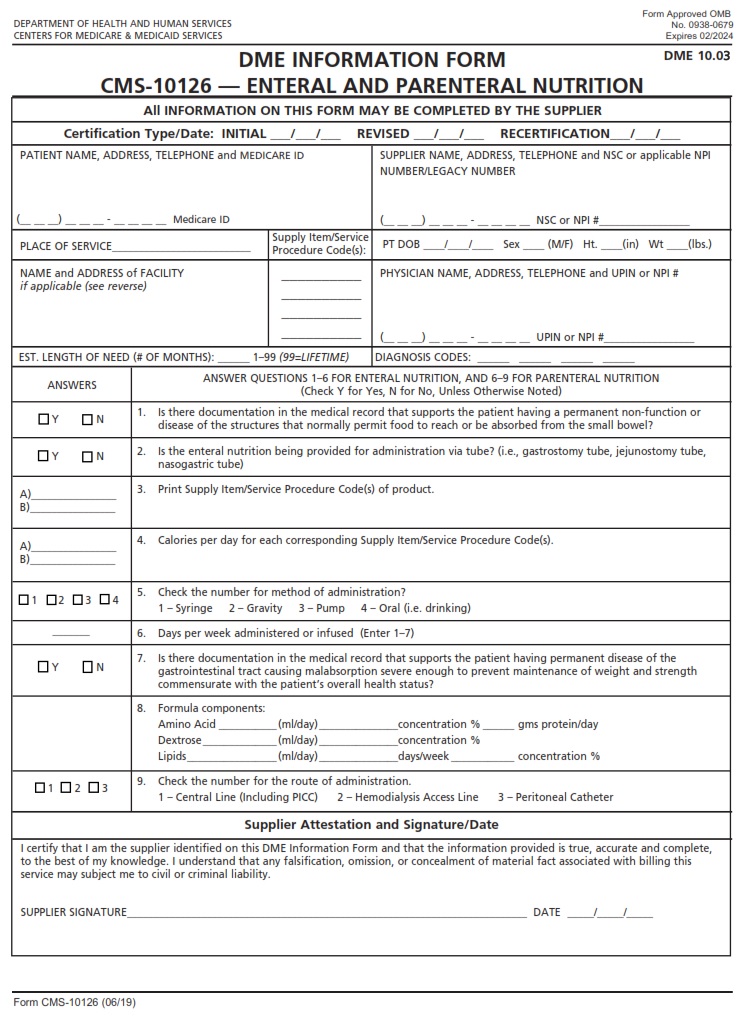
    When it comes to managing patient care effectively, the CMS 10126 – DME Information Form for Enteral and Parenteral Nutrition DME 10.03 plays a crucial role. This form serves as a vital tool in ensuring that patients receive the necessary supplies and equipment for enteral and parenteral nutrition therapies. By accurately documenting the specific DME needs of each patient, healthcare providers can streamline the ordering process, reduce errors, and improve overall patient outcomes.

    The CMS 10126 form is designed to capture detailed information about the type of nutrition therapy required, such as enteral feeding tubes or parenteral infusions. It also includes essential details about dosages, frequency of administration, and any special instructions pertaining to the DME items needed. This level of specificity helps healthcare professionals tailor treatment plans to meet individual patient needs while also facilitating communication between care teams to ensure coordinated and comprehensive care delivery. Overall, by emphasizing accurate completion and utilization of this form, healthcare providers can enhance efficiency, quality of care, and ultimately improve patient well-being in the realm of enteral and parenteral nutrition management.

    CMS 10126 Example

    CMS 10126

  • CMS 10125 – DME Information Form – External Infusion Pumps DME 09.03

    CMS 10125 – DME Information Form – External Infusion Pumps DME 09.03

    CMSFORM.ORGCMS 10125 – DME Information Form – External Infusion Pumps DME 09.03 – In the fast-paced world of healthcare, staying informed about the latest regulations and forms is crucial for providing top-notch patient care. Among the myriad of documents that clinicians encounter, one form stands out as a vital tool in managing external infusion pumps: CMS 10125 – DME Information Form. This seemingly mundane document holds the key to ensuring seamless delivery of durable medical equipment (DME) like infusion pumps to patients in need. In this article, we delve into the intricacies of CMS 10125, exploring its significance in the realm of healthcare and shedding light on how it impacts the utilization of external infusion pumps within medical settings. Strap in as we navigate through this essential piece of paperwork and uncover its role in enhancing patient outcomes and streamlining treatment processes.

    Download CMS 10125 – DME Information Form – External Infusion Pumps DME 09.03

    [su_table responsive=”yes”]

    Form Number CMS 10125
    Form Title DME Information Form – External Infusion Pumps DME 09.03
    Published 2017-02-01
    O.M.B. 0938-0679
    File Size 88 KB

    [/su_table]

    [download id=’1595′]

    What is a CMS 10125?

    A CMS 10125, also known as the DME Information Form for External Infusion Pumps DME 09.03, plays a crucial role in the healthcare industry by capturing essential details related to external infusion pumps and durable medical equipment (DME). This form serves as a standardized format for documenting information about the patient, prescriber, supplier, and specific details of the prescribed equipment. By ensuring accurate and complete data collection through this form, healthcare providers can streamline reimbursement processes and enhance patient care.

    CMS 10125 aids in maintaining consistency and regulatory compliance across different healthcare settings by providing a structured framework for documenting key information about external infusion pumps. Through this form, healthcare professionals can effectively communicate necessary details regarding the utilization of DME to facilitate proper billing procedures and ensure that patients receive appropriate care. Overall, understanding the significance of CMS 10125 is essential for healthcare practitioners to successfully navigate the complexities of managing external infusion pumps within their practice.

    Where Can I Find a CMS 10125?

    Finding a CMS 10125 form can feel like searching for a needle in a haystack, but fear not, as there are various avenues you can explore to obtain this essential document. One place to start is by contacting your healthcare provider or local durable medical equipment (DME) supplier, as they often have access to these forms and can provide guidance on how to fill them out correctly. Additionally, many online resources such as the CMS website or reputable medical supply companies offer downloadable versions of the CMS 10125 form for easy access. Remember that accuracy is key when completing this form, so take the time to verify all information before submission.

    If you prefer a more personalized approach, consider reaching out to patient advocacy organizations or support groups related to DME services for assistance in locating a CMS 10125 form. These groups may have experience navigating the complex healthcare system and can offer valuable insights on obtaining and completing the necessary paperwork. Another helpful tip is to check with your insurance provider, as they may have specific protocols or preferred methods for acquiring and submitting the CMS 10125 form. By being proactive and diligent in your search efforts, you can ensure that you have the required documentation for external infusion pumps DME 09.03 without unnecessary delays or complications.

    CMS 10125 – DME Information Form – External Infusion Pumps DME 09.03

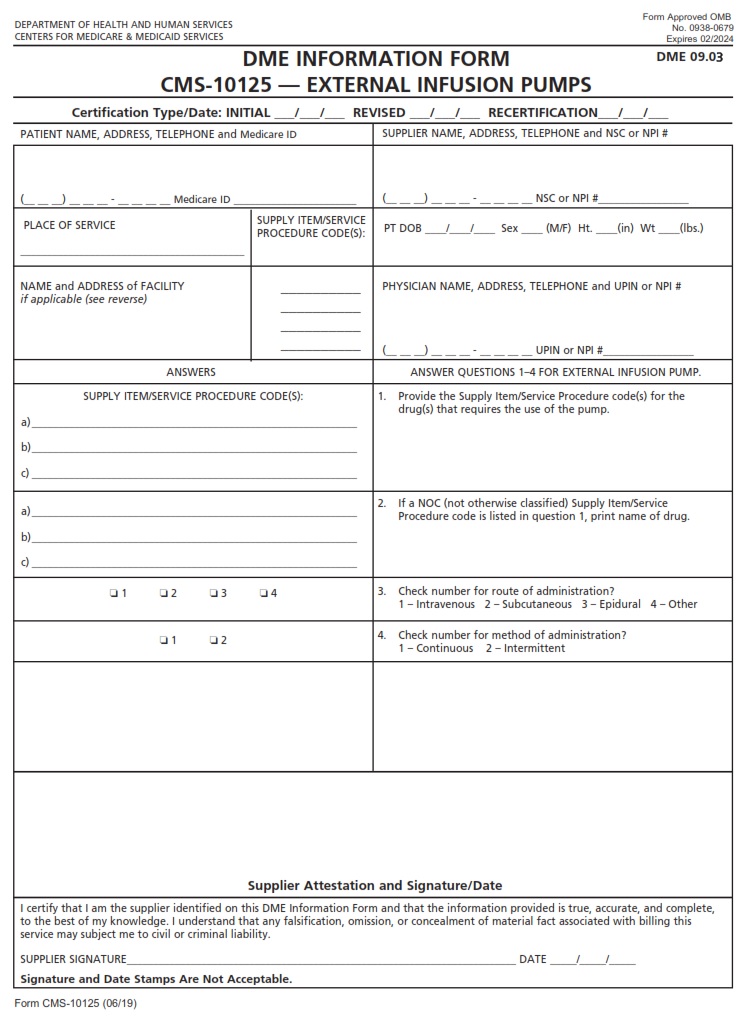
    In the world of healthcare, the CMS 10125 – DME Information Form is a crucial document when it comes to External Infusion Pumps. These devices play a significant role in providing patients with accurate and controlled medication delivery outside of traditional healthcare settings. The meticulous completion of the DME 09.03 form ensures that patients receive the necessary equipment and services for their infusion therapy needs.

    When dealing with External Infusion Pumps, healthcare providers must pay attention to the details outlined in the CMS 10125 form to guarantee optimal patient care. From verifying patient information to documenting medical necessity, every aspect of this process is essential for ensuring seamless treatment delivery. Understanding how these forms interact with DME guidelines can streamline operations and ensure timely access to critical medical equipment for patients relying on External Infusion Pumps for their health management.

    By staying informed about the intricacies of the CMS 10125 – DME Information Form as it pertains to External Infusion Pumps, healthcare professionals can uphold standards of quality care and contribute significantly towards enhancing patient outcomes in infusion therapy settings. This intersection between paperwork and patient care highlights the importance of precision in administrative processes within modern healthcare systems, emphasizing that even seemingly minor details like completing a form correctly can have significant implications for patients’ well-being during their treatment journey.

    CMS 10125 Example

    CMS 10125

  • CMS 854 – Certificate of Medical Necessity – DME 11.02

    CMS 854 – Certificate of Medical Necessity – DME 11.02

    CMSFORM.ORGCMS 854 – Certificate of Medical Necessity – DME 11.02 – In the complex world of healthcare, navigating the intricacies of medical necessity can often feel like deciphering a cryptic code. Enter CMS 854 – Certificate of Medical Necessity – DME 11.02, a vital document that serves as both a lifeline for patients in need of durable medical equipment (DME) and a roadmap for healthcare providers to ensure proper reimbursement. Imagine it as the key that unlocks access to essential tools and devices that can significantly impact the quality of life for individuals facing health challenges.

    As we delve into the realm of CMS 854, we uncover a treasure trove of information crucial for understanding how medical necessity is determined, documented, and communicated within the healthcare system. From wheelchairs to oxygen tanks, this certificate holds the power to transform mere objects into indispensable aids that enhance independence and well-being. Join us on this enlightening journey through the complexities and importance of CMS 854 – where paperwork becomes a powerful advocate for those in need.

    Download CMS 854 – Certificate of Medical Necessity – DME 11.02

    [su_table responsive=”yes”]

    Form Number CMS 854
    Form Title Certificate of Medical Necessity – DME 11.02
    Published 2017-02-02
    O.M.B. 0938-0679
    File Size 128 KB

    [/su_table]

    [download id=’1596′]

    What is a CMS 854?

    A CMS-854, also known as a Certificate of Medical Necessity (CMN), plays a crucial role in the realm of Durable Medical Equipment (DME) reimbursement. This form is typically filled out by healthcare providers to justify the need for specific DME items prescribed to patients. It serves as a key document in ensuring that the equipment is both medically necessary and meets all regulatory requirements.

    The CMS-854 enables healthcare providers to provide detailed information about their patients’ medical conditions and how the prescribed equipment will address these needs. By accurately completing this form, providers can support their claims for reimbursement from insurance companies and governmental payers. Understanding the significance of a properly completed CMS-854 is vital for healthcare professionals to navigate the complexities of DME reimbursement processes effectively.

    Where Can I Find a CMS 854?

    When it comes to finding a CMS 854 form for your medical necessity needs, there are a few key places you can look. One of the most convenient options is to visit the official Centers for Medicare & Medicaid Services (CMS) website, where you can download and print the form directly. Additionally, many Durable Medical Equipment (DME) suppliers and healthcare providers may have physical copies of the form available in their offices or online portals.

    For those looking for more personalized assistance in filling out the CMS 854 form, reaching out to your healthcare provider or Medicare representative can be incredibly helpful. They can provide guidance on completing the form accurately and ensuring that all necessary information is included. Remember, having a thorough understanding of the requirements outlined in the CMS 854 is essential in securing coverage for your DME needs.

    CMS 854 – Certificate of Medical Necessity – DME 11.02

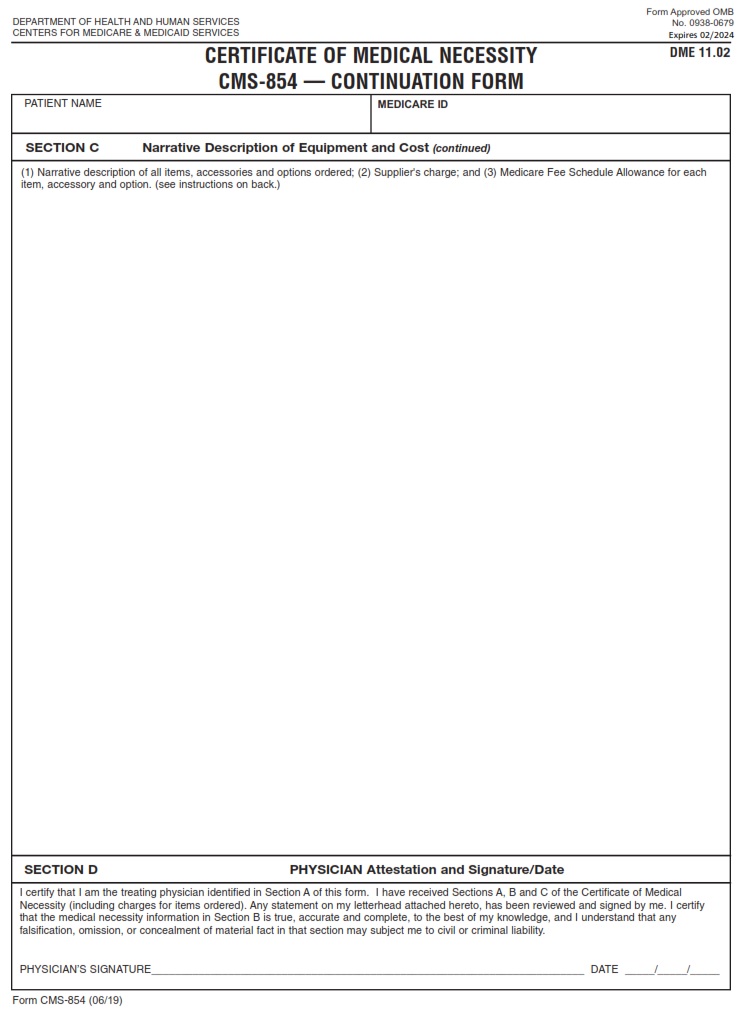
    Understanding the complexities of CMS 854 – Certificate of Medical Necessity for DME 11.02 is crucial for healthcare providers and patients alike. This form serves as a critical document in the process of obtaining durable medical equipment (DME) prescribed by healthcare professionals to ensure that these items are medically necessary for the patient’s condition. By detailing specific information such as the patient’s diagnosis, functional limitations, and relevant treatment plans, CMS 854 plays a central role in justifying the need for DME.

    Moreover, completing CMS 854 accurately requires meticulous attention to detail and an in-depth understanding of both clinical requirements and Medicare guidelines. Healthcare providers must carefully assess each patient’s unique needs to determine the appropriate type and quantity of DME while adhering to strict documentation standards outlined by CMS. Additionally, ensuring compliance with regulatory changes and staying updated on evolving policies is essential to avoid delays or denials in reimbursement claims related to DME prescribed under CMS 854.

    CMS 854 Example

    CMS 854

  • CMS 20017 – ADVISORY PANEL ON HOSPITAL OUTPATIENT PAYMENT

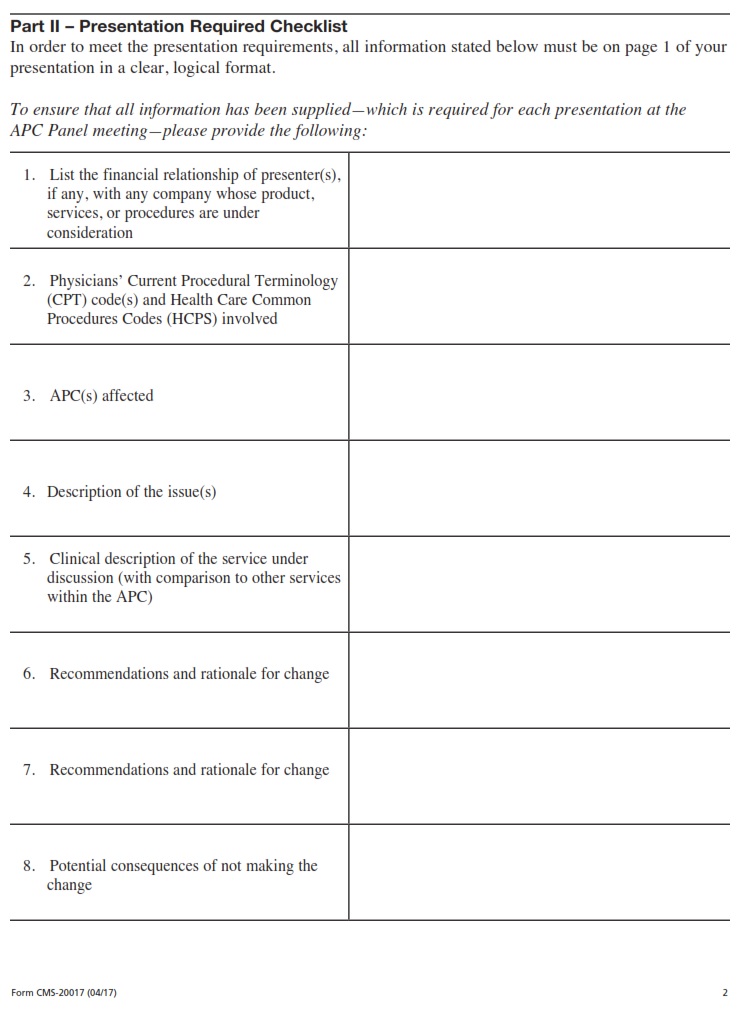
    CMS 20017 – ADVISORY PANEL ON HOSPITAL OUTPATIENT PAYMENT

    CMSFORM.ORGCMS 20017 – ADVISORY PANEL ON HOSPITAL OUTPATIENT PAYMENT – As the healthcare landscape continues to evolve, one crucial aspect that often goes unnoticed but greatly impacts both providers and patients is the system of hospital outpatient payment. The Centers for Medicare & Medicaid Services (CMS) plays a pivotal role in determining the reimbursement rates for services provided in outpatient settings, influencing everything from financial viability of hospitals to access to care for individuals. In the year 2017, CMS established an Advisory Panel dedicated solely to this intricate issue, bringing together experts from various fields to shape policies and recommendations that could potentially revolutionize how outpatient services are reimbursed. Join us on a journey through the complexities and implications of CMS 20017 – Advisory Panel on Hospital Outpatient Payment as we delve into the inner workings of this critical aspect of healthcare financing.

    Download CMS 20017 – ADVISORY PANEL ON HOSPITAL OUTPATIENT PAYMENT

    [su_table responsive=”yes”]

    Form Number CMS 20017
    Form Title ADVISORY PANEL ON HOSPITAL OUTPATIENT PAYMENT
    Published 2017-04-01
    O.M.B.
    File Size 86 KB

    [/su_table]

    [download id=’1597′]

    What is a CMS 20017?

    It’s 20017 and the healthcare landscape is evolving rapidly, with increasing reliance on technology to streamline processes. Enter CMS 20017, a cutting-edge Content Management System (CMS) designed specifically for hospital outpatient payment management. This sophisticated system promises to revolutionize how hospitals handle outpatient payments, offering efficiency and transparency like never before.

    Gone are the days of manual data entry and cumbersome paperwork – CMS 20017 automates processes, reduces errors, and provides real-time insights into outpatient payment trends. With its user-friendly interface and advanced reporting capabilities, hospitals can now navigate the complex world of payment management with ease. In an era where healthcare costs are under scrutiny more than ever, CMS 20017 stands out as a game-changer in optimizing revenue cycles and ensuring financial sustainability for healthcare facilities.

    Where Can I Find a CMS 20017?

    Looking for a CMS 20017? Look no further than the Advisory Panel on Hospital Outpatient Payment. This essential resource provides crucial information and guidelines related to hospital outpatient services, including billing and reimbursement procedures. By accessing the CMS 20017 through this advisory panel, healthcare providers can stay updated on the latest changes in regulations and policies that impact outpatient payments.

    The Advisory Panel on Hospital Outpatient Payment serves as a valuable tool for healthcare organizations looking to streamline their billing processes and ensure compliance with Medicare guidelines. With detailed explanations and insights provided in the CMS 20017 documentation, professionals can navigate the complex landscape of outpatient payment systems more effectively. Accessing this resource gives healthcare providers a competitive edge in managing their financial operations and delivering high-quality care to patients.

    CMS 20017 – ADVISORY PANEL ON HOSPITAL OUTPATIENT PAYMENT

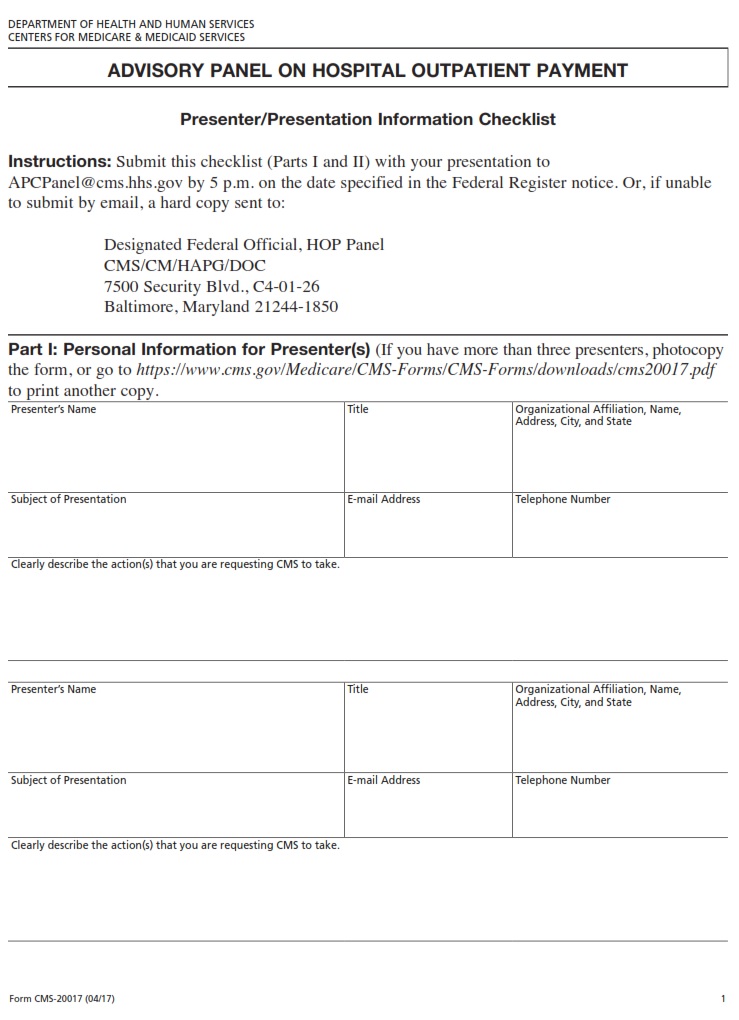
    The CMS 20017 advisory panel on hospital outpatient payment represents a crucial platform for evaluating and enhancing the reimbursement structures in outpatient healthcare settings. This regulatory body plays a pivotal role in ensuring equitable and efficient payment methodologies that align with evolving healthcare needs. Through a comprehensive review process, the panel analyzes various factors contributing to outpatient costs, ultimately influencing policy decisions that impact both providers and patients.

    One key focus of the advisory panel is to explore innovative approaches to balance cost containment with quality care delivery within the outpatient setting. By leveraging data analytics and stakeholder feedback, the panel can identify trends, gaps, and opportunities for optimizing payment models that prioritize value-based care. Moreover, this collaborative effort fosters transparency and accountability in billing practices while promoting a patient-centric approach towards healthcare affordability and accessibility.

    CMS 20017 Example

    CMS 20017 - Page 1 CMS 20017 - Page 2

  • CMS 10198 – Creditable Coverage Disclosure to CMS On-line Form and Instructions

    CMS 10198 – Creditable Coverage Disclosure to CMS On-line Form and Instructions

    CMSFORM.ORGCMS 10198 – Creditable Coverage Disclosure to CMS On-line Form and Instructions – Navigating the intricacies of healthcare compliance can often feel like deciphering a cryptic code, with regulations and forms shrouded in complexity. However, in the realm of creditable coverage disclosure to CMS, there exists a beacon of clarity: CMS 10198. This online form and its accompanying instructions serve as the Rosetta Stone for health insurance providers seeking to communicate crucial information to the Centers for Medicare & Medicaid Services. In an era where transparency and accountability are paramount in the healthcare landscape, understanding how to properly complete this form is not just a task but a strategic imperative for organizations looking to remain compliant and competitive. Join us as we delve into the inner workings of CMS 10198 and uncover the secrets behind creditable coverage disclosure that every industry player should know.

    Download CMS 10198 – Creditable Coverage Disclosure to CMS On-line Form and Instructions

    [su_table responsive=”yes”]

    Form Number CMS 10198
    Form Title Creditable Coverage Disclosure to CMS On-line Form and Instructions
    Published 2017-12-27
    O.M.B. 0938-1013
    File Size 228 KB

    [/su_table]

    [download id=’1598′]

    What is a CMS 10198?

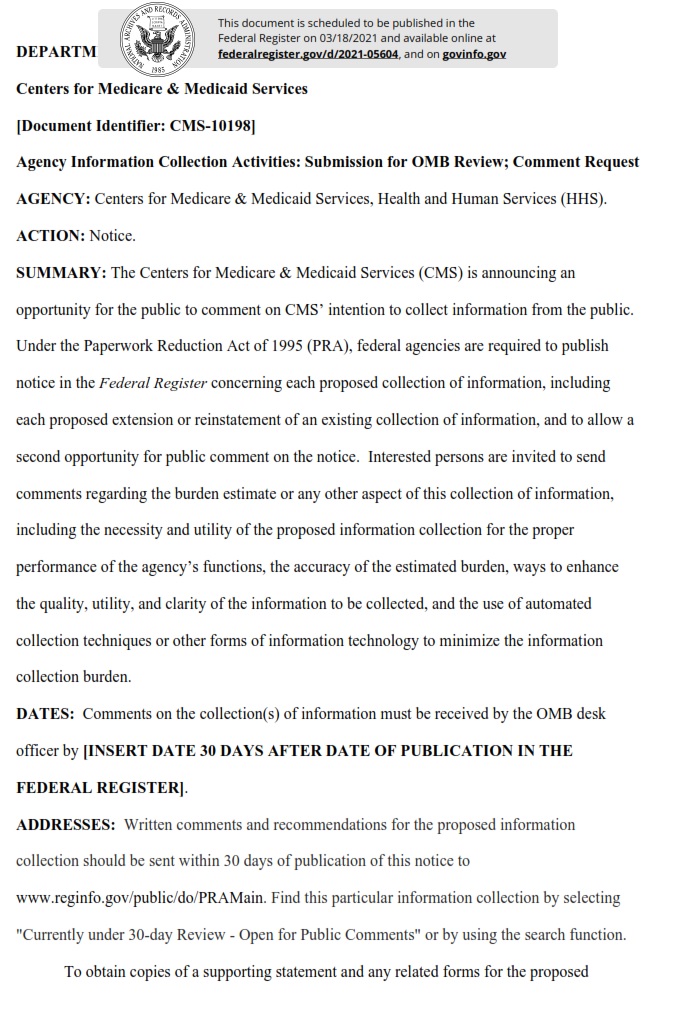
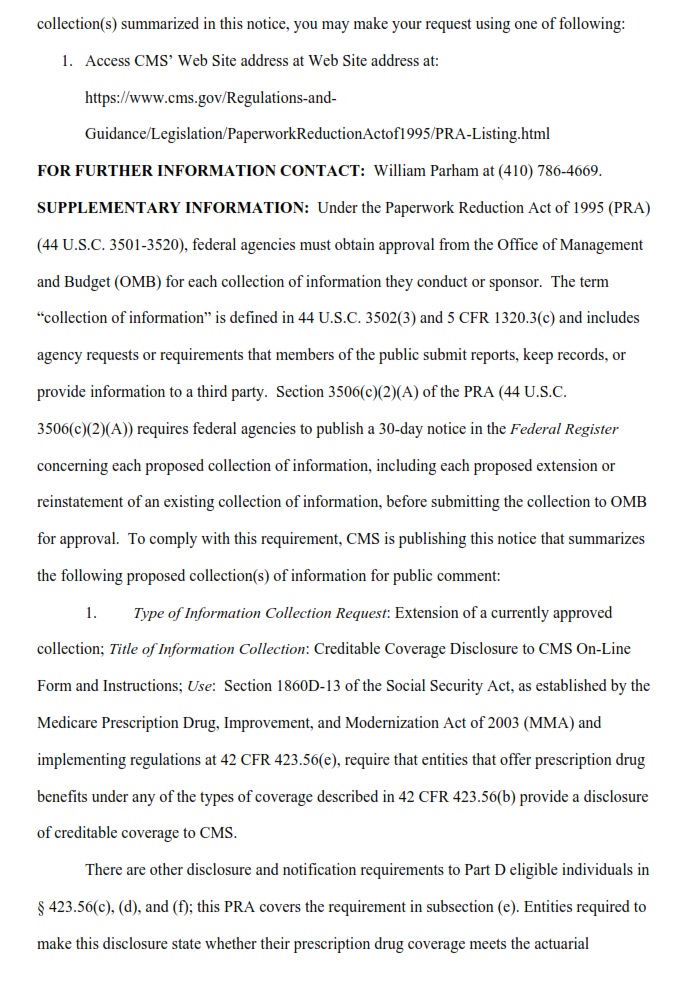
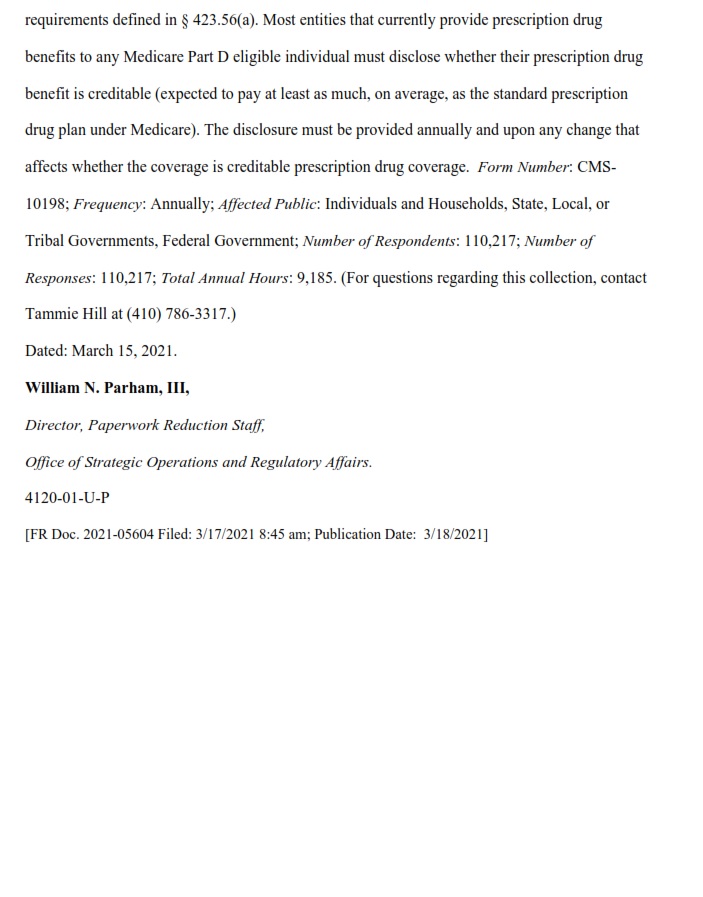
    A CMS 10198 form is a crucial document used to disclose creditable coverage information to the Centers for Medicare & Medicaid Services (CMS). By completing this form accurately, entities can comply with the Medicare Modernization Act requirement of disclosing whether their prescription drug coverage is considered creditable. This information helps Medicare decide individuals’ eligibility for certain benefits based on existing drug coverage.

    Understanding the importance of a CMS 10198 form is essential for employers, insurers, and plan sponsors offering prescription drug coverage. It ensures compliance with federal regulations and provides clarity to CMS regarding the extent of healthcare benefits offered by different entities. By streamlining this disclosure process through online forms and instructions, organizations can efficiently communicate their coverage status while also facilitating timely updates when changes occur in their offerings.

    Where Can I Find a CMS 10198?

    When looking for CMS 10198, it’s essential to start with official channels such as the Centers for Medicare & Medicaid Services (CMS) website. Here, you can find detailed information on the form, its purpose, and instructions for completion. Additionally, reaching out to your healthcare provider or insurance company can yield valuable guidance on obtaining and submitting this form.

    Furthermore, exploring online resources like professional forums and industry blogs can provide insights from individuals who have experience with CMS 10198. Engaging with these communities can offer practical tips and best practices for navigating the creditable coverage disclosure process effectively. Remember that being proactive in your search and leveraging available resources will ultimately lead to a smoother experience when dealing with CMS 10198.

    CMS 10198 – Creditable Coverage Disclosure to CMS On-line Form and Instructions

    When it comes to navigating the intricate landscape of healthcare compliance, understanding the nuances of CMS 10198 – Creditable Coverage Disclosure to CMS On-line Form and Instructions is paramount. This form serves as a pivotal tool for organizations to effectively communicate their prescription drug coverage information to the Centers for Medicare & Medicaid Services (CMS). By ensuring accurate and timely completion of this disclosure form, healthcare entities demonstrate their commitment to transparency and adherence to regulatory standards.

    The detailed instructions accompanying CMS 10198 empower organizations to streamline the process of disclosing creditable coverage information. From outlining key data elements required for submission to providing guidance on formatting and submission methods, these instructions serve as a valuable resource in simplifying an otherwise complex task. With regulatory requirements constantly evolving, staying abreast of updates related to creditable coverage disclosure is essential for healthcare entities seeking compliance excellence in today’s dynamic healthcare environment.

    CMS 10198 Example

    CMS 10198 - Page 1 CMS 10198 - Page 2 CMS 10198 - Page 3

  • CMS 20134 – Medicare Enrollment Application – Medicare Diabetes Prevention Program (MDPP) Suppliers

    CMS 20134 – Medicare Enrollment Application – Medicare Diabetes Prevention Program (MDPP) Suppliers

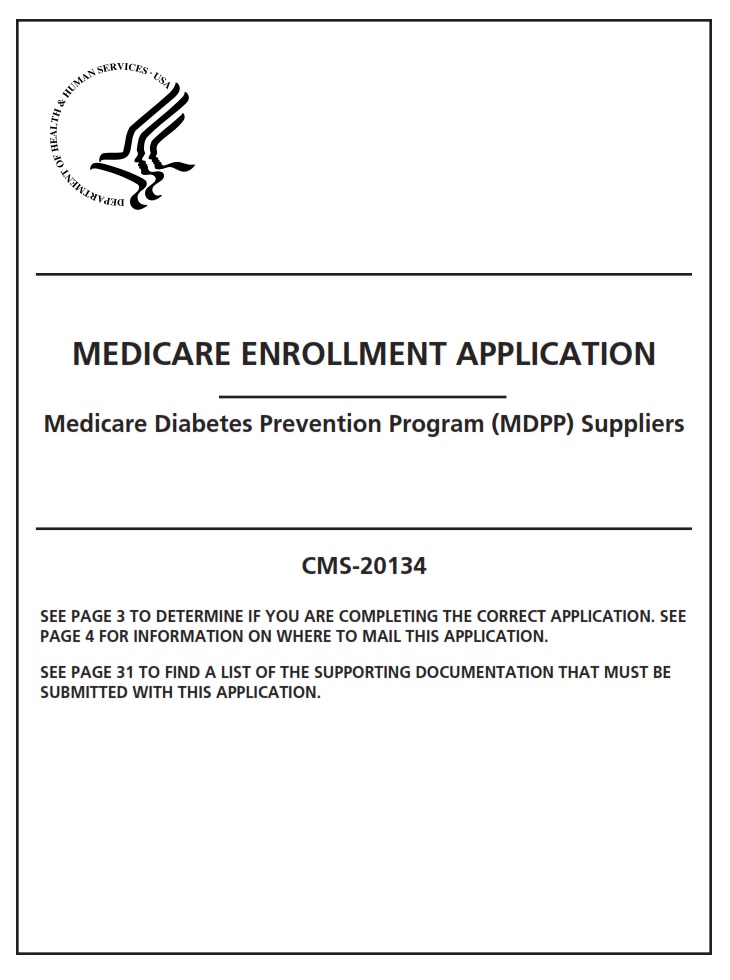
    CMSFORM.ORGCMS 20134 – Medicare Enrollment Application – Medicare Diabetes Prevention Program (MDPP) Suppliers – In the ever-evolving landscape of healthcare, the Medicare Diabetes Prevention Program (MDPP) has emerged as a beacon of hope for individuals at risk of developing this pervasive disease. As CMS 20134 rolls out its Medicare Enrollment Application specifically tailored for MDPP suppliers, the stage is set for a transformative journey towards proactive health management. Imagine a world where prevention takes precedence over treatment, where individuals are empowered with the tools and knowledge to steer clear of diabetes’s clutches before it even sets foot in their lives. This article delves into the intricate nuances of enrolling as an MDPP supplier under CMS 20134, shedding light on how this program is poised to revolutionize the paradigm of diabetes care delivery in our society. Join us as we unravel the potential, challenges, and opportunities that lie ahead in this groundbreaking endeavor towards a healthier future for all.

    Download CMS 20134 – Medicare Enrollment Application – Medicare Diabetes Prevention Program (MDPP) Suppliers

    [su_table responsive=”yes”]

    Form Number CMS 20134
    Form Title Medicare Enrollment Application – Medicare Diabetes Prevention Program (MDPP) Suppliers
    Published 2018-01-01
    O.M.B.
    File Size 696 KB

    [/su_table]

    [download id=’1599′]

    What is a CMS 20134?

    CMS 20134 stands for the Centers for Medicare & Medicaid Services form used specifically for Medicare enrollment applications by suppliers of services and equipment. This form is crucial for healthcare providers looking to participate in programs like the Medicare Diabetes Prevention Program (MDPP) which aims to prevent or delay type 2 diabetes through structured lifestyle change programs.

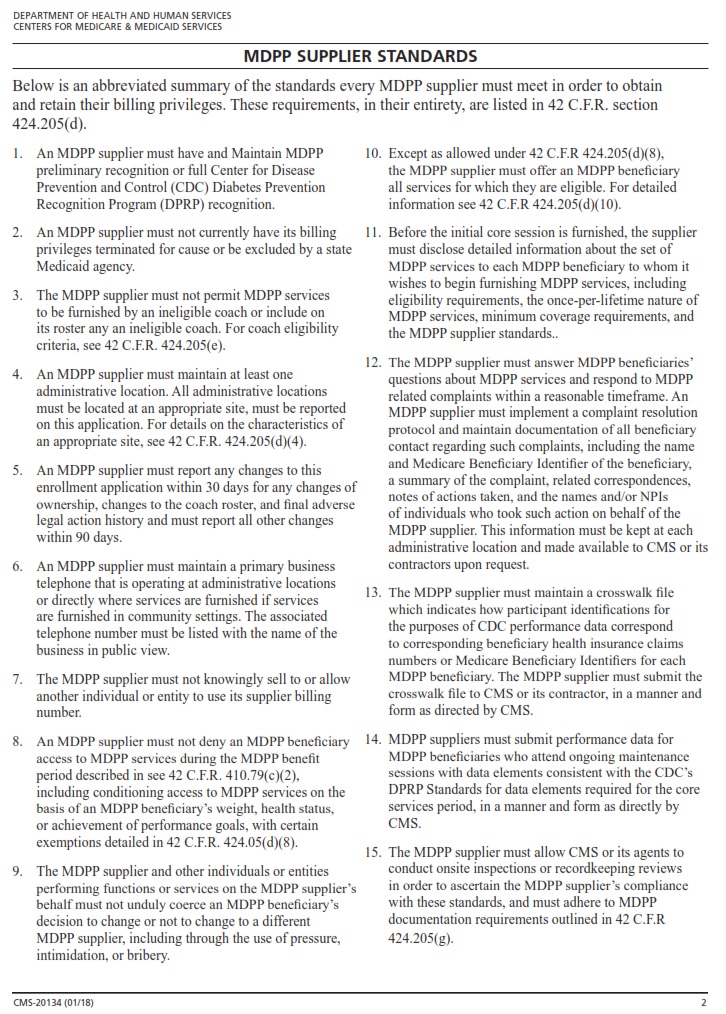
    By completing CMS 20134 accurately and submitting it within the specified timelines, suppliers can ensure they are eligible to provide MDPP services and receive reimbursement from Medicare. The stringent requirements outlined in this application highlight the commitment of CMS to quality care delivery and accountability within the healthcare system. Understanding the nuances of CMS 20134 is vital for providers seeking to support preventative care initiatives and contribute positively towards population health outcomes.

    Where Can I Find a CMS 20134?

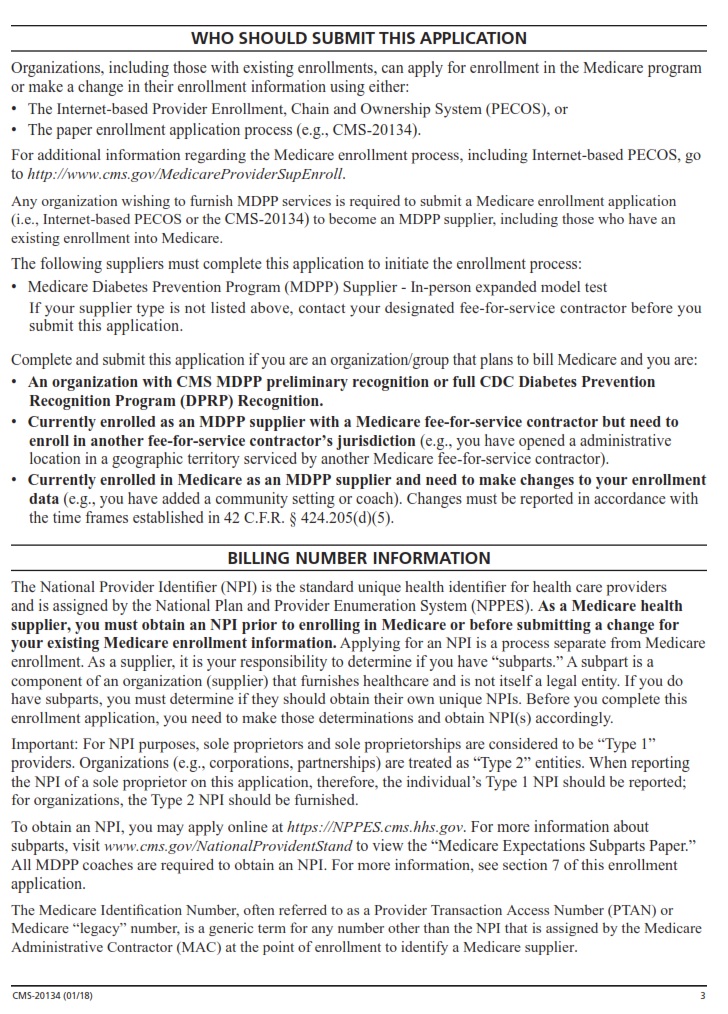
    If you are looking for a CMS 20134 form, you can easily find it on the official Medicare website. The CMS 20134 is specifically designed for suppliers wishing to enroll in the Medicare Diabetes Prevention Program (MDPP). In order to participate in this program, suppliers must complete and submit this application form to CMS for approval.

    One of the key benefits of utilizing a CMS 20134 form is that it streamlines the enrollment process for MDPP suppliers, ensuring that all necessary information is collected efficiently. By providing clear guidance and instructions, the form helps suppliers navigate through the enrollment requirements with ease. So, if you’re ready to join the fight against diabetes and support preventive care efforts, getting your hands on a CMS 20134 form is the first step in making a meaningful impact in healthcare.

    CMS 20134 – Medicare Enrollment Application – Medicare Diabetes Prevention Program (MDPP) Suppliers

    The CMS 20134 Medicare Enrollment Application for Medicare Diabetes Prevention Program (MDPP) Suppliers marks a pivotal step towards improving diabetes management and prevention in the healthcare industry. This application process streamlines the enrollment of suppliers into the MDPP network, facilitating better access to preventive services for patients at risk of developing diabetes. By embracing this program, suppliers are not only expanding their service offerings but also contributing to the overall health and well-being of their communities.

    Participating in the MDPP through the CMS 20134 application signifies a commitment to proactive healthcare that focuses on prevention rather than just treatment. As diabetes continues to be a prevalent chronic condition globally, initiatives like these offer hope for reducing its impact on individuals and society as a whole. The structured enrollment process ensures that suppliers meet essential criteria, including quality standards and adherence to program guidelines, further enhancing the effectiveness and reliability of MDPP services.

    CMS 20134 Example

    CMS 20134 - Page 1 CMS 20134 - Page 2 CMS 20134 - Page 3

  • CMS 2384 – THIRD PARTY PREMIUM BILLING REQUEST, MEDICARE

    CMS 2384 – THIRD PARTY PREMIUM BILLING REQUEST, MEDICARE

    CMSFORM.ORGCMS 2384 – THIRD PARTY PREMIUM BILLING REQUEST, MEDICARE – In the complex world of healthcare billing, where regulations and requirements seem to evolve constantly, navigating the intricacies of third-party premium billing requests can feel like embarking on a daunting journey through uncharted territory. Enter CMS 2384 – a crucial component in the realm of Medicare billing that holds the key to unlocking enhanced payment options for providers. As we delve into the nuances of this process, we will uncover not only the technical aspects but also shed light on how it impacts healthcare organizations and their bottom line. Join us on this exploration as we unravel the mysteries behind third-party premium billing requests and discover how they can shape the landscape of modern healthcare finance.

    Download CMS 2384 – THIRD PARTY PREMIUM BILLING REQUEST, MEDICARE

    Form Number CMS 2384
    Form Title THIRD PARTY PREMIUM BILLING REQUEST, MEDICARE
    Published 2018-03-01
    O.M.B. 0938-0041
    File Size 57 KB

    [/su_table]

    [download id=’1600′]

    What is a CMS 2384?

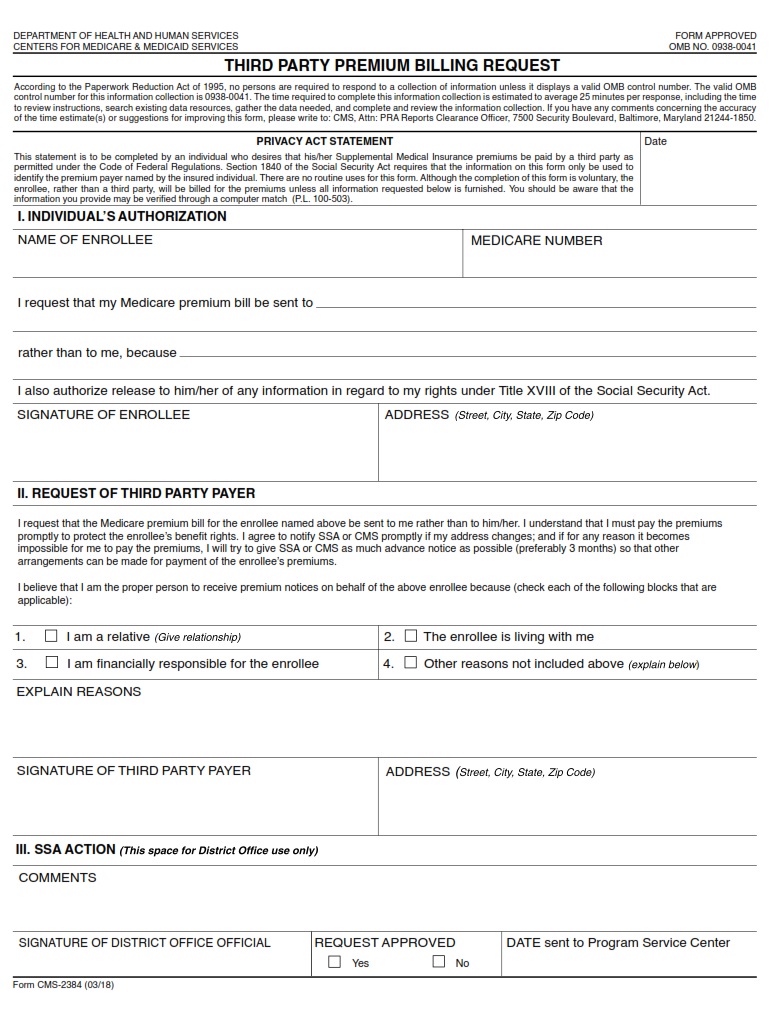
    A CMS 2384 form is an essential tool in the healthcare industry, specifically used for third-party premium billing requests related to Medicare. It streamlines the process of submitting billing information to insurance providers on behalf of patients, ensuring timely payments and reducing administrative burden for healthcare facilities. This form is designed to capture critical details such as patient demographics, insurance coverage information, and billing codes, facilitating efficient communication between providers and payers.

    By utilizing the CMS 2384 form effectively, healthcare providers can enhance their revenue cycle management processes and improve overall financial outcomes. Through accurate completion and submission of this form, providers can expedite reimbursement from insurance companies and minimize potential payment delays or denials. Furthermore, implementing standardized forms like the CMS 2384 ensures consistency in billing practices across different healthcare entities, promoting transparency and accountability in financial transactions within the industry.

    Where Can I Find a CMS 2384?

    If you are looking for a CMS 2384 form for third party premium billing request under Medicare, you can easily find it on the official website of the Centers for Medicare & Medicaid Services (CMS). The form is typically available in the forms section and can be downloaded and printed for use. Additionally, many healthcare provider offices, insurance companies, and medical billing agencies also have copies of this form readily available.

    Another convenient option is to reach out to your local Medicare office or call their customer service hotline to request a copy of the CMS 2384 form. They should be able to guide you on where to obtain the necessary paperwork or may even be able to mail a copy directly to you. Remember that accurate completion of this form is crucial for processing third-party premium billing requests efficiently, so ensure that all required information is filled out correctly before submission.

    CMS 2384 – THIRD PARTY PREMIUM BILLING REQUEST, MEDICARE

    CMS 2384, the Third Party Premium Billing Request form for Medicare, plays a crucial role in streamlining the billing process for healthcare providers and beneficiaries. By allowing third parties to handle premium payments on behalf of Medicare recipients, this form simplifies the payment process and ensures timely coverage. This system not only reduces the burden on beneficiaries but also facilitates efficient management of premiums by eliminating the need for manual payments.

    Furthermore, the use of CMS 2384 reflects a shift towards greater convenience and accessibility in healthcare services. With third-party billing options becoming more prevalent, beneficiaries can now enjoy a more seamless payment experience without sacrificing control over their Medicare coverage. This innovative approach not only enhances user experience but also aligns with modern trends in digital health solutions, paving the way for a more interconnected and patient-centric healthcare system.

    CMS 2384 Example


    CMS 2384

  • CMS 20031 – TRANSFER (ASSIGNMENT) OF APPEAL RIGHTS

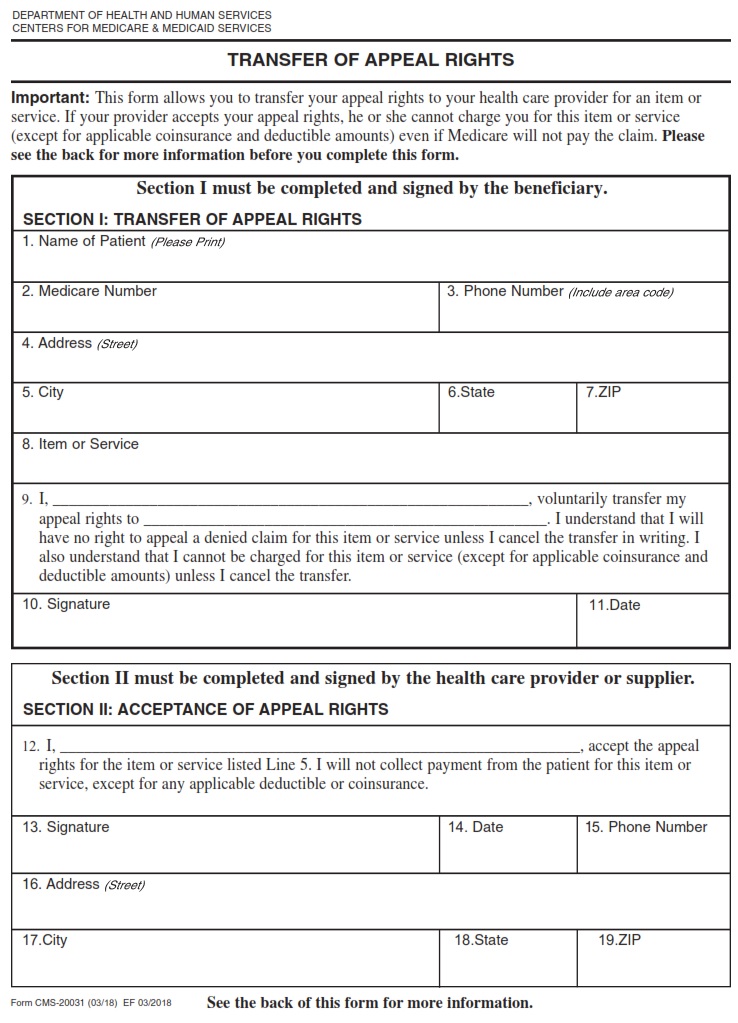
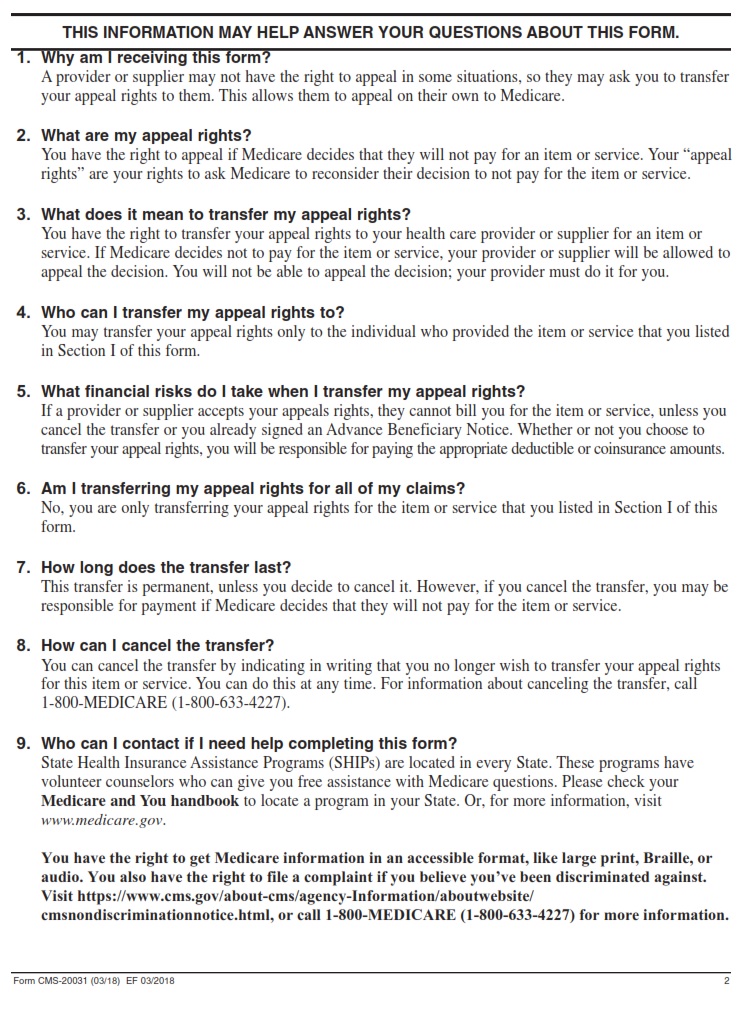
    CMS 20031 – TRANSFER (ASSIGNMENT) OF APPEAL RIGHTS

    CMSFORM.ORGCMS 20031 – TRANSFER (ASSIGNMENT) OF APPEAL RIGHTS – Imagine a world where the power to appeal a decision lies not just with the original party involved, but can be transferred like a valuable asset. Enter CMS 20031 – Transfer (Assignment) of Appeal Rights, a legal framework that challenges traditional notions of jurisdiction and ownership within the realm of litigation. In this complex and intriguing landscape, appeal rights become commodities to be bought, sold, and traded – raising questions about who truly holds the reins of justice. As we delve into the intricacies of this groundbreaking concept, buckle up for a riveting exploration of how legal boundaries are pushed to their limits in pursuit of fairness and accountability.

    Download CMS 20031 – TRANSFER (ASSIGNMENT) OF APPEAL RIGHTS

    [su_table responsive=”yes”]

    Form Number CMS 20031
    Form Title TRANSFER (ASSIGNMENT) OF APPEAL RIGHTS
    Published 2018-03-01
    O.M.B.
    File Size 185 KB

    [/su_table]

    [download id=’1601′]

    What is a CMS 20031?

    CMS 20031 refers to the process of transferring or assigning appeal rights from one party to another. This transfer allows individuals or entities to delegate their rights to pursue an appeal to a different party, often due to various reasons such as financial constraints, lack of resources, or the need for specialized expertise. It provides flexibility and options for parties involved in legal disputes, enabling them to navigate complex appeal processes more efficiently.

    By facilitating the transfer of appeal rights, CMS 20031 streamlines the appeals process and ensures that cases are handled promptly and effectively. This mechanism can also help alleviate the burden on individuals or organizations by allowing them to enlist the support of third parties with greater experience or resources in navigating legal proceedings. Overall, CMS 20031 serves as a vital tool in fostering collaboration and ensuring fair access to justice for all parties involved in legal disputes.

    Where Can I Find a CMS 20031?

    One of the key places to find a CMS 20031 form is on the official website of the United States Patent and Trademark Office (USPTO). The USPTO provides a comprehensive resource center for accessing various forms related to intellectual property rights, including the CMS 20031 for transferring appeal rights. Additionally, legal document repositories and online platforms specializing in intellectual property law may also offer access to this specific form for individuals or entities looking to assign their appeal rights.

    Moreover, consulting with legal professionals or intellectual property experts can be another avenue to obtain a CMS 20031 form. These professionals possess the knowledge and experience to guide individuals through the process of transferring their appeal rights effectively. By seeking expert advice, individuals can ensure that all necessary documentation is completed accurately and in compliance with relevant laws and regulations. Ultimately, having access to resources such as the USPTO website, legal platforms, or expert guidance can streamline the process of acquiring a CMS 20031 form for those seeking to transfer their appeal rights seamlessly.

    CMS 20031 – TRANSFER (ASSIGNMENT) OF APPEAL RIGHTS

    In the realm of intellectual property rights, the transfer of appeal rights is a crucial and often overlooked aspect. When an individual or entity holds the rights to an appeal, they possess significant leverage in legal proceedings. By transferring these rights, parties can strategically shift the balance of power and influence the outcome of a case. This maneuver opens up new possibilities for negotiation and can greatly impact the overall strategy employed by both parties involved.

    The complex web of regulations surrounding the transfer of appeal rights requires careful navigation and understanding. It is essential for all parties involved to be well-versed in these intricacies to protect their interests effectively. Additionally, this process highlights the dynamic nature of intellectual property law and underscores the importance of staying informed and adapting strategies accordingly. Ultimately, mastering the art of transferring appeal rights can provide a distinct advantage in legal disputes and shape the trajectory of future developments in intellectual property law.

    CMS 20031 Example

    CMS 20031 - Page 1 CMS 20031 - Page 2

  • CMS 1957 – SSO REPORT OF STATE BUY IN PROBLEM

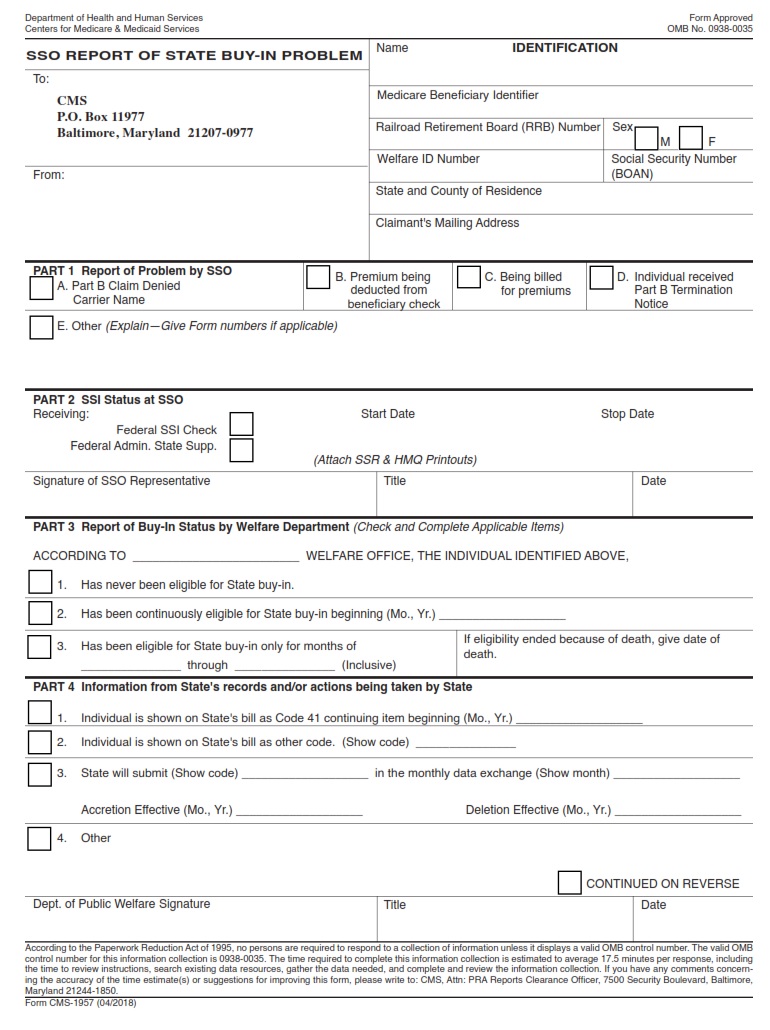
    CMS 1957 – SSO REPORT OF STATE BUY IN PROBLEM

    CMSFORM.ORGCMS 1957 – SSO REPORT OF STATE BUY IN PROBLEM – In the realm of healthcare policy and administration, the year 1957 marked a pivotal moment with the introduction of the ground-breaking CMS 1957 Single Sign-On (SSO) system. However, behind the facade of technological advancement lay a complex web of challenges that threatened to derail its implementation: the State buy-in problem. This seemingly mundane issue held unforeseen consequences for healthcare providers nationwide, sparking debates and triggering a ripple effect that would shape the future landscape of healthcare technology. As we delve into this gripping tale of innovation and resistance, we uncover not only technical hurdles but also political intrigues and bureaucratic entanglements that shed light on the intricate nature of managing change in an ever-evolving industry. Join us on a journey through time as we unravel the untold story behind CMS 1957’s SSO Report of State Buy-In Problem.

    Download CMS 1957 – SSO REPORT OF STATE BUY IN PROBLEM

    [su_table responsive=”yes”]

    Form Number CMS 1957
    Form Title SSO REPORT OF STATE BUY IN PROBLEM
    Published 2018-04-01
    O.M.B. 0938-0035
    File Size 233 KB

    [/su_table]

    [download id=’1602′]

    What is a CMS 1957?

    In 1957, the concept of a CMS (Central Management System) was a groundbreaking development that revolutionized how state agencies handled administrative tasks. This system, known as CMS 1957, aimed to address the challenge of streamlining and centralizing data management within government entities. By introducing standardization in processes and information storage, CMS 1957 set the stage for increased efficiency and collaboration among various departments.

    One of the key features of CMS 1957 was its focus on Single Sign-On (SSO), a pioneering technology that allowed users to access multiple applications with just one set of credentials. This simplified authentication process not only enhanced security but also boosted user convenience and productivity. Despite facing initial challenges in state buy-in due to concerns about implementation costs and compatibility issues, CMS 1957 eventually gained widespread acceptance for its ability to enhance operational effectiveness within government agencies.

    Where Can I Find a CMS 1957?

    If you’re on the hunt for a CMS 1957, you may be facing quite a challenge. These vintage machines are becoming increasingly rare to come by, but fear not – there are still avenues you can explore in your search. One of the best places to start looking is with specialized vintage machinery dealers or collectors who may have some leads on where one of these classic CMS 1957 models could be found.

    Furthermore, scouring online marketplaces and auction sites could also yield some promising results. Keep an eye out for estate sales, auctions, or listings from individuals looking to part ways with their CMS 1957 machine. Additionally, reaching out to industrial equipment forums or clubs dedicated to vintage machinery could connect you with enthusiasts who might have valuable tips or even a lead on where you can find the CMS 1957 model you’re after. Remember, patience and persistence will likely pay off in your quest to find this sought-after piece of industrial history.

    CMS 1957 – SSO REPORT OF STATE BUY IN PROBLEM

    In the realm of CMS 1957, the ongoing issue of State Buy-In problem has stirred a wave of discourse within the SSO community. The intricate dynamics at play between centralized decision-making and state autonomy have led to conflicting viewpoints on how best to address this pressing concern. While some argue for a uniform approach across all states, others advocate for a more tailored strategy that respects individual state nuances.

    One key consideration that emerges from this debate is the importance of striking a balance between national consistency and regional flexibility. The challenge lies in devising a solution that satisfies the diverse needs and preferences of each state while upholding overarching goals of efficiency and equity. As stakeholders grapple with finding common ground, it becomes evident that collaboration and open communication are essential in navigating the complexities inherent in implementing a successful State Buy-In framework.

    Amidst these deliberations, one thing remains clear – the call for innovative thinking and collaborative problem-solving approaches is more urgent than ever. Success in addressing the State Buy-In problem will require a concerted effort to bridge gaps, cultivate understanding, and forge meaningful partnerships across states. Only by embracing this collective mindset can we pave the way towards sustainable solutions that benefit all parties involved in CMS 1957’s journey towards enhanced SSO integration.

    CMS 1957 Example

    CMS 1957