Author: Bismillah

  • CMS 437B – REHAB HOSPITAL CRITERIA WORKSHEET
    CMS 437B – REHAB HOSPITAL CRITERIA WORKSHEET

    CMSFORM.ORGCMS 437B – REHAB HOSPITAL CRITERIA WORKSHEET – Imagine a world where the road to recovery is paved with precision, compassion, and unwavering commitment to excellence. Welcome to CMS 437B – the beacon of hope for rehabilitation hospitals striving for unparalleled standards in patient care. As we delve into the intricacies of this groundbreaking criteria worksheet, we uncover a tapestry of guidelines that not only define success but also redefine what it means to truly heal. From meticulous treatment protocols to innovative therapy approaches, each element within CMS 437B serves as a testament to the transformative power of healthcare when driven by a shared vision of holistic wellbeing. Join us on this enlightening journey as we unravel the blueprint that sets the gold standard in rehab hospital care and challenges us all to reach new heights in restoring lives one step at a time.

    Download CMS 437B – REHAB HOSPITAL CRITERIA WORKSHEET

    [su_table responsive=”yes”]

    Form Number CMS 437B
    Form Title REHAB HOSPITAL CRITERIA WORKSHEET
    Published 2015-07-28
    O.M.B. 0938-0986
    File Size 171 KB

    [/su_table]

    [download id=’1543′]

    What is a CMS 437B?

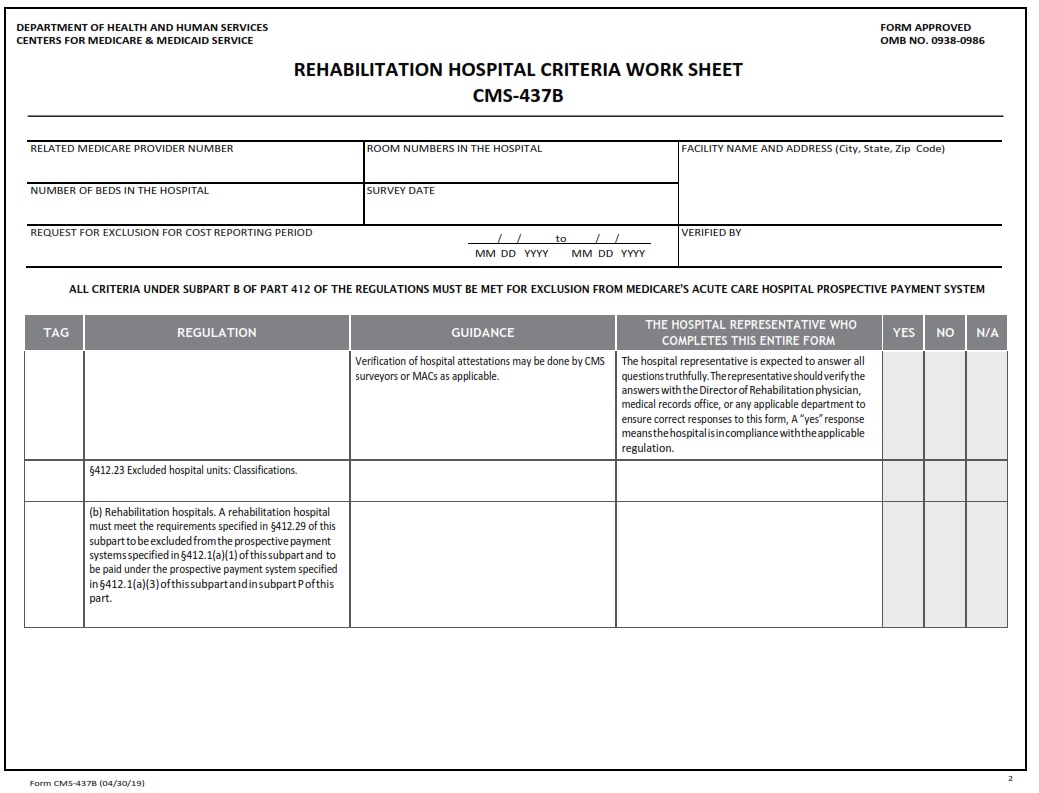
    A CMS 437B is an essential tool used in the healthcare industry to assess and determine the criteria for rehab hospital facilities. This worksheet serves as a comprehensive guideline that outlines specific requirements and best practices for rehab hospitals to meet regulatory standards set by the Centers for Medicare & Medicaid Services (CMS). It covers various aspects such as staffing, facility layout, patient care protocols, safety measures, and quality assurance procedures.

    Utilizing the CMS 437B helps rehab hospitals optimize their operations and ensure high-quality patient care. By aligning with these established criteria, healthcare facilities can enhance efficiency, promote better outcomes for patients undergoing rehabilitation, and maintain compliance with government regulations. The structured format of this worksheet enables institutions to carefully evaluate their processes and make necessary improvements to deliver top-notch services and support to individuals seeking recovery from various medical conditions or injuries.

    Where Can I Find a CMS 437B?

    If you’re on the hunt for a CMS 437B, look no further than reputable medical supply stores or online marketplaces specializing in healthcare equipment. These forms are essential for documenting rehabilitation criteria in hospitals and can often be found through suppliers catering to medical professionals. It’s important to ensure that any CMS 437B you acquire is up-to-date and compliant with current regulations to accurately capture patient information within a healthcare setting.

    Consider reaching out to local healthcare facilities or contacting your facility’s purchasing department for guidance on where to procure these vital forms. Additionally, don’t forget about the option of downloading electronic versions of the CMS 437B from official government websites or trusted online resources. Keeping an eye out for updates and revisions to these forms is crucial in maintaining accurate records and ensuring compliance with industry standards in rehab hospital settings.

    CMS 437B – REHAB HOSPITAL CRITERIA WORKSHEET

    In the realm of rehabilitative healthcare, CMS 437B – Rehab Hospital Criteria Worksheet stands as a vital tool for ensuring quality care and services for patients in need of specialized treatment. This detailed assessment framework goes beyond mere checklist items; it delves into the core components that define effective rehabilitation programs. By adhering to the guidelines outlined in CMS 437B, rehab hospitals can better tailor their services to meet individual patient needs, ultimately leading to improved outcomes and higher standards of care.

    One key aspect emphasized by CMS 437B is the importance of interdisciplinary collaboration within rehab hospital settings. By fostering teamwork among various healthcare professionals – including physicians, therapists, nurses, and social workers – facilities can create a more holistic approach to patient care. This collaborative model not only enhances communication and coordination but also ensures that all aspects of a patient’s recovery journey are addressed comprehensively. As such, adherence to CMS 437B serves as a cornerstone for promoting integrated and effective rehabilitation practices in hospital settings.

    Furthermore, through its structured criteria and evaluation parameters, CMS 437B encourages rehab hospitals to continuously reassess their performance and make necessary improvements. By engaging in ongoing self-assessment using this worksheet, facilities can identify areas for enhancement and implement strategic changes to optimize patient care delivery. This commitment to continuous quality improvement not only aligns with regulatory requirements but also reflects a deep dedication to providing exemplary rehabilitative services while adapting to evolving industry standards.

    CMS 437B Example

    CMS 437B - Page 1 CMS 437B - Page 2 CMS 437B - Page 3

  • CMS 437A – REHAB UNIT CRITERIA WORKSHEET

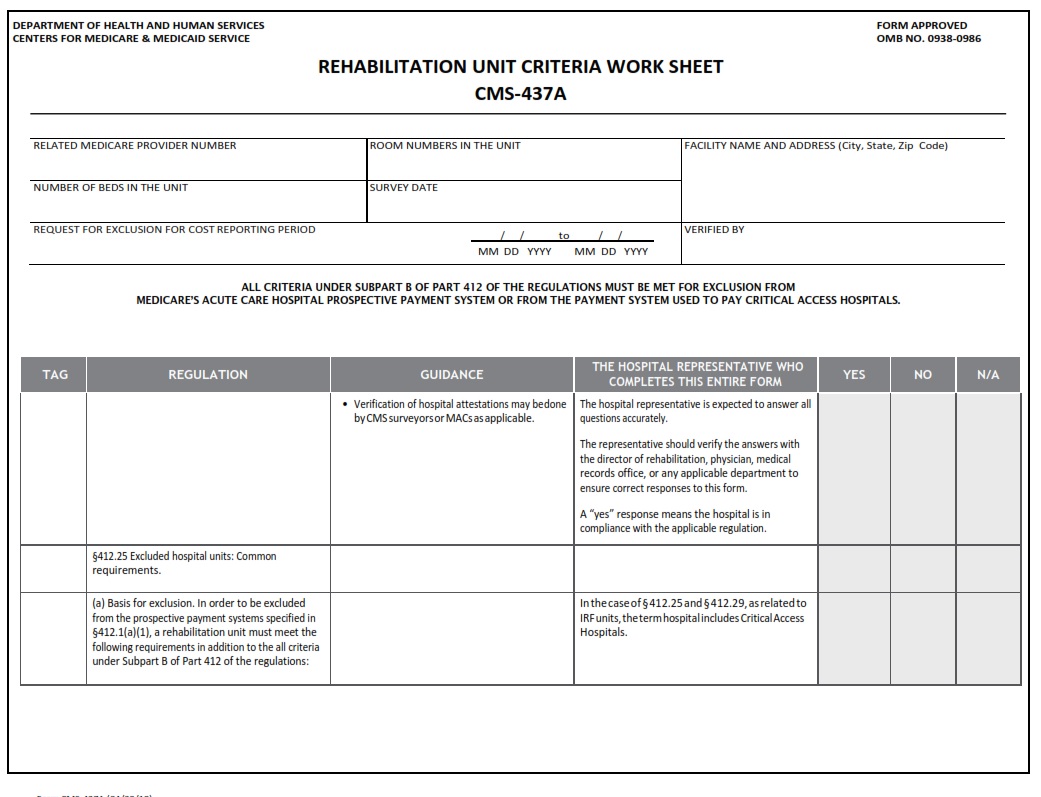
    CMS 437A – REHAB UNIT CRITERIA WORKSHEET

    CMSFORM.ORGCMS 437A – REHAB UNIT CRITERIA WORKSHEET – Imagine a world where every aspect of a rehabilitation unit’s operations could be systematically evaluated and improved upon with ease. With CMS 437A in hand, healthcare providers gain access to a structured framework that not only assesses regulatory compliance but also fosters an environment conducive to innovation and growth. By delving into this dynamic worksheet, professionals are empowered to unlock new insights into their practices, identify areas for enhancement, and ultimately revolutionize the way they deliver rehabilitative services. Join us on a journey through the transformative power of CMS 437A – where meticulous criteria meets groundbreaking potential in shaping the future landscape of rehab units nationwide.

    Download CMS 437A – REHAB UNIT CRITERIA WORKSHEET

    [su_table responsive=”yes”]

    Form Number CMS 437A
    Form Title REHAB UNIT CRITERIA WORKSHEET
    Published 2015-07-28
    O.M.B. 0938-0986
    File Size 184 KB

    [/su_table]

    [download id=’1544′]

    In the fast-paced world of healthcare compliance, navigating the intricate web of regulations and guidelines can often feel like a daunting task. However, at the heart of ensuring quality patient care lies the crucial role of rehabilitation units within medical facilities. Enter CMS 437A – the beacon guiding healthcare professionals through the intricacies of rehab unit criteria assessment with precision and clarity. This innovative worksheet serves as a comprehensive tool designed to streamline compliance evaluations, optimize patient outcomes, and elevate standards of care within rehabilitation settings.

    What is a CMS 437A?

    A CMS 437A, also known as the Rehab Unit Criteria Worksheet, serves as a crucial tool in assessing the eligibility of patients for rehabilitation services. This form outlines specific criteria that must be met in order for a patient to qualify for admission to a rehabilitation unit. The CMS 437A takes into account various factors such as functional status, medical stability, and rehabilitation potential to determine if a patient will benefit from intensive rehab services.

    By using the CMS 437A, healthcare providers can make informed decisions about which patients are best suited for rehabilitation programs. This worksheet helps ensure that resources are allocated efficiently and that patients receive appropriate care tailored to their needs. Moreover, the comprehensive nature of the CMS 437A allows for thorough evaluations that take into consideration both physical and cognitive factors when determining eligibility for rehabilitation services.

    Where Can I Find a CMS 437A?

    If you’re on the hunt for a CMS 437A, you may find it challenging to locate. These specialized forms are typically used in medical facilities and rehabilitation centers to assess patient needs and eligibility for rehab services. Your best bet for finding a CMS 437A would be to contact your local healthcare facility or rehabilitation center directly.

    Alternatively, exploring online medical supply stores or reaching out to medical equipment suppliers could also lead you to the elusive CMS 437A form. It’s important to be persistent and proactive in your search as these forms are not commonly found in generic office supply stores. Remember, patience pays off when seeking out specific medical documentation like the CMS 437A form.

    CMS 437A – REHAB UNIT CRITERIA WORKSHEET

    Looking at the CMS 437A – Rehab Unit Criteria Worksheet, we can see how it provides a structured approach to evaluating and determining the level of care needed for patients in a rehabilitation unit. This tool offers a comprehensive framework for healthcare providers to assess various factors such as medical stability, functional status, cognitive abilities, and support needs of each patient. By utilizing this worksheet, healthcare teams can make informed decisions about the most appropriate level of care and treatment plan for individuals undergoing rehabilitation.

    One key aspect of the CMS 437A worksheet is its emphasis on interdisciplinary collaboration and communication among healthcare professionals involved in the patient’s care. This holistic approach ensures that all aspects of a patient’s condition are considered when determining their suitability for admission to a rehab unit. By promoting teamwork and shared decision-making, this tool helps enhance the quality of care provided to patients while also fostering greater efficiency in the rehabilitation process. Ultimately, the CMS 437A – Rehab Unit Criteria Worksheet serves as a valuable resource for streamlining assessment procedures and facilitating optimal outcomes for individuals seeking rehabilitative services.

    CMS 437A Example

    CMS 437A - Page 1 CMS 437A - Page 2 CMS 437A - Page 3

  • CMS 10287 – Medicare Quality of Care Complaint Form (Spanish)

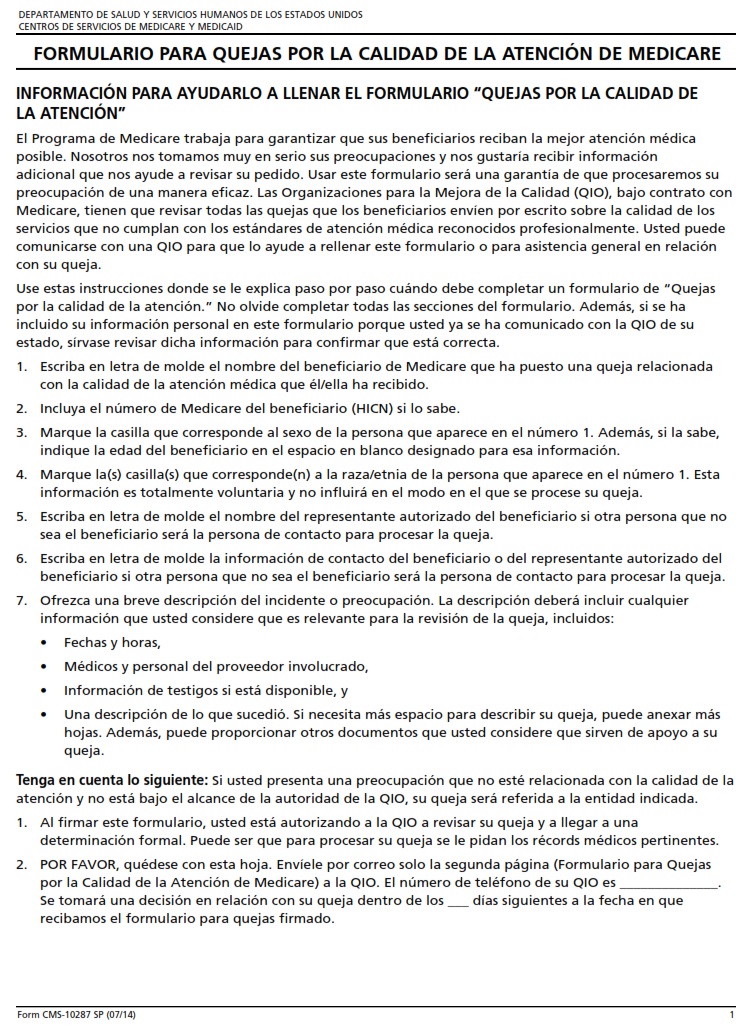
    CMS 10287 – Medicare Quality of Care Complaint Form (Spanish)

    CMSFORM.ORGCMS 10287 – Medicare Quality of Care Complaint Form (Spanish) – In the intricate web of healthcare systems, ensuring quality care for Medicare beneficiaries stands as a pivotal mission. Enter CMS 10287 – the Medicare Quality of Care Complaint Form, a powerful instrument that empowers patients and their loved ones to voice concerns and demand excellence in healthcare delivery. This seemingly humble document holds the potential to spark significant changes in the landscape of medical services, safeguarding the rights and well-being of those entrusting their health to the hands of providers. Let’s delve into the depths of this form, exploring its significance, process, and impact on shaping a future where every individual receives dignified and exceptional care under the umbrella of Medicare.

    Download CMS 10287 – Medicare Quality of Care Complaint Form (Spanish)

    [su_table responsive=”yes”]

    Form Number CMS 10287
    Form Title Medicare Quality of Care Complaint Form (Spanish)
    Published 2015-11-01
    O.M.B.
    File Size 68 KB

    [/su_table]

    [download id=’1545′]

    What is a CMS 10287?

    CMS 10287, also known as the Medicare Quality of Care Complaint Form, is a vital tool for ensuring the quality and safety of care provided to Medicare beneficiaries. This form allows individuals to report any concerns or issues they may have regarding the quality of care received at healthcare facilities. By facilitating a straightforward process for lodging complaints, CMS 10287 empowers patients and their loved ones to advocate for better standards of care.

    Submitting a CMS 10287 form can trigger investigations by Medicare authorities into reported complaints, leading to potential improvements in the quality of care provided by healthcare providers. It serves as a mechanism for accountability within the healthcare system, highlighting the importance of transparency and patient-centered care. Through this form, patients have a voice in shaping the future of healthcare delivery and promoting positive changes within the industry.

    Where Can I Find a CMS 10287?

    Finding a CMS 10287 form, also known as the Medicare Quality of Care Complaint Form, can often be a daunting task for individuals seeking to voice their concerns regarding healthcare quality. One of the most straightforward ways to obtain this form is by visiting the official website of the Centers for Medicare & Medicaid Services (CMS). Here, you can easily navigate through the forms section and locate the specific form by its number or name. If online access is not feasible, reaching out to your healthcare provider or local Medicare office could also provide you with a physical copy of the CMS 10287 form.

    Additionally, community health centers and advocacy organizations specializing in healthcare rights may have resources available to assist individuals in acquiring this crucial document. These organizations are dedicated to ensuring that patients receive proper care and treatment and can guide you through the process of filing a quality-of-care complaint using the CMS 10287 form effectively. Overall, understanding where to find this important form empowers individuals to advocate for their health rights and strive for improved quality care within our healthcare systems.

    CMS 10287 – Medicare Quality of Care Complaint Form

    The CMS 10287 Medicare Quality of Care Complaint Form serves as a powerful tool for individuals to voice their concerns and ensure that high standards of care are upheld. By providing a platform for feedback, this form empowers patients to advocate for their rights and demand excellence in healthcare services. This initiative highlights the importance of accountability among healthcare providers, encouraging transparency and continuous improvement in the delivery of care.

    Through the use of CMS 10287, patients have the opportunity to not only raise issues when they arise but also contribute towards shaping future healthcare practices. By actively participating in quality monitoring processes, individuals play an integral role in promoting a culture of patient-centered care and fostering collaboration between patients, providers, and regulatory bodies. Ultimately, the CMS 10287 form underscores the significance of patient feedback in driving positive change within the healthcare system and ensuring that every individual receives safe, effective, and compassionate care.

    CMS 10287 Example

    CMS 10287 – Page 1 (Spanish) CMS 10287 – Page 2 (Spanish)

  • CMS 10287 – Medicare Quality of Care Complaint Form (English)

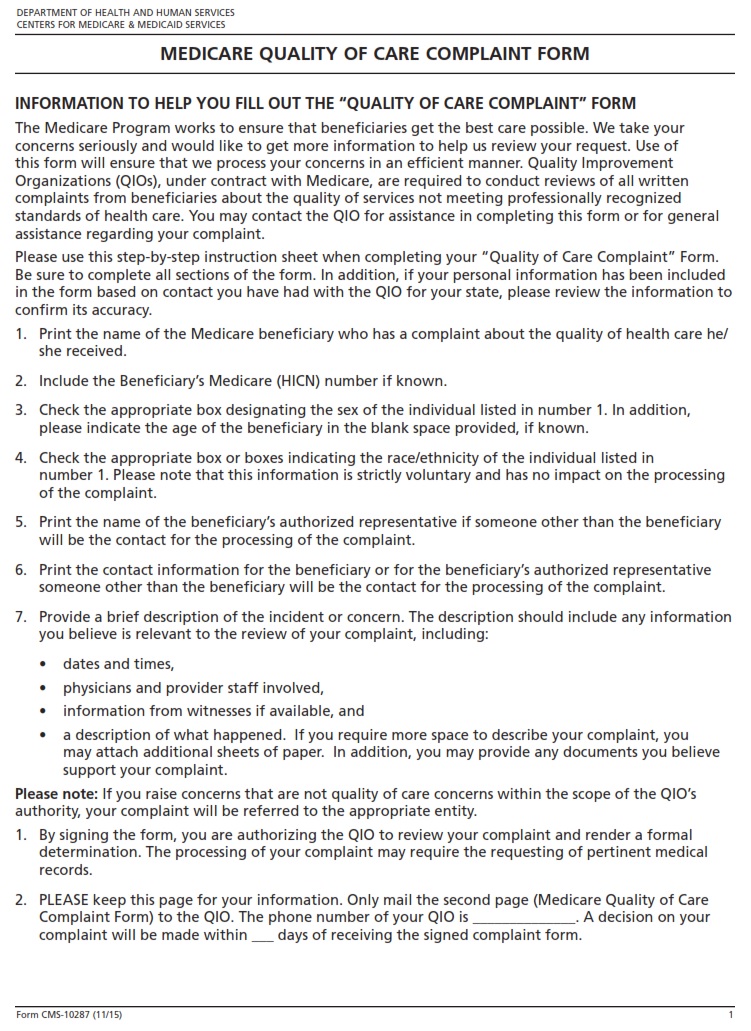
    CMS 10287 – Medicare Quality of Care Complaint Form (English)

    CMSFORM.ORGCMS 10287 – Medicare Quality of Care Complaint Form (English) – Have you ever felt frustrated or concerned about the quality of care provided to a loved one under Medicare? The CMS 10287 – Medicare Quality of Care Complaint Form may just be the tool you need to address your grievances and ensure that your voice is heard. In a system as vast and complex as healthcare, it’s crucial for patients and their families to have a mechanism to raise concerns and hold providers accountable. This form serves as a powerful weapon in the hands of those seeking transparency, accountability, and ultimately, better quality of care for all Medicare beneficiaries. By delving into the intricacies of this form, we uncover not only its practical applications but also its potential to drive positive change in the realm of healthcare delivery. Let’s explore how this seemingly mundane document holds the key to empowering patients and reshaping the landscape of Medicare services.

    Download CMS 10287 – Medicare Quality of Care Complaint Form (English)

    [su_table responsive=”yes”]

    Form Number CMS 10287
    Form Title Medicare Quality of Care Complaint Form (English)
    Published 2015-11-01
    O.M.B.
    File Size 64 KB

    [/su_table]

    [download id=’1546′]

    What is a CMS 10287?

    A CMS-10287 form is a crucial tool provided by the Centers for Medicare & Medicaid Services (CMS) to help individuals report concerns about the quality of care received in healthcare facilities. This standardized form allows patients, families, and advocates to voice their complaints regarding issues such as inadequate treatment, safety concerns, or poor service quality. By completing this form, individuals can ensure that their feedback is documented and addressed by the appropriate authorities within the healthcare system.

    Filing a CMS-10287 complaint empowers patients to advocate for their rights and demand accountability from healthcare providers. It serves as a mechanism to drive improvements in care delivery processes and enhance patient outcomes. This form facilitates transparency in healthcare systems by enabling stakeholders to highlight areas that require attention and intervention. Utilizing the CMS-10287 form can ultimately contribute to fostering a culture of patient-centered care that prioritizes quality, safety, and respect for individual experiences within healthcare settings.

    Where Can I Find a CMS 10287?

    If you’re searching for a CMS 10287 form to address concerns about the quality of care in Medicare facilities, don’t fret – there are multiple ways to access it. One primary source is the official Medicare website, where you can download and print the form directly. Additionally, local healthcare provider offices or Medicare beneficiaries assistance programs often have physical copies available for individuals who prefer not to download online.

    For a more convenient option, consider contacting your regional Medicare office or calling the Medicare helpline for guidance on where to obtain a CMS 10287 form. Embracing digital channels like email or secure messaging through the MyMedicare.gov portal can also streamline the process of obtaining this critical complaint form. Remember, swift action and clear communication are essential when addressing issues related to the quality of care you receive through Medicare facilities.

    CMS 10287 – Medicare Quality of Care Complaint Form (English)

    When it comes to the CMS 10287 – Medicare Quality of Care Complaint Form, patients hold a powerful tool to voice their concerns about the quality of care they receive. This form serves as a direct channel for individuals to communicate incidents or issues regarding their healthcare experience within Medicare-certified facilities. By completing this form, patients contribute valuable feedback that can drive improvements in the overall quality of care provided by healthcare providers and institutions.

    Filing a Medicare Quality of Care Complaint Form empowers patients to advocate for their rights and ensure they receive appropriate and compassionate healthcare services. This process not only holds providers accountable but also promotes transparency and accountability within the healthcare system. Patients play an active role in shaping the future of healthcare by sharing their experiences through this complaint form, ultimately fostering a culture of continuous improvement in patient care standards.

    CMS 10287 Example

    CMS 10287 - Page 1 CMS 10287 - Page 2 CMS 10287 - Page 3

  • CMS 849 – Certificate of Medical Necessity – Seat Lift Mechanisms – DME 07.03A

    CMS 849 – Certificate of Medical Necessity – Seat Lift Mechanisms – DME 07.03A

    CMSFORM.ORGCMS 849 – Certificate of Medical Necessity – Seat Lift Mechanisms – DME 07.03A – In the intricate world of healthcare regulations and medical equipment, one document holds immense power – the CMS 849 Certificate of Medical Necessity for Seat Lift Mechanisms. This seemingly mundane form not only outlines the necessity of DME 07.03A devices but also serves as a gateway for patients seeking assistance in improving their quality of life. Imagine a world where a simple lift mechanism can transform everyday tasks into manageable feats, offering independence and comfort to those in need. As we delve into the complexities of CMS guidelines and explore the impact of seat lift mechanisms on patient care, we unravel a compelling narrative that highlights the intersection of technology, healthcare, and human resilience. Join us on this journey as we uncover the importance and significance of this essential document in shaping the lives of many individuals across the healthcare landscape.

    Download CMS 849 – Certificate of Medical Necessity – Seat Lift Mechanisms – DME 07.03A

    [su_table responsive=”yes”]

    Form Number CMS 849
    Form Title Certificate of Medical Necessity – Seat Lift Mechanisms – DME 07.03A
    Published 2017-02-01
    O.M.B. 0938-0679
    File Size 153 KB

    [/su_table]

    [download id=’1547′]

    What is a CMS 849?

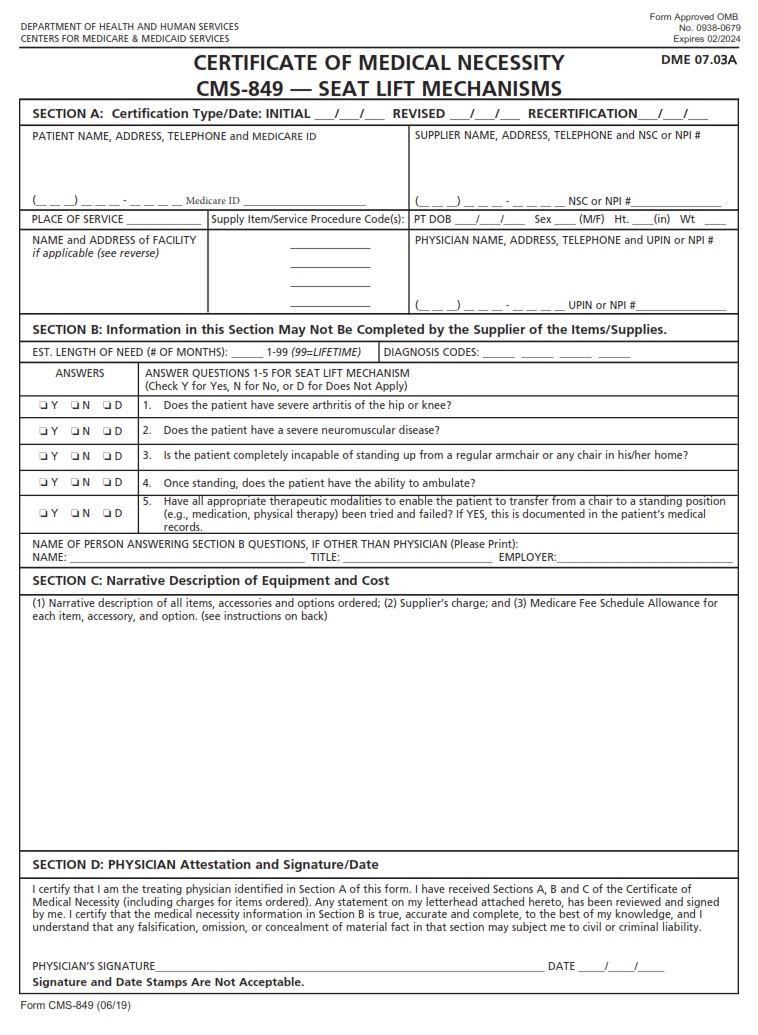
    A Certificate of Medical Necessity (CMS 849) serves as a crucial document in the Durable Medical Equipment (DME) world, specifically for seat lift mechanisms. It is not just a form to be filled out; rather, it represents the intersection of patient care and administrative processes. The CMS 849 ensures that patients receive the necessary equipment by detailing their medical condition and why a seat lift mechanism is essential for their well-being.

    Through the CMS 849, healthcare providers articulate the medical necessity of seat lift mechanisms, often making a compelling case for insurance coverage or other forms of financial assistance. This certificate goes beyond mere paperwork; it symbolizes advocacy for patients’ quality of life and independence. By emphasizing the significance of the CMS 849 in facilitating access to vital equipment, we underscore how administrative procedures directly impact patient outcomes and overall healthcare effectiveness.

    Where Can I Find a CMS 849?

    If you’re on the hunt for a CMS 849 form for a seat lift mechanism, you’re in the right place. The best starting point is to check with your healthcare provider or supplier, as they should have access to this important document. However, if you prefer a more hands-on approach, you can visit the official Centers for Medicare & Medicaid Services (CMS) website where various forms, including the CMS 849, are available for download.

    Another avenue to explore is contacting Durable Medical Equipment (DME) suppliers in your area who specialize in seat lift mechanisms. These suppliers are well-versed in the documentation required by Medicare and can assist you in obtaining the necessary paperwork. Remember that proper documentation such as the CMS 849 form is crucial when seeking reimbursement or coverage for medical equipment like seat lifts, so be sure to stay diligent in your search efforts.

    CMS 849 – Certificate of Medical Necessity – Seat Lift Mechanisms – DME 07.03A

    When it comes to navigating the complex world of healthcare reimbursement, understanding the nuances of CMS 849 – Certificate of Medical Necessity for Seat Lift Mechanisms under DME 07.03A is crucial. This certificate serves as a gateway for patients in need of seat lift mechanisms to receive coverage and access to essential medical equipment. Providers play a key role in accurately completing this form, ensuring that patients with mobility issues can enjoy a better quality of life.

    Seat lift mechanisms are integral components of durable medical equipment (DME) that help individuals with mobility challenges maintain independence and functionality in their daily lives. The intricate process of obtaining a Certificate of Medical Necessity underscores the importance placed on proper documentation and compliance with regulatory guidelines. Ultimately, this certification serves as a testament to the commitment towards improving patient outcomes and enhancing access to vital healthcare resources.

    CMS 849 Example

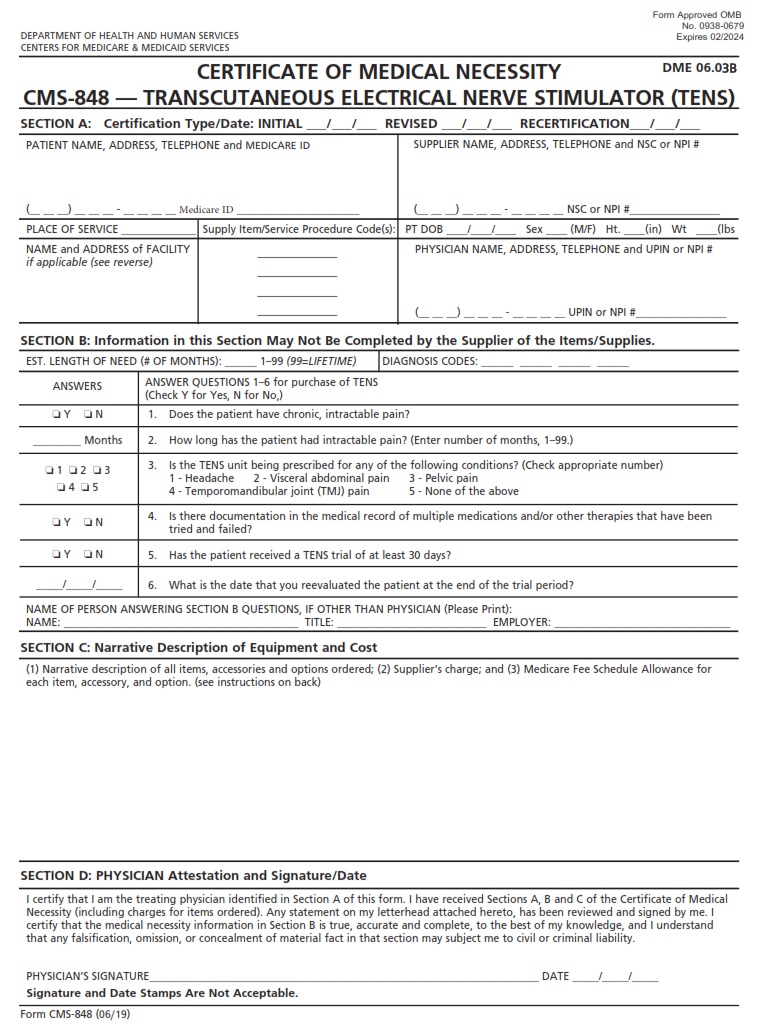
  • CMS 848 – Certificate of Medical Necessity – Transcutaneous Electrical Nerve Stimulator (TENS) – DME 06.03B

    CMS 848 – Certificate of Medical Necessity – Transcutaneous Electrical Nerve Stimulator (TENS) – DME 06.03B

    CMSFORM.ORGCMS 848 – Certificate of Medical Necessity – Transcutaneous Electrical Nerve Stimulator (TENS) – DME 06.03B – In the world of healthcare, where cutting-edge technology meets the age-old quest for pain relief, one device stands out as a true game changer: the Transcutaneous Electrical Nerve Stimulator (TENS). The Certificate of Medical Necessity (CMS 848) for TENS devices is not just a formality, but a crucial step in ensuring that patients receive this innovative treatment option. As we delve into the intricate details of DME 06.03B and explore how TENS therapy is revolutionizing pain management, we uncover a fascinating intersection between medical science and personalized care. Join us on this journey through the complexities of CMS guidelines and the transformative power of electrical stimulation in alleviating discomfort and restoring quality of life.

    Download CMS 848 – Certificate of Medical Necessity – Transcutaneous Electrical Nerve Stimulator (TENS) – DME 06.03B

    [su_table responsive=”yes”]

    Form Number CMS 848
    Form Title Certificate of Medical Necessity – Transcutaneous Electrical Nerve Stimulator (TENS) – DME 06.03B
    Published 2017-02-01
    O.M.B. 0938-0679
    File Size 132 KB

    [/su_table]

    [download id=’1548′]

    What is a CMS 848?

    A CMS 848, also known as a Certificate of Medical Necessity for a Transcutaneous Electrical Nerve Stimulator (TENS), is a crucial document in the world of medical equipment reimbursement. This form serves as documentation from a healthcare provider, justifying that the prescribed TENS device is essential for treating a patient’s specific medical condition. Without this certificate, insurance companies may not cover the cost of the TENS unit, highlighting its significance in ensuring patients have access to necessary therapies.

    Understanding the importance and role of a CMS 848 can help navigate the complex landscape of durable medical equipment (DME) coverage. It acts as a bridge between healthcare providers and insurance companies, providing clarity on why certain treatments are deemed medically necessary. By advocating for patients’ needs through proper documentation and justification, healthcare professionals can enhance access to innovative therapies like TENS units while promoting overall well-being and quality of care.

    Where Can I Find a CMS 848?

    Finding a CMS 848 form for a Certificate of Medical Necessity for a Transcutaneous Electrical Nerve Stimulator (TENS) device can often be a challenging task for individuals navigating the world of durable medical equipment. One common avenue to locate this essential form is through the official website of the Centers for Medicare & Medicaid Services (CMS). Here, users can search for Form CMS-848 and access the necessary documentation required to validate the medical necessity of their TENS device.

    Another approach to obtaining the CMS 848 form is through healthcare providers, durable medical equipment suppliers, or specialized online platforms that cater to DME documentation needs. These channels often offer guidance and support in completing and submitting the Certificate of Medical Necessity, helping patients simplify what can be a complex process in securing coverage for their TENS unit. By tapping into these resources, individuals can streamline their access to vital medical devices and ensure that they receive appropriate reimbursement under Medicare guidelines.

    CMS 848 – Certificate of Medical Necessity – Transcutaneous Electrical Nerve Stimulator (TENS) – DME 06.03B

    In the world of medical devices, the CMS 848 form holds significant importance for patients in need of a Transcutaneous Electrical Nerve Stimulator (TENS) – categorized under DME 06.03B. This form, also known as the Certificate of Medical Necessity, serves as a crucial document that outlines the rationale behind prescribing such equipment. For healthcare providers, filling out this form correctly is essential to ensure that patients receive access to TENS units and other necessary devices to manage their pain effectively.

    One key aspect to consider when discussing the CMS 848 form is the growing recognition of TENS therapy as a non-invasive and drug-free option for pain relief. As more individuals seek alternative methods for managing chronic pain, TENS units have emerged as a popular choice due to their ability to stimulate nerves and provide relief. By highlighting the medical necessity of these devices through proper documentation with the CMS 848 form, healthcare professionals can facilitate better access to TENS units for patients in need.

    Overall, understanding and emphasizing the significance of completing the CMS 848 form accurately can help bridge gaps in accessing essential medical equipment like TENS units. Through this certification process, both patients and healthcare providers can collaborate effectively to ensure optimal care and support for managing various types of pain conditions. The integration of technology like TENS units into treatment plans showcases an evolving approach towards holistic pain management strategies that prioritize patient comfort and well-being.

    CMS 848 Example

    CMS 848

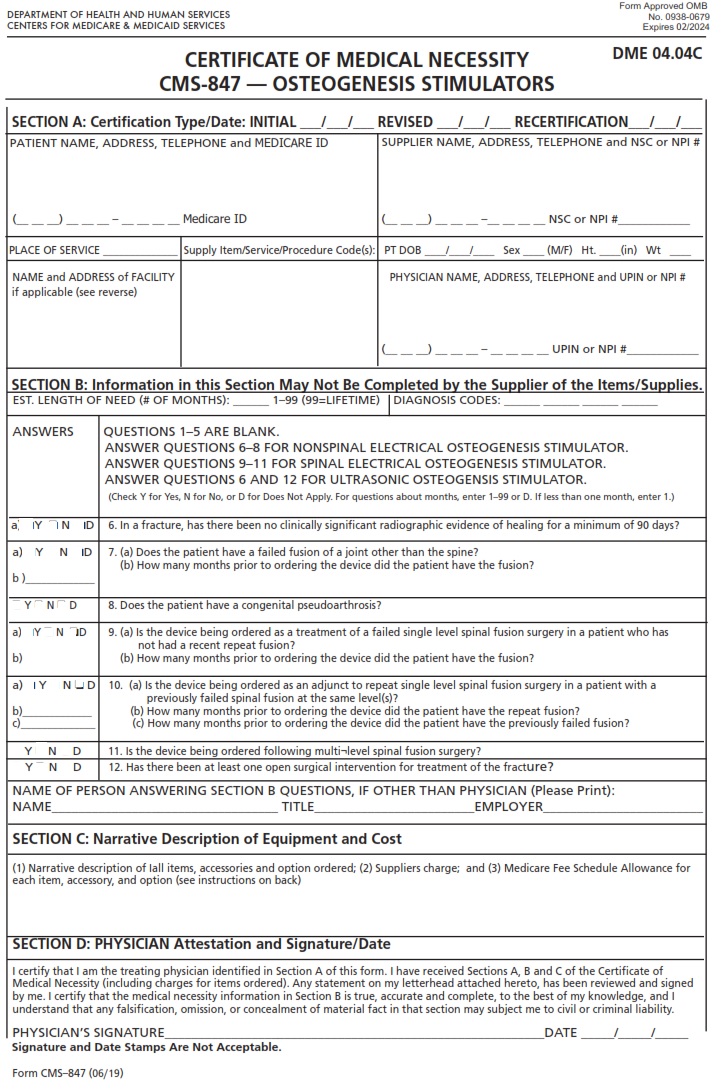
  • CMS 847 – Certificate of Medical Necessity – Osteogenesis Stimulators – DME 04.04C

    CMS 847 – Certificate of Medical Necessity – Osteogenesis Stimulators – DME 04.04C

    CMSFORM.ORGCMS 847 – Certificate of Medical Necessity – Osteogenesis Stimulators – DME 04.04C – In the world of healthcare, navigating the complexities of medical documentation and reimbursement can often feel like a daunting task. However, one key document that plays a crucial role in ensuring patients receive necessary treatments is the CMS 847 – Certificate of Medical Necessity. Specifically focusing on Osteogenesis Stimulators under DME code 04.04C, this article delves into the intricate details surrounding the submission and approval process for these innovative devices. By understanding the importance of this specific form and its impact on patient care, healthcare providers can ensure seamless access to cutting-edge technologies that promote bone healing and regeneration. Join us on a journey through the intricacies of medical necessity certification and unlock the potential benefits for both patients and providers in this specialized realm of durable medical equipment procurement.

    Download CMS 847 – Certificate of Medical Necessity – Osteogenesis Stimulators – DME 04.04C

    [su_table responsive=”yes”]

    Form Number CMS 847
    Form Title Certificate of Medical Necessity – Osteogenesis Stimulators – DME 04.04C
    Published 2017-02-01
    O.M.B. 0938-0679
    File Size 199 KB

    [/su_table]

    [download id=’1549′]

    What is a CMS 847?

    A CMS 847, also known as a Certificate of Medical Necessity, plays a crucial role in the process of acquiring osteogenesis stimulators under Durable Medical Equipment (DME) guidelines. This certificate serves as documentation from a healthcare provider justifying the medical necessity of the prescribed treatment, ensuring that it meets Medicare coverage criteria. While some may view this form as bureaucratic paperwork, its significance cannot be understated. By outlining the specific reasons why an osteogenesis stimulator is required for a patient’s treatment plan, the CMS 847 facilitates transparency and accountability in healthcare decision-making.

    Moreover, understanding the intricacies of completing a CMS 847 can empower both healthcare providers and patients to navigate the complexities of insurance coverage more effectively. The process involves detailing pertinent clinical information about the patient’s condition, previous treatments attempted, and expected outcomes with the prescribed device. By streamlining this information into a concise yet comprehensive document, stakeholders involved can streamline their communication and ensure timely approval for vital medical equipment. Ultimately, mastering the nuances of CMS 847 submissions can spell the difference between accessing necessary treatment options or facing barriers to essential care.

    Where Can I Find a CMS 847?

    If you are in need of a CMS 847 form for a Certificate of Medical Necessity for osteogenesis stimulators, you may be wondering where to find this essential document. The Centers for Medicare & Medicaid Services (CMS) website is a reliable resource for locating the most up-to-date versions of all CMS forms, including the CMS 847. Additionally, many medical supply companies and durable medical equipment providers also offer assistance in filling out and submitting the necessary paperwork.

    It’s important to ensure that you are using the correct version of the CMS 847 form, as outdated or inaccurate information could result in delays or denials of coverage. By staying informed on any updates or changes to the form guidelines, you can streamline the process of obtaining approval for osteogenesis stimulators through Medicare or other health insurance providers. Remember that timely submission and accurate completion of the CMS 847 are crucial steps in accessing medically necessary equipment and treatments prescribed by healthcare professionals.

    CMS 847 – Certificate of Medical Necessity – Osteogenesis Stimulators – DME 04.04C

    When it comes to Osteogenesis Stimulators and the intricate process of obtaining a CMS 847 – Certificate of Medical Necessity, the landscape can often seem confusing and challenging for both healthcare providers and patients alike. However, understanding the importance of this document in justifying the medical necessity of these devices is crucial in ensuring proper reimbursement and treatment for individuals requiring osteogenic stimulation therapy.

    Diving deeper into the realm of DME 04.04C, we uncover a complex yet vital aspect of healthcare administration that underscores the need for clear communication between providers, insurers, and patients. The intricacies involved in completing a CMS 847 form require attention to detail and thorough documentation to support the medical necessity of osteogenesis stimulators for individuals with specific conditions or injuries.

    By familiarizing ourselves with the nuances surrounding Certificate of Medical Necessity processes related to osteogenic stimulation therapy, we not only enhance our understanding of DME billing procedures but also contribute towards streamlining patient care delivery. Embracing this knowledge empowers us to navigate through regulatory requirements more effectively while ensuring that patients receive timely access to essential medical devices for their overall well-being and recovery journey.

    CMS 847 Example

    CMS 847

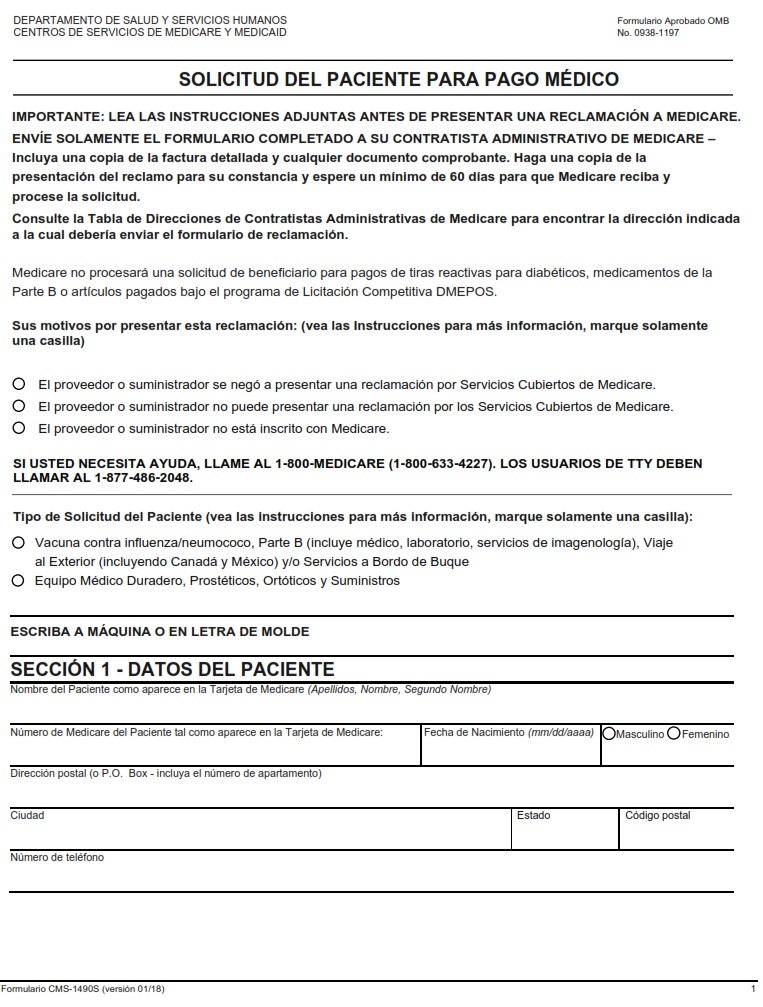
  • CMS 1490S – PATIENT’S REQUEST FOR MEDICAL PAYMENT (Spanish)

    CMS 1490S – PATIENT’S REQUEST FOR MEDICAL PAYMENT (Spanish)

    CMSFORM.ORGCMS 1490S – PATIENT’S REQUEST FOR MEDICAL PAYMENT (Spanish) – Picture this: you’ve just had a medical procedure or received treatment, and now it’s time to navigate the maze of insurance claims and payments. Enter the CMS 1490S form, a seemingly innocuous piece of paperwork that holds the key to getting your medical bills paid. This form, known as the Patient’s Request for Medical Payment, is more than just a bureaucratic necessity – it’s your ticket to ensuring that your healthcare expenses are covered. In this article, we’ll delve into the intricacies of the CMS 1490S form, demystifying its purpose and importance in advocating for your rights as a patient in the complex world of medical billing. So buckle up and get ready to unravel the secrets behind this essential document that could make all the difference in your financial health journey.

    Download CMS 1490S – PATIENT’S REQUEST FOR MEDICAL PAYMENT (Spanish)

    [su_table responsive=”yes”]

    Form Number CMS 1490S
    Form Title PATIENT’S REQUEST FOR MEDICAL PAYMENT (Spanish)
    Published 2024-12-31
    O.M.B. 0938-1197
    File Size 1.016 KB

    [/su_table]

    [download id=’1550′]

    What is a CMS 1490S?

    Have you ever wondered about the significance of CMS 1490S in the realm of healthcare administration? The CMS 1490S form, also known as the Patient’s Request for Medical Payment, plays a crucial role in facilitating direct reimbursements to patients. By filling out this form accurately and submitting it with necessary documentation, patients can claim reimbursement for medical services not covered by their insurance plans. This process empowers individuals to take control of their healthcare expenses and ensures timely payments for services rendered.

    Moreover, the CMS 1490S serves as a bridge between patients and healthcare providers by streamlining the payment process. It eliminates the need for lengthy insurance claims processes and allows patients to seek reimbursement directly from Medicare or other relevant programs. Understanding how to utilize this form effectively can help both patients and providers navigate the complexities of medical billing more efficiently. In essence, the CMS 1490S embodies patient empowerment within the realm of medical payment systems, providing a vital link between individuals seeking financial assistance for healthcare costs and governmental reimbursement programs.

    Where Can I Find a CMS 1490S?

    If you’re looking for a CMS 1490S form to request medical payment, there are several places where you can easily access and obtain this document. One of the most convenient options is to visit the official website of the Centers for Medicare & Medicaid Services (CMS). Here, you can find the form available for download in PDF format, allowing you to print it out and fill it in as needed.

    Another option is to reach out to your healthcare provider or local hospital. Many medical facilities have these forms readily available and can provide you with a copy upon request. Additionally, some pharmacies or medical supply stores may carry these forms as well, so it’s worth checking with them if you need one quickly. Ultimately, having easy access to the CMS 1490S form ensures that patients can efficiently submit their requests for medical payment without any unnecessary delays.

    CMS 1490S – PATIENT’S REQUEST FOR MEDICAL PAYMENT

    When a patient submits Form CMS 1490S, it signifies a critical step in navigating the complexities of medical payment requests. This form serves as a direct channel for patients to claim reimbursement for medical services directly paid out-of-pocket. It is a powerful tool that empowers patients to take control of their healthcare expenses and ensures that they are adequately reimbursed for services rendered. By submitting this form, patients are actively advocating for themselves and asserting their right to fair compensation.

    The process of completing Form CMS 1490S can be daunting for some patients due to its detailed nature and specific requirements. However, understanding the importance of accurately filling out this form can make all the difference in receiving prompt reimbursement. It is crucial for patients to familiarize themselves with the information needed, seek help if necessary, and submit the form in a timely manner to expedite the payment process. Ultimately, by taking charge of their financial health through Form CMS 1490S, patients can achieve peace of mind knowing that their medical expenses are being properly addressed.

    CMS 1490S Example

    CMS 1490S – Page 1 (Spanish) CMS 1490S – Page 2 (Spanish)

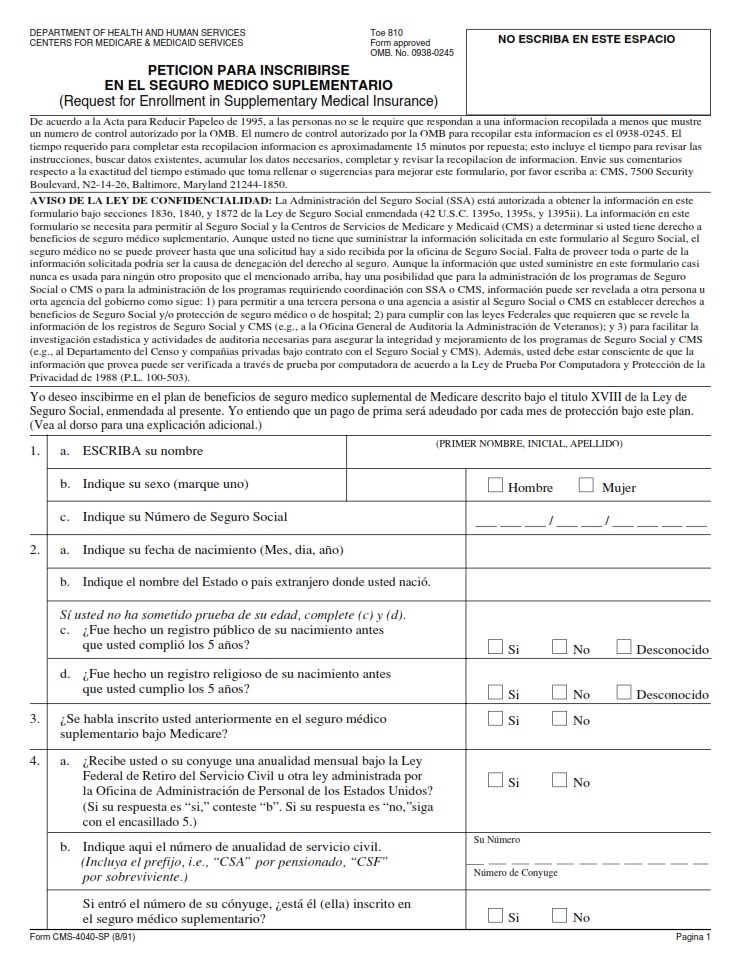
  • CMS 4040 – REQUEST FOR ENROLLMENT IN SUPPLEMENTARY MEDICAL INSURANCE (Spanish)

    CMS 4040 – REQUEST FOR ENROLLMENT IN SUPPLEMENTARY MEDICAL INSURANCE (Spanish)

    CMSFORM.ORGCMS 4040 – REQUEST FOR ENROLLMENT IN SUPPLEMENTARY MEDICAL INSURANCE (Spanish) – Are you tired of navigating the complex world of medical insurance on your own? Look no further than CMS 4040 – the gateway to securing supplementary medical coverage that could change the game for your healthcare needs. In a society where unexpected medical expenses can derail financial stability in an instant, having robust insurance coverage is not just a luxury but a necessity. This article delves into the intricacies of CMS 4040 and why enrolling in supplementary medical insurance might be the smartest decision you make this year.

    Imagine a world where you never have to worry about exorbitant hospital bills or pricey prescription medications. With CMS 4040, that reality could be closer than you think. This comprehensive guide will walk you through the benefits, eligibility criteria, and application process for enrolling in supplementary medical insurance. Whether you’re a seasoned pro at deciphering insurance jargon or completely new to the game, this article is your go-to resource for making informed decisions about your healthcare coverage.

    Download CMS 4040 – REQUEST FOR ENROLLMENT IN SUPPLEMENTARY MEDICAL INSURANCE (Spanish)

    [su_table responsive=”yes”]

    Form Number CMS 4040
    Form Title REQUEST FOR ENROLLMENT IN SUPPLEMENTARY MEDICAL INSURANCE (Spanish)
    Published 2023-09-30
    O.M.B. 938-0245
    File Size 60 KB

    [/su_table]

    [download id=’1551′]

    What is a CMS 4040?

    CMS 4040, also known as the Request for Enrollment in Supplementary Medical Insurance, plays a crucial role in ensuring individuals have access to comprehensive healthcare coverage. This form serves as a gateway for enrolling in supplementary insurance that can cover costs not included in standard Medicare plans. Through CMS 4040, beneficiaries can tailor their coverage to meet specific medical needs and enhance the scope of their healthcare options.

    By simplifying the enrollment process and providing clear guidelines on supplementary insurance options, CMS 4040 empowers individuals to make informed decisions about their healthcare coverage. The flexibility offered by this form allows beneficiaries to customize their insurance plans according to changing health conditions and evolving medical requirements. With CMS 4040, individuals can navigate the complexities of healthcare insurance with ease and peace of mind, knowing they have access to a robust system designed to support their well-being.

    Where Can I Find a CMS 4040?

    If you’re searching for a CMS 4040 form to enroll in supplementary medical insurance, there are several places you can look. One convenient option is to visit the official website of the Centers for Medicare & Medicaid Services (CMS). Here, you can easily download the form or request a physical copy to be mailed to you. Another avenue is to contact your nearest Social Security office, where they can provide you with the necessary forms and guidance on how to complete them.

    In addition, many insurance agencies and healthcare providers also keep physical copies of CMS 4040 forms available for patients and clients who wish to sign up for supplementary medical insurance. You can inquire at your local doctor’s office or insurance company if they have these forms on hand. Lastly, some community centers or senior citizen organizations may offer assistance in obtaining and filling out CMS 4040 forms, so it’s worth checking with these resources as well.

    CMS 4040 – REQUEST FOR ENROLLMENT IN SUPPLEMENTARY MEDICAL INSURANCE

    Enrolling in supplementary medical insurance can be a crucial step towards ensuring comprehensive healthcare coverage. The CMS 4040 form plays a significant role in this process, acting as the gateway to accessing additional benefits that can enhance one’s primary insurance. By filling out this form accurately and promptly, individuals can secure vital coverage for services not covered by their primary plan, such as vision or dental care.

    Understanding the nuances of supplementary medical insurance enrollment is essential for making informed decisions about one’s healthcare needs. The CMS 4040 request sets the stage for individuals to explore tailored options that align with their specific requirements and financial capabilities. Embracing this opportunity can provide peace of mind knowing that potential gaps in coverage are adequately addressed, creating a more comprehensive safety net for unexpected health expenses.

    CMS 4040 Example

    CMS 4040 – Page 1 (Spanish) CMS 4040 – Page 2 (Spanish)

  • CMS 846 – Certificate of Medical Necessity – Pneumatic Compression Devices DME 04.04B

    CMS 846 – Certificate of Medical Necessity – Pneumatic Compression Devices DME 04.04B

    CMSFORM.ORGCMS 846 – Certificate of Medical Necessity – Pneumatic Compression Devices DME 04.04B – As the healthcare landscape continues to evolve, the importance of precise documentation and justification for medical equipment becomes increasingly crucial. One such document that plays a key role in ensuring patients receive necessary devices is CMS 846 – Certificate of Medical Necessity for Pneumatic Compression Devices DME 04.04B. This seemingly mundane form holds the power to impact patient care significantly, serving as a bridge between healthcare providers and insurance companies in the quest for optimal treatment outcomes.

    Imagine a world where medical necessity is not just a bureaucratic hurdle but a pivotal tool in advocating for patient well-being. With pneumatic compression devices becoming essential aids in managing various health conditions, understanding and mastering the intricacies of CMS 846 can unlock doors to improved access to vital equipment for those who need it most. In this article, we delve into the nuances of this often overlooked certificate, exploring its implications on patient care and shedding light on how it shapes the landscape of durable medical equipment provision.

    Download CMS 846 – Certificate of Medical Necessity – Pneumatic Compression Devices DME 04.04B

    [su_table responsive=”yes”]

    Form Number CMS 846
    Form Title Certificate of Medical Necessity – Pneumatic Compression Devices DME 04.04B
    Published 2017-02-01
    O.M.B. 0938-0679
    File Size 3 KB

    [/su_table]

    [download id=’1552′]

    What is a CMS 846?

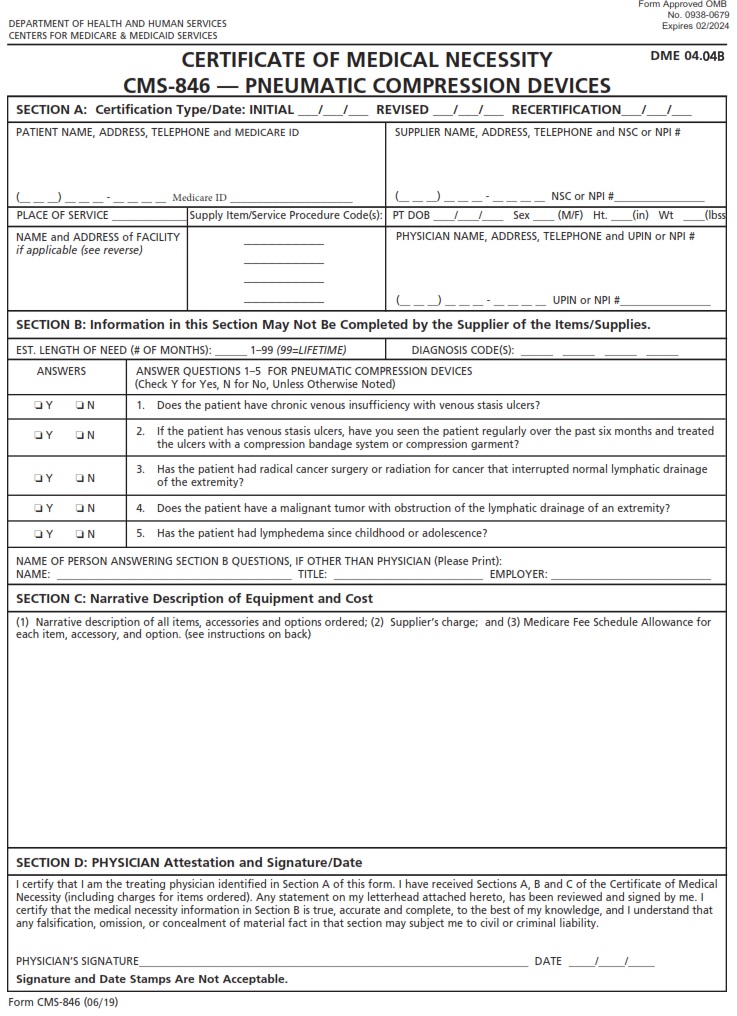
    A CMS 846 form, also known as a Certificate of Medical Necessity, plays a crucial role in the approval process for Pneumatic Compression Devices under DME 04.04B guidelines. This document serves as a validation from healthcare providers that the prescribed equipment is essential for managing a patient’s medical condition effectively. By detailing the specific medical needs and conditions requiring pneumatic compression therapy, the CMS 846 form ensures that patients receive appropriate care tailored to their individual requirements.

    Moreover, submitting a CMS 846 form not only facilitates insurance coverage but also demonstrates compliance with Medicare regulations governing Durable Medical Equipment. Healthcare professionals must accurately complete this form to justify the necessity of Pneumatic Compression Devices for their patients. As such, understanding and utilizing the CMS 846 documentation process is vital for ensuring uninterrupted access to critical medical equipment while adhering to regulatory standards set by Medicare and other insurers.

    Where Can I Find a CMS 846?

    CMS 846 forms, essential for obtaining pneumatic compression devices under DME 04.04B, can be sourced from various avenues. Healthcare providers and Durable Medical Equipment suppliers are primary sources for acquiring the CMS 846 form. These entities often possess up-to-date versions of the form that align with regulatory requirements and streamline the process of obtaining necessary medical equipment.

    For individuals looking to acquire a CMS 846 form independently, exploring official government websites such as Medicare.gov can be fruitful. Additionally, some healthcare facilities provide online resources where patients can access and download CMS 846 forms directly. By leveraging these multiple pathways, individuals seeking pneumatic compression devices can efficiently navigate the documentation process and ensure timely compliance with medical necessity requirements.

    CMS 846 – Certificate of Medical Necessity – Pneumatic Compression Devices DME 04.04B

    When it comes to the CMS 846 form for pneumatic compression devices, precision and thoroughness are crucial. This certificate of medical necessity plays a significant role in ensuring that patients receive the durable medical equipment required for their healthcare needs. Healthcare providers completing this form must accurately detail the patient’s condition, treatment plan, and how a pneumatic compression device will benefit them in managing their condition. Moreover, highlighting the medical necessity of such devices can expedite insurance coverage approval processes and ensure timely access to vital equipment for patients.

    The intricate nature of DME reimbursement highlights the importance of proper documentation through forms like CMS 846. Medical providers must navigate complex coding requirements and specific criteria to prove that pneumatic compression devices are not only beneficial but also essential in managing a patient’s health condition. Effective communication between healthcare professionals, patients, and insurance companies is key in streamlining the process and ensuring that patients receive prompt access to necessary medical equipment. By understanding the significance of CMS 846 in justifying medical necessity for pneumatic compression devices, stakeholders can work together effectively towards optimal patient care outcomes.

    CMS 846 Example

    CMS 846