Author: Bismillah

  • CMS 10055 – SKILLED NURSING FACILITY ADVANCED BENEFICIARY NOTICE

    CMS 10055 – SKILLED NURSING FACILITY ADVANCED BENEFICIARY NOTICE

    CMSFORM.ORGCMS 10055 – SKILLED NURSING FACILITY ADVANCED BENEFICIARY NOTICE – As the aging population continues to grow, the demand for skilled nursing facilities has never been higher. Amidst this surge in utilization, understanding the intricacies of Medicare guidelines becomes paramount for both providers and beneficiaries alike. In this article, we delve into the often overlooked but vital CMS 10055 form – the Skilled Nursing Facility Advanced Beneficiary Notice (SNF ABN). This document serves as a crucial tool in ensuring transparency and clarity regarding potential costs and coverage limitations within skilled nursing facilities.

    With healthcare costs on the rise and reimbursement regulations constantly evolving, it is essential for individuals to be well-informed about their rights and responsibilities when it comes to utilizing Medicare benefits in a skilled nursing facility setting. The SKILLED NURSING FACILITY ADVANCED BENEFICIARY NOTICE (CMS 10055) plays a pivotal role in empowering beneficiaries with information that can guide them through complex healthcare decisions. In this comprehensive guide, we explore the nuances of this form, its implications for both providers and patients, and how it ultimately shapes the landscape of care delivery within these critical facilities.

    Download CMS 10055 – SKILLED NURSING FACILITY ADVANCED BENEFICIARY NOTICE

    [su_table responsive=”yes”]

    Form Number CMS 10055
    Form Title SKILLED NURSING FACILITY ADVANCED BENEFICIARY NOTICE
    Published
    O.M.B.
    File Size 45 KB

    [/su_table]

    [download id=’1274′]

    What is a CMS 10055?

    A CMS 10055 is an essential form used in skilled nursing facilities to provide advanced beneficiary notice to patients. This form serves as a communication tool between the facility and the patient, detailing important information regarding healthcare services, potential costs, and coverage options. By completing this form, both parties can ensure clear understanding of financial responsibilities and choices related to care.

    Skilled nursing facilities utilize the CMS 10055 to empower patients with knowledge about their healthcare journey and associated expenses. This formal notification process enhances transparency in decision-making and promotes informed choices for both patients and providers. Understanding the significance of this document allows patients to actively participate in their care plans while acknowledging the financial implications involved in their treatment.

    Where Can I Find a CMS 10055?

    If you’re in search of a CMS 10055 form for your skilled nursing facility, you’re probably wondering where to find it. One reliable option is the official Medicare website, where you can download the form directly. Additionally, many third-party websites dedicated to healthcare compliance and documentation also provide access to the CMS 10055 form. For those who prefer a more traditional approach, reaching out to local healthcare organizations or consulting with a medical supplies provider might also yield results.

    Another avenue worth exploring is contacting your state’s department of health or aging services for guidance on obtaining the CMS 10055 form. It’s important to ensure that any source providing the form is reputable and up-to-date with current regulations. By being proactive in your search and utilizing multiple resources, you can easily locate the necessary CMS 10055 form for your skilled nursing facility without unnecessary delays or complications.

    CMS 10055 – SKILLED NURSING FACILITY ADVANCED BENEFICIARY NOTICE

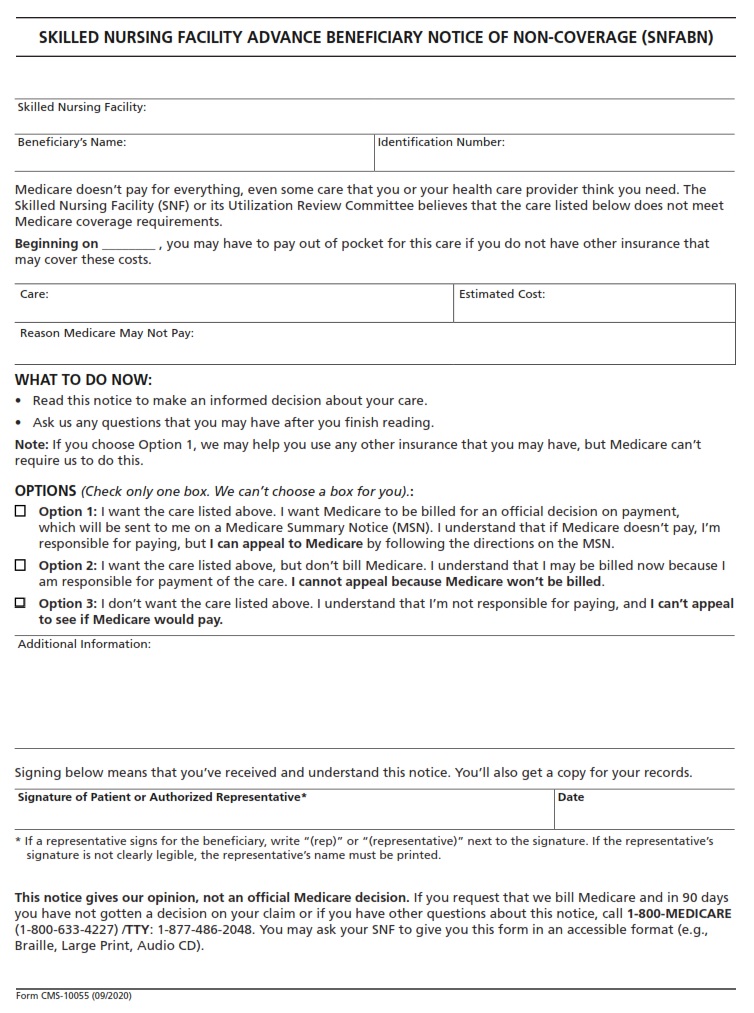
    CMS 10055, the Skilled Nursing Facility Advanced Beneficiary Notice (SNF ABN), plays a crucial role in ensuring transparent communication between healthcare providers and Medicare beneficiaries. This form is issued to inform patients when services provided may not be covered by Medicare, allowing them to make informed decisions regarding their care. By presenting this notice upfront, SNFs empower beneficiaries to understand their financial responsibilities and choose the most suitable treatment options for their needs.

    Moreover, the implementation of CMS 10055 serves as a proactive measure to prevent unexpected billing issues and misunderstandings between patients and healthcare providers. Providing transparency through the SNF ABN promotes trust and cooperation in the decision-making process, ultimately enhancing the overall patient experience within skilled nursing facilities. Through clear communication facilitated by CMS 10055, both parties can navigate potential coverage gaps with confidence, fostering a collaborative approach towards effective care management.

    CMS 10055 Example
    CMS 10055

  • CMS 20041 – Speech Invitation Request Background Information

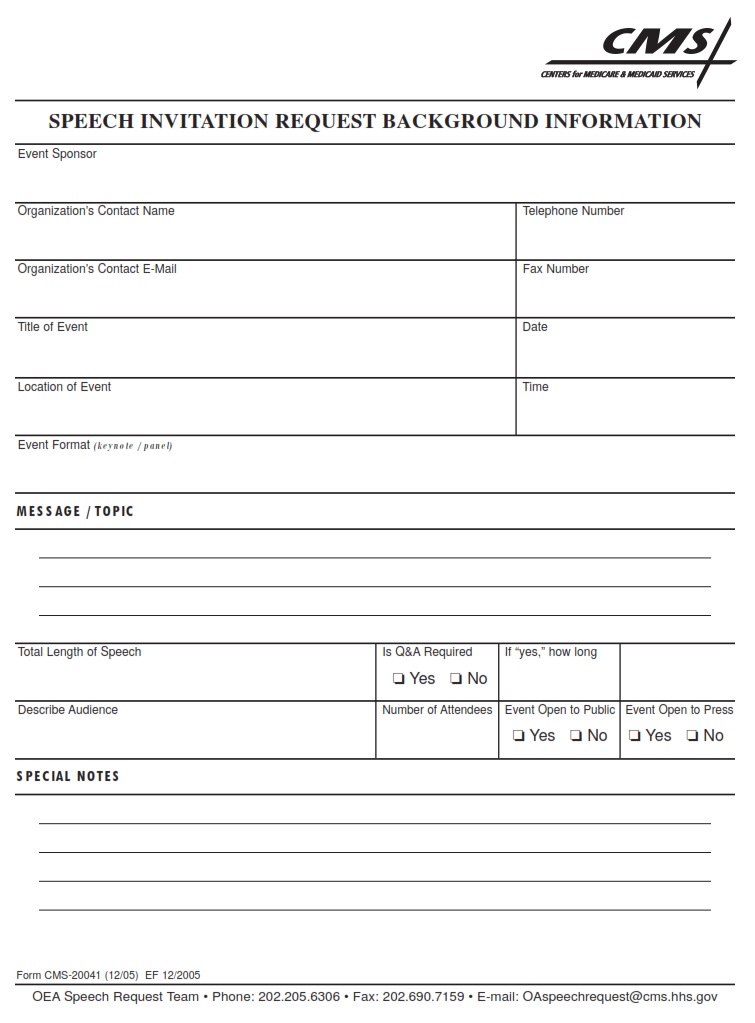
    CMS 20041 – Speech Invitation Request Background Information

    CMSFORM.ORGCMS 20041 – Speech Invitation Request Background Information – Imagine standing in front of a room filled with eager faces, all waiting to hear your words. The spotlight is on you, the stage is set, and the power of your voice reverberates through the air. This is the opportunity that awaits those who receive an invitation to speak at CMS 20041 – a prestigious event where ideas collide, innovation flourishes, and boundaries are pushed. But how does one secure such a coveted spot on this illustrious platform? To answer this question, we must delve into the intricate world of speech invitation requests and uncover the background information that shapes this process. From understanding the selection criteria to crafting a compelling proposal, navigating this landscape requires finesse and strategic planning. Join us as we unravel the mysteries behind CMS 20041’s speech invitation request system and discover what it takes to captivate an audience with your words.

    Download CMS 20041 – Speech Invitation Request Background Information

    [su_table responsive=”yes”]

    Form Number CMS 20041
    Form Title Speech Invitation Request Background Information
    Published 0005-12-01
    O.M.B.
    File Size 14 KB

    [/su_table]

    [download id=’1290′]

    What is a CMS 20041?

    CMS 20041, also known as the Communication Management System, is a cutting-edge technology that revolutionizes speech invitation request processes. Unlike traditional methods, CMS 20041 offers a streamlined platform for organizing and managing speech invitations with efficiency and precision. Its user-friendly interface simplifies the entire workflow, enabling users to send, track, and manage multiple invitations seamlessly.

    One of the key features of CMS 20041 is its robust analytics capabilities. By collecting and analyzing data on speech invitation responses and attendance rates, organizations can gain valuable insights into their audience engagement strategies. This data-driven approach allows for real-time adjustments and improvements to optimize future speech invitation campaigns effectively. In an era where personalized communication is paramount, CMS 20041 provides a dynamic solution for enhancing event planning and guest outreach in unprecedented ways.

    Where Can I Find a CMS 20041?

    If you’re on the hunt for a CMS 20041, you may be pleased to know that many government agencies and organizations often use this specific model for speech invitation requests. To streamline your search, consider reaching out to relevant departments within these establishments or checking their official websites for information on how to access a CMS 20041. Additionally, networking with professionals in the field can also lead you to potential sources where you can acquire this document efficiently.

    Another avenue worth exploring is specialized online platforms that cater to individuals seeking rare or specific forms like the CMS 20041. Websites offering document repositories or services related to government communications may have what you need. Remember to verify the credibility of any sources you come across and ensure that the version of CMS 20041 you obtain is up-to-date and compliant with current regulations.

    CMS 20041 – Speech Invitation Request Background Information

    The Speech Invitation Request Background Information for CMS 20041 is a crucial aspect of setting the tone and expectations for the event. Understanding the purpose, audience, and context of the speech can greatly influence its impact and effectiveness. By providing comprehensive background information to potential speakers, event organizers can ensure that the content aligns with the theme and goals of CMS 20041.

    Additionally, sharing relevant details such as key topics, preferred format, time constraints, and any specific requirements can help speakers tailor their presentations to meet the needs of the audience. This proactive approach not only enhances communication between organizers and speakers but also contributes to a more cohesive and engaging event experience for all participants. In essence, effectively communicating Speech Invitation Request Background Information sets the stage for a successful and impactful speech that resonates with attendees long after CMS 20041 concludes.

    CMS 20041 Example

    CMS 20041

  • CMS 20040 – Regional Office Meeting/Speaker Request Form

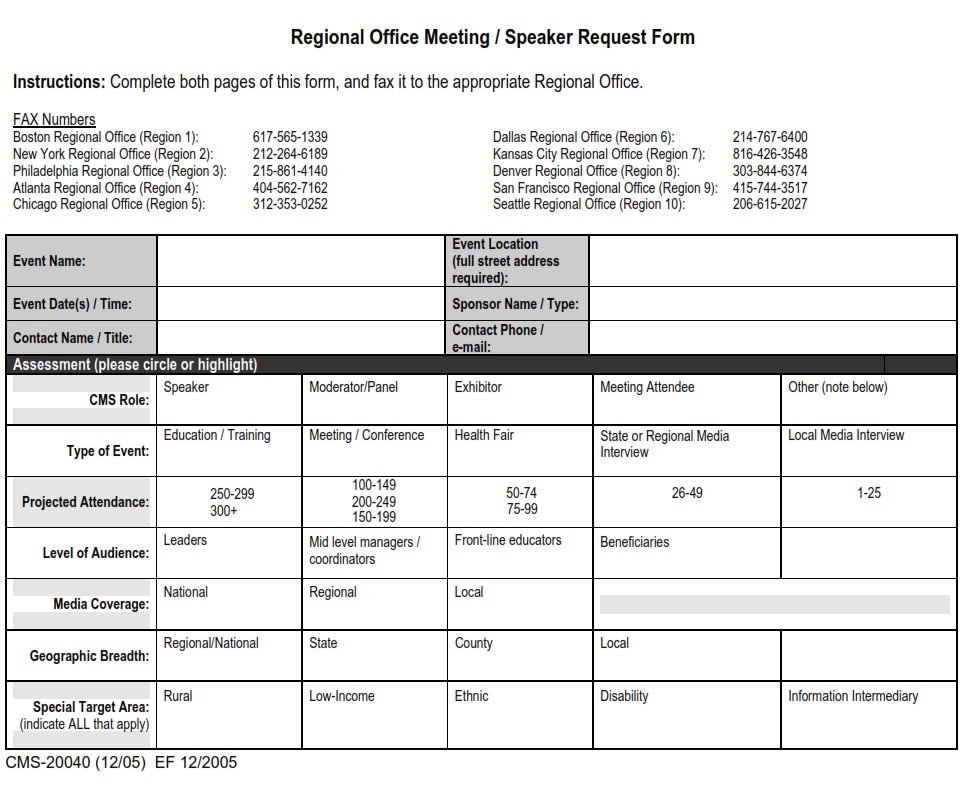
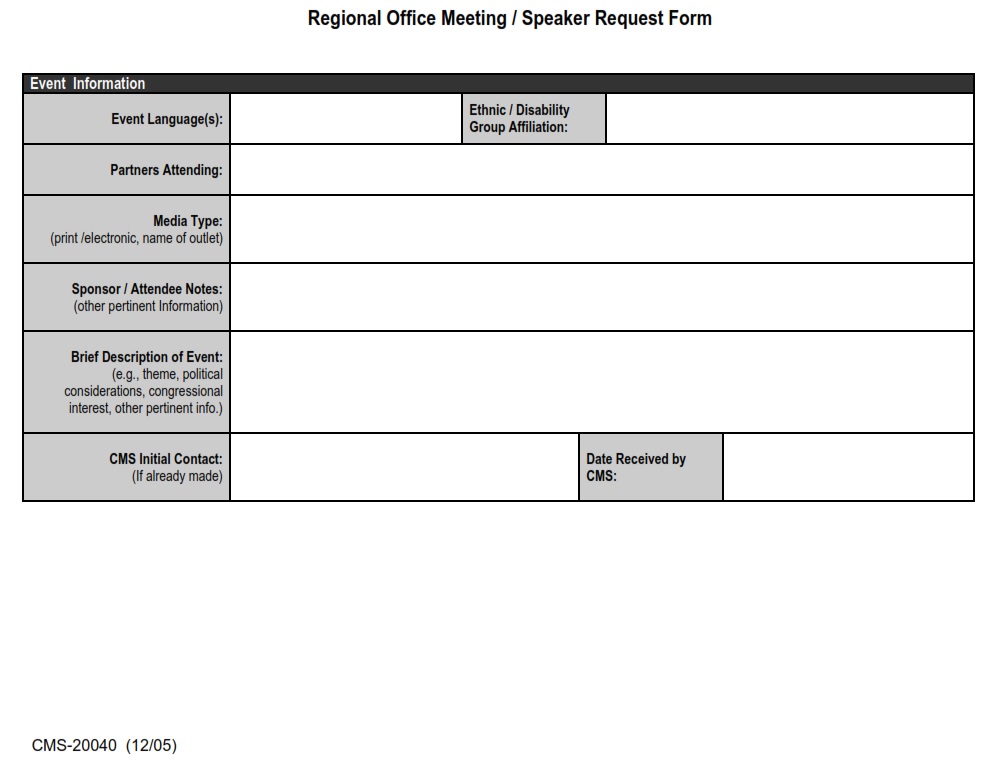
    CMS 20040 – Regional Office Meeting/Speaker Request Form

    CMSFORM.ORGCMS 20040 – Regional Office Meeting/Speaker Request Form – As the regional office gears up for its next meeting, anticipation is building around a pivotal element that can make or break the event: the speaker. The CMS 20040 – Regional Office Meeting Speaker Request Form has become an essential tool in ensuring that these gatherings are not just successful, but truly memorable. From industry experts to thought leaders, the form opens up a world of possibilities for selecting speakers who can inform, inspire, and captivate audiences with their insights and expertise.

    But behind this seemingly straightforward form lies a process that is anything but ordinary. Delving into the intricacies of choosing the right speaker involves careful consideration of not just their credentials, but also their ability to engage and connect with a diverse audience. Join us as we explore how this humble form plays a crucial role in shaping the narrative of each regional office meeting, elevating it from mere routine to an unforgettable experience for all attendees.

    Download CMS 20040 – Regional Office Meeting/Speaker Request Form

    [su_table responsive=”yes”]

    Form Number CMS 20040
    Form Title Regional Office Meeting/Speaker Request Form
    Published 0005-12-01
    O.M.B.
    File Size 95 KB

    [/su_table]

    [download id=’1289′]

    What is a CMS 20040?

    A CMS 20040, also known as the Regional Office Meeting Speaker Request Form, serves as a vital tool for organizations looking to secure engaging speakers for their events. This form typically includes details such as event date, time, location, desired topic or theme, and specific requirements for the speaker. By using the CMS 20040 effectively, event organizers can streamline the process of requesting and confirming speakers while ensuring that their events are informative and engaging.

    One key benefit of utilizing the CMS 20040 is its ability to facilitate communication between event organizers and potential speakers. By providing a structured format for submitting speaker requests, this form helps clarify expectations and ensure that both parties are on the same page regarding event details and logistics. Moreover, the CMS 20040 can help organizations maintain a record of past speakers and their presentations, enabling them to track trends in topics or identify recurring themes that resonate with their audience.

    Where Can I Find a CMS 20040?

    Finding a CMS 20040 can sometimes feel like searching for a needle in a haystack, but fear not, as there are several avenues you can explore to locate this elusive form. One of the most reliable sources for obtaining a CMS 20040 is through official governmental websites or regional office portals. These platforms often provide direct access to the form, allowing users to download it hassle-free.

    Moreover, reaching out to local healthcare facilities or consulting with medical professionals can also prove fruitful in acquiring a CMS 20040. Hospitals and clinics frequently deal with these forms and may have them readily available for distribution. Additionally, online forums and community groups related to healthcare management could serve as valuable resources in locating the required form. By leveraging these diverse channels, you can streamline your search for the CMS 20040 and ensure timely completion of your regional office meeting speaker request process.

    CMS 20040 – Regional Office Meeting/Speaker Request Form

    The CMS 20040 – Regional Office Meeting Speaker Request Form is a crucial tool in ensuring engaging and informative presentations at regional office meetings. This form allows organizers to carefully select speakers who can bring valuable insights and expertise to the table, setting the tone for productive discussions and collaborations. By tailoring each speaker request with specific goals and topics in mind, organizations can ensure that their meetings are not only well-organized but also impactful in driving their mission forward.

    With the CMS 20040 form, regional office meetings have the potential to become dynamic platforms for sharing knowledge, sparking innovation, and fostering meaningful connections among attendees. By empowering organizers to curate a diverse lineup of speakers representing various perspectives and disciplines, this form enables a rich exchange of ideas that can lead to groundbreaking initiatives and solutions within the organization. Utilizing the Speaker Request Form effectively can elevate the quality of regional office meetings, turning them into vibrant hubs of inspiration and collaboration for all participants involved.

    CMS 20040 Example

    CMS 20040 - Page 1 CMS 20040 - Page 2

  • CMS 20033 – MEDICARE RECONSIDERATION REQUEST FORM

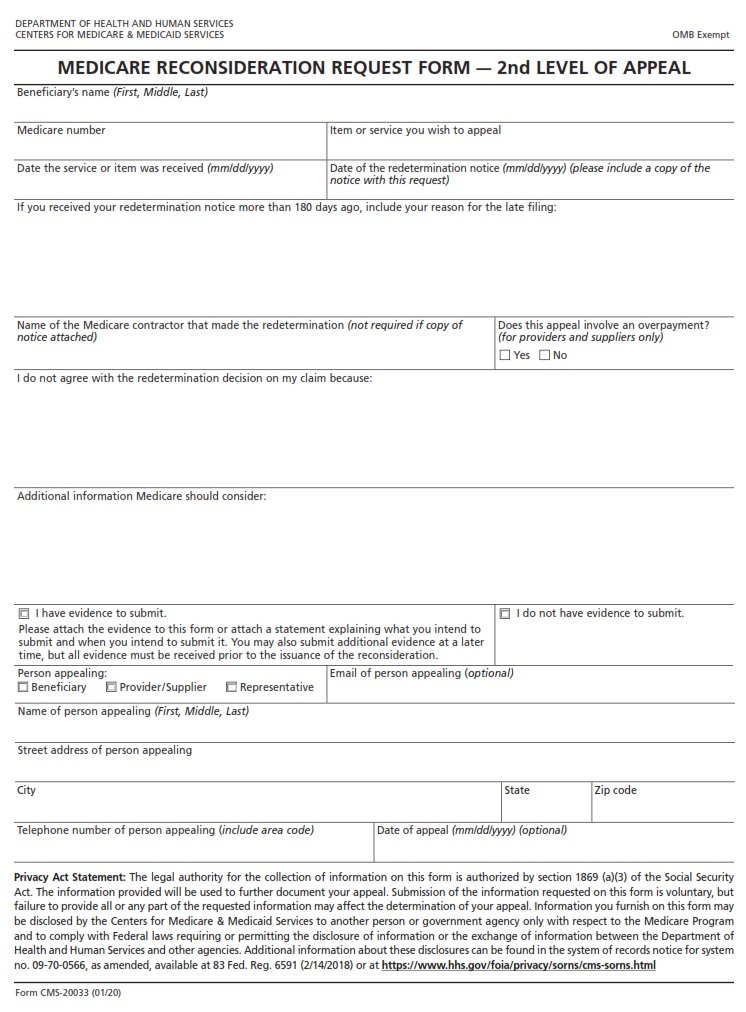
    CMS 20033 – MEDICARE RECONSIDERATION REQUEST FORM

    CMSFORM.ORGCMS 20033 – MEDICARE RECONSIDERATION REQUEST FORM – Navigating the complex world of Medicare can often feel like trying to unravel a particularly stubborn knot. Frustrations can run high when claims are denied or services aren’t covered as expected. But fear not, for there is a beacon of hope in the form of CMS 20033 – the Medicare Reconsideration Request Form. This seemingly mundane document holds the power to challenge decisions made by the Centers for Medicare & Medicaid Services (CMS) and potentially overturn denials, saving you time, money, and headaches in the process. In this article, we’ll delve into the intricacies of this form, explore how it can be your ally in fighting for fair coverage, and equip you with the knowledge needed to navigate the Medicare maze with confidence.

    Download CMS 20033 – MEDICARE RECONSIDERATION REQUEST FORM

    [su_table responsive=”yes”]

    Form Number CMS 20033
    Form Title MEDICARE RECONSIDERATION REQUEST FORM
    Published 0019-07-01
    O.M.B.
    File Size 42 KB

    [/su_table]

    [download id=’1291′]

    What is a CMS 20033?

    A CMS 20033 form, also known as the Medicare Reconsideration Request Form, is a crucial document for beneficiaries looking to appeal a Medicare coverage decision. The form allows individuals to formally request a review of a denial, reduction, or termination of their Medicare benefits. It provides a structured process for appealing decisions made by the Medicare program, giving recipients an opportunity to present additional information or evidence to support their case.

    Filling out the CMS 20033 form requires attention to detail and accuracy in providing all relevant information about the beneficiary and the disputed decision. This form serves as a valuable tool for challenging decisions that may have been made in error or without complete understanding of the individual’s circumstances. By submitting a well-prepared CMS 20033 form with supporting documentation, beneficiaries can increase their chances of having their appeal reconsidered and potentially overturned, ensuring they receive the rightful Medicare benefits they are entitled to.

    Where Can I Find a CMS 20033?

    Looking for a CMS 20033 form? Look no further than the official Medicare website, where you can easily download this crucial document in just a few clicks. This form, also known as the Medicare Reconsideration Request Form, plays a vital role in appealing Medicare coverage decisions and ensures that your healthcare needs are met appropriately. With clear instructions and user-friendly layout, navigating the CMS 20033 form is a breeze for individuals seeking to challenge denied claims or request changes to their Medicare coverage.

    Moreover, healthcare providers and insurance professionals can access the CMS 20033 form through various online portals dedicated to Medicare resources. These platforms not only offer easy access to essential forms like CMS 20033 but also provide valuable guidance on how to properly complete and submit them for efficient processing. By leveraging these digital tools, stakeholders in the healthcare industry can streamline their administrative processes related to Medicare reconsideration requests and ultimately improve patient outcomes with timely resolutions.

    CMS 20033 – MEDICARE RECONSIDERATION REQUEST FORM

    The CMS 20033 Medicare Reconsideration Request Form plays a crucial role in the healthcare system by allowing healthcare providers and beneficiaries to appeal decisions made by Medicare. This form serves as a formal way to request a reconsideration of denied claims, coverage determinations, or payment decisions. By filling out the CMS 20033 form with precision and providing any necessary supporting documentation, individuals can present a strong case for why their claim should be reconsidered.

    One key aspect of the CMS 20033 form is understanding the specific reasons for denial or disagreement with Medicare’s decision. Successfully completing this form requires attention to detail and clear communication of why the decision should be reversed. By engaging in this administrative process, individuals have an opportunity to advocate for fair treatment and ensure that they receive the benefits they deserve.

    CMS 20033 Example

    CMS 20033

  • CMS 20027 – MEDICARE REDETERMINATION REQUEST FORM

    CMS 20027 – MEDICARE REDETERMINATION REQUEST FORM

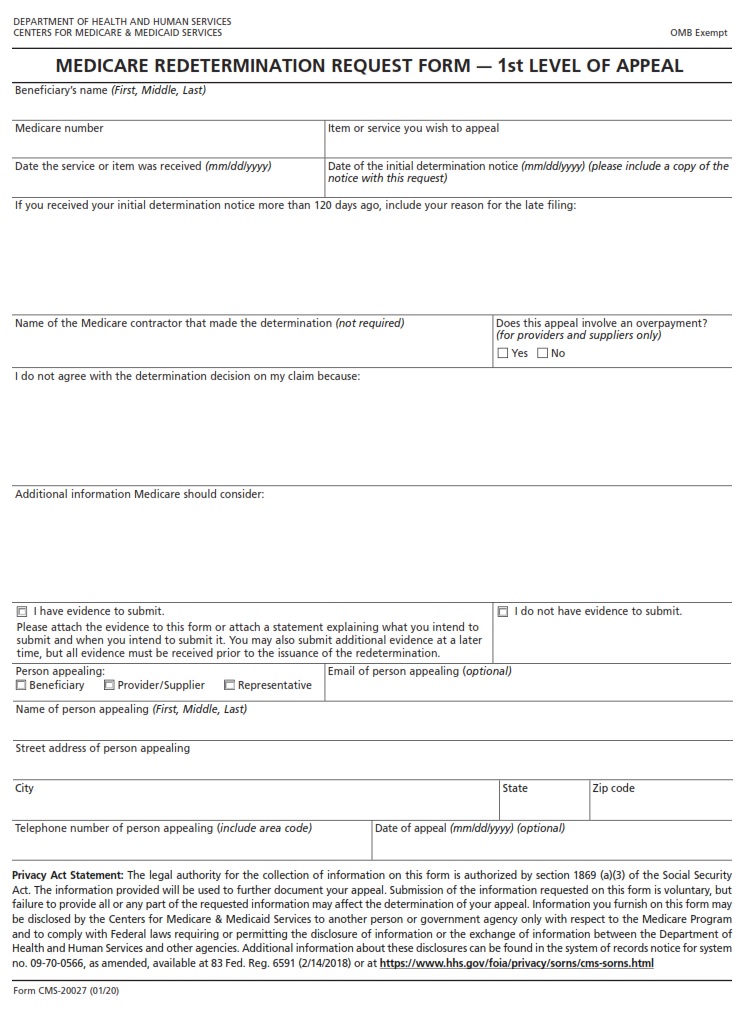
    CMSFORM.ORGCMS 20027 – MEDICARE REDETERMINATION REQUEST FORM – Navigating the complex world of healthcare can often feel like deciphering a cryptic code, with forms and processes that seem designed to baffle rather than assist. However, amidst this labyrinth of paperwork lies a crucial tool for those seeking clarity and resolution: CMS 20027 – the Medicare Redetermination Request Form. This seemingly innocuous document holds the power to challenge decisions made by Medicare regarding coverage or payment, offering individuals a chance to advocate for their rights and ensure fair treatment. In this article, we will delve into the intricacies of this form, exploring its significance in empowering patients to take control of their healthcare journey and seek the justice they deserve. Join us on this enlightening exploration as we unravel the mysteries behind CMS 20027 and discover how it can be a beacon of hope in an often confusing healthcare landscape.

    Download CMS 20027 – MEDICARE REDETERMINATION REQUEST FORM

    [su_table responsive=”yes”]

    Form Number CMS 20027
    Form Title MEDICARE REDETERMINATION REQUEST FORM
    Published 0019-07-01
    O.M.B.
    File Size 45 KB

    [/su_table]

    [download id=’1292′]

    What is a CMS 20027?

    A CMS 20027 form, also known as the Medicare Redetermination Request Form, is a crucial document that allows beneficiaries to appeal decisions made by Medicare regarding coverage or payment of services. This form serves as a channel for individuals to request a review of an initial decision and potentially overturn unfavorable rulings. By filling out the CMS 20027 form, patients have the opportunity to present additional information, evidence, or arguments supporting their case, ultimately aiming to secure the coverage they deserve.

    One key aspect of the CMS 20027 form is its role in empowering patients and advocating for their healthcare rights. Through this formalized process of appeal, individuals can challenge decisions that may adversely impact their access to necessary medical services or financial assistance. It highlights the importance of patient advocacy and involvement in healthcare decision-making, allowing them to actively participate in shaping their health outcomes. The CMS 20027 form embodies principles of transparency and accountability within the healthcare system, ensuring that patients are not left without recourse when facing challenges with Medicare coverage.

    Where Can I Find a CMS 20027?

    If you’re seeking the elusive CMS 20027 form for your Medicare redetermination request, you may have encountered some challenges in locating it. While traditional methods like visiting local Medicare offices or requesting it by mail are options, a more efficient approach would be to explore online resources. The Centers for Medicare & Medicaid Services website is a reliable source where you can easily access and download the CMS 20027 form, saving time and effort.

    Furthermore, various third-party websites focusing on healthcare documentation and forms can also be valuable platforms to find the CMS 20027 form. These websites often provide comprehensive information on how to fill out the form correctly and submit it for your redetermination request. Embracing digital solutions for accessing the CMS 20027 not only streamlines the process but also empowers individuals to navigate their healthcare journey with greater ease and knowledge.

    CMS 20027 – MEDICARE REDETERMINATION REQUEST FORM

    Navigating the world of healthcare can be a daunting task, especially when it comes to understanding forms and processes such as the CMS 20027 – Medicare Redetermination Request Form. This crucial document serves as a lifeline for individuals seeking to dispute or appeal decisions made by Medicare regarding their benefits or coverage. By completing this form with precision and providing all necessary documentation, patients can potentially overturn unfavorable determinations and secure the vital care they deserve.

    One key aspect to keep in mind when dealing with the CMS 20027 form is the importance of thoroughness. Incomplete information or missing documents can significantly delay the redetermination process, causing unnecessary stress for individuals in need of timely medical services. Furthermore, understanding the specific guidelines and criteria set forth by Medicare for filing a redetermination request is essential for maximizing your chances of success. By staying informed and proactive throughout this process, patients can advocate effectively for their healthcare needs and ensure fair treatment under Medicare guidelines.

    In conclusion, while filling out forms like the CMS 20027 – Medicare Redetermination Request may seem overwhelming at first glance, it is an invaluable tool for asserting your rights within the healthcare system. Taking the time to familiarize yourself with these processes and seeking guidance when needed can make a significant difference in your ability to access quality care. By approaching redetermination requests with diligence and determination, individuals can navigate bureaucratic hurdles more effectively and ultimately secure positive outcomes for their health and well-being.

    CMS 20027 Example

    CMS 20027

  • CMS 1666 – REGIONAL OFFICE REQUEST FOR ADDITIONAL INFORMATION

    CMS 1666 – REGIONAL OFFICE REQUEST FOR ADDITIONAL INFORMATION

    CMSFORM.ORGCMS 1666 – REGIONAL OFFICE REQUEST FOR ADDITIONAL INFORMATION – In the bustling corridors of the CMS 1666 Regional Office, a sense of anticipation fills the air as whispers of a new directive echo through the cubicles. The familiar hum of keyboards is punctuated by hushed conversations, all centered around one thing – the impending request for additional information. As employees exchange knowing glances and furrow their brows in contemplation, a wave of curiosity sweeps through the office like an electric current. What could this mysterious request entail? Is it a routine protocol or does it hint at something more significant looming on the horizon?

    The air crackles with intrigue as each employee grapples with their own interpretations and speculations, fueling a collective sense of urgency to decipher the cryptic message that has landed on their desks. With deadlines looming and stakes high, tensions run high as everyone scrambles to unravel the puzzle hidden within CMS 1666’s latest missive. Amidst this whirlwind of uncertainty and excitement, one thing is certain – change is coming, and it’s up to each individual to rise to the challenge or risk being left behind in this ever-evolving landscape of regulations and compliance.

    Download CMS 1666 – REGIONAL OFFICE REQUEST FOR ADDITIONAL INFORMATION

    [su_table responsive=”yes”]

    Form Number CMS 1666
    Form Title REGIONAL OFFICE REQUEST FOR ADDITIONAL INFORMATION
    Published 1980-04-01
    O.M.B.
    File Size 414 KB

    [/su_table]

    [download id=’1293′]

    What is a CMS 1666?

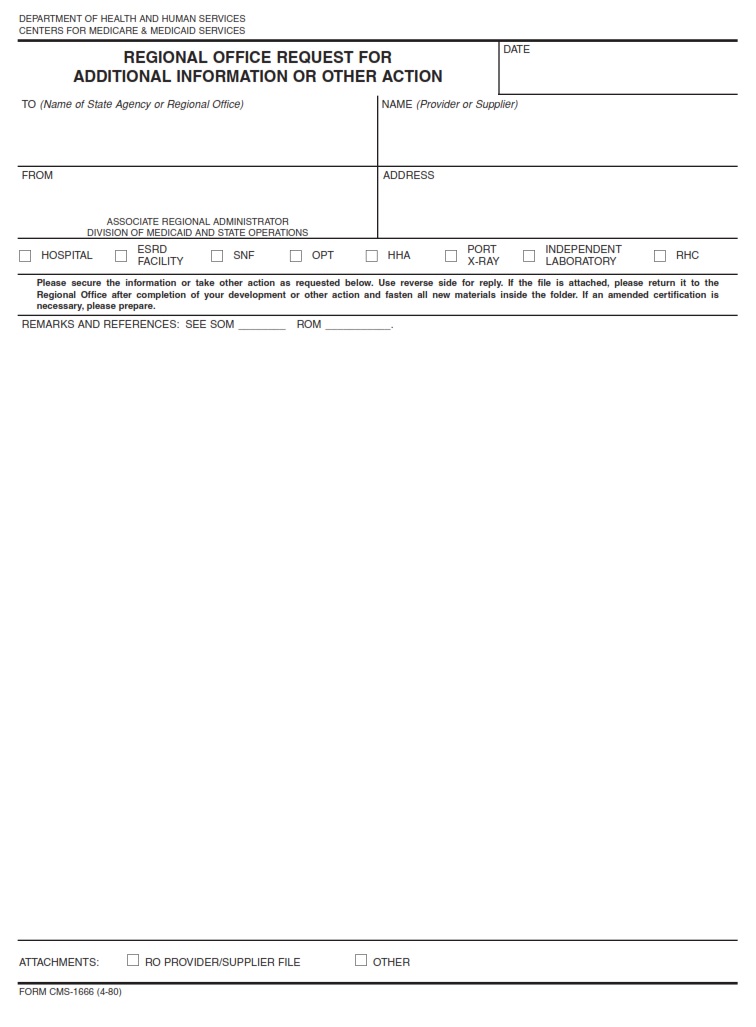
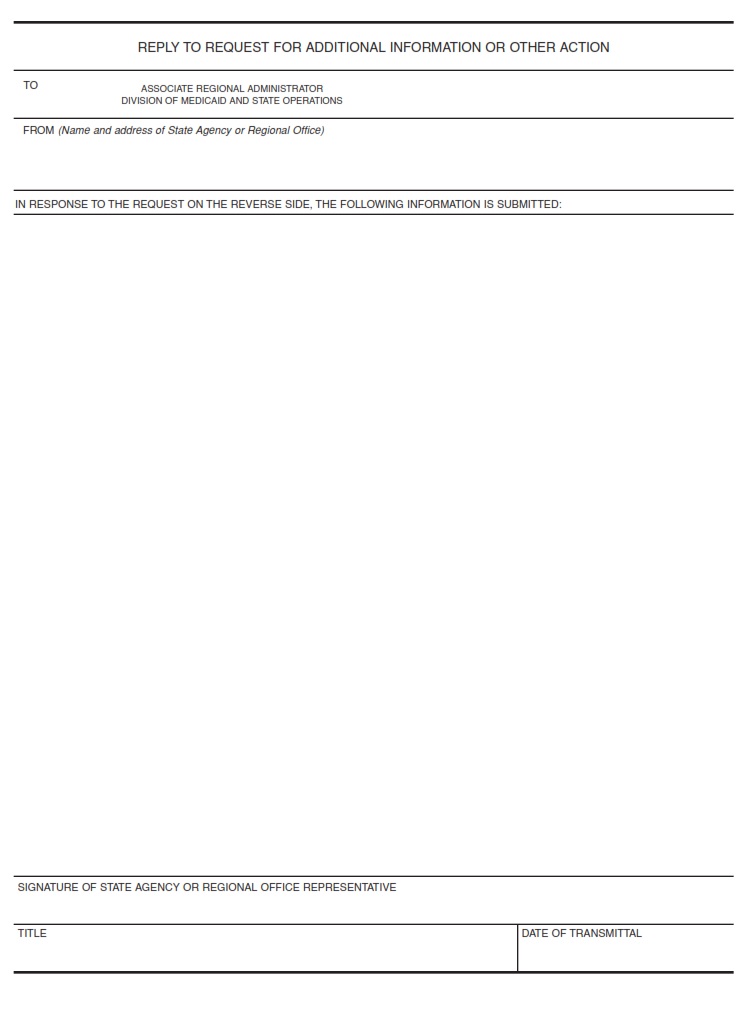
    A CMS 1666 refers to a specific form used by regional offices to request additional information in the context of various processes. This form plays a crucial role in streamlining communication between different departments and ensuring that all necessary details are provided for accurate decision-making. By utilizing the CMS 1666 effectively, regional offices can enhance their efficiency and productivity by clearly outlining the information required from relevant stakeholders.

    Furthermore, the CMS 1666 serves as a formal channel for requesting specific data or documentation, reducing ambiguities and potential errors in the exchange of information. Its structured format enables offices to gather essential details systematically, leading to faster processing times and improved overall effectiveness. Regional teams can leverage the standardized nature of the CMS 1666 to ensure consistency in their requests and responses, fostering better collaboration among all parties involved in the process.

    Where Can I Find a CMS 1666?

    If you’re on the hunt for a CMS 1666, regional offices can be a valuable resource for obtaining additional information. These offices often receive updates and directives regarding specific forms like the CMS 1666 and may be able to provide guidance on where to find them. Additionally, exploring online platforms that cater to government forms and documents can be another avenue to locate the CMS 1666 efficiently.

    Moreover, contacting relevant agencies or departments that deal with healthcare services could also lead you to the desired form. It’s essential to leverage all available resources when searching for specific government forms like the CMS 1666, ensuring you are equipped with accurate and up-to-date information. By being proactive in your search efforts, you increase your chances of obtaining the necessary documentation promptly.

    CMS 1666 – REGIONAL OFFICE REQUEST FOR ADDITIONAL INFORMATION

    As the CMS 1666 Regional Office Request for Additional Information rolls in, healthcare providers are faced with the crucial task of ensuring compliance while maintaining operational efficiency. This process highlights the importance of meticulous documentation and timely response to regulatory inquiries. By embracing a proactive approach, organizations can streamline their communication with regional offices and minimize potential delays in reimbursement.

    One key takeaway from the CMS 1666 request is the opportunity it presents for providers to enhance their internal processes and workflows. Taking a closer look at how information is collected, stored, and accessed can lead to greater transparency and accuracy in reporting. Additionally, engaging staff members in ongoing training on regulatory requirements can further strengthen an organization’s overall compliance posture.

    Embracing technological solutions that facilitate data management and analysis can significantly aid healthcare providers in meeting the demands of CMS 1666 requests. Leveraging electronic health records (EHR) systems and other digital tools can help streamline information retrieval processes and ensure data integrity. By investing in these resources, organizations can not only navigate current regulatory challenges more effectively but also position themselves for success in an increasingly data-driven healthcare landscape.

    CMS 1666 Example

    CMS 1666 - Page 1 CMS 1666 - Page 2

  • CMS 2007 – PROVIDER TIE IN NOTICE

    CMS 2007 – PROVIDER TIE IN NOTICE

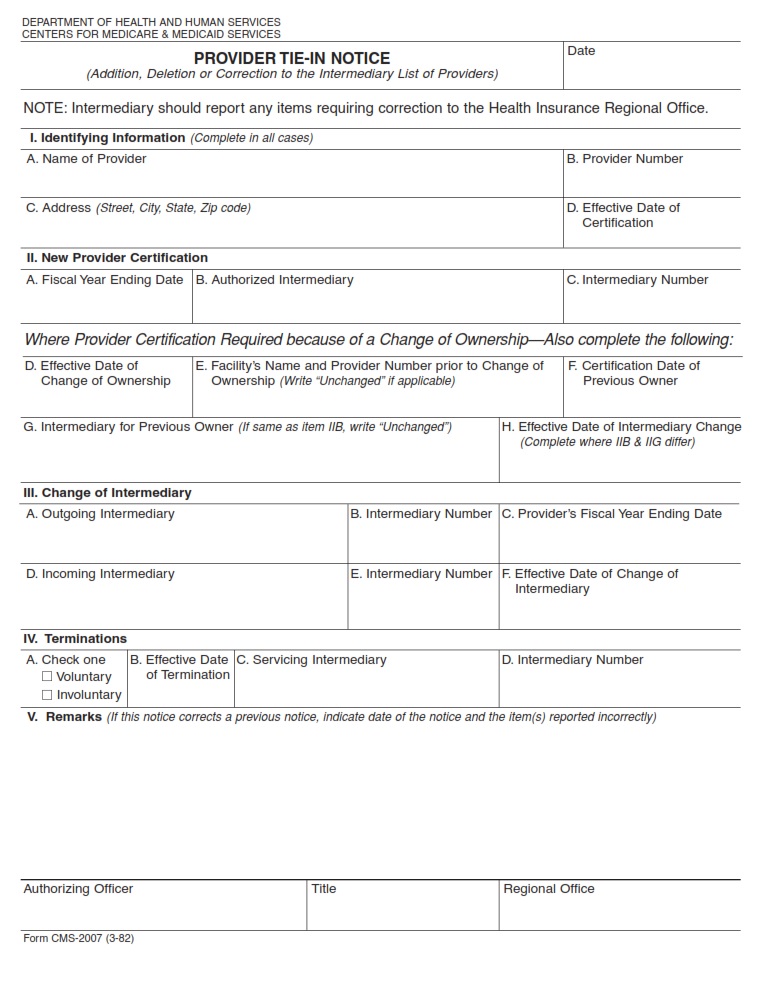
    CMSFORM.ORGCMS 2007 – PROVIDER TIE IN NOTICE – In the fast-paced world of healthcare, staying informed about regulatory changes and updates is paramount for providers to deliver quality care. Enter CMS 2007 – Provider Tie In Notice, a critical communication that has been shaking up the industry with its implications for healthcare providers nationwide. This notice serves as a bridge between healthcare professionals and the Centers for Medicare and Medicaid Services (CMS), revealing new requirements and guidelines that are set to revolutionize the way care is delivered. Providers are on high alert, eager to understand how this tie-in will impact their day-to-day operations and patient interactions. Join us as we delve into the intricacies of this groundbreaking notice and explore its potential impact on the future of healthcare delivery in America.

    Download CMS 2007 – PROVIDER TIE IN NOTICE

    [su_table responsive=”yes”]

    Form Number CMS 2007
    Form Title PROVIDER TIE IN NOTICE
    Published 1982-03-01
    O.M.B.
    File Size 420 KB

    [/su_table]

    [download id=’1294′]

    What is a CMS 2007?

    As we delve into the realm of Content Management Systems (CMS) in 2007, it’s essential to understand the intricate workings and functionalities of these platforms. A CMS in 2007 refers to a robust software system that allows users to create, manage, and publish digital content on websites without the need for intricate coding skills. During this era, popular CMS options included WordPress, Joomla, and Drupal, each offering unique features tailored to various user needs.

    In 2007, one significant aspect associated with CMS usage was the concept of Provider Tie-In Notice. This notice usually appeared when users selected a specific provider or service within their chosen CMS platform. It served as a notification informing users about potential limitations or requirements tied to using certain services provided by external entities. Understanding such tie-ins was crucial for users to make informed decisions about their website development journey in an increasingly interconnected digital landscape.

    Where Can I Find a CMS 2007?

    It’s no secret that finding a CMS 2007 can be quite the challenge in today’s rapidly evolving digital landscape. However, there are still some hidden gems out there if you know where to look. One of the best places to start your search is on online marketplace platforms like eBay or Etsy, where vintage tech enthusiasts often list rare finds.

    Alternatively, don’t overlook local classified ads and community forums – you never know when someone might be looking to sell their old CMS 2007 for a bargain. Another unconventional option is to reach out to tech recycling centers or electronic waste disposal facilities, as they sometimes come across older hardware that could be repurposed rather than scrapped. Remember, the hunt for a CMS 2007 may require some creativity and persistence, but the rewards of owning a piece of tech history are truly priceless.

    CMS 2007 – PROVIDER TIE IN NOTICE

    As CMS 2007 requires healthcare providers to give notice of their tie-in relationships, it opens up discussions on the impact of such transparency on patient care. By mandating providers to disclose financial arrangements with other entities, CMS aims to promote accountability and protect patient interests. This regulation not only helps patients make more informed decisions about their care but also fosters a culture of trust and integrity within the healthcare industry.

    With the rapid growth in telehealth services and partnerships between various healthcare stakeholders, the need for clear communication regarding provider relationships has become more crucial than ever. The Provider Tie-In Notice under CMS 2007 serves as a valuable tool in ensuring that patients are aware of any potential conflicts of interest that may arise during the course of their treatment. It emphasizes the importance of transparency in building strong physician-patient relationships based on honesty and trust, ultimately leading to improved patient outcomes and satisfaction.

    CMS 2007 Example

    CMS 2007

  • CMS 383 – HEALTH INSURANCE CASE SUMMARY

    CMS 383 – HEALTH INSURANCE CASE SUMMARY

    CMSFORM.ORGCMS 383 – HEALTH INSURANCE CASE SUMMARY – In the intricate world of healthcare management, navigating the complexities of health insurance can often feel like deciphering a cryptic code. Enter CMS 383 – the elusive yet essential course that sheds light on this enigmatic realm through captivating case studies and real-world scenarios. Imagine unraveling the enigma of insurance claims, decoding the jargon of policy coverage, and delving into the nuances of reimbursement systems all within a single semester. This article delves deep into the riveting narratives and insightful analyses presented in CMS 383 – Health Insurance Case Summary, offering readers a glimpse into the captivating world where policy meets practice. Prepare to be enthralled as we explore the intersection of healthcare economics, legal frameworks, and patient care through a series of compelling cases that challenge conventional wisdom and broaden our understanding of this crucial aspect of modern healthcare.

    Download CMS 383 – HEALTH INSURANCE CASE SUMMARY

    [su_table responsive=”yes”]

    Form Number CMS 383
    Form Title HEALTH INSURANCE CASE SUMMARY
    Published 1982-12-01
    O.M.B.
    File Size 100 KB

    [/su_table]

    [download id=’1295′]

    What is a CMS 383?

    CMS 383 is a crucial code in the world of health insurance that plays a significant role in streamlining processes and ensuring accurate billing. This specific code refers to a case summary within the CMS (Centers for Medicare & Medicaid Services) system, providing essential information about the health insurance claims related to a particular individual. Utilizing CMS 383 helps healthcare providers efficiently manage patient data, treatment history, and billing details, ultimately resulting in better patient care and smoother administrative operations.

    Understanding the implications and nuances of CMS 383 is vital for healthcare professionals working with health insurance claims. By mastering this code, providers can enhance their billing accuracy, reduce errors, and optimize reimbursement processes. Moreover, having a thorough knowledge of CMS 383 empowers healthcare organizations to navigate complex insurance systems effectively and deliver high-quality care while managing administrative tasks proficiently.

    Where Can I Find a CMS 383?

    Finding a CMS 383 form for health insurance case summaries can be a challenging task for many individuals. However, there are several avenues to explore in order to obtain this crucial document. One of the most reliable sources is the official website of the Centers for Medicare & Medicaid Services (CMS), where individuals can download the form directly. Additionally, reaching out to your healthcare provider or insurance company can also prove helpful in acquiring a copy of CMS 383.

    Another option worth exploring is contacting local healthcare facilities or government health services offices, as they often have resources and information available for patients in need of specific forms. In some cases, online platforms specializing in health insurance documentation may also offer access to CMS 383 forms for easy download and printing. By taking advantage of these various channels and resources, individuals can ensure they have the necessary paperwork to navigate their health insurance needs effectively.

    CMS 383 – HEALTH INSURANCE CASE SUMMARY

    In the realm of health insurance, CMS 383 signifies a pivotal case that has far-reaching implications on the healthcare landscape. This case summary delves deep into the complexities of insurance regulations and policies, shedding light on essential aspects that govern access to quality healthcare services. By analyzing CMS 383, stakeholders can gain a comprehensive understanding of the legal frameworks that dictate coverage, reimbursement, and patient care standards within the health insurance sector.

    Furthermore, the insights gleaned from CMS 383 reveal crucial trends and patterns in insurance adjudication processes, highlighting areas for potential improvement and innovation. As the healthcare industry continues to evolve rapidly, staying abreast of landmark cases like CMS 383 is imperative for insurers, providers, and patients alike. This case summary serves as a beacon guiding stakeholders towards informed decisions that safeguard both financial interests and quality care delivery in an ever-changing healthcare environment.

    CMS 383 Example

    CMS 383 - Page 1 CMS 383 - Page 2

  • CMS 1539 – MEDICARE/MEDICAID CERTIFICATION AND TRANSMITTAL

    CMS 1539 – MEDICARE/MEDICAID CERTIFICATION AND TRANSMITTAL

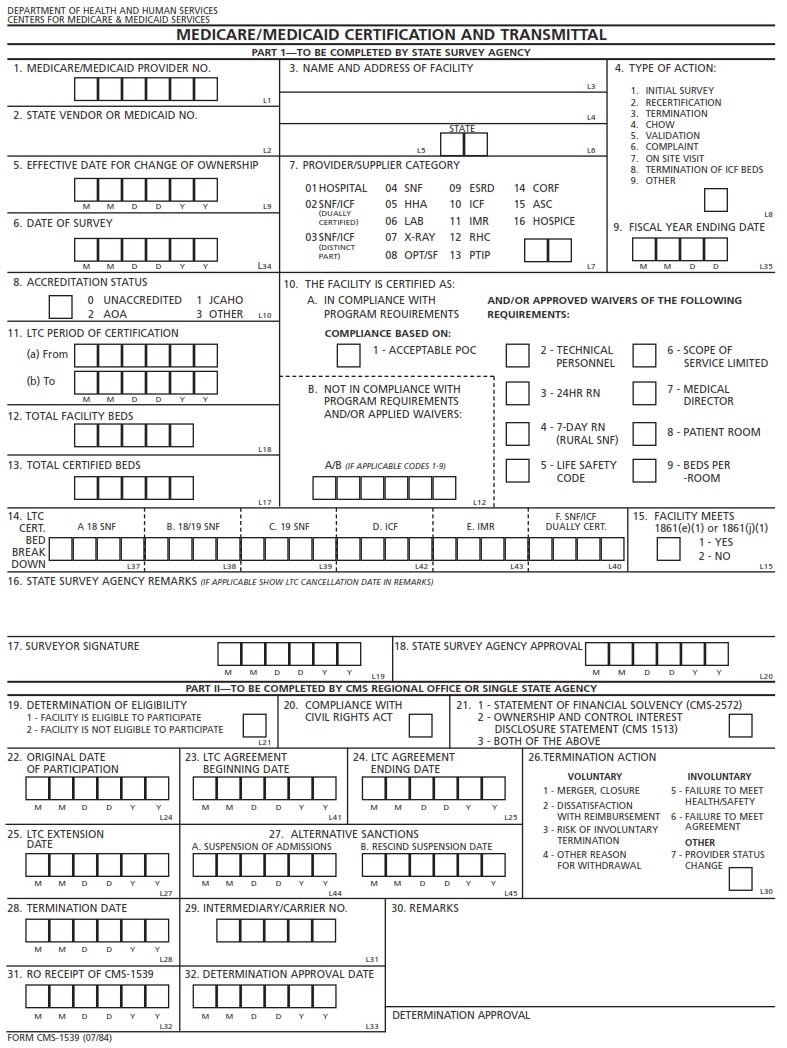
    CMSFORM.ORGCMS 1539 – MEDICARE/MEDICAID CERTIFICATION AND TRANSMITTAL – Navigating the intricate landscape of healthcare certification and compliance can often feel like deciphering a cryptic code. Amidst this labyrinth of regulations, a beacon of clarity shines through in the form of CMS 1539 – Medicare Medicaid Certification and Transmittal. This crucial document serves as a linchpin in ensuring that healthcare providers meet the stringent standards required to participate in these vital government programs. As we delve into the depths of CMS 1539, we uncover not just a formality, but a gateway to quality care, financial stability, and ethical practice within the realm of healthcare provision. Join us on an enlightening journey as we unravel the mysteries behind this pivotal certification process and explore its profound implications on the ever-evolving landscape of modern medicine.

    Download CMS 1539 – MEDICARE/MEDICAID CERTIFICATION AND TRANSMITTAL

    [su_table responsive=”yes”]

    Form Number CMS 1539
    Form Title MEDICARE/MEDICAID CERTIFICATION AND TRANSMITTAL
    Published 1984-07-01
    O.M.B.
    File Size 53 KB

    [/su_table]

    [download id=’1296′]

    What is a CMS 1539?

    The CMS 1539 form plays a crucial role in the Medicare and Medicaid certification process, serving as a transmittal document for vital information. This form is utilized by healthcare providers and facilities seeking certification to participate in these government healthcare programs. It ensures that all necessary details and requirements are met before approval is granted, contributing to the overall integrity of the Medicare and Medicaid systems.

    Through the completion of the CMS 1539 form, healthcare entities demonstrate their compliance with regulations and standards set forth by Medicare and Medicaid. This process helps to uphold quality standards in patient care delivery and ensures that only qualified providers are eligible for participation. By accurately completing this form, healthcare organizations can streamline their certification application process and ultimately improve access to essential healthcare services for beneficiaries.

    Where Can I Find a CMS 1539?

    If you’re on the hunt for a CMS 1539 form to complete your Medicare Medicaid certification and transmittal process, you’re in luck! These forms can typically be found through various channels, including online resources such as the Centers for Medicare & Medicaid Services (CMS) website. Additionally, healthcare facilities, hospitals, and medical supply providers often keep physical copies of these forms readily available for those in need.

    For a more efficient search, consider reaching out to your local health department or contacting CMS directly for guidance on where to obtain a CMS 1539 form. Remember that accuracy and timeliness in submitting this important document are crucial for maintaining compliance with Medicare and Medicaid requirements. Stay proactive in your search efforts to ensure you have all the necessary resources at hand when it comes time to complete your certification and transmittal paperwork.

    CMS 1539 – MEDICARE/MEDICAID CERTIFICATION AND TRANSMITTAL

    CMS 1539, also known as the Medicare Medicaid Certification and Transmittal form, plays a crucial role in the healthcare industry by ensuring that healthcare facilities meet the necessary standards set forth by Medicare and Medicaid. This certification process is essential for providers wishing to participate in these government healthcare programs, allowing them to offer services to eligible beneficiaries. Through this form, facilities demonstrate their compliance with regulations and guidelines aimed at promoting quality care and patient safety.

    One of the key benefits of CMS 1539 is its ability to streamline the certification process for healthcare providers, reducing administrative burdens and ensuring efficient enrollment in Medicare and Medicaid. By completing this form accurately and submitting it on time, providers can access reimbursement for services provided to eligible patients, helping to sustain their operations financially. Additionally, CMS 1539 serves as a valuable tool for monitoring program integrity and preventing potential fraud or abuse within the system, ultimately safeguarding taxpayer dollars while enhancing transparency in healthcare delivery.

    CMS 1539 Example

    CMS 1539 - Page 1 CMS 1539 - Page 2

  • CMS 2878 – ACCREDITED HOSPITAL ALLEGATIONS REPORT

    CMS 2878 – ACCREDITED HOSPITAL ALLEGATIONS REPORT

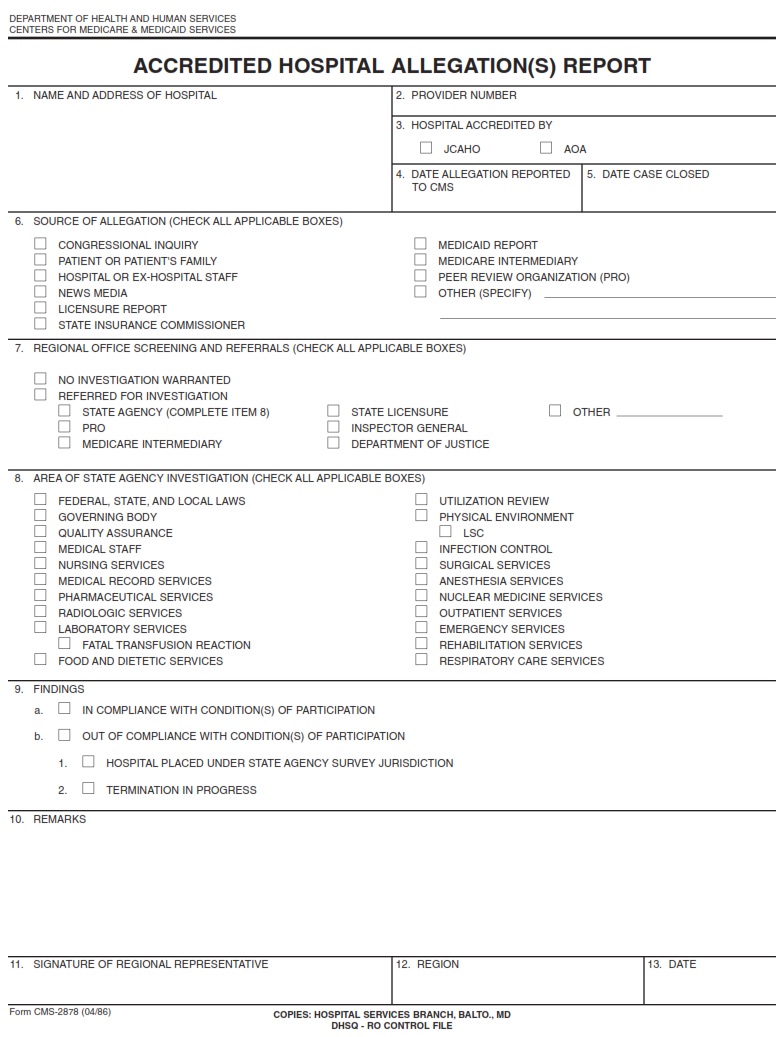
    CMSFORM.ORGCMS 2878 – ACCREDITED HOSPITAL ALLEGATIONS REPORT – In the intricate world of healthcare, maintaining standards of care and compliance is paramount to ensuring patient safety and quality outcomes. The CMS 2878 – Accredited Hospital Allegations Report stands as a critical tool in the oversight and regulation of hospitals across the United States. This report delves into allegations made against accredited hospitals, shedding light on potential issues that could impact patient care and hospital operations. From allegations of medical errors to concerns over staff conduct, this report serves as a window into the often unseen challenges faced by healthcare institutions striving to uphold excellence in their services.

    As we peer behind the curtain of hospital accreditation, we uncover a web of complexities where patient welfare, regulatory compliance, and organizational integrity intersect. The revelations within the CMS 2878 report are not just statistics or figures; they represent real-life scenarios where lapses in care or ethical breaches can have profound consequences. Join us on a journey through this investigative article as we navigate the murky waters of hospital allegations and explore how transparency and accountability play crucial roles in safeguarding our healthcare system’s credibility and trustworthiness.

    Download CMS 2878 – ACCREDITED HOSPITAL ALLEGATIONS REPORT

    [su_table responsive=”yes”]

    Form Number CMS 2878
    Form Title ACCREDITED HOSPITAL ALLEGATIONS REPORT
    Published 1986-04-01
    O.M.B.
    File Size 17 KB

    [/su_table]

    [download id=’1297′]

    What is a CMS 2878?

    CMS 2878 stands for Care Management Services, a crucial component of the healthcare system that focuses on coordinating care for patients with complex medical needs. This type of CMS aims to improve patient outcomes by ensuring they receive comprehensive and integrated care from a team of healthcare professionals. With CMS 2878, providers can better manage chronic conditions, reduce hospital readmissions, and enhance the overall quality of care.

    One key feature of CMS 2878 is its emphasis on personalized treatment plans tailored to each patient’s unique health requirements. By leveraging technology and data-driven approaches, healthcare providers can track patient progress more effectively and make timely adjustments to their care strategies. Additionally, CMS 2878 encourages multidisciplinary collaboration among clinicians, social workers, and other support staff to address all aspects of a patient’s well-being comprehensively.

    Where Can I Find a CMS 2878?

    If you’re looking for a CMS 2878 form, your best bet is to start by visiting the Centers for Medicare & Medicaid Services (CMS) official website. Here, you’ll be able to download and print the form directly from their online portal. Additionally, local healthcare facilities such as hospitals or clinics may also have physical copies of the CMS 2878 available for patients to fill out.

    Another option is to reach out to your healthcare provider or insurance company and inquire about obtaining a CMS 2878 form through them. They can provide guidance on where to find the form and assist you in completing it correctly. Remember, staying informed and proactive in accessing necessary forms like the CMS 2878 is crucial for managing your healthcare needs effectively.

    CMS 1592 – SMI PREMIUM ACCTG FORM

    CMS 1592, also known as the SMI Premium Accounting Form, plays a crucial role in ensuring accurate and timely processing of premium payments within the healthcare industry. This form serves as a standardized template for reporting financial data related to Medicare premiums and facilitates seamless communication between healthcare providers, insurers, and government agencies. By following the guidelines outlined in CMS 1592, organizations can streamline their accounting processes and maintain compliance with regulatory requirements.

    One key advantage of using the SMI Premium Accounting Form is its ability to enhance transparency and accountability in premium transactions. Its structured format enables stakeholders to easily track premium payments, identify discrepancies, and reconcile accounts efficiently. Additionally, by leveraging the data captured in this form, healthcare entities can gain valuable insights into their financial performance and make informed decisions to optimize revenue management strategies. Overall, CMS 1592 serves as a valuable tool for promoting financial integrity and upholding high standards of financial governance within the healthcare sector.

    CMS 2878 Example

    CMS 2878